


|
|
|
 Friday, November 30, 2007
Googling the hostage taker
When I heard that Leeland Eisenberg, the man said to have taken hostages at the Clinton campaign "has a history," I thought I'd turn to Google. Sure enough a man with the name of Leeland Eisenberg was described in this legal memorandum of findings as an "inmate in the custody of the Massachusetts Department of Corrections." A man of the same name (but described in the pleading as "formerly known as Ralph E. Woodward") filed a lawsuit against the Roman Catholic Archbishop of Boston alleging he was molested by a priest who had provided him with room and board when he was "approximately 21 years old, [and] was homeless and living in abandoned cars in a local junk yard in Ayer, Massachusetts." Whether he's the same man and why he is doing what he is doing now, who knows? MORE (06:16 p.m.): The man seems to have just been caught or he has surrendered; I just saw a picture of him lying down being handcuffed. According to Editor and Publisher, he was very upset over his car being checked and then leafleted for having unlocked doors, as well as having his picture appear in the newspaper. MORE: The case seems to have resolved with all hostages released and Eisenberg in custody. The consensus of all the news reports is that he has a history of mental illness, which should surprise no one. AND MORE (06:25 p.m.) It is now being reported by Fox News that the suspect's name is "Troy Stanley," which is confirmed here. So "Leeland Eisenberg" may be an alias, and he is reported to have others. AND MORE: Reading this collection of posts, it appears that the man has gone from "Troy Stanley" (which was discounted) before he was "Leeland Eisenberg" (which has now been discounted), and now (I think) it's back to "Troy Stanley." Maybe it will be figured out eventually. MORE: Michelle Malkin is also trying to follow the name saga, and seems to be leaning in favor of the Eisenberg theory. AND MORE (06:39 p.m.): I know this will sound screwy, but CNN is reporting he's Eisenberg, while Fox said he's Stanley the last time I switched channels. AND MORE (06:42 p.m.): Now Fox says he's Eisenberg. Hillary will be having a press conference in 20 minutes. (No surprise there.) And I have to run out so I'll miss the rest of a story that is -- or should be -- over. MORE (08:00 p.m.): My thanks to Michelle Malkin for the link. The reports are now unanimous that the suspect has been identified as Leeland Eisenberg. UPDATE: My thanks to Glenn Reynolds for linking this post and welcome all. I appreciate the comments. Don't miss Tom Maguire's post which has links to more of Eisenberg's previous problems -- including a DUI and a history of stalking. Hmmm... All the more reason we shouldn't confuse Googling with stalking. (Geez, I almost said "confuse Stoogling with galking.") MORE: Regarding Hillary Clinton's orchestrated statement after the event, Ann Althouse's post (linked by Tom Maguire and Glenn Reynolds) is a must-read: I don't want a President to roil into a mommyesque ball of emotion when a few people are in danger. Yet that's not Hillary. The only question is why she thought a statement like that was a good one. She probably wanted to make sure not to confirm the widely held belief that she's unemotional, and, while she was at it, delight all the ladies out there who lap up emotional drivel.No one could have articulated it better. posted by Eric at 06:00 PM | Comments (12)
| TrackBacks (0)
Multicultural acceptability
Via Glenn Reynolds, I found an intriguing question about female genital mutilation: Should outsiders be telling African women what initiation practices are acceptable?Gee, I don't know. I guess as an "outsider" I should first be asking whether I have a right to an opinion about what is acceptable. But I agree that it's a good question, and even though I might not be allowed to have an opinion, I have thought of a few more. Should outsiders be telling Tlingit Indians what slavery ownership practices are acceptable? Should outsiders be telling Iranians what nuclear practices are acceptable? Should outsiders be telling Muslim men what honor killing practices are acceptable? Should outsiders be telling Rwandans what tribal warfare practices are acceptable? Should outsiders be telling Cambodians what collectivization practices are acceptable? Should outsiders be telling Germans what Jewish evacuation practices are acceptable? God forbid that we might get judgmental about these things.... posted by Eric at 03:06 PM | Comments (1)
| TrackBacks (0)
The Gatekeeper's "Gatekeepergate"?
That CNN has been caught again using planted questioners should surprise no one, least of all me. I've lost count of how many of their "ordinary citizen" questioners turned out to be activists known to CNN or associated with various campaigns. There were several in the last debate, and there have of course been several more in the latest debate. It's a farce. (As Roger L. Simon observed, it forces satirists to "parody a parody.") There have been countless posts by countless bloggers. Glenn Reynolds has had more posts than I can count about CNN's obvious bias; in this one he pretty well sums it up. I especially liked this: I've never called CNN the "Clinton News Network." (I'm not even a "conservative blogger" except in the sense that I've supported the war, but nowadays that's all "conservative" means to most people). And there's a bigger problem.I'll go further. I don't know whether I've called CNN the Clinton News Network, so I'll check. Nope. So here I go.... CNN is the Clinton News Network! It's just too blatant to ignore. What irritated me the most, though, about the angry retired gay general whose name is right there for the world to see on Hillary's web site was not so much that CNN failed to disclose it (or that they have now expunged the segment) but that the premise of General Kerr's argument was so flawed. I do not refer to his argument that gays should be allowed to serve. I agree with him wholeheartedly on that, and I have for years. Rather, it's the way he stood there on national television, with a huge (if justifiable) axe to grind, and scolded the Republicans -- as if his "closet" was all their fault. Was it? What I think should have been reported was not merely his presence on Hillary's election committee, but the background behind his argument -- especially the fact that he retired not under Bush, but under Clinton -- after the "Don't Ask Don't Tell" policy was established. Moreover, his military service dates back to the early 1950s -- a time when there was virtually unanimous agreement by the political leaders of both parties that homosexuality was incompatible with military service. Kerr didn't come out until 2003: Darrah, along with Army Col. Stewart Bornhoft and Army Brig. Gen. Keith H. Kerr, who all are retired, will speak about hiding their orientation while in the military and ask for support to repeal the "don't ask, don't tell" policy tomorrow, Aug. 3, at a program benefiting the Servicemembers Legal Defense Network (SLDN) at Chicago's Center on Halsted roof garden.So the guy came out in 2003, then he became active in the Kerry campaign. Whether Kerry would have gotten rid of "Don't Ask Don't Tell" is open to serious question. Not long before the election, he was caught in this classic waffle: in June John Kerry told the 'Army Times' magazine that he was not sure that "Don't Ask, Don't Tell" should be abolished, even though he has previously said that he supports allowing Gay men and Lesbians to serve in the U.S. military, and disliked the "Don't Ask, Don't Tell" policy.And while few may remember it, Kerry also stated during the campaign that he and Bush had "the same position, fundamentally" on gay marriage. So, with all respect to General Kerr and his decision to come out eight years after his 1995 retirement, why is it that the public national scolding is deserved only by Republicans? During General Kerr's 43 years of service, he'd have served under ten Presidents -- Truman, Eisenhower, Kennedy, Johnson, Nixon, Ford, Carter, Reagan, Bush, and Clinton. That's five Democrats and five Republicans; and the "Don't Ask Don't Tell" wasn't implemented until shortly before he retired. Under all previous admininstrations, the policy was more along the lines of "we ask, you lie!" I'm sure life in the military was difficult for General Kerr, and it is understandable that he would bear a grudge. But I think it's hardly fair to single out Republicans for an emotional scolding. What would have really been interesting (and more honest, in my view) would have been to allow candidate Alan Keyes to weigh in on General Kerr's question. Keyes is on record as saying that homosexuality, is "the thermonuclear device--that is aimed at the soul of America," and "a direct repudiation of our most important principles." It may sound cynical, but think CNN did itself a disservice here. I mean, imagine the ratings that would be generated by a presidential candidate accusing a general of being a thermonuclear device on national television. But CNN kept Keyes off the air and edited him out of the debate. The Keyes website is naturally indignant: For reasons evident below, CNN's decision to exclude Dr. Keyes is obviously arbitrary, unfair, and presumptuous -- overriding, in essence, the prerogative of the State of Florida to decide which presidential contenders voters have a right to learn about.CNN's position is that Alan Keyes hasn't raised enough money and doesn't do well in the polls. But both Florida polls and a recent Iowa poll show him as ahead of at least Duncan Hunter: Mitt Romney 29%Keyes' views on homosexuality and on a number of issues are extreme fringe, and I couldn't disagree with him more. But I think he should be allowed in these debates, because I don't think it is good for the GOP or the country to have the angry fringe he represents swept under the rug. It's not just that CNN is playing gatekeeper, because Keyes has no chance of ever winning the nomination. What I think is happening is that the Romney people don't want him there, and CNN is delighted to keep him out. The race is very close, and Romney thinks he can corral the anti-gay Keyes voters by positing himself as the "conservative alternative" to the "liberal" Giuliani with all the "values" rhetoric. That Keyes is not there to call him on it suits him just fine. I think that strategically, it suits CNN and the Clinton machine just fine too. Were Keyes and his supporters with their angry agenda allowed to be heard, it would be clarifying for the country. They would be able to vote, and everyone would know the actual strength -- in actual votes -- Keyes and what I call the "WorldNetDaily wing" would tally. At most, they'd get between 5% and 10%. I may be wrong, but that's my guess. All the more reason to please, for God's sake, let them vote! Identifying this vote is not in the interest of the left, because their goal is to claim that the entire Republican Party thinks that way. Thus, while it may be counterintuitive, it is in their interest (and Romney's interest) to marginalize the far right, and in this way, blur their numbers so that they look bigger than they are. Marginalization is in the interest of conflation. Of course, I may be wrong, and the Keyes WorldNetDaily wing may be stronger than I think. Isn't that all the more reason to find out? MORE: Via PJM and Beltway Blogroll, I see that to some on the left, using Google to research people's political affiliations and find out what they have said is now considered "stalking." Which makes me wonder whom I have stalked in writing this post. General Kerr? Alan Keyes? Mitt Romney? CNN? Who wrote the MyDD post, anyway? A guy named Todd Beeton? Let's see. According to my quick stalk, here's his blogger.com profile: # Age: 36In an amazing, stupendous "coincidence," Hitler was also a male Aries! And when he was 36, while he might not have written for MyDD, he did publish Mein Kampf! See? When you've stalked one 36 year old male Aries, you've stalked them all! It's getting to the point where words don't mean anything. UPDATE: "DON'T ASK, DON'T TELL," says Glenn Reynolds (about CNN), who noted earlier that the prestigious bastions of respectable journalism aren't into asking or telling. Glenn links Michelle Malkin, who has more on Kerr (including his airline ticket), along with another list of "other Democratic activists lurking in the YouTube garden." She also quotes a CNN exec who attempts to use the Ron Paul supporters as an excuse: Whether through, as one blogger put, "constructive incompetence" or "convenient ineptitude," CNN has committed journalistic malpractice under the guise of "citizen" participation.Yes, as a matter of fact it would! Not that any of this would matter to CNN, but the YouTuber with the confederate flag (TheHoustonKid) is a not only a Ron Paul supporter, but you don't even have to resort to "stalking" to find that out; it's right there with his YouTube videos!
Pathetic. Who needs parody when you've got the "Clown News Network"? Yeah, I know I said "Clinton New Network" earlier, but that's only because I was trying to parody something serious. But with the Clown News Network, now I'm really serious! MORE: It's a minor point, but on CNN, General Kerr described himself as "a retired brigadier general with 43 years of service he had 43 years of service." That is reflected here, which means the reference to 31 years in the article I quoted above is wrong. (It also states that his service began in 1953 and he formally retired in 1996, which means he would not have served under Truman. Using the wrong date above, I subtracted 43 from 1995.) posted by Eric at 09:31 AM | Comments (0)
| TrackBacks (0)
Malice And Stupidity
By now you have probably heard about the ringers at the CNN debate. If not Glen Reynolds has a few links to get you started. Eric also has some help. The short version: The Democrats had party activists asking questions for the Democrat's debate and they had party activists asking questions for the Republican's debate. So of course the Democrats got softballs and the Republicans got toughies. Which is a good thing. It takes the Republican's minds off of intraparty warfare and focuses it on beating the Democrats. As to CNN and the Democrats: It is unwise to attribute to malice alone that which can be attributed to malice and stupidity. Cross Posted at Power and Control posted by Simon at 07:55 AM | Comments (1)
| TrackBacks (0) Thursday, November 29, 2007
generic label loyalty?
Megan McArdle looks at a meme of which I've grown quite tired -- that "real libertarians" didn't support the war: This is the emerging meme, mostly, interestingly, among people who are not themselves libertarians.Stand by for my post tomorrow: real progressives won't vote for Hilary Clinton.Real or not, there's this test result. And there's this chart.
The results I get don't change much, and they're based on my answers to questions. I think what I think, and I happen to agree with a lot of what most people would call "libertarian thinking." Whenever I take these tests, they tell me that I am libertarian. Pointing that out does not morally obligate me to do anything beyond agreeing with my own answers. The tests do not tell me what I think, nor what I should think. I tell the tests what I think, and I think what I think I should think. Is there anything in those tests or in my stated libertarianism which says I have to take an oath to be "real"? What is real? I find it appalling that anyone would tell anyone else that he is not a "real" libertarian. No one is in any position to do this, as there is no oath to take. Other than the Libertarian Party, there is no platform. So who would have the right to determine what is, and what is not, the correct ideology? As an individualist, I would not trust anyone who tried to claim such a right, because he'd be claiming a right to speak for me. Unless libertarianism has become like scientology, I don't think other libertarians have any such power. I think that part of the reason I fall into the libertarian camp is because of my individualism. I don't believe that anyone has the right to tell anyone else what to think. Telling someone he is not a "real" libertarian has no other purpose than attempting to bully him into thinking not what he thinks, but what the accuser thinks. This, I think, explains why most of the accusations that libertarians are not "real" seem to be coming not from libertarians, but from self-appointed antiwar scolds. The "libertarian" handle for me is a label of convenience -- something to help give people a general picture of my philosophical outlook which they can take or leave, but certainly not something worth fighting for. People can say I am not real, but unless they change the tests, I'm afraid the tests will go on saying I'm libertarianish, and I will too. I don't care whether I measure up to someone else's standards of "realness." Life is too short. posted by Eric at 10:56 PM | Comments (6)
| TrackBacks (0)
There oughta be a law, right?
A recent Philadelphia shooting has attracted so much local attention that I thought it merited a post. The situation is so appalling, and the family so squalid and so dysfunctional, that it challenges my usual libertarian sensibilities, and while it doesn't incline me towards communitarian thinking, it does incline me to entertain the idea that some situations -- and some people -- might be so hopeless as to be beyond redemption. This is, I admit, an ugly thought, and one most people don't allow themselves to have. But is denial the better approach? Too many libertarians just want the world to be the way they are. They behave responsibly, and therefore so should others. Tell that to the family involved here: Philadelphia - A five-year old boy was shot outside a Philadelphia Housing Authority (PHA) home early yesterday morning, police said yesterday.Did the 15 year old steal the guns accidentally too? What was a 5 year old doing hanging on the street corner at 1:00 a.m.? That was a couple of days ago. In today's Inquirer, it was reported that the boy has been arrested, and the mother of the five year old is having her children taken away. The wounded boy's siblings have been placed in the custody of child welfare officials.But she's a good mother! Relatives said Stallings was a good mother who left her children with a baby-sitter while she visited friends nearby.I must be getting old and uptight, but I think age five is too young to be hanging out on street corners, and eleven is definitely too young to be stealing cars. At that age, the kid might have problems seeing over the dashboard. Someone might get hurt. In another piece, a relative weighed in on the family's, um, issues: Aisha Meggett, Stallings' cousin, said the police have the story all wrong. She was babysitting at the home yesterday and helping to clean up; clothes were strewn around the living room following the police search the night before.Oh well in that case, it's fine! Five year olds have a perfect right to be hanging out on the street at 10:30 unsupervised. And food in the refrigerator? What more evidence of responsibility do we need? "There's no gun in this house, no drugs, nothing," Meggett said. "My cousin wouldn't jeopardize anything." She had no idea how Fletcher obtained the gun. "Kids find guns and they play with them. If they [police] found a gun here, they set us up."I'm sure there are plenty of gun control advocates who'd agree with the people quoted that the problem is guns, because families that let their five year olds hang out on the street where they find guns and play with them are utterly blameless. The worst thing about this is that while I don't blame guns for being stolen and played with any more than I'd blame the car that the eleven-year-old stole, I worry. My worry is that there might be people who just plain shouldn't have guns. They shouldn't have cars. And in all probability, they shouldn't have kids. (The mother who was at the cocktail lounge when all this happened has had hers taken away.) Not that any of this matters. I doubt that the mother or any of her kids are allowed to own firearms anyway. That's why the gun control people are upset by cases like this. Notice how the Inquirer trots out the stock phrase "ready availability of guns," though. They're writing about a group of people who are not legally allowed to have them, yet who claim they are everywhere, and admit their kids are playing with them. If there is a problem with ready availability, I would suggest it is a law enforcement problem. The idea of passing more laws for such people to ignore is laughable. It is illegal for 15 year olds to steal guns. It is illegal for 15 year olds to possess guns. Similarly, it is illegal for 11 year olds to steal cars, and the last I heard, it was also illegal for them to drive them! Now, let's suppose the 11 year old who stole the car had managed to run over the 5 year old before the 15 year old had managed to shoot him. Would anyone be complaining about the "ready availability" of cars? If this family proves a ready availability of anything, it's that Philadelphia has a ready availability of crime. (Need I point out for the umpteenth time that there is also a ready availability of laws? Nah, why bother?) The problem is that I can offer no solutions, which is what makes posts like this emotionally unfulfilling to write. Libertarianism offers nothing by way of solutions to intractable social problems. People like me tend to have a "Leave me alone in my house, and I'll leave you alone in your house" approach. This might work fine among libertarians who don't believe in "It Takes A Village." But what happens when the village wants village laws, village rule, and (ultimately) village tyranny? What happens when the village "decides" it does not like the "ready availability" of freedom? Can I just go get it somewhere else? MORE: This quote from Ludwig von Mises may be helpful to libertarians in their time of need: A free man must be able to endure it when his fellow men act and live otherwise than he considers proper. He must free himself from the habit, just as soon as something does not please him, of calling for the police. posted by Eric at 05:05 PM | Comments (0)
| TrackBacks (0)
"I was perfect before I wasn't, and when you still weren't!"
I watched part of last night's debate and read about the rest (via Glenn Reynolds) at Vodka Pundit. Nothing beats reading drunken live blogging the morning after. The most important things were that Fred looked good, so did McCain (at least during the waterboarding discussion when he "pulled rank"), and I agree with Stephen that it was Rudy's weakest night so far. I absolutely loved some of the YouTube questions Stephen Green has for the candidates. This one is especially good, as it zeroes in on a key issue: A lot better than many of the YouTube questions they had last night! No seriously. The truth is, Romney's hair really is perfect. At least as perfect as John Edwards's hair. And John Edwards' perfect hair is an important campaign issue. It has been for two elections now. As even Kerry admitted, "better hair" "goes a long way!" So why not ask Romney about his perfect hair? Women love men with perfect hair, and regular guys with regular hair are jealous, so it is a big deal, even a huge deal. Not that there's anything wrong with being perfect.... But I'd like to know something. Yesterday, I noticed that Romney not only appeared to be backing away from his previous holier-than-thou attitude, but in doing so he was saying almost the same thing he'd slammed Giuliani for saying: "I was wrong, I was effectively pro-choice," said Romney, who has said he changed his stance in 2004 during debates on stem cell research. "On abortion, I was wrong."That claim -- from "Mr. Perfect" -- sounded so familar that I did a doubletake. It sounded almost exactly what Rudy Giuliani -- "Mr. I'm Not Perfect" -- said one week ago: "The reality is all of us that run for public office, whether its governor, legislator, mayor, president-we are all human beings. If we haven't made mistakes don't vote for us cause we got some big ones that are gonna happen in the future and we wont know how to handle them."Howard Kurtz called that "inoculation" when it was said by Giuliani. So what does it mean when it comes from Romney? The perfect triangulation imperfection inoculation? Anyway, the bottom line is that Giuliani had a weak night, and the background is that he had already beaten Romney to the claim of not being perfect. But Romney not only had the best hair last night, but he will continue to always have the best hair! And if he, Mr. Perfect, is now able to triangulate Giuliani as Mr. "I'm Not Perfect," but he still has perfect hair, where does that leave Mr. Less-Than-Perfect-Hair? Will Romney triangulate bad hair? (Maybe just one bad hair day?) I guess we'll stay tuned. posted by Eric at 10:34 AM
| TrackBacks (0)
cameras are torture too!
According to logic, if tasers are instruments of torture (which the UN argues they are), and if you can use an ordinary camera to make a taser, then cameras should also be considered instruments of torture, and regulated, right? What? You don't believe me because my old link no longer works? There's a new link to the same video here, or you can just watch this YouTube video and learn how to outwit the UN! Why no one brought up the taser torture issue at last night's Republican debate, I don't know. I'm surprised that UN hasn't decided that police nightsticks are instruments of torture. And sjamboks. (traditionally considered South African, but used in Namibia or Zimbabwe) And fists! Why, even the lowly lit cigarette is well known as an instrument of torture. And what about guns? If the theory is that torture is the infliction of pain, then why isn't shooting someone considered torture? The answer is that anything can be used to torture someone. In Daniel P. Mannix's History of Torture, a police detective from the days of the "Third Degree" is quoted as saying he could make anyone talk by using only a telephone book and a pair of pliers. Moreover, he claimed that he knew how to use them in such a way that it would leave no marks. [OK, I didn't want to spell it out, but since most people won't buy and read Mannix's account, the telephone book is used to beat the victim's head on the temples without leaving marks, and the pliers work best with unneutered males....] Mannix also quotes Peron's police chief Cipriano Lombilla, an expert at torturing people electrically without leaving marks. Here's a typical (if poorly translated) account by one of Lombilla's victims -- Nieves Boschi de Blanco: In half of the declaration the Amoresano employee came to cover the eyes to me using cotton and a long bandage. Lead by a running length to another room they forced to lay down to me to me on a stretcher. They began then to use the electrical wire, the first on the clothes and soon directly on the body, raising to me dress and undergarments until the height of the neck. The application was made systematically by space of ten minutes in the ears, sines, belly, ingle, genital organs and legs, using as a towel dampened like average conductor. As result of the torture I underwent the first fading, restored of which they reinitiated the procedure during other five minutes. Before a new loss of the sense the bandage took off being able to verify then that the voices and mentioned laughter before heard corresponded to the Lombilla, Ferreiro and other three, whose last names I do not know. The torture was preceded and accompanied by obscene offenses by word and in fact (in an opportunity the Amoresano employee expressed: ' I am going to you to make release the baby before its time').Sorry for the poor translation, but it ought to give a general idea that this low tech gadget is no fun. (Certainly not for the victim.) Here's a brief history of the Argentine picana: The Argentine picana electrica had humble origins.[2] In 1902, Boekelman had published papers on the electric stunning of animals for slaughter and its effects on the quality of the meat. By 1929, Weinberger and Muller developed a stun device for pig slaughterhouses at the University of Munich. In Argentina, the picana electrica replaced the barbed picana. In 1932, it entered into police work in Buenos Aires and little has changed in its usage since that time. Victims are strapped to a wooden table and wetted down to aid the current. The prod operator applies the wand to sensitive parts of the body (head, temples, mouth, genitalia, breasts) while the machine operator works the bobbin, raising and reducing voltage. The victim often bites on rubber or lead to make sure that the tongue is not bit off during the shocks. Usually, a doctor is present to make sure that the victim has no heart problems and can survive the interrogation. Other accounts indicate a doctor keeps tabs on the pulse of the victim during the interrogation.The last site is an anti-taser site, and I think they're missing the point in comparing the picana to the taser, because the taser is not intended to be used as a torture device, but like mace or pepper spray -- to subdue a suspect with non-lethal force. For any other purpose, its use would be torture. The picana (Wiki entry here) has no legitimate use for any purpose other than torture. I have read various gruesome accounts about Lombilla's use of the picana (he bragged that he could make even the most stubborn cases talk by sliding a wire down the esophagus and then shocking the pit of the stomach opening), but Time magazine has another account involving two brothers who were "friends of Evita": When Dictator Juan Peron was in power, the Cardosos were notorious for winning "confessions" from the regime's prisoners. Their prize persuader was the picana electrica, an "electric needle" that delivered a 12,000-volt jolt. Applied to the lips, soles of the feet or genitals, the picana made the victim convulse with shrieking pain, while leaving no marks. "With the picana" Juan Cardoso once boasted, "you can extract in one session confessions that would have taken four days of sissified questioning."Such devices could be -- and are -- banned. But anyone could make them. All you'd need would be a car battery and a trip to Radio Shack. Or just use the pliers. The important thing to remember is that it's all Bush's fault. posted by Eric at 08:53 AM | Comments (1)
| TrackBacks (0) Wednesday, November 28, 2007
Worse than waterboarding?
Apparently there are such things. And I'm not referring to anything done by the Inquisition (which I hope people will grant was worse than Bush and Rumsfeld). I refer to the comments of a Philadelphia judge in characterizing a defendant's crimes: "She was basically tortured," said Philadelphia Municipal Court Judge James M. DeLeon, summarizing the half-hour testimony of Ian Hood, a deputy city medical examiner. "She was tortured much worse than waterboarding."Interesting word choice, and apparently it reflects the current moral consensus (led by arch-moralist Stephen King and many others) that waterboarding is the worst form of torture imaginable. Read Instapunk's post for perspective. What was done to this woman in question was so awful that when I read the piece, I found myself surprised that the judge would even think to mention waterboarding in comparison: Her head had been covered with plastic and a pillowcase, and a scarf had been tied around her neck. She was also wearing latex gloves with bleach-like fluid inside. All of this had been done, police have contended, to mask the victim's identity.I don't doubt that it is. What amazes me is to see waterboarding (which has never killed anyone) becoming the new standard by which evil is measured. I probably should have pointed out in my Inquisition post that burning people alive is worse than waterboarding. (Wouldn't want people to get the wrong idea.) posted by Eric at 08:56 PM
| TrackBacks (0)
Bill's Revisionism
Even The New Republic notices. Campaigning for his wife this afternoon in Iowa, Bill Clinton threw an asterisk over his position on the Iraq war:It looks like Bill is spinning faster than an Iranian uranium enrichment centrifuge."Even though I approved of Afghanistan and opposed Iraq from the beginning," said Clinton, "I still resent that I was not asked or given the opportunity to support those soldiers."Bill still has it going on. Support the wife? Check. Support the troops? Check. Throw an arm's length up between your team and the war administration? Check. This 'two-for one' bit sure has legs. But as much as Clinton may wish it otherwise, these days Bill's extra-credit work cannot go unchecked. Reporters soon rustled up a speech at the war's outset in which Clinton said:"I supported the President when he asked the Congress for authority to stand up against weapons of mass destruction in Iraq." Cross Posted at Power and Control posted by Simon at 12:10 PM | Comments (0)
| TrackBacks (0)
Why they don't make propaganda like they used to
In his continuing examination of why Hollywood's recent antiwar films have flopped (even though the old Vietnam stuff didn't), Roger L. Simon offers a very interesting explanation. The Iraq films flop because they lack the same type of passion which characterized the anti-Vietnam war films. As Roger explains, it's a lot easier for leftists to be pro-Communist than pro-Islamist: While the Vietnam and Iraq Wars are often equated by the liberal-left, the differences between the two are greater than the similarities, especially in the critical area of who is the adversary. For Vietnam: The evils of communism could be and were rationalized by the left as a plea for social equality in an economically unjust world. For Iraq: The evils of Islamofascism and just plain fascism are considerably harder, indeed almost impossible, to rationalize.I think Roger is right, and it shows in the quality of the films. People don't want to sit through fundamental dishonesty. It's also emotionally unrewarding to go to a film expecting good guys and bad guys (after all this stuff is marketed as entertainment), only to be told that "your side" is bad, without a cogent and compelling explanation of exactly how the enemy is supposed to be good. Would Hollywood make a film showing American troops committing atrocities against the Nazi SS in an unsympathetic light? Such things did happen; I knew a man who was present at the liberation of Dachau who personally witnessed American GIs spontaneously shooting unarmed Nazi concentration camp guards despite the fact that they had surrendered. The officers didn't stop it as fast as they might have, for they were also in a state of horror over what they found. But there's no question that shootings like that were illegal. For obvious reasons, such incidents tended not to make it into Hollywood films. They'd have flopped at the box office, and to make them during World War II would have been unthinkable. For that matter, so would a film about the deaths of innocent children during the firebombing of Dresden. Whether war is war, and whether atrocities in Iraq are morally comparable to atrocities against the Nazis -- these issues are irrelevant to whether the general public wants to shell out money to sit through a scolding of their own country. To the extent that entertainment becomes propaganda, it tends to lose its entertainment value. To make good propaganda, the propagandist has to be what is called a "true believer." (Such a thing may be an oxymoron in Hollywood today.) posted by Eric at 11:55 AM | Comments (4)
| TrackBacks (0)
"Secular left"?
It's a term I see more and more, and I'm worried that it's degenerating into either a redundancy, or code language for "atheist left." Ann Althouse linked this WSJ Op Ed by First Things editor Joseph Bottum which has the following subtitle: Will the secular left soon attack the religious right for being pro-science?In her analysis ,Ann Althouse puts the conflationist term "secular left" in quotes. I think she's right, because the term merits attention. While I can't read the mind of Joseph Bottum, I don't think it has quite the same rhetorical ring as the accompanying overused term "religious right." Or does it? When I think of the "religious right" I normally think of moral or social conservatives, usually fundamentalists, who tend to be in the conservative wing of the Republican Party. As opposed to the non-religious or less religious right. Goldwater conservatives, paleoconservatives, libertarian Republicans, and even some neoconservatives are by no means necessarily fundamentalists, and thus they do not all deserve to be lumped in with the "religious right." But is "secular left" used the same way? Is it used to distinguish the secular from the non-secular left? Or is it code language implying that secularism is inherently leftist? I don't like the automatic assertion that there is no such thing as the secular right. This tends to be a kneejerk assumption among conservatives, but more than one conservative has objected. In a great article titled "The Secular Right," Robert Tracinski explains: If a young person is turned off by religion or attracted by the achievements of science, and he wants to embrace a secular outlook, he is told--by both sides of the debate--that his place is with the collectivists and social subjectivists of the left. On the other hand, if he admires the free market and wants America to have a bold, independent national defense, then he is told--again, by both sides--that his natural home is with the religious right.Tracinski links an article by Heather Mac Donald that created quite a debate, and which was addressed by Michael Novak at First Things. Interestingly, there's a Wiki entry on the subject of the secular right, but this is defined as "refer[ing] to but [is] not exclusive to the libertarian, socially liberal or non-religious wing of most conservative movements or parties." At the time of the founding, there were plenty of religious secularists, who wanted to separate government and religion not to the detriment of religion but for the benefit of religion. In a post on the subject, I quoted James Madison: The settled opinion here is, that religion is essentially distinct from civil Government, and exempt from its cognizance; that a connection between them is injurious to both...Of course, the word has been so misused that for many conservatives it's come to mean official state atheism which is just awaiting the opportunity to bulldoze churches. "Secular" has become such a dirty word that few on the secular right would dare define themselves that way. And the endless conflation goes unchallenged.... posted by Eric at 11:08 AM | Comments (2)
| TrackBacks (0)
Accusing Galileo of bad faith (while tap dancing with Torquemada)
Some things are incredibly tedious for me to go through, and I'm afraid that Dinesh D'Souza's "He didn't suffer all that much" is one of them. It is D'Souza's position that because of a false atheist claim that the elderly Galileo was physically tortured, the Inquisition is in need of reexamination. And maybe other stuff we've learned is all wrong too. Maybe Galileo is more to blame than we were all taught in school. For the Inquisition (it turns out) was surprisingly benevolent, and Galileo really forced their hand by violating an earlier order not to teach heliocentrism. NOTE: D'Souza's "He didn't suffer all that much" essay is in red, because I have too many other quotes interspersed throughout. Is there an irreconcilable conflict between science and religion? Today's outspoken atheists, including Richard Dawkins, Christopher Hitchens and Sam Harris, seek to set science and religion at odds largely by invoking the Galileo case. For example, Harris, in his book The End of Faith, condemns the Christian church of the Renaissance for "torturing scholars to the point of madness for merely speculating about the nature of the stars."It is not my goal to defend a shrill and obnoxious atheist like Harris, but as D'Souza has quoted only him as the leading "example" I think it is fair to supply the Harris quote in its context: In 1907, Pope Pius X declared modernism a heresy, had its exponents within the church excommunicated, and put all critical studies of the Bible on the Index of proscribed books. Authors similarly distinguished include Descartes (selected works), Montaigne (Essays), Locke (Essay on Human Understanding), Swift (Tale of a Tub), Swedenborg (Principia), Voltaire (Lettres philosophiques), Diderot (Encyclopédie), Rousseau (Du con trat social), Gibbon (The Decline and Fall of the Roman Empire), Paine (The Rights of Man), Sterne (A Sentimental Journey), Kant (Critique of Pure Reason), Flaubert (Madame Bovary), and Darwin (On the Origin of Species). As a censorious afterthought, Descartes' Meditations was added to the Index in 1948. With all that had occurred earlier in the decade, one might have thought that the Holy See could have found greater offenses with which to concern itself. Although not a single leader of the Third Reich-not even Hitler himself-was ever excommunicated, Galileo was not absolved of heresy until 1992.Harris does not say that Galileo was tortured; only that he was convicted of heresy, and not exonerated until 1992. It is true that Galileo was convicted of heresy and sentenced to life imprisonment "for holding as true the false doctrine taught by some that the sun is the center of the world" (the sentence was later commuted to life imprisonment) and it is also true that he was vindicated in 1992. Here's the Pope John Paul II statement vindicating Galileo: Thanks to his intuition as a brilliant physicist and by relying on different arguments, Galileo, who practically invented the experimental method, understood why only the sun could function as the centre of the world, as it was then known, that is to say, as a planetary system. The error of the theologians of the time, when they maintained the centrality of the earth, was to think that our understanding of the physical world's structure was, in some way, imposed by the literal sense of Sacred Scripture....Well, better late than never. Is there something wrong with me in finding it appalling that the world's leading scientist was hauled before the Inquisition, convicted of heresy, and sentenced to life imprisonment? Not that this justifies atheists (or anyone else) exaggerating what was done to him, and he does not appear to have been tortured. But if atheists have made the false claim that he was, is that really an occasion to leap to the defense of the Inquisition? At any event, I am unable to find any claim by Harris that Galileo was tortured. Instead, he complains about the Church (not limited to "of the Renaissance" as D'Souza claims) "torturing scholars to the point of madness for merely speculating about the nature of the stars." Is that necessarily a reference to Galileo? Isn't it possible that he meant to refer to Giordano Bruno? The latter was a scholar, philosopher and cosmologist who held firm to his belief in the plurality of worlds, and ended up being burned at the stake for it: Bruno continued his Venetian defensive strategy, which consisted in bowing to the Church's dogmatic teachings, while trying to preserve the basis of his philosophy. In particular Bruno held firm to his belief in the plurality of worlds, although he was admonished to abandon it. His trial was overseen by the inquisitor Cardinal Bellarmine, who demanded a full recantation, which Bruno eventually refused. Instead he appealed in vain to Pope Clement VIII, hoping to save his life through a partial recantation. The Pope expressed himself in favor of a guilty verdict. Consequently, Bruno was declared a heretic, handed over to secular authorities on February 8 1600. At his trial he listened to the verdict on his knees, then stood up and said: "Perhaps you, my judges, pronounce this sentence against me with greater fear than I receive it." A month or so later he was brought to the Campo de' Fiori, a central Roman market square, his tongue in a gag, tied to a pole naked and burned at the stake, on February 17, 1600.Such a defiant attitude certainly sounds crazy by today's standards. Bruno was a distinguished scholar, and all he had to do was comply with the very reasonable demands of the well-meaning but misunderstood Inquisitors such as the "learned theologian" Bellarmine, who oversaw his trial and his burning alive. For this, another apology was issued, also by Pope John Paul II: Four hundred years after his execution, official expression of "profound sorrow" and acknowledgement of error at Bruno's condemnation to death was made, during the papacy of John Paul II.While today we think of those who speculate about the nature of the stars as astronomers, in those days there were plenty of astrologers who did the same thing. Tommaso Campanella was an astrologer who was tortured and imprisoned and eventually was described as feigning insanity: In Naples he was also initiated in astrology; astrological speculations would become a constant feature in his writings.According to the Galileo Project, "during these imprisonments he often lived under the worst conditions and was tortured several times." While I am not a scholar of the Inquisition, I think either Bruno or Campanella would fit within the general parameters Harris describes. To what extent they were tortured, to what extent it was for speculations about the stars, and to what extent it drove them to madness I cannot say. But considering what happened to other scholars, I think it is a little disingenuous to characterize Harris's claim as a false statement that Galileo was tortured. I was never taught that Galileo was tortured, although I was taught that he landed in the hands of the Inquisition repeatedly. I believed then and I believe now that it is one of the most regrettable periods in Christian history. Unless I am reading him wrong, D'Souza is going out of his way to imagine a "false torture smear" against the Inquisition (even though he doesn't show the smear was made by any of the atheists in question), and then he bootstraps that into a defense of the Inquisition against the atheists. What in the world is going on with this guy? Does he think that atheists are morally worse than the Inquisitors? Or is he a professional apologist, leap-frogging from a defense of "conservative Muslims" against "cultural leftists" to this latest defense of the Inquisition against godless atheists? These questions may sound argumentative, but I feel forced to ask them because he is on record as stating that atheists share the blame for Hitler, Stalin, and Mao. (More on that later.) Before the 16th century, most educated people accepted the theories of the Greek astronomer Ptolemy, who held that the Earth was stationary and the sun revolved around it. The geocentric universe was a classical, not a Christian, concept. The Christians accepted it - though not because of the Bible. The Bible never says that the sun revolves around the Earth. Christians accepted Ptolemy because he had a sophisticated theory supported by what seemed like common sense (i.e., everything does seem to revolve around the Earth) and that gave reasonably accurate predictions about the motions of heavenly bodies.Actually, there was Biblical opposition, based on the following passages: Psalm 93:1, Psalm 96:10, and Chronicles 16:30 state that "the world is firmly established, it cannot be moved." Psalm 104:5 says, "[the LORD] set the earth on its foundations; it can never be moved." Ecclesiastes 1:5 states that "the sun rises and the sun sets, and hurries back to where it rises."Well, I suppose that because those passages come from the Old Testament, it is possible that the contrast D'Souza draws between the "classical" and "Christian" concepts means that he does not think Christians were bound by the strictures of the Old Testament. I'd like to think that they aren't, and it's nice to imagine that D'Souza would agree with me on this, but I'm not so sure that's what he really means. But even if he did mean it, he wasn't the Pope in 1633, nor was he charged with running the Inquisition. I think it's a fair to say there's geocentrism in the Bible, although I think theologians should feel free to reinterpret it, but I doubt very much the Inquisition would have agreed with me. The data right up to Galileo's day favored Ptolemy. Historian Thomas Kuhn notes that throughout the Middle Ages, people proposed the heliocentric alternative. "They were ridiculed and ignored," Kuhn writes, adding, "The reasons for the rejection were excellent." The Earth does not appear to move, and we can all witness the sun rise in the morning and set in the evening.Bellarmine "proposed" and Galileo "agreed"? He makes it look like an arm's length gentleman's agreement between friendly peers when it was anything but that. It was an order from the Inquisition, with a threat of stronger action, and Bellarmine was in turn ordered to formally issue it to Galileo: On February 24 the Qualifiers delivered their unanimous report: the idea that the Sun is stationary is "foolish and absurd in philosophy, and formally heretical since it explicitly contradicts in many places the sense of Holy Scripture..."; while the Earth's movement "receives the same judgement in philosophy and ... in regard to theological truth it is at least erroneous in faith."Never mind that this was an edict agreed to under duress. Never mind that when the Inquisition threatened "stronger action," they probably didn't mean hiring a collection agency. To D'Souza, this was a solemn agreement with an honorable institution, in which Galileo had "given his word," as if he were a modern person signing a contract to buy a house. Unbelievable. But this continues in like vein, as if Galileo was duty bound to obey his masters, until eventually, he "dishonored" himself by cheating on them! For several years, Galileo kept his word and continued his experiments and discussions without publicly advocating heliocentrism. Then he received the welcome news that Cardinal Maffeo Barberini had been named Pope Urban VIII. Barberini was a scientific "progressive," having fought to prevent Copernicus' work from being placed on the index of prohibited books. Barberini was a fan of Galileo and had even written a poem eulogizing him. Galileo was confident that now he could openly preach heliocentrism.How dare he! The sheer effrontery of Galileo! Why, this is almost as dishonest as Benjamin Franklin breaking his indenture bond! Or a slave running away from the master he was duty bound to obey! And despite his perfidious behavior, look how kindly Galileo was treated! In 1633, Galileo returned to Rome, where he was again treated with respect. He might have prevailed in his trial, but during the investigation someone found Cardinal Bellarmine's notes in the files. Galileo had not told the present Inquisitors - he had not told anyone - of his previous agreement not to teach or advocate Copernicanism. Now he was viewed as having deceived the church as well as having failed to live up to his agreements. Even his church sympathizers, and there were several, found it difficult to defend him at this point.Oh my God! Galileo was not strictly honest! With the Inquisition! About opinions which were evidence of heresy! I'm getting the feeling that D'Souza is just plain not on the same page of history that I'm on. OK, I admit my bias. I don't like the Inquisition. You know, Torquemada and all that. I don't consider it a nice or honorable thing to burn people alive for their opinions, and I see no duty towards such people to do be any more honest than is necessary to save your skin in the hope you might be able to somehow sneak through whatever contribution you might have to the advancement of human knowledge. Lying to the Inquisitors strikes me as about on the same level of dishonesty as lying to Stalinist commissars or Khmer Rouge officials. I'm sorry, but this really comes down to good guys and bad guys, and I don't accept the Inquisitors as the good guys. It has been widely repeated that Galileo whispered under his breath, "And yet it moves." Pure fabrication. There are no reports he said anything of the sort. One should be charitable toward his motives here. Perhaps he issued his denials out of weariness and frustration. Even so, the Inquisitors can also be excused for viewing Galileo as a flagrant liar. Galileo's defense, Arthur Koestler writes, was so "patently dishonest that his case would have been lost in any court." The Inquisition concluded Galileo did hold heliocentric views, which it demanded he recant. Galileo did, and he was sentenced to house arrest.Well, I'm glad we're finally going to show the ingrate a little charity towards his motives. Weariness and frustration? Hey, I'm feeling that way reading through D'Souza's gray, bleak, and downright grim polemic. (Inquisition apologies -- especially from an apologist for Islamism -- leave me with an ugly feeling, and I've been putting off this post for three days.) Contrary to the claims of Sam Harris and others, Galileo was never charged with heresy and never placed in a dungeon or tortured. After he recanted, Galileo was released into the custody of the archbishop of Siena, whose terrible punishment was to house him for five months in his own episcopal palace. Then he was permitted to return to his villa in Florence. Although technically under house arrest, he was able to visit his daughters at the Convent of San Mattero. The church also permitted him to continue his scientific work on matters unrelated to heliocentrism, and Galileo published important research during this period.More polemical twisting. He was charged with suspicion of heresy, but recanted: Galileo was ordered to Rome to stand trial on suspicion of heresy in 1633, "for holding as true the false doctrine taught by some that the sun is the center of the world", against the 1616 condemnation, since "it was decided at the Holy Congregation [...] on 25 Feb 1616 that [...] the Holy Office would give you an injunction to abandon this doctrine, not to teach it to others, not to defend it, and not to treat of it; and that if you did not acquiesce in this injunction, you should be imprisoned"[12]. The sentence of the Inquisition was in three essential parts:Back to D'Souza: Galileo died of natural causes in 1642. It was during subsequent decades, Kuhn reports, that newer and stronger evidence for the heliocentric theory emerged, and scientific opinion, divided in Galileo's time, became the consensus we share today.I guess burning Giordano Bruno at the stake was part of the harmony. By the way, the "gags" they used for burning at the stake were not mere pieces of cloth; they were iron contraptions like this which were inserted between the jaws, locked the tongue in place, and fastened around the neck in the back:
Being iron, of course the gag would have been reused. (I wonder how carefully they washed off the charred residue from the mouths of previous victims...) (Sorry, I'm trying to have fun, but gallows humor is a bit of a strain where it comes to burning people alive.) Back to D'Souza. The church should not have tried Galileo. But his trials were conducted with comparative restraint. Galileo himself acted in bad faith, which no doubt contributed to his fate. Even so, that fate was not so terrible. Alfred North Whitehead, the noted historian of science, concludes from the case that "the worst that happened to men of science was that Galileo suffered an honorable detention and a mild reproof, before dying peacefully in his bed."Well, considering what could have happened to Galileo, and what did happen to others, yes, his trials were conducted with comparative restraint. What bothers me the most about D'Souza is to see him so casually passed off as just another "conservative" by the MSM. He doesn't speak for me. If he is a conservative then I need to reevaluate the term. I am sick of the game playing and the endless false dichotomies. Why, for example, must I choose between D'Souza and Dawkins? Between religious conservatism/fundamentalism and atheism? What about neither? Why don't more libertarians or centrists appear in the MSM as alternatives to the left? This isn't quite the HITLER WASN'T SO BAD argument that Glenn linked earlier, but I've been increasingly concerned about the constant revisionism that's going on everywhere. If you think about it, if Bush is like Hitler, then could Hitler have really been so bad? And Torquemada -- was he really any different than, say, Donald Rumsfeld? This is not to say that atheists (and demagogues like Glenn Greenwald) are not doing the same thing as D'Souza. A mischaracterization here, a twist there, and pretty soon all Christians are guilty of the Crusades, and the Inquisition. Naturally, this makes D'Souza feel justified in retaliatory communitarianism, blaming all atheists for the crimes of some: It's time to abandon the mindlessly repeated mantra that religious belief has been the greatest source of human conflict and violence. Atheism, not religion, is the real force behind the mass murders of history.He elaborates at TownHall: So in addition to the mountain of corpses that the God-hating regimes of Stalin, Mao, Pot Pot and others have produced, we must add the body count of the God-hating Nazi regime. The Nazis, like the Communists, deliberately targeted the churches and the believers because they wanted to create a new man and a new utopia freed from the shackles of traditional religion and traditional morality. In an earlier blog, I asked what is atheism's contribution to civilization? One answer to that question: Genocide.It would certainly be fair to say that anyone targeted by the Communists for not being atheist would be a victim of Communist atheism, but most of their victims were not killed for their religion, but because they were deemed class enemies, like the Kulaks in Russia and the landlord classes in China. To call Nazism atheism is, I think, a real stretch, as they were not all atheists. Many were Catholic, many were Lutheran, some were Muslim, and some claimed to be pagan revivalists. But the argument is an attempt to conflate all atheists with Communists and Nazis: Should religion now be blamed not only for the crimes committed in the name of God but also those committed in the name of atheism?That depends on whether atheism is the equivalent of religion, doesn't it? Are not atheism and theism both competing views of the unknown? If you kill people for disagreeing with your view of the unknown (which you contend to be known), then you are to blame for the killing. But to blame people who had nothing to do with the killing, simply because they shared the killers' view of the unknown, that strikes me as monumentally unfair. To D'Souza, and to another atheist he cites (in the familiar pattern of "my way or the atheist way"), it's eminently fair: Consider what the atheist philosopher Daniel Dennett says in discussing religion. He says judge it by its consequences: "By their fruits ye shall know them." Dennett says he doesn't care if these consequences were intended by the founders of the religion or if they represent its highest and noblest values. He writes: "It is true that religious fanatics are rarely if ever inspired or guided by the deepest and best tenets in those religions. So what? Al Qaeda and Hamas terrorism is still Islam's responsibility, and abortion clinic bombing is still Christianity's responsibility." Fine: I accept Dennett's standard. But then by the same criterion, the mass murders of atheist regimes are atheism's responsibility. If the ordinary Christian who has never burned anyone at the stake must bear some responsibility for what other self-styled Christians have done on behalf of religion, then atheists who think of themselves as the kinder, gentler type do not get to absolve themselves for the horrible suffering that their beliefs have unleashed in recent history. If Christianity has to answer for Torquemada, atheism has to answer for Stalin.Well, by that standard, hippies have to answer for Manson! And clowns have to answer for Gacy. And law students have to answer for Bundy! Etc. D'Souza or Dawkins? Sorry, but no thanks! But it often seems that the sicker I get of fake dichotomies, the more there are. Hey, if Dawkins gets to be Stalin, does that mean D'Souza gets to be Torquemada? Seriously, it wasn't long ago that D'Souza performed a tap dance around Islamic terrorism, and now he's tap dancing around the Inquisition. It's a free country, and I defend his right to do either. But the more he does these things, the more I think he helps encourage the very nihilism he would condemn. There's nothing new about the post modernist view of bad guys as good and the good guys as bad. An old idea, really. Because, in the days of the Inquisition, the bad guys were the good guys! But if we're going to tap dance with Torquemada, doesn't it work better as comedy? Hmmm..... Maybe D'Souza doesn't go for the chorus lines with trendy tonsures and two-toned tap shoes. Every man has his own view of torture... But I draw the line at accusing Galileo of bad faith. Continue reading "Accusing Galileo of bad faith (while tap dancing with Torquemada)"posted by Eric at 12:29 AM | Comments (4)
| TrackBacks (0) Tuesday, November 27, 2007
Democrats Will Be Happy
Good news for Democrats. Something like 100,000 American troops will be leaving Iraq over the next few years. Lieutenant General Douglas Lute, quietly announced that the American and Iraqi governments will start talks early next year to bring about an end to the allied occupation by the close of Mr. Bush's presidency.I think he is wrong about removing the war from contention. I remember it like it was yesterday, the 2004 Presidential campaign where we re-fought the Vietnam War. With Kerry the great war hero and Bush the shirker of duty. With a large side dish of Iraq thrown in to give the meal some potential contrasting flavors. I think Iraq will be even bigger issue now that the outcome seems to be a good one for the Iraqis and the Americans. Don Surber is gloating. Quagmire, eh?I think the point about not letting Iraq stand alone is very important. That is why you see it here twice. We back up the elected government of Iraq with about two divisions (20,000 troops) and the rest will be logistics, probably including Corps of Engineers type stuff (mostly consulting). I'm predicting some likely responses from the Democrats. "We told you so", "Not soon enough", and "Where are the contracts for my district?" will be very popular. My vote for the one you will hear most often is: "We were the real fathers of this victory. Bush and the Republicans had nothing to do with it." Which is a pretty good position. As long as no one asks for a paternity test. H/T Instapundit Cross Posted at Power and Control posted by Simon at 04:04 PM | Comments (1)
| TrackBacks (0)
Body person theory
Last night I had trouble finding "body persons" for anyone except Hillary Clinton, despite the fact that such entities are supposed to be ubiquitous in the um, "industry." So I thought I'd look again. Using the phrase "my body person," the first hit was typical, and it involved a person who works on customers' bodies: When Maria Turretto-Shropshire bought Naturals back in 1990 it was a haphazard mix of employees, renters and commissioned stylists.There were only twelve measly hits for "my body person," though -- and most of them involve the person who works on an automobile body. My body person is a fender bender, not a gender bender! Such a person used to be called a "body man." (I was almost afraid to Google "body man" as I don't want to get mired in X-rated popups, but I did, and I got over 20,000 hits, most appearing to involve body and fender type repair.) There are sixteen hits for "his body person," mostly involving sex and/or religion, and none seem to involve politics. Considering that there are a lot of men in the United States Senate, and the fact that "body person" is said to be "Senate parlance," what gives here? Googling "her body person" yields similar sex and religion results, but they're now hopelessly contaminated by Hillary's "body person." (Like it or not "her" seems to be becoming synonymous with "Hillary" or "Hillary's.") In any event, I cannot find another "body person" anywhere who works according to the so called industry standard and has that title. Googling the phrase "body person wanted" came up with employment listings for jobs in auto body shops. (I suspect they're not allowed to use the phrase "body man" lest they invite discrimination litigation.) Either I am missing something, or something is wrong with the term we have been given as "industry speak," because its only industrial usage seems to be in the automotive and Hillary repair industries. And I do mean given. I did not make up the ridiculous phrase "body person," and I think it looks ridiculous. I am beginning to suspect its current usage is of recently manufacture. Might be a good name for a business, though. But that brings up a pet peeve, which is the contamination (even destruction) of perfectly good words by their use in commerce. At the shopping center the other day, I saw a store with the word "THEORY" on it. Now, that's fine. They can use whatever word they want for what appears to be a clothing store. (I didn't go in.) But people are greedy by nature, and the human tendency is to imagine you own what you use. So they have theory.com, and no doubt if they succeed, the longer they're in business the more likely they'll think that "theory" is their word. It's annoying as hell, but how do we protect words? How would we stop the body person snatchers? After all, the term is already IN VOGUE. And Vogue is more than vaguely theoretical. Things could be worse, though. At least we don't live in the kind of country where our leaders use body person doubles.... (Actually, the correct term seems to be "political decoy" but that's a completely different subject. In this country we still have real leaders, right? At least in theory....) UPDATE: Jim Miller links this post and in turn links a New York Times piece which refers to John Kerry's "body man": ''There are not many staff members who go snowboarding with the principal,'' David Morehouse, a senior adviser, said, referring to Mr. Kerry's recent ski vacation in Idaho, on which Mr. Nicholson accompanied him. ''John Kerry wanted Marvin to go snowboarding with him.''Interesting. And here's the Wiki entry for "factotum": A factotum is a general servant or a person having many diverse activities or responsibilities. The word derives from the Latin command (imperative construction) fac totum ("do/make everything").They used to be called go-fers. Even "personal assistants." But body person? The word almost seems too contrived -- as if someone wants to get the GOP guys to deny having them! posted by Eric at 09:10 AM | Comments (2)
| TrackBacks (0) Monday, November 26, 2007
NEWSFLASH???
If the rumors like these are true, then I might have finally found something I like about Hillary. It won't win my vote though, as I don't believe in identity politics. Does this finally explain the previously unexplained sex scandal involving the unnamed Democratic candidate which Ron Rosenbaum said was deliberately kept under wraps by the news media? Should anyone be shocked? (I mean, it's not as if there's anything new about a White House mistress....) It must be a slow day. MORE: Honestly, until today I hadn't heard about "Huma," described as Hillary's "body person." But unbeknowst to clueless me, there's been a "cult" surrounding her for some time. No, I am not kidding: But, Really, Is She?Hillary's secret weapon? How come the dull Republican candidates don't get to have people like that? And why has this been getting so little press? MORE: If I am reading Tom Maguire correctly, this all has something to do with the blended puppy school of, uh, political huma: I have never had a lesbian affair. Er, or perhaps I'm getting my rumors confused. At any rate, where Huma Abedin is concerned the prospect seems more than usually appealing.Sigh. So which is it? Puppy blender or gender blender? I hate to repeat myself, but now I'm reminded of what I said two years ago: ...what I'm wondering right now is why I can't be a pre-post-operative female-to-male transsexual trapped in the body of a man, but who, because of pure luck, has no need to go through with the surgery, because I already have male anatomical features (i.e., a woman who wants to become a man but who is by accident of birth already trapped in the body of a man). It would be a terrible hardship (a cruel travesty, even) to make me surgically become a man trapped in the body of a woman who wants to become a man because the man is trapped in her body, if I can shortcircuit the entire process and merely accept the fact that I am already where I would be after surgery back and forth.Certainly not the first first lady's first first laddie! I suppose there's a serious side to this nonsense, because some people will take it seriously. But if you think about it, isn't that actually funny? MORE: The "cult of Huma" has over 6300 Google adherents. (Commonly known as "hits.") MYTHOLOGICAL NOTE: The "Huma" is a bird of paradise, not unlike the Phoenix, which brings great luck: According to Sufi master Inayat Khan, "The word huma in the Persian language stands for a fabulous bird. There is a belief that if the huma bird sits for a moment on someone's head it is a sign that he will become a king. Its true meaning is that when a person's thoughts so evolve that they break all limitation, then he becomes as a king. It is the limitation of language that it can only describe the Most High as something like a king."Hey, don't look at me! I'm just quoting Wiki. AND MORE: I've been around for awhile, and I'm still puzzled by the term "body person" as inside trade language. But the HuffPo's Susan Madrak is indignant that "right-wing blogs" don't seem to know what she claims to know: Having just come off a stint as a campaign staffer, I happen to know what a "body person" is. It's someone who travels everywhere with the candidate. The job description is to take business cards, handle followup thank yous, keep the press out of the candidate's face, etc. - basically, the all-around non-strategic staffer. They work 18-hour days, and they're picked on the basis of 1) appearance and 2) how well the candidate gets along with them, since they spend so much time together.I've been involved in a few campaigns over the years, and I've never heard the term, but if she says so, then maybe the fair thing to do is ask the other candidates about their "body persons." MORE: The "body person" count. At the present time, I can find no "Giuliani's body person," nor "Romney's body person," nor "McCain's body person," nor "Thompson's body person." Frankly, I'm getting a little tired of searching for Republican body persons, and I'm not inclined to Google "Huckabee's body person," "Tancredo's body person," etc. But there's no "Obama's body person," nor "Edwards's body person," and I'll stop with "Biden's body person," because I'm secretly holding out hope that there is a Kucinich body person. Of all the candidates, only Hillary Clinton seems to have an actual body person. If this is common as "Senate parlance" (and "industry speak") then why does it only seem to appear in discussions of Hillary Clinton and auto body shops? posted by Eric at 03:01 PM | Comments (7)
| TrackBacks (0)
The latest Iowa poll
Maybe I'm nuts, but I seem to see the world in a very different way than Barack Obama. (Link via Glenn Reynolds.) Either that or Obama doesn't really mean what he says. I guess it's possible that he's pandering to rural Iowans, but his view of what constitutes "common sense" is just about the opposite of mine. Apparently, he thinks that you're more likely to need a gun in rural Iowa, than, say, around the major urban area where I live: "We should be able to combine respect for those traditions with our concern for kids who are being shot down. This is a classic example of us just applying some common sense, just being reasonable, right? And reasonable would say that lawful gun owners - I respect the Second Amendment. I think lawful gun owners should be able to hunt, be sportsmen, protect their families.I've spent a lot of time in Iowa. And in Philadelphia.
There's no question that Iowa -- especially rural Iowa -- is nice and beautiful, and it's as close as you can get to being that apocryphal kind of place where you really can in many places leave the front door unlocked without having to worry about burglars or thieves. True, it might take the local sheriff a long time to arrive if you did have to call 911. But most of the 911 calls you'd make would involve injuries, accidents, or sudden illnesses like strokes or heart attacks. Except for the occasional attack by a wild animal (predatory animals that might attack humans are rare in Iowa), these are hardly the sort of emergencies for which you'd need a gun. On the other hand, I'd be legitimately very afraid for my life and property to be forced to live in Philadelphia without a gun. Philadelphia is one of the most violent places in the country, and violent places are the places where you most need a gun. There are areas in Philadelphia where the police don't come even if you call them. This is not to say that I'd want to live in Iowa (or anywhere else) without a gun. But given the choice of having to live with no gun in rural Iowa versus no gun in urban Philadelphia, Iowa would win any time. It's such a no-brainer as to be almost beyond common sense. Barack Obama is obviously not the only person who thinks the country is more dangerous than the city, though, as I've heard this argument before from urban sophisticates who tolerantly allow that "the country people" should be allowed to have guns, because "they need them" but that "city people don't." Maybe I'm crazy, but if protecting yourself from violence and defending yourself against people who want to kill you is a human need, I think it's the urban folk who need guns -- and a lot more than the rural folk. Again, this is my view of common sense. But am I wrong? Is Barack Obama right? I thought I should ask the readers. (After all the Second Amendment is an election issue, even if the candidates are ducking it.) So you decide. Where would you be more likely to need a gun? UPDATE: My thanks to Glenn Reynolds for linking this post, and I appreciate the votes, and the input. (So far, only eight people think you're more likely to need a gun in Iowa than in Philadelphia. Maybe Obama will take this into account...) posted by Eric at 02:36 PM | Comments (43)
| TrackBacks (0)
Interspeciesist pagan nostalgia
Via Nick Packwood (best known as Ghost of a Flea), I just learned about the discovery of the cave where a she-wolf crossed species lines and suckled Romulus and Remus -- "twin sons of the priestess Rhea Silvia, fathered by the god of war, Mars." But for this touching act of inter-species (trans-species? and how about trans-mortalist?) altruism, Rome never would have been founded. How did the helpless twin demi-gods end up in a state of animalistic dependency? Glad you asked! Their mother was the daughter of the Trojan-descended Numitor who shared the Alba Longa kingdom with his twin brother Amulius, who tried to stop Numitor's daughter from having children: Because Amulius held the treasury, thus having more power than his brother, he dethroned Numitor as the rightful king. Out of fear that Numitor's daughter, Rhea Silvia, would produce children that would one day overthrow him as king, he forced Rhea to become a Vestal Virgin, a priestess sworn to abstinence. She was discovered to be pregnant nevertheless[4] She bore the twin boys, as told, of remarkable size and beauty, later named Romulus and Remus. Amulius was enraged and ordered Rhea and the twins killed. Accounts vary on how; in one account, he had Rhea buried alive (the standard punishment for Vestal Virgins who violated their vow of celibacy) the death of the twins by exposure; In another, he ordered Rhea thrown in the Tiber with the twins.The kindly she-wolf took pity on them, and the rest is history. The grotto is very fragile, they're afraid it will collapse, but it has been photographed with probes: November 20, 2007--Colorful mosaics spiral across the vaulted ceiling of a grotto that was unveiled today as the likely place where ancient Romans believed that a she-wolf suckled their city's legendary founders.More here. It appears that the Emperor Augustus built his palace over the site for political reasons, but in any event its discovery is extremely important, for the Lupercalia was one of the longest-running and most important festivals in ancient times. Amazingly, the Lupercalia was an annual celebration which lasted (although substantially degraded form) well into Christian times, until Pope Gelasius put an end to it in 494 A.D. Interestingly, they failed to get rid of the name "February": The festival was held every year, on the 15th of February,a in the Lupercal, where Romulus and Remus were said to have been nurtured by the she-wolf; the place contained an altar and a grove sacred to the god Lupercus (Aurel. Vict. de Orig. Gent. Rom. 22; Ovid. Fast. II.267). Here the Luperci assembled on the day of the Lupercalia, and sacrificed to the god goats and young dogs, which animals are remarkable for their strong sexual instinct, and thus were appropriate sacrifices to the god of fertility (Plut. Rom. 21; Servius ad Aen. VIII.343).b Two youths of noble birth were then led to the Luperci, and one of the latter touched their foreheads with a sword dipped in the blood of the victims; other Luperci immediately after wiped off the bloody spots with wool dipped in milk. Hereupon the two youths were obliged to break out into a shout of laughter. This ceremony was probably a symbolical purification of the shepherds. After the sacrifice was over, the Luperci partook of a meal, at which they were plentifully supplied with wine (Val. Max. II.2.9). They then cut the skins of the goats which they had sacrificed, into pieces; with some of which they covered parts of their body in imitation of the god Lupercus, who was represented half naked and half covered with goat-skin. The other pieces of the skins they cut into thongs, and holding them in their hands they ran through the streets of the city, touching or striking with them all persons whom they met in their way, and especially women, who even used to come forward voluntarily for the purpose, since they believed that this ceremony rendered them fruitful, and procured them an easy delivery in childbearing. This act of running about with thongs of goat-skin was a symbolic purification of the land, and that of touching persons a purification of men, for the words by which this act is designated are februare and lustrare (Ovid. Fast. II.31; Fest. s.v. Februarius). The goat-skin itself was called februum, the festive day dies februata, the month in which it occurred Februarius, and the god himself Februus.Alas! We're still in the months named for numbers, and this November weather sucks, and makes me want to return to California. February seems a long way off. (And there's no Lupercalia to look forward to!)
I guess the she-wolf was lucky that there weren't any animal rights activists around to accuse her of "species-inappropriate" behavior.
posted by Eric at 10:39 AM | Comments (3)
| TrackBacks (0) Sunday, November 25, 2007
Support your local sharia?
I don't know how many people have been following the Chauncey Bailey murder case, but the reports I've been reading are unsettling, to say the least. The story had seemed very cut and dried. Local journalist works on exposé of the Black Muslim Bakery and is then murdered in an ambush. Huge police raid on the bakery. Murder weapon found. Suspect confesses to police. Well, as it turns out, now Mr. Broussard has recanted his confession, and last week his defense lawyer moved to have the case thrown out entirely. While the motion was denied, the legal issue may be headed for the Supreme Court. In two tape recordings introduced as evidence Wednesday Broussard confesses to the murder, but his attorney claims he was coerced by leaders of the Your Black Muslim Bakery. Defense attorney LeRue Grim tried to have the evidence dismissed, but he was denied by Judge Robert McGuiness.How convenient. I'm wondering what Oakland jury would now dare convict him, as people are scared to death of this politically connected group. And even if he is convicted, the case may be so hopelessly tainted that it may be thrown out on appeal. According to a recent analysis in the San Francisco Chronicle, what is unraveling involves a sordid affair of high level police corruption: Yusuf Bey IV, the young leader of Your Black Muslim Bakery, boasted to his followers that he had avoided being implicated in the slaying of Oakland Post Editor Chauncey Bailey because of his relationship with the officer assigned to investigate the case.Read the whole piece. It details a sycophantic relationship between the homicide investigator and the head of the group he was supposed to be investigating. And why not? Didn't high public officials sing the praises for the place? Over the years, Longmire regularly visited Your Black Muslim Bakery on San Pablo Avenue in Oakland and became acquainted with Yusuf Bey Sr., who founded the bakery three decades earlier. The bakery earned praise from government officials, including a U.S. congressman who would become Oakland's mayor, Ron Dellums.Remember the group's brutal attack on local stores for selling liquor? Once again, Bey's cozy relationship has led to intervention on his behalf, which only seems to have enabled him to commit more crimes: As the two developed a relationship, Bey IV had several run-ins with Oakland police, records show. Police say it was during this time that Bey IV led bakery members on a string of crimes that included robbery, vandalism, assault, kidnapping and torture.Nice for criminal suspects to enjoy such protection, eh? Local stores are attacked and vandalized for selling alcohol, and the attackers are coddled. Do I need to remind readers that Oakland is in the United States and not in Pakistan? (What ever will I do when all sarcasm fails?) Longmire's actions, in effect, prevented Bey IV from making a voluntary statement about the case to Sgt. Dom Arotzarena, the investigator assigned to the vandalism case.The whole thing reads like a horror story, and while there wasn't much national news coverage when the story broke in August, this time there seems to be even less. (Even the Wiki entry hasn't been updated.) Despite the fact that this involved a journalist murdered for daring to write about the group. (Hmmm.... Should have said "because"?) What an unreported scandal it would be if it turned out that Bey was the one who actually issued the order to kill Bailey! That was what some police initially suspected last year: Oakland Assistant Police Chief Howard Jordan said the day after Bailey was shot that police believed that Yusuf Bey IV, the son of bakery founder Yusuf Bey, was involved in some fashion.As the saying goes, justice delayed is justice denied. Christopher Hitchens pulled no punches when he wrote about this story in August: If this isn't softness on crime, then the term is meaningless. Residents have been complaining for a long time about the atmosphere of hatred and violence--and about what some have called the YBMB's attempt to "cleanse" the neighborhood, either of godless liquor stores on the model of jihadism or simply of business rivals and journalistic critics. What were the police doing all this time, and why did Chauncey Bailey have to be murdered before they could be moved to act? Perhaps they were doing what they do best: confiscating marijuana and rousting whores so as to painlessly improve the crime statistics. I called Bob Valladon, the extremely rude and graceless head of the Oakland police union, but I didn't even get to put my question before receiving a large flea in my ear. Other California law-enforcement officials were adamant in refusing to be quoted in any way. I can't say I blame them: Thousands of their voters and citizens are living in Third World conditions of fear, with a "no-snitch" policy openly enforced at gunpoint, and they cannot be troubled to do anything about it.With backing from your local police.... posted by Eric at 10:00 AM | Comments (1)
| TrackBacks (0)
"It can't happen here"
British blogger David Vance looks at an emerging phenomenon with clear implications for everyone -- whether Big Brother will restrict travel in England -- in order to save the planet from "global warming": Restricting the ability of citizens to travel is clearly an unpopular strategy for any politician to advance but if if comes from the left and done in the name of "Saving the Planet" then it is likely to win sympathetic media treatment and so become a real political possibility.I'm not sure that this is the first time in history that a government has restricted the right to travel. But after all, the citizens affected are in England, which is in Europe. I keep saying that Europe does not have the same history of freedom that we have here, and it never ceases to amaze me how many Americans think that they're "just like us." They are not. In fact, their lack of freedom is in the inspiration behind the idea of American freedom. Our experience with the divine right of kings consisted of kicking it out when the British king decided it was time to restrict the colonists' means of self defense. As to the right to travel, in this country it is not an express constitutional right. It is (like the right to privacy, which the right wing often claims does not exist) implied: As the Supreme Court notes in Saenz v Roe, 98-97 (1999), the Constitution does not contain the word "travel" in any context, let alone an explicit right to travel (except for members of Congress, who are guaranteed the right to travel to and from Congress). The presumed right to travel, however, is firmly established in U.S. law and precedent. In U.S. v Guest, 383 U.S. 745 (1966), the Court noted, "It is a right that has been firmly established and repeatedly recognized." In fact, in Shapiro v Thompson, 394 U.S. 618 (1969), Justice Stewart noted in a concurring opinion that "it is a right broadly assertable against private interference as well as governmental action. Like the right of association, ... it is a virtually unconditional personal right, guaranteed by the Constitution to us all." It is interesting to note that the Articles of Confederation had an explicit right to travel; it is now thought that the right is so fundamental that the Framers may have thought it unnecessary to include it in the Constitution or the Bill of Rights.Of course, under the thinking of the founders, the federal government had only very limited, specifically-defined powers, reflected in two amendments which might as well not exist as they have been willfully and shamelessly ignored for decades: The enumeration in the Constitution, of certain rights, shall not be construed to deny or disparage others retained by the people.And: The powers not delegated to the United States by the Constitution, nor prohibited by it to the States, are reserved to the States respectively, or to the people. There being no power to restrict the right to travel, that means the federal gummint doesn't have it! (Unless, of course, I'm being overly, um "textual" in my analysis.....) The Wiki entry points out that the United Nations' Article 13 of the Universal Declaration of Human Rights reads as follows: Everyone has the right to freedom of movement and residence within the borders of each State.Should aggrieved British citizens try petitioning the UN? Hey why not? This being a satire blog, let me be the first to encourage them to do so! (Surely the UN will uphold the right to travel in the face of applied scientific theory.) Anyway, we should all be glad that this is not England, where environmentalist crackpots can abolish the right to travel. But the author closes by noting that the environmentalist crackpot in chief is a good friend of Bill Clinton, and wants him back in the White House where presumably his wife can overrule the "right" we so smugly infer: We British are the experimental rats in the carbon-mania laboratory. If Prime Minister Brown can get away with stopping us traveling by car and plane - and doing it in the name of cutting carbon emissions - isn't it possible that the people if the US might also face the future prospect of also being issued with "personal" carbon allowances by a munificent President Clinton? Is it imaginable that someday US citizens could be prohibited from traveling how and when they choose - and all in the name of saving the Earth?Not to worry. Here we overthrew the divine right of kings. Here we have the Constitution! And I for one take my implied rights literally! posted by Eric at 08:43 AM | Comments (4)
| TrackBacks (0) Saturday, November 24, 2007
Medium libertarian Iron Man for Giuliani
Via Dr. Helen, I just took the Ultimate 2008 Presidential Candidate Matcher.
Dr. Helen is also a Giuliani match, and interestingly, her candidate preferences are ranked in the same order as mine. (I don't know whether that is built in to the Giuliani profile or not.) This put me in the mood for more testing, so I took the "Which Superhero are you?" test. I'm Iron Man:
NOTE: The html code did not render properly, which forced me to use a screenshot instead. Still in the mood for more testing, I thought it was time to retest my libertarian purity, as I'm sometimes acccused of being polluted. I took a fairly thorought test at at this test site. My results: Your Libertarian Purity Score As backup, I took the the World's Smallest Political Quiz again. I'm always consistently in the "libertarian" camp, and the placement of my red dot has changed little if at all over the years.
I have a question, though. Will someone please explain to me why they keep leaving Fred Thompson off the candidate matching tests? I am almost certain that he would be my number one match because I'm a pretty strong federalist, and I admire his unusually outspoken (for a politician) federalism. MORE: Via Greg Mankiw, I found a link to a recently released October 19, 2005 interview with Milton Friedman (by Dallas Fed president and CEO Richard W. Fisher). Here's an especially good YouTube segment: UPDATE: My thanks to Glenn Reynolds for the link, and a warm welcome to all! (I've never been a comics fan, but now I'm intrigued with the idea of Iron Man's sentient armor, especially the implications for libertarianism....) posted by Eric at 07:37 PM | Comments (15)
| TrackBacks (0)
The Euros Are Getting Organized
The Europeans have some of the highest gasoline taxes in the developed world. Certainly higher than in America. And yet.... In common with the rest of the world, Europe is now having to face up to the fact that a cheap and plentiful supply of oil and other fossil fuels has led to a long term under investment in energy technologies. Public funding for energy R&D in the EU member states declined between 1991 and 2005 in real terms, when it stood at around €2.2 billion a year. Of this, almost three-quarters is concentrated in only three countries. Private sector investment in energy R&D shows a similar pattern.We don't seem to have those kinds of problems in the USA. I wonder why? As a result the process of energy technology innovation is riddled with structural weaknesses, such as long lead times to market, incompatible infrastructures and limited market incentives. In the era of cheap oil, the take up of new energy technologies was hampered because they were inevitably more expensive.Dire warnings and $100 a bbl oil and the Euros can't find opportunities? Something must be strangling their economies. What could it be? The problem is how to jump start energy research from its current low base. Although member states share some priorities, pan European cooperation is low, and until now there has been no setting of priorities at a European level. Yet the capital intensive nature of energy technologies - witness the ITER nuclear fusion project - makes it essential to find synergies and build economies of scale.Oh yeah. ITER. The great Euro fusion boondoggle that will get us the practical knowledge to build a working fusion power plant in no less than 30 years. America is a little different. We have lots of fusion projects going on and we are a member of the ITER club too. Let us start with a venture capital start up Tri Alpha Energy. That is not all, we have Robert Bussard's Easy Low Cost No Radiation Fusion which is currently being funded by the US Navy. The above reactor can burn Deuterium which is very abundant and produces lots of neutrons or it can burn a mixture of Hydrogen and abundant Boron 11 which does not. The implication of it is that we will know in 6 to 9 months if the small reactors of that design are feasible. If they are we could have fusion plants generating electricity in 10 years or less depending on how much we want to spend to compress the time frame (my best guess is that a crash program could build an operating power plant in 3 to 5 years - if the experiments now underway green light that course of action). A much better investment than the CO2 sequestration non-sense promoted by the EU. BTW Bussard is not the only thing going on in IEC. There are a few government programs at Los Alamos National Laboratory, MIT, the University of Wisconsin and at the University of Illinois at Champaign-Urbana among others. The Japanese and Australians also have programs. So let me ask. How is it the Australians can afford a program which may produce actual energy soon or at the very least is going to produce some knowledge on the cheap and yet the Euros can't afford it? It is a wonderment. It is kind of like they have killed off or driven out a major portion of their risk takers. Welcome to America. Where all kinds of ideas get tried. Even long shots. Like ITER. Cross Posted at Power and Control posted by Simon at 02:57 PM | Comments (1)
| TrackBacks (0)
Too much at stake!
I can appreciate the "inoculation" style of advertising that Howard Kurtz describes: "You give people a small dose of the virus, in the hope that later on, when opponents start bashing you on family values or whatever, viewers will have enough of the defense to resist the incoming attacks."Sure, it's tough to take Hillary Clinton to task for helping a man get medical treatment for his son, just as it's tough to fault Mitt Romney's successful marriage and child-raising techniques, and it's tough to fault Giuliani for admitting he's less than perfect. It's also tough to fault Jimmy Carter for building houses, or Mother Theresa for cleaning bedpans. But can someone tell me how any of the above constitute presidential skills? "How dare you question her! To question her is to wish my son had died!," is how Ann Althouse characterizes the Hillary video, showing a man who claims Hillary saved his son's life. (Link via Glenn Reynolds.) As inoculations go, that's heavy duty stuff. Far beyond Romney's excellence in child-raising, or Giuliani's undisputed claim to less than perfection. But unlike Mother Theresa, Hillary is not a candidate for beatification, nor is she running for public martyr. (At least, I hope she's not!) They might all be "inoculations," but I think the relative strength and effectiveness of the vaccines varies. Mr. Perfect? Mr. Less Than Perfect? Ms. Beyond All Reproach? If I have to choose from the three, Giuliani gets my vote, because it comes down to simple math. "Less than perfect" is at least a credible claim. "Mr. Perfect" is too squeaky-clean to be credible. (Sooner or later, someone will bring up his underwear again and all hell will break loose between the forces of dirty and holy underwear.) As to Saint Hillary the Hospitaller, I'd like to see a YouTube video of her scrubbing bedpans or (if she doesn't want to stoop to doing the work of untouchables) at least catheterizing incontinent Republicans patients or something before I buy into the martyr image.
OK, OK, I know I'm being unfair with the bedpan humor and the catheter jokes. But I don't like this sense of automatic martyrdom entitlement that is being promoted by Saint Hillary and Company. I mean, it's as if she's being allowed to have her stake and heat it too! posted by Eric at 10:54 AM | Comments (0)
| TrackBacks (0) Friday, November 23, 2007
God hates shopping too?
(Doh. Why do you think they call it BLACK FRIDAY?) Damn it! It's so cold today that I didn't want to go out shopping, and there isn't anything I want to buy right now. Plus I can't stand crowds. I'm just not cut out to be a shopper. But on the other hand I hate it when people tell me not to do something, and I don't like the Buy Nothing Day idea. It just strikes me as too contrived. Mindless activist follower types bring out the natural contrarian in me. Anything that activists want me to do, I tend to instinctively want to not do. And vice versa. In this case, though, the problem is compounded by the fact that they want me not to do something that I already don't want to do. But reading stuff like this makes me want to hightail it to the nearest shopping center: It just might be the most well-known holiday on the activist calendar.Something about the conga lines of non-shoppers with empty carts just irritates me. I feel like just going out and buying something. In fact, right now I'm ready to buy anything! The Buy Nothing Day people link their cause to Global Warming, of course, and they are also trying to insinuate religion into it: LOS ANGELES - Buy Nothing Day is getting a Jesus jolt. Performance artist Bill Talen assumes the persona of Reverend Billy, often accompanied by a gospel choir, to use the histrionics and cadences of a televangelist (think Jimmy Swaggart) in an anti-consumerism effort to convert people to his "Church of Stop Shopping."The piece links the Adbusters web site, which offers a litany of complaints, like this one about the "'vicious cycle' of consumerism": - the chronic overwork to be able to spend more; the social disintegration resulting from overwork; the environmental damage caused by consumer waste; conflict over resources to supply consumer demand. In other words, a myriad of problems loosely bound by the innocent desire for an iPod or a luxury car collection.Geez, I had no idea that an innocent desire for an iPod was part of such wickedness. Needless to say, Jesus is like totally behind Buy Nothing Day!
I should have known that shopping was for secular hedonists who hate God! Hmmm..... Maybe I still have time for a spitefully Satanic shopping spree. posted by Eric at 06:26 PM | Comments (2)
| TrackBacks (0)
"Mom and Dad, how could you have been so selfish?"
I've never had children, but I have never regarded people who had them as selfish. However, there's an emerging form of new morality which not only regards having children as selfish, but considers them a threat to the planet. The Daily Mail discusses people and couples who have therefore had themselves sterilized in order to save the planet. One of them is Toni Vernelli: At the age of 27 this young woman at the height of her reproductive years was sterilised to "protect the planet".This is not a new issue for this blog, and I think what I'll call the "misanthropic left" (for lack of a better term) has been softening people up systematically. First they acclimated people to sterilizing their animals. As I put it in "First, they came for my dog's ovaries": they'd most likely want to reorient human thinking in such a manner that human childbirth would be phased out gradually. At first the idea would be spread through peer pressure, i.e., having kids would become politically incorrect (as in certain Berkeley circles), then immoral, until finally, when the non-breeders became a fed-up majority. Tired of putting up with the irresponsible and selfish breeders who endangered the planet, eventually they would demand mandatory spay and neuter laws for humans.I think it is getting easier, and I don't think it's any coincidence that the people who are having themselves rendered reproductively non-functional are often quite evangelical about animal rights. Back to the Daily Mail: My suspicion is that sterilization would further encourage the messianic activism which possess these people. Not only because it derives from misplaced spirituality, but because they don't have to devote time, energy, or money to raising children. Regular readers may remember the voluminous number of posts I wrote in opposition to California AB1634 -- the mandatory spay and neuter measure. I sounded off about this in post after post (such as here, here, here, here, here, here, here, here, and here). The measure was barely defeated, but it is by no means dead. While it seemed of little relevance at the time, the bill was the brainchild of an animal rights activist named Judie Mancuso. Perhaps because the details of people's personal lives don't interest me much, I paid little attention to Mancuso, and barely noticed this tidbit about her: [Mancuso's husband] Wicklund, 39, has a software development company. The couple had already decided they would not have children so they could devote their life to animals. Now they decided that Mancuso, who had just turned 40, would quit her job and become a full-time volunteer.Boy did she ever! Her efforts came within an inch of criminalizing Californians who refuse to cut their dogs nuts off! There's an older, longer writeup of Mancuso's and Wicklund's no-children decision I found linked at Childfree by Choice, with much discussion of the effect it would have on their politics. From the archived full story: Growing up in upstate New York, Rolf Wicklund thought everybody had kids, everybody owned their home and everybody got Time magazine. "You didn't order it, it just came to your home," he recalls believing as a child. Times have changed. These days, Wicklund, 31, and his wife, Judie Mancuso, 36, own a home in Laguna Beach, Calif., subscribe to The Nation magazine, and they don't intend to have children. Ever. "I like kids. I like listening to what they say, and I think they're really fun," Wicklund says. "But I don't feel strongly enough that I want to bring another person into the world. And that's the only way that I think anybody should have a baby." Wicklund and Mancuso, who've been married for three years, are part of a growing number of couples who are choosing for a variety of reasons to remain childless or "child-free," as they refer to themselves. "'Childless' means lacking. We're 'free from', " explains Katie Andrews, 31, a middle-school teacher who is married and has no children. "Free from a burden, a responsibility. We're free from the drain on our time and money and resources. We're not `less' anything." These couples - along with singles who don't intend to have kids - are forming social organizations such as No Kidding!, with 32 chapters in the United States and Canada. Some are taking leadership roles and denouncing what they see as inequities in employee-benefits packages and in tax-code provisions favoring parents with dependent children. Advocates of the child-free lifestyle say they are not out to convince other people not to have children. Instead, they're promoting the idea that not having children is a valid reproductive choice, and that the child-free lifestyle should be accepted and respected. In shunning parenthood, they are helping to redefine conventions about family and gender roles, and they're doing so in a climate that is generally considered family-friendly and socially conservative. Judie Mancuso, a vivacious woman with an easy laugh, dark curly hair and clunky black shoes, says she has known she didn't want to have children since she was a kid herself. "I always thought that my feeling about it would change because it was supposed to. You're supposed to have a kid one day," says Mancuso, a project manager for a computer company. It never did, not even when she met Wicklund, a fellow animal lover and a vegetarian, at a computer convention several years ago and began a long-distance relationship - he lived in San Francisco and she was in Beverly Hills, Calif. Nor did it change when they got married when she was 33. "I was still open to the idea that my mind is going change, and then all of a sudden it was like, you know what, it's not going to change," she says. "And I was OK with it. And he's OK." But not everyone else is OK with it. "There's been tons of pressure," she says. "The friends are the ones who've shocked me. Especially when they're having a baby. Their emotions, their hormones are raging with baby, baby, baby. I had one friend tell me, 'Judie, you have to have a baby. It's so amazing.'..." Mancuso and Wicklund live in an airy, spacious home that's decorated with photos of their pet cats and an ebony sculpture in the shape of a curled cat. Sugar, a white Persian cat they found abandoned, rests in a sunny spot in the living room. They both volunteer time to animal-welfare groups. They also like spending time with each other, riding bikes and going out to dinner. "We have put a whole lot of effort to getting to this point in our lives with each other," Wicklund says. "We're at the point where we don't argue, and we have a full schedule," Mancuso says. "Not having kids gives us more time to do things in the community and to further our education." According to the National Center for Health Statistics, there has been a steady increase in the number of voluntarily childless women between 14 and 44 who are married or have been married, from 2.4 percent in 1982 to 4.1 in 1988 to 4.3 in 1990. Other statistics show a more dramatic increase: In 1990 one-quarter of women age 30 to 34 were childless, compared with 16 percent in 1976. Fully 22 percent of all women born between 1956 and 1972 are expected never to bear children. These days, nearly everyone knows adult women who have not had children and don't intend to.That was in 1999. Before Global Warming caught on full swing. Nearly a decade later, it's abnormal for pet animals to have reproductive organs -- in the name of their "rights." Don't we owe our children the same? It will take leadership to achieve this goal, and leadership starts in the colleges and universities. In a piece I linked yesterday, the Philadelphia Inquirer discussed the phenomenon of college kids returning home for Thanksgiving and announcing their newfound veganism. It's almost like being gay: Often, college is where young people first hear from vegetarians and vegans who believe that meat is unhealthy and that animals are exploited for their flesh, as well as for their milk and eggs. Consuming meat and its byproducts are seen, by this minority, as immoral.Hey kids, announcing you've had yourself sterilized is almost as cool as announcing you're a vegan, and while it might not be quite the same as "coming out," the benefits are similar. And even if you haven't actually had your tubes done yet, talking about it certainly ought to be a good Thanksgiving dinner conversation starter. (Hmmm.... I have to say, my dark side has a slightly different take on this emerging, "sterilization is unselfish" movement. I ruled out committing suicide in the early 90s, but I never really thought about how selfish I would become by continuing to live.) Of course, that last remark was intended only as deep dark satire, because the idea of young people sterilizing themselves on the advice of a professor or in order to be cool is just too absurd to be taken seriously. I'm glad this is just another silly idea that's not going anywhere, because I'd hate to think that the people who "voluntarily" complied with this new moral code might get sick of putting up with those who haven't. UPDATE: My thanks to Glenn Reynolds for the link, and a warm welcome to all! Comments appreciated. MORE: Rand Simberg's post about the Cattle Decapitation band make me wonder whether my use of the term "anthropomorphic left" might be understatement. A few words from the band's leader: The end result of our love of nature is the downfall of humanity.....Now I know why Jim Jones was such a hit with the "Kool Aid and Cyanide" anarcho punk nihilists back in the 80s. Might be time to reconsider Pol Pot as a planet healer? (Via Glenn Reynolds.) posted by Eric at 12:07 PM | Comments (50)
| TrackBacks (0) Thursday, November 22, 2007
What nice day?
Besides, farm-raised turkeys never have a nice day! Despite the grim title, and the grimmer contents to come, let me start by wishing everyone a very happy thanksgiving! Notwithstanding my tendency to lodge complaints about this thing or that thing, I'm not unmindful of the fact that today is a day to be grateful to be an American living in a free country with a free press that we're equally free to criticize. And of course, there are a lot of other things to be grateful for. But suppose I started this Thanksgiving Day post by expressing gratitude (not "graddytood") for the fact that today is such a breathtakingly beautiful day! No, really. It feels like Spring. Never mind that local "Fully" temperatures are expected to drop into the 20s "eauver" the weekend. Saying it's a beautiful day when it Really Should Not Be (because the Global Warming Rechimplicans have ruined the climate) means you're Just. Not. Getting. It. I should be expressing ingratitude. For the "bad" weather that I imagine to be good. And how the hell dare I enjoy it? Seriously, I'm beginning to hope that this does not turn out to be a "record warm" Thanksgiving, for that would mean a hellish moral scolding in the Inquirer tomorrow. Hey, I know! I can be grateful that my bags were not lost at the airport! Well, only because I didn't go anywhere this year, but because I might as well have, I might as well be grateful for the fact that my bags might as well have been lost but weren't. But maybe the whole problem of lost or stolen bags could be solved if we treated them the way the gun control people want to treat lost or stolen guns, and make it a separate crime not to report them. (If we could deter just one illegally diverted unreported bag....) I can also be thankful that because I didn't have children, I never had to save the hundreds of thousands of dollars it costs to send them to brainwashing centers where they are taught that ingratitude (should that be "ingraddytood"?) is the highest form of morality, so than when they return home to sit down for their first Thanksgiving meal with the family, they can announce their evolution to a higher plane. What is it that they learn? Why, that "this is the time of year we place a cooked brown carcass on the table, then reach inside its body cavity and scoop out powerfully odoriferous items that people are expected to eat": "It's repulsive to see turkeys running around on the news at Thanksgiving time, and then they're all getting killed," says Melissa Stockton-Brown, a Royersford vegan and a 19-year-old sophomore at Smith College in Northampton, Mass.Huh? What if you've raised the kids and paid their tuition, and it pains you to think that they're so deluded that they believe that their new-found food choices gives them a license not merely to skip the turkey, but become thoughtless little scolds? Maybe as a non-parent I'm not getting it, but I think it is the kids in these instances who owe their parents an apology. The polite thing to do if someone offers you food that you don't want to eat is to simply say "no, thank you," and eat something else. Shouldn't feelings of morally superiority because of what you eat be kept to yourself? I think so, and I think it's wrong of them to lecture their parents at the Thanksgiving dinner table over their food choices (however benighted they might imagine them to be). Maybe I should be grateful I naver had 'em. But it doesn't matter what I think; this phenomenon is growing. Because at college, more and more kids are taught to be vegetarians. As it happens, a little more than 2 percent of the U.S. population over 18 says it never eats meat, fish or fowl and is, by definition, vegetarian, according to various polls.Let me stop right there and express "graddytood" that the purpose of education is now to make kids "see the world from a different perspective." I never knew that. Nor did I know that kids were so hopelessly lost that they had to go to college to "establish their own identities." Is making a big show of not eating Thanksgiving turkey and hurting your mom's feelings now an "identity"? Apparently. The things that hundreds of thousands of dollars can buy! And how insensitive of me not to realize that not eating meat is like telling the world you're gay! Well, I guess I should be grateful that they didn't say it was akin to something more serious, like being a veil-wearing Muslim in George Bush's racist America. "I decided to give vegetarianism a try around Thanksgiving of my sophomore year," says Sarah Stockton-Brown, Melissa's 21-year-old sister, a senior at St. Joseph's.Just think! Thanksgiving is now a time to "negotiate" the enjoyment of the meal! Bring in Henry Kissinger and let's get started! There's more, of course, including a success story about two daughters who converted their mother to veganism, and at the end of the story the Inquirer concludes with advice: To read about preparing no-meat dishes at Thanksgiving, go to http://go.philly.com/food.Well, it could have been worse. At least it wasn't pointed out that the turkey eaters are, by eating meat, not only responsible for random acts of savage cruelty, but they are guilty of warming the planet. For that I am also grateful. I'm going to a friend's house to eat turkey, and if by chance some vegans are there saving the planet by conspicuous non-consumption of turkey, I'll be very grateful if I'm not scolded. (Especially if I get really mean-spirited and let slip something like "What a nice day!")
posted by Eric at 01:35 PM | Comments (8)
| TrackBacks (0)
My opinion is not a lobby or an agenda
While I'll be thankful for my turkey today, I did not especially appreciate the turkey of a headline which greeted me from the front page of this morning's Inquirer: Two GOP votes test gun lobby in PennaOK, for starters, the "Pennsylvania polls" were conducted by Ben Tulchin, a Democratic activist pollster in San Francisco's Mission district, whose methodology was questioned not only in the context of the CeaseFirePA poll, but numerous times in San Francisco. To characterize as "Pennsylvania polls" a poll by a leftie San Francisco activist hired by a partisan gun control outfit is misleading at best. I'm not saying that CeaseFirePA doesn't have every right to do this, but I'm wondering..... Suppose the NRA commissioned a poll from a known conservative activist pollster in Virginia, and he came up with opposite results. Would the Inquirer refer uncritically to the NRA poll as "Pennsylvania polls indicating majority opposition to stricter regulation of handguns"? Kate Harper represents nearby Blue Bell, and while it's not my district, it's in my area, and I go there to shop and eat regularly. So I'm technically not in a position to complain as one of her constituents, but in a way I am glad I'm not, because I'd feel discounted. And I do not mean discounted by Kate Harper's vote, or because she disagrees with me. That I might be able to handle if I thought she was a sincere person who arrived at her decision for sincere reasons, and who took her constituents' opinions seriously. My problem is with what she said: Harper, of Blue Bell, said she was reflecting the will of her constituents, knowing that the gun lobby may try to exact revenge next year.Assuming the Inquirer is reporting her statement correctly, this Republican legislator is dividing her district into the "constituents" and the "gun lobby." The former are those who agree with her, and the latter do not count as people, but are a lobby to be characterized and demonized. (Those who disagree are a "lobby" of revenge-seekers.) I've said this before and I'll say it again. I am not a lobby! My opinions are my own. Furthermore, I am not an agenda. These phrases are used to discount opinions, and while it is not surprising to see them tossed around by activists engaged in ideological disputes with each other, for any legislator to discount constituents that way is to my mind, a lot worse than simply disagreeing with them. If I have a pro-gun opinion, and it is mine, why does that make me the gun lobby? To put it another way, if I have a pro-gay opinion, and it is mine, does that make me part of the "gay agenda"? To an activist, it does. Glenn Greenwald will refer to people who disagree with him as part of the radical right wing agenda. The Concerned Women for America spokesman will call people who disagree part of the radical gay agenda (or "apostates"). It's the Greenwaldization of political discourse. It's probably inevitable in the blogosphere and among activists, but should legislators be interacting with their constituents that way? Once again, the thesis in Glenn Reynolds' law review article really hits the nail on the head. There is an eerie similarity, not just between the gun issue and the gay issue, but in the way people who hold opinions about these issues are treated. And stereotyped. I don't know what to call it. ("Greenwalding" the opposition?) But it's leading to a situation where any opinion that you have makes you not a person, but a lobbyist. And Agendaite. (Er, maybe would that be "lobbyite" or "agendaist.") So, whether you agree with him or not, why should Glenn's remark about the "happily married gay couples with closets full of assault weapons" reduce him to being a hapless stooge of the gun lobby and the gay agenda? The Gun Gay Agenda Lobby? Or the Gay Gun Lobby Agenda? I think people are getting tired of this. What bothers me in this instance is to see it coming from a legislator, and I'm hoping the Inquirer was putting words in her mouth. Um, no, I'm not really hoping that, because I don't want the Inquirer to put words in politicians' mouths. You know what I mean. (I mean you, the reasonable readers, not the people who think an opinion is a lobby is an agenda.) Of course, to the Inquirer (and, apparently, Governor Rendell) the argument that current laws are not being enforced is not a legitimate argument or idea worthy of discussion on its merits: Rendell's 40-minute appearance, in which he sought to refute gun-lobby arguments about weak enforcement of current laws...How dare I have opinions which are "gun lobby arguments"? Stay tuned for more gun lobby arguments, and gay agenda arguments. Speaking of lobbies and arguments, I enjoyed this piece of, um, "constituent email" which activists were urging be sent to Kate Harper: We will never have a sane gun policy unless we stand up to the gun lobby.Sheesh. All I can say to that is this: We will never have a sane family policy unless we stand up to the gay lobby.Pretty soon, there will be no real constituents, and no one will be considered to have a real and independent opinion. Beware! If you have an opinion, you're just a lobbyist whose agenda assaults someone's values. UPDATE: Wow. My thanks to Glenn Reynolds for linking this post, and a warm welcome to all turkey headline gobblers! posted by Eric at 10:00 AM | Comments (9)
| TrackBacks (0) Wednesday, November 21, 2007
A Spiritual Moment
"Fuck it," I say.From Michael Totten. Read the whole thing. Or if you really want to read the whole thing read: House to House. 
Cross Posted at Power and Control posted by Simon at 10:57 PM | Comments (1)
| TrackBacks (0)
Zeusaphone
High Technology meets low art. "This Tesla coil was built and is owned by Steve Ward. Steve is a EE student at U of I Urbana-Champaign. He and Jeff have been going to Teslathons, which is where they met." You can find out more at Zeusaphone. Just some good old American geeks having fun. HT Itwassooted posted by Simon at 09:01 PM | Comments (1)
| TrackBacks (0)
2 things in 24 hours isn't bad
I've seen two new things in the past 24 hours that I like about Rudy Giuliani. I especially liked what he said today in defense of Barack Obama's admission of past drug use: "I made some bad decisions that I've written about, there were times when I got into drinking and experimented with drugs.. there was a whole stretch of time when i didn't really apply myself a lot," Obama told the group.Damn right. People talk about "hypocrisy" a lot, but if there's one thing that really is hypocrisy, it's this idea that you're supposed to lie about your past. For "the children." I've never had kids, so perhaps I'm the one who's not getting it, but what kind of parenting is it to lie to your children about something they're likely to discover about you anyway? If you took drugs in the past, and you don't want your kids to take drugs, isn't it better to tell them about it so that maybe they'll learn from your mistakes? I think so, and I strongly disagree with the Romney approach: But fellow Republican contender Mitt Romney feels differently, saying Obama committed a "huge error."Does that means Romney thinks leaders of the free world should lie about their past? Or does he believe in a "don't ask, don't tell" policy? Or might it be that he thinks having been anything less than squeaky clean should be a disqualification from office? Sorry, but I don't trust people who think that way. It should not be forgotten that one of America's worst traitors was FBI counterintelligence chief Robert Hannsen, and a man more obsessed with being squeaky-clean would have been hard to find. (And I know it's anecdotal, but one of the most unbearably perfect men I ever knew turned out to be far from perfect. He might be out of prison by now.) Call me a cynical ex druggie, but I trust a guy who's made mistakes and tells you what he's done, as opposed to Mr. Perfect. The other thing I like about Giuliani was an offhand remark I read by a young voter in a post Glenn Reynolds linked yesterday at Politico by a freshman at Dartmouth college who "registered Republican on a whim": Should Giuliani lose the GOP nomination, however, Lim says it's unlikely he'll vote for another Republican.Hardly the Republican base. But precisely the type of voter the Republicans will need in order to win. The GOP better be careful not to let the perfect become the enemy of the good. posted by Eric at 04:54 PM | Comments (1)
| TrackBacks (0)
Fully speauken hur
That's my best phonetic attempt to write the phrase "Philly spoken here" in the regional dialect that used to be much more common in this area than it is now. The local football team is fondly referred to as the "Iggles" and there's a blog called "attytood," but fewer and fewer people actually speak that way. As more and more local television reporters started speaking in Californian, the accent faded away. Although I did grow up here, I don't have much of a Philadelphia accent, and thus I was surprised by the results of an online test I found quite accidentally when I clicked on Glenn's link to David Freddoso's discussion of Northern prejudice against Southern accents. Actually, a reverse prejudice also exists, and who could blame Southerners for being annoyed by people who say "attytood" for attitude, "humitt" for humid, "wooder" for water, and even more incomprehensible things? As someone who lived in California for three decades, I naturally assume that I am as accent-free as the Cleaver family. So imagine my surprise and shock over the results of the What American accent do you have? test!
I don't know how much stock I should place in these online tests. I suspect that the first warning sign of spending too much time online is when you start to take online tests. The second sign is when you let others know about them so they can take them too. But the final alarm should be sounded when you take the time to link the tests in a blog post, while analyzing the results! This is an addiction, and I really should be more ashamed of myself. Fortunately, Ann Althouse made me realize that things are not as bad as I thought. She linked a net addiction test which indicates that I really don't have a problem. I scored only a 34 -- not as high a score as Ann Althouse but in the same general grouping : You are an average on-line user. You may surf the Web a bit too long at times, but you have control over your usage. The important thing to remember is like Ann Althouse, "I can quit whenever I want!" I'm not addicted. (Or, as they used to say in Fully, "not addictit.") It could never happen to me. Yo! No deenial hur! MORE: Sean Kinsell's comment made me work harder. It occurred to me that "attytood" really doesn't convey the traditional "Fully" dialect, and that it should have been spelled "addytood," as only the second "t" is pronounced with the t sound. On top of that, Glenn Reynolds' link to the the video that Andrew Sullivan neglectit served as a reminder that I can improve on the phonetic Fully spelling of "addicted." It ought to be "adicktit." Hmm... Even there, some people might still get it wrong, because they might mispronunce the "a." So it's not "adicktit" but "uhdicktit." posted by Eric at 04:14 PM | Comments (3)
| TrackBacks (0)
But who will protect the right to be urban and sophisticated?
Yesterday was not a great day for the forces of gun control. Ed Rendell's extraordinary attempt to pressure the Pennsylvania legislature failed, and the Supreme Court voted to hear District of Columbia v. Heller. On today's front page, the Philadelphia Inquirer carries Linda Greenhouse's New York Times report. Yawn.... Ms. Greenhouse (known at least as much for gratuitous attacks on conservatives as for her The federal appeals court here, breaking with the great majority of federal courts to have examined the issue over the decades, ruled last March that the Second Amendment right was an individual one, not tied to service in a militia, and that the District of Columbia's categorical ban on handguns was therefore unconstitutional.I'm wondering about something. Were she writing up an affirmative action/workplace discrimination case, would Ms. Greenhouse interject that a plaintiff had been "recruited" by a "wealthy liberal lawyer"? I doubt it. For people who want some more serious discussion, Glenn Reynolds has: I find it fascinating that this might actually prompt a Sister Souljah moment from Hillary Clinton, and I tend to agree with Bill Quick: I think Hillary will have a Sister Souljah moment and come out in support of an individual rights interpretation. In my leftist days, the New Left certainly felt that way. None of us supported disarming the Black Panthers. And, frankly, Kos isn't exactly a hotbed of anti-gun fervor, given that a strong stream of opinion there believes they will have to take up arms to protect themselves from us Fascists.It was that way when I was in college at Berkeley in the early 70s. Lots of leftish hippies had guns. And in my law school days when San Francisco Mayor Dianne Feinstein tried to ban guns, there was a unique alliance between far left hippies, libertarians, gays, and traditional conservatives to get the ban overturned (as well as a Feinstein recall campaign, which I supported in whatever category I fit at the time). It's worth noting that even the far-left Ted Rall believes in the the Second Amendment, and he has long urged the Democrats to embrace the issue: Democrats, however, still need to make the libertarian case. That's where guns come in. Accepting and promising to defend the Constitution as a whole, including the Second Amendment, could jumpstart the return of the American left from the fringe to the mainstream. Kerry's endorsement of gun rights would not only neutralize a key GOP values issue; it would serve as a cultural signifier that he doesn't view hunters and other gun aficionados with (as Democratic political consultant David Sweet put it) "an urban, sophisticated mentality that sneers at their way of life."Geez, does that make Linda Greenhouse a sophisticated urban sneerer? Where does she think her right to sneer comes from? It's very easy for sophisticated people to sneer at the rights of "gun nuts." I grew up here on the East Coast, and watched the phenomenon evolve. In fact, I even saw it first hand, applied in a very petty way by a very "sophisticated" neighbor, when she told my mother that she didn't want her son to come over and play with me as long as my mom allowed me to have toy guns (which in her view needed to be shunned by mothers who knew better). This was shortly after the Kennedy assassination, when I was around eight years old and into the "playing soldier" phase. My mom was quite disturbed by this, because the woman (whose family was headed by a famous New Deal aristocrat) outranked her socially, and I remember my parents discussing it at the dinner table. My father took the "boys will be boys" line and advised my mom to ignore it, but I did lose a friend, and it wasn't really his fault or mine. It was the new "sophistication." Little did I know that I was witnessing the emergence of one form of what I now call "manufactured morality." Then as now, the ruling class snobs knew what was best. MORE: In his New York Post column, Glenn notes that this issue might not break as neatly along political lines as the common wisdom might expect: It's also probably bad for Rudy Giuliani and Mitt Romney, who have generally been less supportive of gun rights than the other GOP contenders. But maybe Hillary Clinton will prove flexible: Bill Clinton said that the gun issue cost the Democrats control of Congress in 1994, and Hillary no doubt remembers that.Well, that would be classic triangulation: take away an issue from the "other side." But considering that Hillary's Second Amendment record is worse than Giuliani's or Romney's, would it be honest? UPDATE: My thanks to Glenn Reynolds for the link! And special Thanksgiving thanks to all commenters. posted by Eric at 09:11 AM | Comments (8)
| TrackBacks (0)
Its Taxing To Make A Buck
Yes it is very taxing to make a buck. Unless you use taxing to make a buck. Then it gets easier. From Bloomberg. Nov. 19 (Bloomberg) -- When Senate Environment Committee Chairwoman Barbara Boxer, Republican Senator John Warner, the nation's largest environmental groups and General Electric Co. join forces to push a U.S. cap on global-warming emissions, it should be an unbeatable team. Not in the 110th Congress.So let me see if I got this. Green energy is not profitable (enough) and so these wonderful companies want to in effect put a heavy tax on energy use in order to make their dreams of riches without effort come true. Not make things better, faster, cheaper. Nope, that is hard. Taxing the other guy out of business is easier. I looked at such questions before in Criminals And Moralists Working Together where I looked at how all this carbon trading stuff was in part related to Enron's business model and how it seems to have influenced science. The Brits are wise to this scam. Probably because they are already being taxed to help these industrial schemes along. New Energy and Fuel is looking at a similar Hillary inspired scheme for automobiles. H/T I Call BS Cross Posted at Power and Control posted by Simon at 01:29 AM | Comments (1)
| TrackBacks (0) Tuesday, November 20, 2007
Remember The Warsaw Ghetto
I just got an e-mail from one of my friends at Jewcy repeating in full and providing the url for this article trashing Thanksgiving because of the destruction of the Native Americans. Let me quote a bit of this noxious screed. After years of being constantly annoyed and often angry about the historical denial built into Thanksgiving Day, I published an essay in November 2005 suggesting we replace the feasting with fasting and create a National Day of Atonement to acknowledge the genocide of indigenous people that is central to the creation of the United States.That is the first paragraph and you know where this is going. Let me get a little deeper in the muck and see if there is a particularly Jewish angle. Imagine that Germany won World War II and that a Nazi regime endured for some decades, eventually giving way to a more liberal state with a softer version of German-supremacist ideology. Imagine that a century later, Germans celebrated a holiday offering a whitewashed version of German/Jewish history that ignored that holocaust and the deep anti-Semitism of the culture. Imagine that the holiday provided a welcomed time for families and friends to gather and enjoy food and conversation. Imagine that businesses, schools and government offices closed on this day.The thing is - it was not some round up and mass slaughter of the Indians. There was fighting all the way. Initiated by both sides. It is why we used to like giving our sports teams Indian names. Fierce Warriors. Even famous American Generals. William T. Sherman. You can look up what the T stands for. Funny thing is when the Indians stopped making war the war stopped. Indians joined the American culture. They fought in our wars. They have even written operas. Surprisingly it was about the attempted extermination of the Jews by the Germans. In any case it looks like the Hate America Holiday Season is in full force. Columbus Day was just a start. Here is the gist of what I had to say on Columbus Day about the myth of the white man's genocide. You know "the evil white man destroyed the noble Indians and we therefor wish to atone for the sins of our ancestors" types. Have I got news for them.So let us bring this back to the Jews. Here was my response to the person who sent the e-mail. You know the Indians regularly fought each other for control of territory.And I might add that had more Jews done that we might have some sports teams (besides the Maccabees) named after us. Which brought up thoughts of Jews for the Preservation of Firearms Ownership which is always good. Then it seemed like a good idea to see if Bad Eagle had something to say on the subject. And yes he does. I want to see change in Indian country. I'm not talking about new cars, dental work, or even Nikes. I'm talking about attitude. I'm talking about our view of ourselves in American history, and especially in our modern day.I think that shows there is a big difference between the defeated like Bad Eagle and the demoralized. Note that term de-moralized. Without morals. So let me see if I can bring this back on topic. Bad Eagle refers to a piece by I. Ahron Katz. Which made me think of a lot of things in a new light. It started when I noticed that in the escape from Egypt, a strange thing happened. At least it seemed strange to me when I read it. Especially in the context of what I'd learned. When the Hebrews came to the Red Sea, they were confronted with a dangerous and seemingly overwhelming dilemma. The sea in front of them, and the Egyptian army coming up behind. What were they to do?It is not about might makes right, but right makes might. If you are willing to fight. So how about a rousing cheer this Thanksgiving for the Indian Warriors. The Comanche, The Arapaho, The Sioux, The Cheyenne. And their great war leaders like Geronimo and Tecumseh. And the white men who brought a better civilization by eliminating all the warring over property by providing a system of secure property rights (excepting for Kelo). Cross Posted at Power and Control posted by Simon at 11:40 PM | Comments (2)
| TrackBacks (0)
Get 'em up! (And give 'em up!)
I should be more careful about what I don't wish for. In a humongous post on Sunday (in which I argued that the man who murdered a Philadelphia police officer was quite possibly a bad person), I took issue with the Inquirer's editorial contention that it was society's fault, but expressed relief that they didn't see the killer's three stolen guns as an argument for gun control: I'll say this for the Inquirer editorial; at least it didn't try to paint John Lewis into an argument for gun control.I guess I spoke too fast, for today's Inquirer editorial does just what I was happy they didn't do on Sunday. Get 'em up, lawmakersThis brazen statement blaming "lax handgun laws" completely ignores the fact that all three of the murderer's guns were illegal stolen guns. Two had been issued to and stolen from law enforcement officers, while the third was stolen in Virginia and illegally transported into Pennsylvania. None of the laws which applied to John Lewis were lax. Rather, it was law enforcement which was lax in failing to arrest him for an armed robbery committed eleven days before the murder of Officer Cassidy. But none of that matters to the Inquirer. What matters is that they just want more gun control, and any incident will do as an excuse. Again, I see John Lewis's shooting of Officer Cassidy as an argument for having a gun and an argument against gun control, and the Inquirer (along with many Philadelphians) see it as an argument for gun control. You'd almost think defenselessness against evil was a virtue. Laughable as that sounds, there are now many ways that this society promotes precisely that idea. Schools indoctrinate children with pacifist ideology, citizens are systematically being encouraged to cooperate with criminals, and a recent incident illustrates a growing tendency to actually punish people who dare to show initiative. And in some cases, murderers are portrayed as heroes. Of course, if Che Guevara and Mumia abu Jamal can be considered heroes, then why should I be surprised that a murderer like John Lewis could be considered an argument for gun control? I can't help thinking that had Lewis been shot by Officer Cassidy instead of the other way around, the people who want to take away our guns would consider that a "tragedy." And had the police officer's life been saved by the presence of an armed citizen who shot Lewis first, I don't doubt that the citizen would have been called a "vigilante" -- with accompanying calls for gun control. That's because if all violence is wrong, then guns are inherently evil! (Well, except the guns that the government needs to take the guns away from everyone else....) posted by Eric at 11:28 AM | Comments (3)
| TrackBacks (0)
Pry my what from my cold dead hands?
While I try to be rational and logical and not conflate things that really shouldn't be conflated, the world is not a logical place, and many people are driven by emotion, especially where it comes to hot button issues. Guns, gods, and penises are all hot-button topics, and when you're as steeped in the arguments about these things as I am, a process commonly known as "sleep" inevitably produces another form of conflation: the dream state. Dreams are not meant to be rational, for they are a form of auto-therapy. Ideas and thoughts are naturally scrambled and sifted, and either rendered less annoying, or sometimes the ones that won't go away are highlighted in reminders we call "nightmares." I don't know how many posts I've written which have compared gun control to penis control, but Glenn Reynolds' scholarly law review article on the subject -- Guns and Gay Sex: Some Notes on Firearms, the Second Amendment, and "Reasonable Regulation -- is a must read. I've downloaded and read it a couple of times, and last night I also read Glenn's states rights "thought experiment" analysis of gun control, which touches on another hot-button issue: the racist impulse (now in the form of denied liberal racism) which fuels gun control. These things were on my mind, but also on my mind was God, or gods, or religion. When too many hot buttons are pushed at the same time, the result is cultural overload. The dreaming process thus functions as a natural cultural cuisinart. But just as one man's satire is another man's reality, one person's unconscious cuisinart is another person's apparently conscious cause.
I'd be willing to bet that the above idea (in one form or another) has occurred in liberal dreams, as well as conservative nightmares. And while it is undeniable that God can be said to hate or to love almost anything, imagine my reaction when, still half asleep, I opened this morning's Inquirer to see the latest Tony Auth cartoon:
I know that the Second Amendment follows the First, and there are many logical and rational connections which can be made (as well as the argument that the rights in both come ultimately from God), but I really didn't need to look at that right after a night of dream therapy. Of course, I may be suffering from surrealist shock, but I just don't see the need to complain that the Inquirer's graven image unfairly stereotypes the NRA (to say nothing of demonizing Pagan gun owners). I think it's more likely a testament to desperation. People who think the cartoon represents NRA reality are engaged in wishful thinking. I mean, does anyone seriously believe the NRA worships guns as religious objects? I'm familiar with the argument that the Second Amendment comes from God, but not all NRA members even go that far. (And it would not surprise me if the more religious members of the NRA would frown on the idea that the Second Amendment dictates violating the Second Commandment.) The irony is that the activity portrayed in the Inquirer cartoon would be just as protected under the First Amendment as phallic worship -- an irony compounded by the fact that the depiction of the latter might not be! (Although what can be depicted in schools is another matter.....) While I'm being admittedly silly here, isn't the cartoon clearly intended as a form of religious ridicule? Is the Inquirer carrying religious ridicule too far? (Or not far enough?) UPDATE: My thanks to Glenn Reynolds for linking this post, and a warm welcome to all. I really appreciate the comments. MORE: Regarding the gun control measures which the cartoon and the accompanying editorial flurry were intended to advance, Governor Ed Rendell did not get what he demanded from the legislature. Far from it: HARRISBURG - Despite an impassioned personal plea by Gov. Rendell to do more, a state House panel this morning endorsed one bill aimed at curbing gun violence but rejected two others and tabled action on a fourth. UPDATE: "A Bible scholar she ain't." My thanks to Donald Sensing for the link, and for totally discrediting the poor religious scholarship behind the "GOD HATES GUNS" sign. Very amusing post! posted by Eric at 09:10 AM | Comments (24)
| TrackBacks (0) Monday, November 19, 2007
Agreed: God hates sex
I lost this damned post earlier because of an error in the time stamp, so now I'm recreating it. (Sorry if I sound whiny, but I hate reinventing thoughts which aren't new, and I find this topic extremely annoying.) Anyway, "GOD HATES SEX" seems to be an apparent area of agreement between those waging war against sex, and those waging war against God. I realize that it is natural for activists to create dichotomies which imply that the only choice is between their extreme or the other extreme, but I think that perhaps in this instance, neither "side" wants to dare admit even to the possibility of a sexually-tolerant God. Thus, in a numbingly predictable form of collusion, the two sides "agree" that the "choice" is between a sexually intolerant God, or no god at all. Matt Barber, Policy Director for Cultural Issues of Concerned Women for America, has sent me yet another Culture War-promoting email, and his emails put me in a double bind, because if I ignore them I feel like a coward. (I know this is as irrational as refusing to be too "chicken" to take a dare, but these are feelings, OK?) And OTOH, if I spend time on them, I'm not only wasting time on someone who will never be convinced, but by paying attention to him, I'm doing what Ace suggested we not do with, uh, Gleen Grenwald. So I'm damned if I do pay attention, and damned if I don't. I suppose you could say that I shouldn't give the man a link, but I think that's a little petty. Besides, I usually link Glenn Greenwald when I discuss him, and I think that when you discuss something, it's good form to give a link, whether it helps his traffic or not. I don't mean to single out Greenwald as the gold standard by which Matt Barber linkage is to be judged, but the way I see it, if I'm willing to link Greenwald, then I should be at least as willing to link Barber. (Besides, they probably each deserve to be spending time listening to each other.) Of course, what link should I give him? Matt Barber's review of The Golden Compass came to me as an email, but it's all over the Internet. As TownHall seems to be his home base, I guess I'll link to that. I have not seen the movie, nor have I read any of the books by author Phillip Pullman, but Barber says both the book and the film are anti-Christian: ....both this movie and the man behind it have a very certain anti-Christian axe to grind.Perhaps this is true. But I've noticed that Barber seems to define "Christian" according to his own interpretation of it. To him, Christian churches which allow gay marriage are not merely heretical; they are guilty of apostasy. Meaning not Christian. Presumably, apostasy is anti-Christian, so by Barber's definition, Pullman might be no more anti-Christian than the Rainbow Baptist Church. Or for that matter, the Episcopal Church. (The Archbishop of Canterbury does not consider Pullman's work to be anti-Christian in nature. ) Hmmm.... What if Barber actually does think the Episcopal Church is anti-Christian? Geez, I'm thinking that in that case Barber might consider this an anti-Christian post, and I don't consider myself anti-Christian at all. I'm just a pantheistic Pagan Christian with kooky ideas that God might love the people he's said to hate, and that maybe certain things in the Bible either weren't said by God or are taken out of context. Is it "anti-Christian" to engage in such speculation? See how complicated this gets? If right off the bat, I'm anti-Christian by disagreeing with Matt Barber, there's no way I can ever hope to persuade him or the people who think like him of anything, is there? Seen that way, this post is a waste of time. But it's really not personal to Matt Barber because I think there is a larger issue, and it's a pet peeve of mine: the tendency of atheists and fundamentalists to agree on terms which, while boosting the ranks of atheists and fundamentalists, tend to make ordinary people roll their eyes and turn off to spirituality in any form. By focusing on Pullman's philosophy, Barber conflates atheism and secularism into a neat little package united by a common desire to do away with authority: Pullman leaves little question as to his books' central theme. "I don't profess any religion," he is quoted as saying. "I don't think it's possible that there is a God; I have the greatest difficulty understanding what is meant by the words 'spiritual' or 'spirituality.'"Atheists are not atheists because of any honest or deliberate thought on their part, but merely because they want to get away with being wicked: ....isn't that what atheism is all about, really? Our fallen desire to have, "no one to punish [us] for being wicked." If we can convince ourselves that there is no God, then we escape accountability for what we do, or so we believe. It's not so much a-theism as it is anti-theism. In fact, atheism is every bit a religion as any other. But in the church of the non-believer, the high priest is cloaked beneath the vestment of pseudo-"science" and parishioners worship at the altar of moral anarchy.Barber invokes David Limbaugh for the theological position that sex -- especially sexual perversion -- is what it's all about: Author and attorney David Limbaugh sums up the anti-theist condition succinctly:But doesn't the claim that sex galvanizes the modern opponents of God presuppose the overarching importance of sexual issues to God? It's almost as if he is telling the "anti-theists" that God is about opposition to sex, and that they are right in hating God if they hate God for that reason. (Also, the use of the term "anti-theists" makes me think he conflates theism with God, which is wrong because theism encompasses one or many gods. One can be a theist and reject or embrace Jesus, Allah, Yahweh, Krishna etc.)"It seems the most militant 'anti-theist' these days are either arrogant scientists or unrestrained licentious types whose main obstacles to faith are not intellectual, but moral -- and that moral obstacle seems invariably to be sex ... sexual perversion, while perhaps not the worst sin, especially when compared to pride, for example, seems to be the one galvanizing the modern opponents of God."Psalm 14:1 tells us, "The fool says in his heart, 'There is no God.' They are corrupt, their deeds are vile; there is no one who does good." It's tough to read through someone's characterizations of the views of an author with whom I am not familiar, so I thought it would be fair to attempt to determine exactly how atheistic or anti-theistic the author himself is. In this interview, he seems to be a religious skeptic, although his main gripe seems to be with those who claim religion as an excuse to behave badly: ....I'm caught between the words 'atheistic' and 'agnostic'. I've got no evidence whatever for believing in a God. But I know that all the things I do know are very small compared with the things that I don't know. So maybe there is a God out there. All I know is that if there is, he hasn't shown himself on earth.I find it fascinating that Pullman's and Barber's views are almost flip sides of the same coin; Barber argues that atheists use atheism as an excuse for bad behavior, while Pullman accuses religious people of using religion as their excuse. (If this is true, I suppose if there were a war between atheists and religious people, all killing would have to be, um, "excused.") Pullman says he doesn't care which religious variant is involved, and that his opposition to religious mischief is not limited to opposing the Christian variety: when you look at organised religion of whatever sort - whether it's Christianity in all its variants, or whether it's Islam or some forms of extreme Hinduism - wherever you see organised religion and priesthoods and power, you see cruelty and tyranny and repression. It's almost a universal law.Obviously, I'm a lot more familiar with Christianity than I am fundamentalist Islam. And while I find radical Christian zealots annoying, experience tells me that they are nowhere near as dangerous as radical Muslim zealots. True, there are a few Army of God types who do occasionally murder abortionists and "sodomites" in the name of Christianity, but usually, the worst thing Christian fundamentalists do is spout nutty theories. Telling me that Hurricane Katrina was "God's punishment" for "sodomy" is a lot less threatening than executing sodomites -- to say nothing of thousands of Americans. There is simply no comparison. However, I have not hesitated to criticize what I've repeatedly called "the Bigot God of 9/11," and I do think that there (and have always been) are plenty of religious people who insinuate their particular bigotry into their various forms of God or gods. What shouldn't be forgotten is that these are competing views of the unknown, and what will likely remain unknowable (at least as far as I can see). That means that it is entirely possible that the atheists might be right. Matt Barber might be right. Phillip Pullman might be right. Fred Phelps might be right. The Archbishop of Canterbury might be right. And (nauseating thought though it is) even Osama bin Laden might for the sake of argument be right. (Which means that I and most of us could very well be going to hell.) It is also possible that God (or a god or gods) might not be as anti-sexual as is commonly claimed. What Barber forgets with his "either my way or atheist hedonism!" pitch is that there is just as much right for a group of theists (in this case "Pan theists") to set up a Church of Nature's God and engage in phallic worship as there is for him to get all bent out of shape over it. Don't expect me to start such a church though. Just because I've been photographed with Nature's God doesn't mean I have to start a cult.
I mean, consider the god's name. Pan? Priapus? (It's a slippery slope from there to the "Church of Viagra".... And for the record, I am not the hedonist I appear to be in the picture, OK?) UPDATE: My thanks to Glenn Reynolds for the link, and a warm welcome to all. (Comments appreciated, whether from atheists, fundamentalists, people in between, or none of the above.) posted by Eric at 06:27 PM | Comments (35)
| TrackBacks (0)
Engineering Is Scientific
Engineering is scientific in that it compares results to theory and adjusts accordingly. However, in engineering it is not always the theory that gets adjusted. I was having a discussion with Gerald Browning at Climate Audit about engineering vs science. Two related but very different disciplines. Which brought up this polemic (thankfully short) from me. In engineering it only has to work. The theory need not be correct. It just needs to bring you in the vicinity of a solution. Second, a feed back system properly designed will cover up a lot of misunderstanding. I know the valve will be highly non-linear. Its components (O-Rings [pdf]) will have serious hysteresis and material creep problems. The gas flows will be probabilistic (see comments). You servo the system to the desired results and it doesn't matter. Which is why some of the companion articles deal with feedback and control. Instrumentation. Detectors.There is also a bit about having sufficiently large tanks inserted in the system at convenient places in order to reduce rates of change possible. It is ALL about scale. Try doubling the size of the oceans to slow down the dT/dt (rate of change of temperature with time) for a given energy input. An exercise best left to the reader. A very bad way to do basic science. A good way to do engineering. The fact that this is engineering in service of basic science is even better. Of course if your system response is exponential to change and your feedback loop is longer than the system response time you are farklempt. Nuclear reactors would be uncontrollable for this reason if it wasn't for the approximately 1% delayed neutrons. Even then there is a narrow range of reactivity where the delayed's help. Get above that range and the reactor self controls - i.e. melts down. Let me add that what usually happens in these cases is that if you can get a lash-up to work and it has high utility a lot of people get assigned to understanding and improving on the original design and correcting the bad theories. Read some of Tesla's work. Brilliant in general, but he had some serious and glaring mis-understandings - according to what we know now. The thing is his mis-understandings lead him to dead ends. OTOH he made things work. Like radio controlled boat models in the very late 1800s. An amazing accomplishment for its time. Now it is good to have so many people studying climate. What is unfortunate is that our minuscule understanding has given rise to orthodoxy that pretends to more understanding than it actually has. This is easy to hide because the time scales are so long and the system itself is chaotic with strange attractors (You want to know the most likely weather for tomorrow? Same as today). Even when the time scales are short (electricity) understanding is some times decades in coming. The real crime in all this is not this prediction or that prediction. It is confidence intervals that do not match the quality of the data and its analysis. One must take this as a common human failing because we see it in all fields. Predicting the future gains one prestige. Tarot reader or climate scientist. Doesn't matter. Cross Posted at Power and Control posted by Simon at 01:07 PM | Comments (2)
| TrackBacks (0)
Ammo for peace!
What a foul and wretched day it is today! It's that wet cold that pierces to the bone, and it's raining steadily . On the bright side, today happens to be National Ammo Day. Glenn advises picking up a box or two, and what the hell, if it's "Chinese-made, "at least it'll be something that's supposed to contain lead!" In an interesting heavy-metal coincidence, I badly need to buy a new battery for my car. Batteries are also probably made in China these days, and of course they also contain lots of lead in the plates. So today, I'll buy lots of lead. Considering today's theme, there are two "lead" stories which seem appropriate. Reader Sean sent me a link to an incident in Allentown in which an unarmed shopkeeping family was forced into barehanded combat with armed invaders: Using nothing but their fists against two armed would-be robbers, an Allentown shopkeeper with a bullet in his shoulder, his stepson with a stab wound to the chest, and his wife fought back against their attackers with fatal consequences Friday night.Fortunately, Fernandez (the robber) died. That might deter other armed robbers, and it will definitely deter him. While the story is testament to the family's courage, it's a miracle that they survived, and I can't think of a better argument for being armed ahead of time. The other "lead" story is from the Inquirer, and it involves a robbery at a Rite Aid. Fortunately, a witness flagged down a passing Philadelphia highway patrol officer who responded immediately: Police surrounded a Rite Aid store while it was being held up last night and then wounded the shotgun-wielding robber as he walked out the front door and leveled his weapon at the officers, Chief Inspector Keith Sadler said last night.The people in the store were all very lucky that the officer happened to be driving by at the time. Who knows what would have happened otherwise? The police simply cannot be there all the time. In their absence, guns in the hands of law-abiding citizens are the only equalizing force to preserve any semblance of a civilized society. Again (from the essay Glenn linked) here's an excerpt from "why the gun is civilization": ....Force has no place as a valid method of social interaction, and the only thing that removes force from the menu is the personal firearm, as paradoxical as it may sound to some.Gun control, of course, gives a monopoly to those who do not obey gun control laws, and to the occasional police who might be driving by, but who usually arrive after the carnage in order to write reports. So buy ammo today and give peace a chance. And if you're in Pennsylvania, be sure to remember to boycott gun control tomorrow! UPDATE: In a post about rape, Connie du Toit has some common sense advice that seems worth quoting here: if a woman does have to be out alone, carry a gun! That is such a minor hurdle to overcome. Women carry Kleenex, in case they SNEEZE. Can't they carry a gun, in case of RAPE? We carry aspirin, a tampon in case our period starts unexpectedly, or hand cleaner, in case we get our hands dirty and water/soap isn't immediately available. Men carry a condom, in case they get lucky (despite their comb-over condition). Is it such a big deal to suggest that we ALSO carry the means of protecting life and limb, in the event of rape or assault? posted by Eric at 10:09 AM | Comments (6)
| TrackBacks (0) Sunday, November 18, 2007
Fred Thompson video preview
UPDATE: The interview has now been posted! Pajamas Media is doing an interview with Fred Thompson, which will be posted tomorrow morning. Early Monday morning, we will post the first of these conversations, with Senator Fred Thompson. Roger L. Simon and Bob Owens discussed the subject at length with Sen. Thompson at The Citadel in Charleston, SC last Tuesday. See a preview of their conversation here now, and watch it here in its entirety Monday. Look for other candidates at a later date.Here's the preview:
You need to upgrade your Flash Player
If it doesn't work the flv link is here. I'm looking forward to seeing the full interview, as I'm quite partial to his candidacy and I think he'd be a better president than anyone else now running in either party. Whether he's the one with the best chance of beating Hillary, who knows? It's still too early to tell. (The only thing I know right now is that I don't want to see the Clintons returned to the White House.) posted by Eric at 10:06 PM | Comments (5)
| TrackBacks (0)
Careful with "Unnecessary" "quotes," lest you "mock" the "meaning" of the "text"
The "Blog" of "Unnecessary" Quotation Marks is one of the funniest things I've seen in some time. If you need a laugh, check it out! (Via CG Hill.) posted by Eric at 03:33 PM | Comments (2)
| TrackBacks (0)
Who is responsible for John Lewis?
It's not every day that an editorial has a picture of a person, but this one does.
A police officer has been murdered, gunned down in the line of duty, leaving behind a grieving wife and three fatherless children.Yes, and retiring Commissioner Johnson sees law abiding citizens who carry concealed weapons as akin to enemies who "outnumber" the police. To reduce crime, especially violent crime, you must address the factors that produce it, including unemployment, poverty and bad schools. There's plenty of each in any big city in America. But in all of the Democratic and Republican presidential debates, have you heard anyone detail a cohesive national urban policy aimed at these issues?They do get out, almost all of them. Think about that statement in light of police statistics showing that 80% of Philadelphia's shootings involve previously convicted criminals. Presumably, if they were behind bars the shootings would not have occurred. Doesn't saying they all get out beg the question of whether keeping them in would decrease crime? No. Paradoxically, the Inquirer says that locking them up only "delays" crime: When is America going to learn that warehousing prisoners only delays crime, it doesn't stop it? When is it going to make adequate funding of schools a top priority? What good is waging a worldwide war against terrorism when the terror outside our doors is scarier? The violence won't stop until we take a good look at ourselves.Crime is "our" fault! Get that? The baby faced cop killer really would have been good, but "we" made him bad with all the awful television programs, bad schools, and a fictitious Burger King king being whacked by moms. I don't watch much television so I hadn't been aware of that latest shocking development until I read the editorial. In the old days I'd have probably taken the Inquirer at its word (at least for the sake of argument). Please believe me when I say that the last thing I want to have to do is turn on the television and watch carefully for offensive Burger King commercials. Writing this essay is enough of a pain in the ass as it is, but being forced to watch commercials? That is too much. Fortunately, I don't have to. Like many offensive and dangerous things, the "Hit Moms Burger King Commercial" can be watched at any time on YouTube!
I try to be thorough, so I watched it carefully in its entirety. Not once but twice. It is obvious comedy; a harmless, even cute parody of countless mob films. Honestly, I am trying to give the Inquirer the benefit of the doubt here, but what can they be thinking? Does anyone seriously believe that a silly commercial skit like that could in any way -- even remotely -- contribute to a cold-blooded murder of a police officer? I mean, I'm accustomed to crazed conspiracy theories and everything, but if someone told me this with a straight face I'd wonder what they were on. The climate of Burger King violence theory aside, I do think the Philadelphia school system is an atrocity, and I've written numerous blog posts about it. I have no argument whatsoever with improving education, and I'd support a major overhaul from top to bottom. But is a poor education really to blame for John Lewis? Let's assume that John Lewis got a crummy education. I agree that it's awful that anyone should get a crummy education, because education is one of the things that tax dollars are supposed to pay for. But thousands and thousands of Philadelphia kids go to the same schools, and how many of them shoot police officers? Was John Lewis forced by society to drop out of school in the first place? Isn't individual motivation a factor in education? To be fair, the Inquirer also blames unemployment and poverty in addition to bad schools. While the reporting about John Lewis's family situation is a bit scanty, what is known is that his mother works as a corrections officer, and that he appears to be her only child. He's 21 and she's 37, so it's more than likely his father committed a crime in helping to create him (unless he was a paid sperm donor, which I doubt). Whether babies born to teen mothers are more likely to become criminals, I don't know, but I think I've seen studies somewhere, and I suspect that there's at least as much of a correlation there as with a poor education; maybe more. You'd think teen pregnancy (perhaps out of wedlock birth, if that's the case here) might be worth a mention in the Inquirer's litany of "social conditions that create men like the baby-faced suspect." But even if we put this aside, it does appear that the mother was gainfully employed in a law enforcement job, which means she knows right from wrong. Whether she was able to impart this to her only son, I am not sure. But frankly, I'm not seeing poverty as a factor. As to unemployment, well, I admit, there aren't a whole lot of jobs for drug-addicted high school dropouts, but he seems to have found jobs anyway: Earlier this year, Lewis worked at two other Dunkin' Donuts locations - at Germantown and Erie Avenues, and on Roosevelt Boulevard near Rising Sun Avenue."Let go for unspecified reasons"? "He just had issues"? I'm going to stick my neck out here and venture a controversial theory about what kind of person would walk into a Dunkin Donuts and blow away a cop in cold blood. I think it is possible that this cop killer might just have been a bad person. That his education, employment history, money problems, and even Burger King commercials really were not what made him do what he did. Did affluence, college and law school prevent Ted Bundy from murdering 30 people? OK, since we're supposed to be noticing faces, let's take a look at Bundy's:
Maybe not exactly Lewis's innocent "baby face," but what is evil supposed to look like, anyway? (I've known wonderful people who looked a lot more ferocious than that.) Or is it that "we" are responsible for John Lewis, but not Ted Bundy? I don't see how. I think that there are bad people, and evil exists in the world. Had John Lewis been arrested for stealing food to feed himself, I'd be more sympathetic. I'll say this for the Inquirer editorial; at least it didn't try to paint John Lewis into an argument for gun control. That rhetorical task was left up to Governor Ed Rendell, and columnist Monica Yant Kinney. Rendell and his crowd are trying to spin the gun issue as "urban" versus "rural" one; this Inquirer headline being a perfect example: Rendell puts gun divide to the testWhile it's hardly a new argument, Ed Rendell is portrayed as courageously standing up to the ignorant rural redneck peasants like me who are known collectively as the gun lobby: Gun-control bills have tended to die obscurely in the halls of the Pennsylvania Capitol, rarely requiring a legislator to cast a recorded vote.I'll come to the question of laws taking guns out of the hands of criminals like Lewis. But what are these "cultural forces"? You're either "urban" (and for gun control) or "rural" (and against it.) I guess being a suburban non-hunting RINOtarian Goldwater liberal I don't belong to either "side": "This does not break down on partisan lines. It's rural vs. urban, and Democrats have a strong rural base in the southwest and northeast," Madonna said.Not to be outdone by the Guv, Inquirer columnist Monica Yant Kinney argues that "real heroes support bills that stop bullets from flying in the first place" and expresses hope that politicians are "afraid of being run out of office by the National Rifle Association." I had no idea that the NRA had the power to run politicians out of office. I thought that was the sort of thing that required losing an election, being impeached, or being a Republican in a sex scandal. But never mind. As a member of the NRA, I'm feeling very empowered, so at the risk of spouting what Ed Rendell would call "NRA propaganda," I thought I'd offer a few reasons why I think the gun control forces have a very poor poster boy in John Lewis. Far from being an argument for gun control, his sordid spree of gun crimes (culminating in the murder of Officer Cassidy) stands as a compelling argument that gun control does not work. All his guns were illegal. Initially, it appeared that Lewis had killed Officer Cassidy with the gun the city had issued to his corrections officer mother, and which he stole. According to later reports though, Lewis had yet another illegal gun -- which had been stolen in Virginia. This brought his collection of stolen guns to three: According to articles in the Philadelphia Inquirer, Lewis' mother is Lynn M. Dyches, whose prison-issued gun was missing after the Oct. 31 shooting.OK, so that's three stolen guns -- two of which were stolen from law enforcement officers, the third stolen in Virginia. I'm going to assume that Virginia law makes it a crime to steal guns (correct me if I'm wrong), and I know it violates several other federal and state laws to transport a stolen gun from Virginia to Pennsylvania. Plus the transfer of the stolen gun to Lewis was another gun crime. None of the new gun control laws that have been proposed would have done anything to stop Lewis. People in law enforcement (like his mother and Officer Cassidy) would still carry guns, and it would still be illegal to steal them. And it would be just as illegal as it was to buy guns stolen in other states. The problem is not that we need more laws; the problem is that we need fewer evil men like John Lewis. (It might also help to enforce the law we have.) Back to Rendell's claim that calls for better law enforcement are "NRA propaganda." What the governor seems to be missing is that eleven days before he shot Officer Cassidy, Lewis was positively identified as the gunman in a pizza store robbery. Yet no warrant was issued: An employee of Oasis Pizza in Feltonville positively identified Lewis as a regular customer who showed up Oct. 20 with a gun demanding cash. He fled with $150. Despite the identification, no arrest warrant was obtained.Ah, but it none of that matters to people who think that locking people up does no good because "we" are all responsible. I'm sorry, but I think Lewis is the bad guy here. It's his fault; not poverty, education, unemployment, Burger King, or guns. The prisons may be full, but short of capital punishment, locking up bad guys is the only thing that will stop them. If they are not going to be locked up (or if, as the Inquirer says, "they do get out"), I think that taking away people's ability to defend themselves constitutes criminal recklessness. MORE: Did police fail to act on tip? It certainly looks that way. AND MORE: I'm wondering whether Ed Rendell and his gun-grabbing buddies have read the wonderful essay that's making the rounds which Glenn Reynolds linked earlier Here's an excerpt from "why the gun is civilization": ....Force has no place as a valid method of social interaction, and the only thing that removes force from the menu is the personal firearm, as paradoxical as it may sound to some.Read it all. Truly, guns give peace a chance. posted by Eric at 02:47 PM | Comments (5)
| TrackBacks (0) Saturday, November 17, 2007
Gone but forgotten - NOT!
Longtime Classical Values blogger Dennis and I got together last night, and had dinner at the official Classical Values restaurant. This picture was taken later:
The reason I'm looking a bit askance is because I had to balance the camera on the uneven banister post at the bottom of the stairway, set off the 10 second timer, and run into the picture, all the while worrying that the camera might fall off the banister post (which is raised and slanted so there's no flat surface for the camera). It made me feel nostalgic for the old times when Dennis had nothing better to do than write posts! (But at least he wrote one last month; maybe there'll be more...) Dennis related an interesting anecdote involving a recent Google image search for "classical scholar." He was looking for someone else and the last thing he expected to find was a picture of himself. But page 2 of the Google search bought up this picture -- of Dennis holding an odd-looking object:
Looking back at the post, I'm realizing that I should have been more forthcoming. It's one thing to play guessing games and have fun with mysteries, but I probably should have made it clear what the object is. It's an onion ring! But not the kind in the famous Clinton Sopranos "Don't Stop Believing" video. The onion ring Dennis is holding is more, um, chaste. So.... whether your preference runs for traditional or classical onion ring values, don't stop believing! MORE: Coco has just reminded me that her picture is on the FIRST PAGE of the Google search for "classical scholar" and it shows her in this post reading a very important book!
Take that liberal arts snobs! posted by Eric at 04:33 PM | Comments (0)
| TrackBacks (0)
Barely into the 60s...
It's the Dovells, singing their 1961 hit, "The Bristol Stomp": As I keep saying, you never know what is going to turn up on YouTube next! Incidentally, the Dovells, while a white Doowop group, copied the style of several black Doowop groups. Indeed, some would argue that they came pretty close to copying this -- my all time favorite Doowop song -- "Every Day of the Week" by the Students (1958): Sorry it's only audio. This was a fantastic group that didn't last long, and I've never been able to find out much about them. But thanks to the Internet, today I've found more: A song written by William H. "Prez" Tyus, of Cincinnati, Ohio.If you're interested, there's also more here. Original Dovells member Mark Stevens talks about his group, and the musical connection with the Students. I actually thought that we were pretty unique. We had a very R&B sound. We were a white group with a black sound and that's what got The Dovells signed to Cameo / Parkway. That's what they were looking for. There's no doubt about that. And Len Barry, the original lead singer of The Dovells, had that black, rhythm and blues thing going on. We all did. We all went to a very black high school. We were all rhythm and blues oriented.While groups are notorious for borrowing from each other, he makes what comes close to being an admission: Q - "The Bristol Stomp" would be the song that put you over the top then?As to the precise line between sharing, influencing, and infringing, who knows? Frankly, from a musical standpoint, who really cares? I wish the Students had made more money, but both these groups were great, and in those days they didn't need no stinking Digital Millennium Copyright Act! posted by Eric at 02:47 PM | Comments (3)
| TrackBacks (0)
Gun control, gun control, and more gun control!
This piece of, um, legislation, is an outrage. Among other things, it would allow the city of Philadelphia to outlaw all guns, in direct violation of the United States and Pennsylvania Constitutions: (3) A city of the first class may adopt ordinances doing any of the following:That, and other legislation which has always met ferocious resistance in the Pennsylvania legislature, is suddenly (and most opportunistically, IMO) being championed by Pennsylvania governor Ed Rendell, who is suddenly going to the mat to stick his neck out for draconian gun control in Pennsylvania. Is it just the governor being emotional? That's what we are told, but considering Ed Rendell is a seasoned political animal (and former Chairman of the DNC), I seriously doubt he's been carried away by emotion. In any event, the emotional pretext he's using involves the recent shooting of a police officer by another rampaging criminal: Visibly moved by the funeral Wednesday for slain Philadelphia Police Officer Chuck Cassidy, Gov. Rendell yesterday called for tougher penalties for shooting at a police officers and pledged to renew his fight for three gun-control laws stalled in the Legislature.I discussed the incident previously, and the police caught the guy in Florida. He's described as "drug addict [who] shot Cassidy with a gun he stole from his mother, who is a prison guard for the city." Which is the news media's way of "disclosing" that he violated existing gun control laws. Drug addicts are not allowed to own guns. People with criminal records or facing felony charges are not allowed to own guns. People are not allowed to steal guns. Etc. And of course, not even the most draconian gun control laws will disarm prison guards. So what we have is an emotional reaction to an incident which happened despite a plethora of existing gun control laws, and which would not have been prevented by any of the proposed ones. The governor's move is so unusual that it is attracting national attention. Here's the Examiner: HARRISBURG, Pa. (Map, News) - Gov. Ed Rendell, hoping to inject fresh drama into the stalled debate over gun control in Pennsylvania, plans to personally address a House committee considering several bills he says are crucial to reducing gun violence.Readers who care about Pennsylvania gun control -- or the growing threat of gun control generally -- should make some noise. If you're in Pennsylvania, I suggest contacting your state representatives and let them know how you feel. Both of mine (unfortunately) favor gun control measures, and I doubt I will convince them to change their ways. But at least I can let them know how wrong I think they are. The more people who do that, the less likely they are to think that only "rednecks" in some other county care. Let them know. (Contact information from the NRAILA follows if you expand the post.) Continue reading "Gun control, gun control, and more gun control!"posted by Eric at 09:16 AM | Comments (2)
| TrackBacks (0)
Victory Has Another Father
The KOS Kids are going to show the wingers how supporting the troops is supposed to be done. Today, I'm calling all kossacks with an invitation to show the wingers how to walk the walk by supporting the troops with some good old fashioned care packages. It's a great way to support those men and women who will not be home for the holidays and sending care packages to the troops serving in Iraq and Afghanistan is easier than most folks realize. So, here's some specific information on where to find soldiers to support, what to send, and the ins and outs of mailing care packages overseas. I promise, it's easier than you think and you'll feel wonderful walking away from that post office counter.And you know it a couple of months it will be - "We always supported the troops and the mission. It was the moron Bush's mismanagement that put us off." Well any way, welcome aboard "The Victory" shipmates, one of the very latest and most modern ships in the US Military. Cross Posted at Power and Control Welcome Instapundit readers. posted by Simon at 07:27 AM | Comments (22)
| TrackBacks (0) Friday, November 16, 2007
I Can See It Coming
If things are still going well in Iraq by the beginning of next summer or a little earlier, expect all those Congress Critters who didn't support the war to come out for more dollars for Veterans hospitals, college benefits, pay, and what not to cover for being on the wrong side. Victory will not be an orphan. When some one brings up the war they can start talking Veterans. They are going to paper their tracks with our money. In this case it is probably a good thing. Inspired by this post. Cross Posted at Power and Control posted by Simon at 05:02 PM | Comments (2)
| TrackBacks (0)
Just a few ordinary citizens?
Via Glenn Reynolds, I see that Dan Riehl identified one planted questioner from last night's debate. It turns out that Suzanne Jackson, (mother of a three term Iraq War veteran) is a fairly well known antiwar activist. Activists have just as much right to ask questions as anyone else. It's just that when their activist backgrounds are known but not disclosed, the false impression is created that they might as well be ordinary Americans selected at random. Why, they're just plain folks like you sitting at home! Like the randomly-selected ordinary citizen questioner Khalid Khan. From the CNN transcript: MALVEAUX: Our next questions is -- Khalid Khan, if you would please stand for a moment. You and I spoke very briefly, and you said you have some concerns about racial profiling.OK, I have no way of knowing the extent to which Mr. Khan has been subjected to profiling. But he is not an ordinary citizen. For years he has been a prominent Muslim leader -- the president of the Islamic Society of Nevada, who has hosted conferences like this one (which included the controversial Muzzamil Siddiqi), and the first sentence in a piece in the LA Times described him as "a stalwart among Las Vegas Muslims." Nor, as it turns out, is Khalid Khan a stranger to CNN. From the transcript of a show last year called "keeping the faith in Sin City -- a surprising look at how Muslims manage to live and work under the glitz, greed and sex in Las Vegas.": ZAHN: Our special hour tonight continues with a "Top Story" out of Las Vegas, where Muslim prayer rugs and the Las Vegas Strip collide, and collide in a big way.Look, I have no problem with the president of any organization asking questions at a presidential debate. But shouldn't who he is be disclosed? There's just something about the same network putting the president of an important organization on one show as an authority on Islam -- only to later pass him off as an unknown random citizen at a presidential debate -- that I find more than a little annoying. It makes me wonder what else CNN is not saying. UPDATE: My thanks to Allah at Hot Air for the link! Allah links another story about Khalid Khan, with video showing that he is of course the same person. UPDATE: Wow. My thanks to Glenn Reynolds for linking this post! I'm honored to be in such good company, for Glenn also has two more links from Dan Riehl, and a surprising remark from Josh Marshall -- "Can We Just Close Down CNN?" I'm not going near the "diamonds and pearls" business. Not in a serious post, anyway.... But I just can't resist mentioning Slublog's post about how the Wolf got neutered (which Glenn also linked), because it's a "pet" issue. Haven't I repeatedly warned that they wouldn't stop with the neutering of dogs? UPDATE: My thanks to Doug Ross for the link! posted by Eric at 03:37 PM | Comments (11)
| TrackBacks (0)
Victim fights back (if you read the story carefully...)
I was fascinated to stumble upon a report of citizen heroism, buried deep in a Philadelphia Inquirer local news piece about carjackers targeting "high-end SUVs." A very brave woman resisted a pair of armed thugs who were trying to take her SUV away with her daughter in the back seat, and she actually managed to get the gun away from them -- shooting one in the process. Instead of singling the woman out for the praise she deserves, the incident is being treated by police almost as an aberration which never should have happened. ...The drivers were female, the vehicles high-end, the keys taken along with the cars.Notice that the good citizen is the one who just hands the keys over without a peep. I'm wondering... Should the brave woman who resisted have let them drive away with her child too? I realize that the police mean well when they tell people to always comply with criminal demands and never to resist, but can't this be carried too far? I mean, are we supposed to hide under our desks and wait our turn like the Virginia Tech shooting victims? None of the three victims has been identified by police. The Havertown victim, approached at her home in Philadelphia, declined to comment about her decision to resist.Well, considering that she's all but being scolded for the decision, it would not surprise me if her decision not to comment was on the advice of her attorney. I might be old-fashioned, but I think the police should be thanking this woman. Most of the time the cops never catch carjackers, who usually use the vehicles in short crime sprees and then abandon them. Ultimately, the fact that this bastard got shot in the hand during the struggle may have been what helped the police nail him. By 10 p.m. on Wednesday, Philadelphia police had located her Toyota Cruiser in Cobbs Creek and sent in a surveillance team. As officers waited, they heard about the theft of the Range Rover in Montgomery Township. Not long after, a Range Rover pulled into the alley followed by a black Jeep. Police moved in. Two males in the Range Rover and the driver of the Jeep were taken into custody after police opened fire as one of the vehicles tried to run down an officer. As of last night, Omaru K. Sannoh, 20, of Yeadon, and Unisa Kamara, 19, of Dale City, Va., had been charged by Havertown police with robbery of a motor vehicle, receiving stolen property and aggravated assault, among other offenses. Other charges in Philadelphia and Montgomery Township were expected.Natives of Sierra Leone, huh? If they're non-citizens, the law prohibits them from obtaining firearms, as of course it does if they're previously convicted criminals. Either way, it's more evidence that gun control does not deter criminals. But citizens can. Whoever this anonymous Havertown woman is, I think she should be praised. Acts of courageous resistance like hers do more to discourage criminals than gun control laws or uniformed police who file the usual reports which accumulate into the usual statistics. My hat's off to her. MORE: The Philadelphia Daily News has more details about the case, which apparently involves an international car-theft ring: The suspects are believed to be part of a Liberian carjacking ring that is known to ship high-end vehicles out of the country, Sgt. Ray Evers, a city police spokesman, said.The details about the carjacking and the woman who fought back are reported a bit differently: As she stared down the gun's barrel, she pleaded not only for her own life, but for the life of her 7-year-old daughter, who was cowering in the car.I think we are fortunate to have citizens who are still possessed of the spirit to fight back. AND MORE: Until I saw this story, I didn't realize the extent of the problem involving stolen American SUVs shipped overseas. An investigative report in the Boston Globe revealed that these international car-theft rings are often linked to terrorists, and that the high end SUVs are popular with suicide bombers in Iraq, because they "blend in": According to the Bureau of Justice Statistics, more than 1 million cars were stolen from US streets in 2003, the most recent statistics available. Government officials think the vehicles insurgents use were stolen from locations as varied as Virginia, Maryland, Texas, and Florida. Arizona reported more than 56,000 vehicles stolen last year, the largest per-capita number of thefts in the country.Which means that the woman who fought back might have been fighting terrorism without knowing it! The Boston Globe report also notes the keen interest shown by FBI's counterterrorism unit in these international stolen car rings. (The FBI certainly wasted no time getting involved in an otherwise "local" Philadelphia carjacking.) UPDATE: My thanks to Clayton Cramer for linking and quoting this post, in an interesting discussion of SUVs. (I never gave it much thought, but now I'm wondering how much thought the number crunching economists have given to terrorism as a cause of global warming.) posted by Eric at 10:02 AM | Comments (7)
| TrackBacks (0) Thursday, November 15, 2007
a shyer coyer feminism
I watched tonight's debate, and Hillary turned things around. With the help of hecklers and (I think) CNN. The following argumentative rhetorical question appeared across the bottom of the screen (at around 8:25 p.m. EST): IS IT FAIR TO ACCUSE SEN. CLINTON OF FLIP-FLOPPING, BUT CHANGE YOUR OWN POSITIONS?The most interesting question of the evening was whether Hillary is playing the gender card. 7:12pm The question, from 6. Is Hillary playing the gender card? That's the question. Of course, she denies it. Follow up: What did you mean by "the boys' club." She refers grandly and vaguely to the "impediments" there may have been along the way to progress. Wolf asks if anyone thinks she is playing the gender card. Edwards takes over, but totally fails to stalk about gender.When he says HC takes money from lobbyists, the audience boos him loudly. Who knew the pro-lobbyist sentiment was so strong? Anyway, no one wants to talk about gender.(Both via Glenn Reynolds.) Ian Schwartz has the video of this portion -- appropriately titled "Hillary Plays Gender Card While Explaining She Doesn't Use It." Pressed twice on what she meant by the phrase "boys' club" Hillary smiled and said knowingly, "Campbell....." This was followed by a classic Jack Benny-style "straight man" pause. Then, "Well, I think it is clear from women's experiences from time to time, there may be some impediments."
I thought it was ingenious the way Campbell Brown had to be seen as dragging it out of Hillary. UPDATE: Commenter Meleva asks whether it's true that CNN placed the rhetorical question -- "IS IT FAIR TO ACCUSE SEN. CLINTON OF FLIP-FLOPPING, BUT CHANGE YOUR OWN POSITIONS?" -- at the bottom of the screen. I'm afraid so. I was irritated enough to pull out my camera and take a "screen shot" showing the caption (or advertisement, or whatever it is):
Says Meleva, i can barely contain my incredulousness at such obvious "side-taking" on the part of a major network! CNN is actually going to sell you their candidate IN THE MIDDLE OF A "NON-BIASED" DEBATE?!Sell? Hmmm... Maybe it is a form of advertising. posted by Eric at 10:54 PM | Comments (1)
| TrackBacks (0)
The heartbreaking truth about what Hillary did not know
(and when she didn't know it...) Here's Glenn Reynolds on Wolf Blitzer's bind: If he doesn't pound on Hillary tonight, it'll look like he's given in to intimidation. If he does, of course, Clinton fans will call him names, or say that he should be shot.Well, she can always say "Oh, Wolf, I don't even want to dignify that with a response." But is that really funny? I mean, if we look at the big picture, it becomes quite clear that it really wouldn't be fair to expect Wolf Blitzer to pound on Hillary tonight -- at least, not with tough questions. That's because the record shows that when tough questions arise, Hillary Clinton can only really be expected to know what she did not know. "I knew nothing about the Marc Rich pardon...." "I knew nothing about my brother's involvement in these pardons." In fact, the pardons broke her heart: A "heartbroken" Senator Hillary Clinton expressed shock that her brother Hugh Rodham got $US400,000 for urging clemency for two felons who were pardoned by her husband, former President Bill Clinton.Well, it is heartbreaking. And shocking. To think that this poor woman who only wants to be president was kept from knowing what her husband was doing -- and on top of that she was not even permitted to know what her own brother was doing? They really do gang up on her, don't they? And they've been ganging up on her a lot, and for a long time, because there's so many more heartbreaking and shocking things that have been kept from her. She did not know did not know about the FALN pardons. And she was shocked. Shocked! when she found out. She also did not know that her former senate campaign treasurer John Cunnungham III, was simultaneously "working as an attorney who was preparing and sending in pardon applications, two of which were approved by President Clinton." That's got to be another heartbreak right there. Shocking. Positively shocking! She did not know about the criminal background of campaign financier Peter Paul. She did not know "about Bill's counseling of his friend and benefactor the crown prince of Dubai, Sheik Mohammed bin Rashid al Maktoum, on the ports deal." And of course she did not know about the fugitive status of Norman Hsu. As recently as last week, she did not know about the now famous planted question. Nor did she know that her husband wrote a letter in 2002 asking the archives to release his presidential papers as soon as possible. Those awful shocking and heartbreaking men! How could they have all kept her in the dark like that? HOW DARE THEY? A very cynical cosmic conservative attributes the not knowing to credibility problems: But do you think anyone will start calling Hillary a "liar?" Of course not. And this is just one example. Ask Hillary about her involvement in any number of fund raising scandals, and again she will look straight at you and with deep sincerity say "I knew nothing about that" even when her voice is on tape from phone calls discussing the fund raising event. She will tell you that she knows nothing about missing documents from investigations against her legal partners, even AFTER they are discovered hidden in her bedroom.Welll, one thing seems to be clear: Hillary is either lying or telling the truth. She has either been kept in the dark about everything that goes on around her, or she is lying. Heartbreaking and shocking though it is to report, I'm afraid this is not a not a new argument: She never knew about Whitewater!That came from someone on the right who doesn't seem either sympathetic or convinced. But here's a similar sentiment coming from a left-wing anti-war activist who also doubts that Hillary did not know what she said she did not know: Either she is not as smart as we are and therefore not qualified to be president, or she is a liar and does not deserve our trust. Choose.I think that nearly everyone is overlooking the one common thread which ties together all the things that Hillary just plain did not know, and was kept in the dark about. Every single one of the things she did not know were things that were kept from her by men. And aren't almost all the mean questions being asked by men? Isn't Tim Russert a man? And Wolf Blitzer? He too is a man. The shocking and heartbreaking dots are all there, if only we connect them. posted by Eric at 07:55 PM | Comments (2)
| TrackBacks (0)
A tacky solution to a constitutional inconvenience
While I don't know whether she'll sparkle in tonight's debate, I have to say that watching this video of Hillary slugging it out in Iowa was no fun. The blogger who linked it titled the post The Hillary Scream. Not to disagree in a major way, but I'm afraid that it's more along the lines of crassly mundane political plodding than it is a true Howard Dean-style scream. The speech is the sort of thing I'd expect to hear as an exhortation from a Chicago ward-heeler in a get-out-the-vote drive. And about as inspiring. Frankly, I find it dull and grating. It is to screaming as a dull ache is to real pain. But, much as I'm already tired of Hillary's speechifying, being tired of hearing her is the least of my objections to her. What I find more crass than the unpleasant tonality of her voice is the sheer tawdriness of what she represents. It's the wife-really-running-for-the-husband, wink-wink stuff. In a word, it is tacky. And it's unbecoming the United States. Longtime anti-Clinton columnist Charles Krauthammer discussed the phenomenon recently. Needless to say, if this old hand at Clinton-bashing didn't like Bill as president, you can imagine what he thinks of what he calls the "Hill-Bill Problem": ...Hillary's problem goes beyond discomfort with dynastic succession. It's deep unease about a shared presidency. Forget about Bill, the bad boy. The problem is William Jefferson Clinton, former president of the United States, commander in chief of the Armed Forces, George Washington's representative on earth.Cute. It's like sorta almost kind of like we really don't need the 22nd Amendment to the Constitution. Hey, you don't have to like my wife's speech-making, her flip-flopping, or her voice tone as long as you remember that the country's in good hands! OK. While I wouldn't vote for him again, I'm enough of a realist that I can handle the fact that a majority of Americans would like to put Bill Clinton back in the White House. Had he been allowed to run against Bush in 2000, he'd have won. No argument there. But must we suffer through the wink-wink charade? Apparently. Reading Charles Krauthammer piece was painful for me, only because I agree with him and hate being reminded that if you thought Bill was tacky, you ain't seen nothin' yet: Any ex-president is a presence in his own right. His stature, unlike, say, Hillary's during Bill's presidency, is independent of his spouse. From day one of Hillary's inauguration, Bill will have had more experience than her at everything she touches. His influence on her presidency would necessarily be immeasurably greater than that of any father on any son.That, I'm afraid, is wishful thinking. If Hillary is elected, Bill will be back. That is not a bug, folks, it's a feature. It's the whole idea. Krauthammer mentions two famous men's famous wives, Isabelita Peron and Cristina Kirchner. Perhaps his goal was to remind his readers that this is the sort of thing that should only go on in other countries, but I wish he'd mentioned Lurleen. That's Lurleen Wallace, who ran as a wink-wink stand-in for Governor George Wallace when the Alabama Constitution forbid him a third term. People thought it was a cheap, tawdry, and tacky thing. Up here in the North, people laughed. (Probably because most of them thought it was a dumb, white-trashy thing to do.) Well, I'm sorry, but the idea of a wife of a president who could never become president on her own becoming president as an end-run around the Constitution is cheap, tawdry, and above all tacky. From a feminist perspective, it is insulting and degrading for women. But the feminists don't especially care how they smash the Last Glass Ceiling. In terms of pure tackiness, it's amost on the level of Jim McGreevey, heterosexual until a corruption scandal caught up with him, and then "the nation's first gay governor." Although I'll say this for McGreevey: at least he ran on his own. I doubt he could ever have been elected had he run as a gay man, but OTOH I doubt very many people voted for him because he had a wife and kids. The usual non-controversial "straight" assumptions were made, and he never had to say, "I'm running because I want to become your heterosexual governor!" (Correct me if I'm wrong, but I just don't remember that.) My point is that it was tacky for gay activists to claim McGreevey, and it is almost as tacky for feminists to claim Hillary. I stress "almost" because she did run for and serve as a United States senator. But even that involved a huge effort by her husband and the Clinton machine, and considering what's happening right now, it's laughably unreasonable to deny that the goal all along has been for the Clintons to retake the White House. Wink-wink! Thus, I don't see Hillary as the feminist identity politics issue some would like her to be. There is no issue in the minds of reasonable people over whether a woman should be president. Not only do I have no problem with that, but I'd vote for Condi Rice in a heartbeat, because she's earned it. OK, I'm sure there are conservatives out there who'd refuse to vote for Condi for various political reasons. (After all, according to some "conservatives," she's a war-supporting One World Trilateral Bilderberger who's destroying America's sovereignty and wants to replace the dollar with the "Amero.") But how many right-wingers would really oppose her for being a woman? I submit that the number would be minuscule, and you can be damned sure they wouldn't vote for the Democrats. The point is, there are many fully qualified women in both parties who qualify on their own merits, and not on their husband's merits. (Just as the GOP has Condi Rice, the Democrats have Dianne Feinstein, Madeleine Albright, and others. Even Nancy Pelosi at least is known as Nancy Pelosi and not the wife of whoever the hell she married.) Tacky though it was, the cheap end-run around the Alabama Constitution that George and Lurleen Wallace pulled off in the 1960s simply does not compare in scope to this monumental national charade. It's no understatement to call this a sleazy and dishonest trick. By two sleazy and dishonest people. America is not a corrupt Jim Crow state. Nor is it supposed to be a third world country where people fall for sleazy and dishonest tricks by sleazy and dishonest people. Why can't the Democrats get a real woman who can run on her own? Whose electability doesn't depend on the fact that her husband is a popular former president who's barred from running again? I'm wondering whether the 22nd Amendment was a mistake. So did Dwight Eisenhower: "The United States ought to be able to choose for its President anybody it wants, regardless of the number of terms he has served."I realize that many powerful arguments can be (and obviously were) made in support of presidential term limits, but in the absence of a civic-minded and virtuous electorate, rules like the 22nd Amendment invite mischief. All who don't want Hillary Clinton to be president have the 22nd Amendment to thank. But for that amendment, her campaign would not exist. But is it really fair of me to blame an amendment to the Constitution? I mean, this was all debated to death and agreed to in the 1940s, and when the amendment was passed, it became as much a part of the Constitution as the right to free speech. So perhaps rather than blame the Constitution, I should blame those who are so eager to cheapen it. To call what they're doing "tacky" might even be an understatement. If enough Americans want Bill, wouldn't it be more honest and more dignified to allow them to actually vote for Bill? I say get rid of the 22nd Amendment and let Bill run. You want sleaze and dishonesty, vote for the real thing! Isn't that better than cheapening the Constitution? Let me admit my bias here. I voted for him the first time around, but I wouldn't do it again. I think Bill and his wife brought tackiness to the White House, and the conservative attack-Clinton hate machine that emerged was something I had never seen before in American politics. I naively hoped I'd never see it again. But that was before payback came in the form of BDS. Does it really have to be payback time again? Is there any way to turn off the cycles of Bush-Clinton hate machines? (I guess that's another topic. The winking at the mocking of the inconvenient 22nd Amendment by two tacky people is a tacky enough mouthful for one post.) posted by Eric at 09:23 AM | Comments (2)
| TrackBacks (0) Wednesday, November 14, 2007
Hilliot Spitzer, the cause and cure
What the hell is it with Elliot Spitzer? Every time I turn around, he's trying to implement another insanely stupid idea (his latest being taxes on Internet sales just in time to muck up Christmas). But Spitzer has a long history as a control freak, whether it's constantly messing with ebay for things like gambling and stun gun sales, bullying UPS, going after toy guns -- to say nothing of real guns (naturally he's one of the worst gun grabbers in the United States, and wants to bankrupt the firearm industry). And on top of that, he's a petty and vindictive SOB: "It's now a war between us," Eliot Spitzer told me. "I will be coming after you."And that was because he didn't like something the man had written! It should come as a surprise to no one that (as Glenn Reynolds noted yesterday) the Nifong comparisons are flowing over reports of dirty tricks. Spitzer is a guy who goes for the jugular, and he seems quite willing to go after almost anybody. Well, anybody except the people who aren't allowed to be here. He wants to give them drivers licenses. I'm just wondering. Is Spitzer competing to win the Biggest Horse's Ass of the Year Award? Or is he just trying to make Hillary look reasonable? Especially now that Hillary's campaign forced him to drop the drivers licensing for aliens, this not only made her look reasonable, she can now be spun as a savior. It's a neat trick, really. This way, Hillary gets the credit for stopping a bad idea. She looks like a leader and a moderate, while Spitzer looks like an overreaching hardline fanatic governor brought to heel by the eminently reasonable senator from his state -- who has now shown that she knows how to run the state better than he does. Here here! Hey, maybe it was the anti-tax Hillary who stopped Spitzer's Internet tax too! UPDATE: My thanks to Glenn Reynolds for the link, and a warm welcome to all! posted by Eric at 11:50 PM | Comments (20)
| TrackBacks (0)
Double Bill - Too Much Of Everything
Eric says in a previous post: Hope you Dead haters will indulge me; I realize not everyone shares my tastes. Well I'm going to indulge you Eric - with more Dead. I Need A Miracle I need a woman 'bout twice my age I got a feeling and it won't go away, oh no I need a woman 'bout twice my height And it's real and it won't go away, oh no I need a woman 'bout twice my weight And it's real, believe what I say, yeah It takes dynamite to get me up posted by Simon at 06:23 PM | Comments (1)
| TrackBacks (0)
China Cat Sunflower
Another vintage classic from the Grateful Dead, this one from 2/4/70. (Hope you Dead haters will indulge me; I realize not everyone shares my tastes.) It gives a pretty good picture of what they sounded like when I first started calling myself a "Deadhead." I only wish the sound quality was better, but considering how long ago this was, I can't complain. As to the lyrics to China Cat Sunflower, how could I be expected to omit these pearls of psychedelic wisdom? Feel free to interpret, but I think they're as acid-soaked as the music, and not subject to rational analysis: Look for a while at the china cat sunflower,(If only I could write blog posts like that....) posted by Eric at 05:28 PM | Comments (1)
| TrackBacks (0)
Sauce for the goose?
At Pajamas Media, Amy Alkon looks at "When Involuntary Fathers Are Forced to Foot The Bill": Jennifer Spenner for the Saginaw News and Kathy Barks Hoffman for the AP wrote about a Michigan man who recently challenged being forced to pay child support for his girlfriend's baby -- despite what he alleges were her assurances that she couldn't get pregnant because of a medical condition, and her knowledge that he didn't want a child.The guy lost, of course. Because only women have the right to opt out. And unlike men, women have three opportunities to opt out. The first opportunity -- to not have sex or to take precautions against pregnancy -- is of course shared by both sexes. But women (like it or not) have a second opportunity in the form of legal abortion, and men have no say in the matter. The third opportunity to opt out of parenthood is by putting the baby up for adoption. Again, only women have this right. The bottom line is that once pregnancy has occurred, men simply cannot opt out. Noting a horror story about a man forced to pay child support for a baby conceived when he was molested at 14, and the irony of a society that considers it "reprehensible" for a man to father a baby out of wedlock but no big deal for a woman, Alkon concludes with advice for men: For all you boys out there, until that day there is actual male choice, don't neglect the birth control...no matter what she tells you. Unless you're a sterling judge of character, on the level of secret service agents and clinical psychologists, and unless you're absolutely sure you've got an ethical and/or infertile girlfriend, or you personally watch her get Depo Provera injections...prudent thinking is never believing her when she says she can't get knocked up, always bringing your own condom, and retaining custody over it at all times...lest it find its way to the business end of a pin.Cynicism doesn't even begin to fathom the craziness of the double standard involved. I've written about this before, and I asked whether there's any moral distinction between a man selected at a bar and a sperm donor selected from a clinic's catalog: ...Putting the legalities aside for the moment, I don't see a whole lot of moral difference between a woman who decides to get pregnant by visiting a fertility clinic and a woman who selects an attractive stud at a bar for the sole purpose of getting pregnant, assuming she never wants to have anything else to do with the man. Society -- and lawyers -- have declared that the man selected at the bar is obligated, whereas the man selected in the catalog is not. Suppose the woman thought sex was "icky" and told the guy from the bar to just deposit his sperm in the measuring cup, and that she would take care of the rest with a kitchen turkey baster. The obligation is the same, because there's no army of clinicians with the right paperwork insulating him from the identical consequences of his actions.I also explored the feminist contention that no woman should ever have to become a mother "against her will." There's of course no such concept as becoming a father "against his will." The rule is that only the will of women matter. I'm feeling cynical enough to relate a true story involving the flip side of Amy Alkon's example. A friend had a vasectomy after having kids and an unpleasant divorce. He began dating a woman he really liked, told me it was going well, and that he was going to tell her about the little "operation" he'd had on the next date. Of course, he was "sure" that would be OK, because after all, she had told him that she was "not interested in having children!" However, no sooner did he tell her than she ended the relationship. The disclosure of the vasectomy was their last date, and she dropped him like a rock. It was as if saying she didn't want children was part of a dishonest script, but hearing about the vasectomy introduced reality. These things come down to instinct, and words are just words. I knew this guy, and trust me, had the situation been reversed -- had she told him that she'd had a tubal ligation -- he'd have been tickled pink. Considering that women hold the cards and the deck is stacked against men, I suppose the most cynical thing an eligible but hedonistic and irresponsible man could do would be to have a vasectomy and then deliberately withhold that from the women he's dating. That way, he could have sex to his heart's content without a care in the world. Ah, but that would be sexual misrepresentation, wouldn't it? Or would it? Let's spice up the hypothetical. Suppose the man lied, and stated after direct questioning that he had never had a vasectomy. If the woman had sex with him hoping to get pregnant, would his lie constitute "romantic deception"? Does it rise to the level of the guy who claimed to be an astronaut and tricked women into bed? Do women actually care sexually whether a man has had a vasectomy? Is this a relevant consideration in determining whether to have sex out of wedlock? Why? If anything, I'd expect that a "responsible" woman who wanted to play around would consider it a plus. Or would they? Simple logic dictates that women who do care whether a man has had a vasectomy are interested in something other than recreational sex. Let's look at it the other way around. Suppose a woman was not able to have children, and she lied to the man. If his goal was having recreational sex, her inability to conceive would likely be seen as a plus, not a minus, and whether she lied would be only be relevant to whether she's an honest person. Nondisclosure or lying about sterility would of course be grounds for annulment of a marriage, but I'm wondering how the two sexes would see it the context of a casual affair. I think they'd see it in very different -- even diametrically opposing -- ways. Might "casual sex" be not nearly as casual for women as it is for men? The answers are to be found more in instinct than in logic. MORE: The vast differences in commitment levels between the two sexes can be illustrated by contrasting the gay man and lesbian "second date" jokes: There's a lesbian joke that goes like this: MORE: My thanks to Mrs. du Toit for the link! She also has some good advice for everyone: We HAVE a mechanism whereby a woman can be assured that her children will be supported by their father. It is called marriage. Without it, you got nada in the way of guarantees.... which, by the way, is FINE if a woman doesn't want those guarantees, but she doesn't get to play BOTH sides of the fence. You either get married with all the requirements of that arrangement, and with that you have financial security for yourself and your children, or you go it alone. posted by Eric at 09:35 AM | Comments (4)
| TrackBacks (0) Tuesday, November 13, 2007
Liberals are snobs and conservatives are boors!
No, that's not what this wonderful post by Connie du Toit says. Nor is the title even my characterization of what Connie says. It's my satirical reaction to it by way of deliberately grotesque oversimplification. But why should liberals feel out of place at a gun range? And why should conservatives feel out of place at a ballet or art museum? The kind of things that go to the heart of human differences and make people hate each other really ought to be topics for humor. And, if possible, self-deprecating humor on both sides, instead of hateful pronouncements like this provocative tidbit of conventional (now all too typical) liberal wisdom: "There are two Americas. One is the America of Lincoln and Adlai Stevenson; the other is the America of Teddy Roosevelt and the modern superpatriots. One is generous and humane, the other narrowly egotistical; one is self-critical, the other self-righteous; one is sensible, the other romantic; one is good-humored, the other solemn; one is inquiring, the other pontificating; one is moderate, the other filled with passionate intensity; one is judicious and the other arrogant in the use of great power."The quote is from J. William Fulbright's The Arrogance of Power. It's relevant because Fulbright was highly influential and Bill Clinton's mentor -- although I'm sure I could find an equally smug and simplistic conservative quotation. While nothing will ever explain the process fully, I think that what Connie du Toit said gets close (uncomfortably close, IMO) to understanding the psychology of this divide: If we, as conservatives, cannot laud beauty and shun ugliness... if we are not able nor willing to discriminate against ugliness, ignorance, or the simpleton by risking a supposed encroachment on another's freedom to choose badly, then we will lose. If we cannot champion the arts, language, and culture and both appreciate and understand it, then our stewardship of our civilization has ended. We have consciously and callously handed it to the other side or dropped the baton entirely.Read it all, because by quoting it in part, I am not doing justice to all of Connie's thoughts. It is worth noting that she starts with an admission that she is a snob. This is something I was taught never to admit, and to this day I refuse to admit it. Of course, whether that makes me a liberal or a conservative is not the point, because I don't aspire to either "category." If I am a snob, then I am in denial about it. Perhaps that's a feature I share with "liberals"; perhaps not. (It would not surprise me if there are conservatives and maybe a few Libertarians and libertarians and pseudolibertarians who keep such things in the closet.) Here's a paradox for you. I think that conservatives tend to be less snobbish. But that's wrong, because to the extent that they are snobbish, they tend to admit it. Liberals, however, tend to be so steeped in snobbery -- and from such an early age -- that no sooner do they learn how to be snobs than they learn how to deny it. Don't you dare say that we're better than other people! (Even if we know we are....) This is an all-permeating denial that denies even itself. Hey don't expect me to write about it. All I can do is leave a comment like the one I just tried to leave (I think the comments are delayed or closed): Wonderful, wonderful post. The problem is, it just makes me so incredibly sad, because it's a reminder that my mother was right, that some things are beyond the appreciation of some people, but to dare discuss them is to risk being considered a snob.Well, my general tendency is to think that if you can't talk about something freely, why not make fun of it? I mean, we all hate each other, right? That's a given. But is it necessary to kill each other over it? Was it necessary to have the culture war between radically simplistic Abolitionists and radically simplistic property rights fanatics who believed in human chattel escalate to a shooting war? Why is it that the British were able to do away with slavery without a Civil War? Might the origins of the Civil War be at least partially related to this observation by Oscar Wilde? America is the only country that went from barbarism to decadence without civilization in between.Or did Wilde even say that? Bear in mind that while this is one of Wilde's most famous quotes (I first read it in high school), his Wiki entry claims it is unsourced. If it is "misattributed" to Wilde, then it's one of the most famous misattributions of all time. Come on, he really must have said it. If it looks like Wilde and sounds like Wilde, then it might as well be Wilde. Right? Get with the program! We need to know how barbarous Wilde thought we were even if we weren't! Sorry for this digression, but it seems worth the time spent. (I'd hate to think that a masochistic national inferiority complex would fuel a massive misattribution!) Here the remark is said to have been made during Wilde's 1882 tour. And this reviewer rather uncritically attributes it to Lady Windermere's Fan, but the review involves a butchered "updated" version of the play. Still no actual page citation anywhere. No line and verse, no citation to a scholarly anthology anywhere It is said to be "atttributed" but not sourced here. What the hell does "attributed" mean? This is a famous man of letters. His writings were widely published and he did tour the United States. Had he written this down it could be looked up, and had he said it, it would have been reported. I'd like to know when it was first attributed to him; if it was while he was alive, it's more probable he said it than if some unknown prankster misattributed Clemenceau (1945) to Wilde. It also comes up as an "unsourced" quote attributed to George Bernard Shaw. But the earliest actual, citable, reference to the quote I can find would seem to be in Frank Lloyd Wright's autobiography, which mentions "a witty Frenchman": * America is the only country that went from barbarism to decadence without civilisation in betweeno Also attributed to Oscar Wilde and Georges Clemenceau. Earliest citation to Clemenceau by Hans Bendix, "Merry Christmas, America!" The Saturday Review of Literature, 1945-12-01, p. 9. Mentioned in Frank Lloyd Wright: An Autobiography (1943):+ A witty Frenchman has said of us: "The United States of America is the only nation to plunge from barbarism to degeneracy with no culture in between. Not that it especially matters who said something that so obviously and profoundly might as well have been said by someone profound. But let's assume Clemenceau said it and not Wilde. Would that make it more serious? I think so. Wilde was a humorist, and Clemenceau was a more of a moralist. People swallow moral criticism more easily when it's packaged as comedy. And Wilde, the foppish Englishman, traveled to America and appreciated this country in a manner that Clemenceau, the clueless Frenchman (and architect of the precursor to World War II) never could. I admit, I'm not much of a fan of Clemenceau, and I don't like seeing his quotes rebadged, if that's what's going on. However, if the goal here is to understand American psychology, I think the fact that the remark has broader appeal coming from Wilde than it would coming from Clemenceau is more interesting than either the remark itself or how true it might be. (Of course, if Hitler had said it, it would have been considered a despicable and evil remark, and likely rebutted eloquently by FDR.) Another famous quote (being less likely to generate ill will because of its general nature) is widely attributed to nearly everyone : Anyone who is not a socialist at 16 has no heart, but anyone who still is at 32 has no mind.Who said that? It really doesn't matter. Seriously. Just check out this collection of quotes which all say the same thing: There are many different versions of the same basic quote ? Take your pick?Sheesh. I don't have time to track these down and figure out who had the thought first! I mean, what if Plato quoted Socrates as saying basically the same thing as a common sense observation? I think there are basic differences between the way certain types of people and certain types of minds view the world. They are translated into politics by a process of reduction, which all too often means liberal versus conservative and you have to take your pick. I'm not taking a pick! I think it's grotesque mental tyranny to tell people that they should pick and then belong to one group or another. People should be allowed to think for themselves. The problem is, that just isn't in the interest of those who want to lead or those who want to follow, which makes it wildly impractical in the real world, but food for a blog post. (The wonderful thing about writing blog posts is that there's just as much right to misunderstand as there is to be misunderstood. Not so in real life.) UPDATE: Thank you, Connie du Toit -- for the link and the kind words! posted by Eric at 11:19 AM | Comments (4)
| TrackBacks (0) Monday, November 12, 2007
What part of "make no law" don't they understand?
The Universal Life Church has been around for 47 years. Founded by the late Kirby Hensley (a man I met many years ago), the church takes an extremely broad, extremely liberal view of man's relationship to the unknown force or forces that many people call deities. Do only that which is right.(Lord knows I try.) Moreover, they will ordain anyone. I've known a number of ULC ministers, and in California I attended more than one ULC-officiated wedding. The legality of marriages performed by ULC ministers was, I thought, long-settled. The idea is that while the civil authorities (in the form of the state) possess the power to regulate marriage by issuing licenses, the nature of the religious ceremony and the qualifications of a minister are beyond government purview. Not, however, in Pennsylvania. A couple in York county decided they wanted to marry so they filled out the forms, paid the fee, obtained the marriage license, and then married each other in a ceremony officiated by a ULC minister. Like a lot of marriages, theirs ran into trouble in the first year, but unlike most divorce-seekers, they decided that the marital difficulties somehow resulted from a defect in the minister's credentials. Amazingly, a judge agreed with them: Are marriages valid if performed by people who were "ordained" by online churches in a matter of minutes and have no congregation? Answer: No.The court's ruling, while limited to York County, is already causing chaos in Pennsylvania, with many couples who were married by "alternative" style ministers now worrying whether their marriages are legitimate. This has received national attention: Anna and Casey Pickett fell in love during a college class on Transcendental literature, reveling in the nature-loving rhapsodies of Henry David Thoreau and Ralph Waldo Emerson.And of course, there's been a lot of discussion about the bill which would spell out ministerial "qualifications": The American Civil Liberties Union says Pennsylvania officials have trampled the boundary between church and state and is mulling legal action.But what are the "teachings for the correct way"? Baptists traditionally allow anyone to lay claim to being a minister, the argument being that it is a "calling." From God. And there are numerous types of ceremonies. Couples aren't actually "married" by anyone; they marry each other and they are traditionally allowed to do so in any way they see fit. Atheists and pagans might want to commune with nature or dance around the fire and have a feast. Since when do these things become the business of the government? Isn't it the right of the couple to select whomever they choose to officiate -- or not? Traditional Quaker weddings have no ministers, couples simply declare in front of the congregants that they are marrying each other. Nevertheless, the York County judge (in a decision I think is eminently reversible) decided that ministers must have credentials of the sort he deems worthy of state approval: Adams Charles Robert Johnston hadn't done any of that, according to York County Common Pleas Judge Maria Musti Cook -- the judge who issued the order -- when he married two friends in August 2006.The ACLU is right. In its 47 year existence, the ULC has not changed its doctines. Anyone who wants to become a minister can be ordained by filling out their form and agreeing to their simple religious guidelines. I think the sudden firestorm is grounded in the fact that ordinations can now be obtained online. Big effing deal. What makes one form of communication between humans more suspect than another? Suppose a religious-minded blogger decided to form the Divine Church of the Holy Blog, and decided upon a common set of beliefs, based on articulable principles known and understood and agreed to by all interested joiners. Why wouldn't their congregation ("Holy Blogroll") and place of abode be just as valid as any other? What business is it of the government to decide? But somehow, the fact of online ULC ordination is seen as tainting the ordination in a manner in which it wouldn't be tainted if obtained by mail. I think making any inquiries into the nature of beliefs and qualifications of any minister is beyond the purview of the state. Quite incidentally, I'd even say this about crackpot denominations run by self-appointed freelance ministers with whose tenets I disagree. Last night I wrote a blog post about two fringe type "street preachers" -- one of whom was ordained by the "God Hates Fags" Church. Much as I dislike their religious doctrines, their credentials are not the state's business, and they are just as free to perform marriages as anyone else. Moreover, there are 6000 ULC ministers in Pennsylvania, and I am sure that there are many weddings at which they've officiated. As Cook notes in her ruling, Pennsylvania courts have not addressed the validity of marriages performed by ministers who are ordained online through the Universal Life Church.Internal disputes within the ULC (there's also a The Universal Life Monastery) are about as relevant to the state's right to regulate ordination as internal disputes within the Episcopal Church. But this raises another interesting question: suppose an Episcopal priest is thrown out of his local church by the church hierarchy, and suppose he is defrocked. Shouldn't he be free to start another denomination? Isn't that one of the reasons we have the First Amendment? Anyway, I think the Picketts are right. As to the ULC, they plan to fight the decision, and it appears they also plan to fight the ridiculous ordination law: The brevity of this marriage, as with many others in America, reflects not on the Universal Life Church minister but on the couple. It is inappropriate for Ms. Heyer to blame the failure of her marriage on the ULC administered ceremony.It's an outrage. Marriage licenses are state created, so it is natural to expect people to talk about "safeguarding" the institution of marriage in that respect. Religious ordination, however, is not a state created institution, and the state simply has no business there. If the state can get into the institution of ordination, and regulate credentials of ministers, what's to stop it from getting into the credentials of journalists, and regulate online journalism? I better ordain myself as an online journalist fast, before they close the "loophole."
All are free to gather here and comment. Absolutely no credentials required. UPDATE: My thanks to Eugene Volokh for linking this post in a very interesting discussion. UPDATE: My thanks to Sean Kinsell for linking this post in a great one of his own. Don't miss Sean's thoughts. And be sure to read his earlier post on the subject of what makes a religion "legitimate." AND MORE: In addition to the First Amendment to the United States Constitution (which applies to the states), the Pennsylvania bill in question also appears to violate the Pennsylvania Constitution: Religious FreedomI don't see how giving a preference to those who "go to school and learn the teachings for the correct way" can be squared with that. posted by Eric at 09:45 AM | Comments (21)
| TrackBacks (0) Sunday, November 11, 2007
Santa is Satan! (And other lessons for small children....)
At least, that's what's on the sign that got the man in the video arrested. The arrested man is the Reverend Orlando Bethel, and he is running for president of the United States as the Christian Reform Party candidate. He is waving his "SANTA IS SATAN" sign across the street from a school, apparently in a residential neighborhood in front of a home. (I'd love to know what strange language is being spoken in the background by an unidentified woman during the arrest.) While Santa's satanism might be the concern in this video, his campaign platform is anti-sodomy and pro-welfare: Today, Apostle Orlando Bethel, Minister of New Life Gospel Ministries - Repent or Burn in HELL, announced his intention, within the next week to file the official paperwork to run for our nations highest office, PRESIDENT OF THE UNITED STATES. He is running as the Christian Reform Party - Remove all sodomites.What fascinated me the most was to read that Reverend Bethel is endorsed by the Reverend Roy Moore. Judge Moore of Alabama said, "we need more Christians who are not afraid of God's word and have been a humble servent of Orlando's for years and give me a first class endorsement for President."I don't think he'll be included in any of the national debates, though, and I can't even find him listed in this Wiki entry -- a comprehensive list of third party candidates, as well as people who claim to be running. He is described as having been ordained as a minister by "Prophet Fred Phelps, Sr." of the Westboro Baptist Church in Topeka, Kansas, and he has appeared at Phelps events like this. If you really want to read his philosophy, his "Motion TO DISMISS TO WICKED LYING BASTARD JUDGE" is a classic. While most people would consider him on the outer edge of fringy, Reverend Bethel is being taken seriously by the First Amendment Center, and I do see an interesting First Amendment issue which makes a lot of people uncomfortable. To what extent are time, place and manner restrictions appropriate? Is the right to wave "SANTA IS SATAN" signs in front of a school constitutionally protected? This gets into a murky area, as schools are supposed to be places where children have a right to be free from distractions. It's pretty well settled that the First Amendment is not an entitlement to demonstrate in front of private homes, but I don't know about schools. Can or should the content matter? If it's OK to show kids the "SANTA IS SATAN" sign, how about waving giant bloody pictures of aborted fetuses? In this video, well known anti-gay/anti-abortion activist Michael Marcavage has his signs taken away by local police in Media, PA. The reason given is that the pictures would "upset the children." Is that not content related? Sure, the pictures are upsetting, but are they more upsetting than pictures of graphic sex? The latter would not be protected. Nor would signs advertising tobacco. I think it's inappropriate to wave any of this stuff at children, but by what standard is one worse than the other? Are penises and breasts more upsetting than butchered fetuses? Should they be? What is the standard, and where is the line drawn, if anywhere? Does it depend on whether someone might freak out and go ballistic? When I attended a demonstration in Berkeley I later blogged about, pro-Israel and pro-PLO demonstrators were kept on opposite sides of the street by officers who were understandably concerned about keeping the peace. This struck me as common sense at the time, and I've also read about anti-Bush demonstrators being kept away from the president. I'm a strong supporter of free speech, but are there practical limitations? I knew a lot of cops, and they want to avoid inflammatory situations, and things like having a nut in a Klan uniform handing out leaflets at a black civil rights gathering tend to scare the crap out of police. So does the idea of anti-gay activists heckling gay events. Is keeping counter-protesters at a distance unconstitutional? Can deliberately irritating speech constitute a disturbance of the peace? I'm not free to go outside and yell political slogans late into the night; and I see no reason why it would matter if I were yelling religious messages instead. Yet the same behavior would be constitutionally protected in a business district, even if people felt harassed. Do my rights change again in front of a school? What if the school is in a residential neighborhood, and the message is disturbing to children? I'm not seeing any clearly decipherable lines under the time place and manner exception. Maybe kids just have to tolerate obnoxious nonsense as part of their education. (Considering what passes for education I guess there isn't much harm.) UPDATE: My thanks to Clayton Cramer for the link. Good questions about the ACLU too. UPDATE: My thanks to Glenn Reynolds for linking this post. A warm welcome to all! Obviously, it's getting close to Santa time. And in that respect I do have a question. Are we still allowed to say "Ho Ho Ho"? posted by Eric at 10:53 PM | Comments (9)
| TrackBacks (0) posted by Simon at 10:29 PM | Comments (0)
| TrackBacks (0)
When too much responsibility means no responsibility
Last Wednesday, an oil-filled container ship struck the San Francisco-Oakland Bay Bridge, spilling 58,000 gallons of "heavy-duty bunker fuel oil" into the San Francisco Bay. It could have been much worse, and I guess everyone's lucky the ship didn't take out one of the bridge towers. What intrigues me, though, is the way an intricate bureaucratic labyrinth has produced a system in which ultimate responsibility is non-existent. (An increasingly common phenomenon, which we see constantly in the form of banks being free to make business decisions with terrible consequences they never have to bear, because what big brother regulates, the big nanny state sister guarantees.) For starters, the ship that hit the Bay Bridge was not even being operated by its captain. Port regulations mandate that ships turn the controls over to local pilots. Yet even though he has no control over his ship, the captain is still "responsible": Even the newest and largest ships, however, depend on the skill and judgment of pilots and ship officers. In the bay, a pilot gives orders to the helmsman. While the captain has the ultimate responsibility, the pilot has control.And I'll bet the actual, "real" captain -- the one supposedly in command -- had absolutely no control over the matter. No matter how incompetent or how many times the guy might have required "counseling," the captain just had to give up control of his ship, or stay out of San Francisco Bay. Naturally, I find myself wondering what it might take to fire one of these government employees. (Despite all his power, President Bush couldn't even fire the incompetent paper pushers who gave visas to Mohamed Atta and company, so they were "reassigned." That's the way the "system" of "responsibility" works. "The buck stops here" is a bit like "the age of big government is over," "I am not a crook," "I did not have sex with that woman" and other classics....) Putting myself in the "real" captain's position, the whole thing really sucks. Imagine being completely responsible for things which are legally beyond your control. Who would take such a job? I'd demand backup. And backup there is -- all the way to.... To where? Oh, who knows? Because of infinite government regulation compounded by infinite litigation, there's no way to tell who owns these ships: The Cosco Busan has had two names and has sailed under at least two flags since it went into service in 2001.Ultimately, when no one is responsible, the government is responsible. The article points out that the state can seize and hold the ship and require "it" to pay the damages. But what if the company is bankrupt and it would cost more to repair the ship than it's worth? I guess that means the taxpayers are responsible. I thought of responsibility in another context when I read in today's news that the "West Memphis Three" (three young men convicted in a "Satanic ritual killing" in the mid 1990s) have apparently been exonerated by DNA evidence, and that they may be freed: ATLANTA, Oct. 29 -- In 1994, three teenagers in the small city of West Memphis, Ark., were convicted of killing three 8-year-old boys in what prosecutors portrayed as a satanic sacrifice involving sexual abuse and genital mutilation. So shocking were the crimes that when the teenagers were led from the courthouse after their arrest, they were met by 200 local residents yelling, "Burn in hell."I vaguely remember reading about this case at the time, and I also remember that Satanic ritual killings were very much in vogue with the news media -- with predictable public hysteria. Because of the "genital mutilation," this was a particularly gruesome case And now it turns out that "animals" did it? Well that's no fun for the hysteria machine, is it? Hey, maybe it was killer pit bulls that did it! Forgive my cynicism, but I've been treated to so many sexed up news stories and so much manufactured public hysteria that I honestly don't know what to expect next. Especially in case that's been around as long and written about by as many people as has the West Memphis Three, there is no accountability, and no responsibility. Even the Wiki entry has become a hotly contested (and largely incomprehensible) war of words. Prosecutorial careers rise and fall with such cases. I'm sure there are plenty of people who will blame the "climate of violence" for the crimes -- perhaps the climate of irresponsibility itself. We are all responsible. Well all crashed the tanker and we all Satanically mutilated the children. Or we might as well have. Which means that after the moral lecture is over, we're all off the hook! (But does that mean we all have to go down with the ship anyway?) posted by Eric at 09:59 AM | Comments (7)
| TrackBacks (0)
A note of thanks....
M. Simon's post yesterday (about the anti-war crowd's lack of faith in the American people -- along with a plea for passage of the Veterans bill) was very appropriate on the eve of today, because today is Veteran's Day. Here's the official poster for this year:
(The official gallery at the Department of Veterans Affairs has the rest of them going back to 1978.) Because Simon doesn't toot his own horn about being a veteran (and because I'm one of those people who tends to get so focused on minutiae that I sometimes forget important things) I just thought I'd start today by reminding readers that he is M. Simon is a veteran, that today is Veteran's Day, and that we should all be grateful to everyone who has served in this country's military in any capacity. I'm grateful to have Simon as a co-blogger here, but it's not often that I have the opportunity to thank him for his military service, and today seems like a good time. So thank you, M. Simon. And the larger point is that today is Veteran's Day, so anyone who's reading this, go out and thank a veteran, or decorate a grave, or donate to a good veterans organization. And the most important thing is to remember. posted by Eric at 08:09 AM | Comments (2)
| TrackBacks (0) Saturday, November 10, 2007
Putting France in the doghouse with Bush?
I'm watching "Battle of Algiers" right now. Great, award-winning documentary-style war drama from 1967, which sympathetically portrays the uprising against the French in the late 1950s. Plenty of bombings, and plenty of stuff which will make plenty of light bulbs suddenly light up the minds of intellectual dimwits who are otherwise clueless about history. Really, it's almost too good: A film commissioned by the Algerian government that shows the Algerian revolution from both sides. The French foreign legion has left Vietnam in defeat and has something to prove. The Algerians are seeking independence. The two clash. The torture used by the French is contrasted with the Algerian's use of bombs in soda shops. A look at war as a nasty thing that harms and sullies everyone who participates in it.Not that Turner Classic Movies would ever think about trying to offer subtle "guidance" to the intellectuals who tune in on prime time Saturday night on the only commercial-free cable channel. No, the showing of this film that's never been on TCM before is absolutely not intended to influence anyone's mind about anything going on in the world today. Rather than being introduced by Robert Osbourne alone, the film was introduced by Danny DeVito, who really almost goes out of his way to say nothing about anything except the film's technique, and how good the director is. No need to mention Iraq, Vietnam, Bush. (Or what's the name of the new guy in France? You know, the one who's made France US-friendly again?) Modest boy Danny. (Doesn't even remember the drunken "numb nuts" Bush remark....) And nothing even about... Sarkozy! (I knew I'd remember his name!) His existence must disturb the hell out of those who are wedded to the idea that has Bush made our European allies hate us. (The New York Times has tried to warn us that he's a right wing bigot....) Probably a great time to start "reminding" American "intellectuals" about France's past problems. Anyway, "Battle of Algiers" is an excellent film, and I enjoyed watching it. I also loved Lion of the Desert despite its bias. It just bothers me a bit to contemplate that there are historically unaware people who've never thought much about French colonialism in Algeria, and who will suddenly have "insights" into the Iraq War simply because this floats across their tube on Saturday night, and I certainly hope this film was not intended to influence their thinking. "Just like a documentary," said Danny in the afterword. So true to contemporary life that it almost felt like drunken live blogging!
posted by Eric at 10:15 PM | Comments (0)
| TrackBacks (0)
I Find Your Lack Of Faith Disturbing
I liked it better in the original German. Which you can actually find to the left or on YouTube. An amazing bit of work. This was prompted by one of the most recently honest Democrats in America. As long as we have Democrats like him there will be no orphan victories in America. No surprise there. Well what is my little agitated brain coming up with these days? Gateway Pundit, that's what. Who says: Senator Joe Lieberman blasted Democrats today for placing politics before protecting America:So lets track the linkage back. First Senator Joe who is in the know. According to Fox. You know them guys. The people who are always Foxing with the liberals. Heh.Sen. Joe Lieberman on Thursday painted a dim picture of his party, saying Democrats have given up their moral authority on foreign policy because they are more concerned with opposing Republicans than doing what is right.And, Senator Joe Biden said in an interview that Democrats have lost faith in the American people. WASHINGTON -- Sen. Joe Lieberman on Thursday painted a dim picture of his party, saying Democrats have given up their moral authority on foreign policy because they are more concerned with opposing Republicans than doing what is right.But why get your news second hand? Here is Smokin Joe in his own words: "Iraq has become the singular litmus test for Democratic candidates. No Democratic presidential primary candidate today speaks of America's moral or strategic responsibility to stand with the Iraqi people against the totalitarian forces of radical Islam, or of the consequences of handing a victory in Iraq to al Qaeda and Iran. And if they did, their campaign would be as unsuccessful as mine was in 2006. Even as evidence has mounted that General Petraeus' new counterinsurgency strategy is succeeding, Democrats have remained emotionally invested in a narrative of defeat and retreat in Iraq, reluctant to acknowledge the progress we are now achieving, or even that that progress has enabled us to begin drawing down our troops there."OK. So Joe notices things. The big fish who were once swimming with the tide are now bucking it. The tide has changed. What is so amazing here is that even dead fish are smart enough to go with the tide. Now here is another Joe who gets it. Democrat Joe Biden. Joe is from Delaware, not too far from Connecticut Joe. Both are reliably liberal states. Total Blue blood. Here is what Joe from Delaware thinks: Sen. Joe Biden said in an interview at the New Hampshire Union Leader this afternoon that too many Democrats, including the frontrunners for the presidential nomination, do not have faith in the American people.Connecticut Joe always understood the importance of victory in Iraq. His defeat of Ned Lamont in a left leaning state shows that victory was tested in the last election among the left and found to be a winner. Not just on the right, but on the left too. I remember Vietnam when so many politicos came out and said that the President fooled them about the prospects of that war. I look forward to Hillary saying that the President fooled her. "The war looked so totally unwinable, I was fooled by Bush's incompetence." Or something. It must have been Bush's stupid evil genius. Or something. Now we get to Don Surber who disects Biden. In a nice way that really slices and dices the Democrats. Or as I prefer Defeatocrats. Biden said: "We've got to trust the American people more. I think they've really lost faith in the American people in terms of leveling with them."Them Republicans have some of the biggest dupers you can find anywhere. Thanks to Wake Up Americans we find another Democrat who also wants to be the father of an Iraqi victory. House Majority Leader Steny Hoyer (D-Md.) said on Tuesday that the troop surge, which began in June, has had a significant impact on the situation in Iraq and noted that he had always been critical of the Bush administration for deploying an insufficient number of troops in previous years.Yep. The baby is being born not just from the surge but also a change in tactics made possible by the re-building of the Iraqi army over the last 4 years and Steny was there all the way. Way to go Daddy-O. The Weekly Standard has gotten Steny to look at where the Democrats need to go now that losing the war does not appear to be a viable option: Steny Hoyer is one of the sharper members of the Democratic leadership. He's hated by many in the Netroots because he believes that Democrats need to tread a centrist path to keep the backing of a majority of the American people. He understands that the hard-line against the Iraq war favored by the Democratic base is not a winning message while the troops on the ground are winning the war.It looks like the Democrats have given up on the Agony of Victory and the Sweet Smell of Defeat and are edging towards a position more in line with the American people. Who as our morale expert Patton once said "love a winner and will not tolerate a loser". The Chicago Cubs notwithstanding. Now how about passing the Veterans Bill? Cross Posted at Power and Control without the nice video. posted by Simon at 07:56 PM | Comments (2)
| TrackBacks (0)
Fame and shame in Las Vegas
While I wish I could have attended Blog World Expo, there's just no way that I could have done that this week. So I've had to content myself reading about it at InstaPundit and at Pajamas Media. Some great Pajamas Media posts here, here, here, and here. And Glenn has more posts up than I can count, and this is not meant to be a roundup, but he has some great pictures of the event and the festivities, and delivers a bottom line: the blogging pond has gotten very big, and there are a lot of big fish in it now. I think that's a huge success for the blogosphere.While I was out running errands yesterday, I turned on the car radio and, while flipping through the dial, I overheard Roger L. Simon being interviewed at Blog World on Hugh Hewitt's radio show. They were chatting quite amiably, joking about Roger's Hollywood background as well as their political differences. Hugh Hewitt is a conservative, while Roger is a liberal on social issues, but they agreed on foreign policy. (I only caught a few minutes of the show, but the gist was that both support the war this country happens to be in, while disagreeing on other issues.) Not that this was the biggest deal in the world. But it was a reminder of the civility that can exist in the face of political differences. Atrios sees things very differently, and he links a post titled "To Fathom Hell" for the proposition that Pajamas Media is "shameful." Not just shameful, but "The most shameful thing I have ever heard of": Roger Simon + Charles Johnson + "Pajama Party" = Just. Fucking. Kill. Me."Please Kill Me Too," echoes Atrios in the title of his post. The "death wish" stuff, it's all a figure of speech, right? Political hyperbole? Of course, "pray for death" may be a snarky reference to the crackpots who used to pray for the death of Supreme Court Justice Harry Blackmun. (At least I think it was Blackmun; correct me if I'm wrong.) I've been through a period of life when I wanted to commit suicide, and there have been many times when I have been nauseated and appalled by the political opinions of other people. I never saw a political opinion that made me want to die, and I really can't imagine that anyone would feel that way about a political opinion. Even advocacy of Communism, Nazism or genocide; I'd be motivated to oppose them, but I can't see wanting to die because of what other people advocated -- even if they advocated killing me. Obviously, the death stuff is overwrought political hyperbole, meant as humor. However, I don't think the use of the word "shameful" is that. I've been reading Roger L. Simon for years, and I've been a Pajamas Media blogger for years, and it just never occurred to me that I was part of something "shameful." Shame is a pretty strong concept, and I've written many posts arguing against it -- usually in the context of human sexuality. In fact, I just wrote yet another anti-shame post yesterday, because I disagree that there is anything intrinsically shameful about kinky sex (whether practiced by Republicans or Democrats). I refuse to succumb to shame in a sexual context. People who disagree with me can say whatever they want about the shameful nature of this or that sexual activity, but that shame is in their minds, and not mine. For me, it is an externality. The same can be said about shame and shamefulness in the political context. People who think the political opinions of others are shameful are most likely engaged in projection. Because they disagree so vehemently -- to the point of being deeply offended, they find themselves morally offended, and because they would be ashamed of themselves to be associated with Pajamas Media, they declare PJM and its activities shameful. (Bear in mind that I think politics is the reason for the shame Atrios links, and not the wearing of pajamas.) Is shame spreading? I mean, here's my concern. I don't think sexuality should be a source of shame, and I have argued against it. I have also argued against the manufacture of what I call new morality, in a variety of contexts, whether it be connected to global warming, gun ownership, drinking bottled water, buying dogs, telling people they are not "real" libertarians, or telling people they should be ashamed of what their alleged ancestors did. But shame is used to control people -- almost as a weapon. There seems to be more of it now than their was in the old uptight days. Is there a need for shame? Is it (like the need for heresy) part of the human condition? If it is, attempts to wipe it out in one area might just lead it to spring up in another. Hmmmm... Maybe the attempt to shame PJM is not about politics. Perhaps it's just over the gambling (and possibly other, traditionally shameful activities). UPDATE: My thanks to the shameless Glenn Reynolds for shamelessly linking this shamefully shameless post! A warm welcome to all! posted by Eric at 10:14 AM | Comments (14)
| TrackBacks (0) Friday, November 9, 2007
Hillary Scores
Sen. Hillary Rodham Clinton (N.Y.) has won tens of millions of dollars more in federal earmarks this year than her rivals for the Democratic presidential nomination, even though two of them have significantly more Senate seniority.The Hill talks about this theft like it was a good thing. Twain was right: "America is a nation without a distinct criminal class...with the possible exception of Congress." Where is Nixon when you need him? Say what you will about Nixon. He was not a crook. He left that sort of thing to his friends. Hillary's style is more direct. No intermediaries for her. She is in there grabbing with both fists as fast as she can grab. With Hil it is not going to be just a snatch and grab job, it is going to be organized. Pallets of cash carried out to waiting trucks. posted by Simon at 07:02 PM | Comments (1)
| TrackBacks (0)
High School Irish spoken here!
Via Dr. Helen, I learned a couple of interesting things about this blog and myself. First, Dr. Helen links this site which rates any blog by level of reading difficulty. While her blog is written at the Genius level, Classical Values is written at the High School level.
I don't mind that at all, as I'm a compulsive explainer and want what I say to be as easy-to-understand as possible. What amazes me is that Volokh.com is rated Junior High -- and so are Glenn Reynolds and Ann Althouse. Beats me why.... There must be some factor which isn't staring me in the face. The other test Dr. Helen linked is a test to determine your Inner European. Hers is Russian. It turns out that I'm Irish! (I'm not of Irish descent, and I've never been to the place, although I have been accused of talking Blarney. And of course some of my best friends are Irish.)
Very amusing tests. So go check your reading level and test your nationality! posted by Eric at 03:45 PM | Comments (10)
| TrackBacks (0)
Decency is not hypocrisy. But what is decency?
Via an email, I was sent a link to a post by Matt Sanchez about the latest Republican gay sex (at least I guess it involves sex) scandal. I agree with some of what Sanchez says, and some of it I disagree with. The piece is titled "Hypocrisy or Decency? The Left's Dirty Little Secret" and I think it's worth a close look in its entirety. In case you haven't heard, another gay sex scandal has hit the news cycle as Washington state Representative, Republican Richard Curtis, announced his resignation after the details of his sexual encounter with a male escort were aired.No, I hadn't heard. In fact, I had to Google for the details of the story, and learned that the state senator was apparently being blackmailed. During a segment on MSNBC, Dan Abrams, accused the representative of "hypocrisy" for voting against "legislation for gay rights." Of course, we heard the same whining after the Senator Larry Craig and Mark Foley incidents.OK, let's say it did. All the more reason for my initial wonderment over is it gay? And is it sex? Why am I supposed to care? Another segment commentator, Laura Flanders, a British born mouth-piece for Air America--yes, apparently they still are on the air--accused Representative Curtis and closeted Republicans of being "chickens" for not standing up for "who they are."Who they are? One man with lingerie, rope, and a stethoscope? I don't think that's "who" anyone "is" much less Republicans as a whole. If an individual (whether Republican or Democrat) gets turned on by that sort of thing, it's not my business. Or am I supposed to be shocked? Lingerie? Rope? Stethoscope? I'm tempted to ask how much assembly is required. But I'm sure the snarkier types have already been through it and through it. "Being chicken that disqualifies you from holding office," said Flanders, so proud that someone was actually listening to what she had to say.I'm all in the mood for stopping this entire post, but then, I didn't email me about it, and I feel duty bound. Hmmm... "Duty bound" sounds a little dirty. Maybe just feeling a little roped in. I don't think it's hypocrisy. The problem is that public officials are subjected to scrutiny that private citizens are not, and when they and their party are seen as having an anti-kinky-sex ideology, this puts them in a difficult position when kinks in their personal lives are discovered -- whether by blackmail or not. (It's a bit like a greenie scold being caught as an energy glutton.) I'd love to see a Republican stand up against this nonsense, but apparently that is not allowed. Things like this force me to wonder whether things have reached the point where Republican office holders are forbidden to be gay. Is that a question anyone is allowed to ask? When a chain smoker afflicted with cancer votes for anti-smoking legislation, he probably has good reason for at least attempting to shield the public from what he is already suffering. Why would Foley, Craig or the latest, Curtis, be so proud of their wayward behavior that they would want to pass legislation to validate it? Were these men showing hypocrisy and denial or just insight and concern?I don't think the cigarette analogy is a proper one, and I've tried to explain it thusly: Even today, if a well-known anti-cigarette crusader were discovered to be hooked on cigarettes, I don't think it would hurt his credibility, nor would he be accused of hypocrisy. But on the other hand, if the head of an "Ex-Gay" ministry were busted in a mens room for soliciting an undercover officer or photographed doing something compromising in a gay bar, he'd be laughed out of the "Ex Gay" business.It's a bit analogous to the way gun control advocates talk about how "we should license guns like cars," but the last thing they want is for a moral issue (which they the think gun issue is) to be treated as an issue which remains largely a legal and bureacratic one. Granted, there are a lot of people who want cars and cigarettes to be as inherently immoral as homosexuality once was, but it hasn't happened yet. (And I hope it never does.) On television, radio, print and now even in the public schools, the purveyors of perversion have forced sexual issues onto prime time airwaves like raw sewage into a city water reserve--completely bypassing the filters and waste treatment plant. Things that have always existed, bondage, sadism, public and group sex have steadily become matters for public consumption. It gets to the point were it all seems, common, normal and harmless.Is it that simple? Seriously, is that really what has happened? How does something get "forced" onto prime time? Seriously, who is doing the forcing? I realize that the majority of people are not into "bondage, sadism, public and group sex," but isn't it possible that titillation sells, and that marketing is being used rather than force? Doesn't the reference to the "filters and waste treatment plant" imply controls which would prevent these things? If the controls were there, would they not be a form of force too? At least as much as the forces which determine whether or not people are titillated enough to watch in the first place? Can't a good argument be made that the reason for such controls is to use force to prevent people from being able to watch? If there is such a thing as "force," why is Sanchez characterizing it as only being on the supply side? For the life of me, I do not understand how a seller can force an unwilling buyer to buy anything -- especially sex. If I don't like the idea of being tied up (and believe me, I don't), no amount of Madison Avenue advertising will change my mind. If they put it on TV and I don't like it, I'll turn it off. Of course, if I really thought they had used force to get it on TV, I'd be concerned, but again, I think this is largely hyperbole. My generation of Americans are numb to the "freak factor". Experts agree that kids who have been sexually abused are more promiscuous and often have an unhealthy sexual relationship. The sexual revolution, as exemplified through the gay agenda, has been molesting the American public for nearly three decades.There are a number of assumptions present there. While there may be some connections between numbness to the freak factor and sexual abuse in childhood, does that really mean an entire generation has been sexually abused? By who? By the "gay agenda"? How is that defined? The reason I'm asking is that I've often seen the term used as code language for all homosexuals who admit they are gay. Well? Does the admission of homosexuality mean being part of the "gay agenda"? Is opposition to sodomy laws or support for non-discrimination laws the "gay agenda"? Does anyone know? I understand the concerns with in-your-face activists, and I also understand the concerns about same sex marriage, but is the "gay agenda" term limited to that? Or is it considered part of the "gay agenda" to have gay friends and not care whether someone is gay? How about Glenn Reynolds' infamous statement that he'd "be delighted to live in a country where happily married gay couples had closets full of assault weapons"? Does that mean Glenn Reynolds is part of the "gay agenda"? What does the term mean? During the whole Abrams piece no one, besides old-school conservative, Pat Buchanan, even questioned if hiring a self-described male-escort for sex or cheating on one's wife was shameful.I didn't see the Abrams piece, so I can't comment on it. For that matter, I have never watched the Don Abrams show. Assuming that the show does not believe cheating on one's wife is shameful, then shame on the show. I think cheating on anyone to whom you've made a commitment is shameful. Whether "hiring a self-described male-escort for sex" is the same as cheating depends on who's doing the hiring. If he or she is breaking vows, then yes it is shameful. But I don't see why it is shameful in and of itself unless paying for sex is shameful per se. Obviously, opinions vary. I don't think it is shameful, and if Matt Sanchez does, then we have different views of what should constitute shame. (Obviously, I do not know what he thinks is shameful, and he does not spell it out.) For liberals, sex in public bathrooms and inter-office relations with interns is just being open and honest. Freak sex behavior is fine, as long as you tow the homosexual party line for the Eldorado of legitimacy: Marriage.OK, while I understand the mechanism of toeing the party line on gay marriage, I have to speak up for at least some of the liberals that I know who don't think sex in public bathrooms and inter-office relations with interns are fine, whether you believe in gay marriage or not. I don't fit into or agree much with the liberal camp, but I don't think their brains are syphilitic. I think it is very foolish of the Republicans to present themselves as standard bearers of sexual morality, much less moral scolds, because we are all human, and all of us fall short at one time or another. What Sanchez seems to be forgetting is that many liberals also acknowledge that falling short is wrong. Is it smart politics to have ordinary voters think liberals are more forgiving of sexual peccadilloes? (I knew a serious lifelong conservative in California, an original Reagan man, who did a 180 degree flipflop over the Clinton sex scandal, as he couldn't stand the moralistic posturing on sexual matters.) Conservatives realize human beings are imperfect, but that shouldn't stop anyone from doing the right thing. Of course, the term "right thing" leaves liberals confused and wondering if this is discrimination against those who can only use their left hand.Does this mean that conservatives alone believe in human imperfection, and in doing the right thing? And all liberals believe in doing wrong and living hedonistic lifestyles? Sorry, but I have regular discussions and arguments with my liberal friends, and I just don't get this from them. Believe it or not, many liberals are married and monogamous people. And they don't like being told they're not. Most Americans have a sense of fairness about personal preferences, and this extends to sexual preference. The libertarian branch of conservatism considers sexuality a private matter intimately linked to the pursuit of happiness, or as liberals call it "Girls gone Wild, without the guilt trip."A number of logically unrelated statements are strung together there. Yes, most Americans tend to be fair-minded, thank God. But what has this to do with whether libertarians consider sexuality to be along the lines of "Girls gone Wild, without the guilt trip"? Am I being paranoid, or is Sanchez going out of his way to impute hedonism to libertarians? His acknowledgement in the next paragraph that libertarianism is about the role of government would seem to indicate that he knows better, and yet there's no explanation of the wild sex. Since when does not wanting to jail people for sex become advocacy of sex? Isn't this like saying that libertarians who want to legalize drugs believe that taking drugs is good? As to the San Francisco Board of Supervisors, I agree with Sanchez, although I think their anti-military policies are far more egregious than their pro-sex stance. In a city where civil unions have been accepted for over a generation, the City by the Bay, San Francisco is anything but a gay paradise. It boasts the highest HIV infection rate in the country; so much for the pipe dream the official recognition of gay relationships would somehow encourage monogamy and stability.Sorry, but the Folsom Street Fair is more S&M than it is gay, and there are a lot of heterosexuals into that sort of stuff. I'm not into it, but I don't see it as my concern. Does that make me a "liberal"? Am I molesting America with the S&M agenda? It is an undeniable fact is that there are a lot of people who really don't care what other people do sexually, as long as they aren't bothered. The problem for them is that there are people who care very much, and the existence of large numbers of people who don't care outrages them. I'm in the unusual category where I don't care, but I do care enough to get pretty pissed off if people are trying to make me care. I understand there's a right to care, but who shall speak for the people who simply want to be left alone and exercise their right to not care? Oh sure, supporters of homosexual marriage and gay rights will insist on love and commitment as the grounds for their "right to equality." This is window dressing for the pink Trojan Horse, but like the rear ends of the senior citizens wearing leather chaps at the fair, there's too much hanging out for the public not to notice the hideous truth.I never acted in or produced adult gay films. But I never minded that people did, and I still don't. I defended Matt Sanchez when he was attacked for his past, and I still would. I feel a bit like someone who defends the rights of cigarette smokers only to have an ex-smoker and cigarette vendor telling me that now I should care. Again, what about the right to not care? Seriously, I worry that there are so many activists demanding that people care that pretty soon, the right to not care will have to be fiercely defended by the "not caring" activists, lest it be lost! (Yes, I know how surreal this sounds.) Boy, look how much "progress" we have made. The marginal lifestyle I espoused is quickly being packaged as a human rights campaign. No homosexual rights advocate will ever denounce lewd public behavior, pornography or promiscuity. They are too busy trying to get the terms "mother" and "father" banned from school textbooks and insisting junior high school kids benefit from live demonstrations on how to properly put on a condom.Well, I guess it should come as a relief to know that I'm not a homosexual activist, because I'm not into lewd public behavior, pornography or promiscuity. Or do I have to denounce it too? As to the banning of the words "mother" and "father" from school textbooks, I am 100% against that, but is it happening? Or is it overheated hyperbolic speculation from the WorldNetDaily branch of the Republican Party? For a relatively small interest group, the gay lobbyist and their enablers in high places have come a long way, nevertheless, Americans reject the homosexual agenda and it's not just for conservatives anymore. Representative Curtis, who opposed same-sex marriage and civil unions, was elected with over a 10 point lead in hopelessly liberal Washington State.I think a lot of people dislike same sex marriage. I have problems with it from an individualist perspective. I don't think supporting same sex marriage is the definition of tolerance, nor is opposing it the definition of intolerance. Tolerance varies from person to person; in general it means putting up with things you don't like. As to what should obviously be objectionable behavior, that varies. A lot of straight people support same sex marriage not because they love homosexuals, but because they dislike the activists who are telling them they should oppose it. I think it's also important to remember that some, even many, straight people have gay friends whom they believe are decent people. If it becomes locked in as the official conservative position that homosexuality is incompatible with decency, I think this could cause an erosion of GOP support well beyond the "gay vote." I'm not much of a believer in the hypocrisy meme, and I think Sanchez makes some good points in that department. Naturally, he's thought of as a hypocrite himself for his past involvement in a business he now condemns. (This is not new; "Deep Throat" star Linda Lovelace condemned the porn industry years ago despite her involvement in it.) Sanchez has just as much right to condemn the sex industry despite his involvement in it as do, say, a former tobacco executive -- or a former slaughterhouse employee -- to condemn their respective industries. Such positions do not constitutes "hypocrisy." But should such former occupational status lend additional logical or moral weight? Obviously, opinions will vary. All in all, it's a very thought-provoking post. Some of the comments are great too. posted by Eric at 10:32 AM | Comments (6)
| TrackBacks (0)
Economics In One Big Easy Lesson
Oregon Guy has a nice look at the panic in the financial markets these days. His take is: look at the value of the kissers. Sally vs Nancy. I like Sally. An almost not work safe picture of Sally can be found at the above link. Well any way I like Sally. Oh yeah. Where was I. Economics. Oregon Guy says the only way American currency inflating vs the rest of the world hurts the USA is if inflation starts driving up prices in the USA. If American prices don't go up (say due to increased efficiency) then a lowering of the value of the dollar only hurts our competitors. As long as the dollars match the available goods inflation will not be a problem. And besides I like Sally. What will be a problem is other countries whose output increases more slowly. The costs of their goods declines more slowly. Thus their currency holds its value relative to the dollar at the expense of lowered output. Of course as one of my e-mail correspondents points out, our friends in government could be cooking the books. When in which case I still like Sally. HT linearthinker via email Cross Posted at Power and Control posted by Simon at 05:07 AM | Comments (5)
| TrackBacks (0) Thursday, November 8, 2007
The worsening of "increasingly"
NeoSullivanistic Greenwaldians beware! According to Dave Price, the "increasingly effective" meme (which got Glenn Reynolds in so much trouble with Andrew Sullivan) is back with a vengeance: Major-General Joseph Fil, commander of U.S. forces in Baghdad, said al Qaeda in Iraq no longer had a foothold in any part of the city of 7 million people.Read Dave's post. Call me a hyperventilating hyperbolist, but I think that from an anti-war perspective, "much, much more" sounds even more ominous than "increasingly." Only this time, it's not Glenn "STAB IN THE BACK" Reynolds' fault! posted by Eric at 07:39 PM | Comments (1)
| TrackBacks (0)
First they came for my dog's ovaries....
I hate it when patently crazy ideas become respectable. But they do -- especially when they're promulgated as morality. (Even scientific morality!) Anyway, I found this John Feeney guy (linked in a Mark Steyn column that Glenn Reynolds had linked earlier), and I just couldn't leave him alone. Nor should I. Guys like him just won't leave the rest of the world alone with their obnoxious ideas, so the least I can do is write a blog post. Feeney wants to shrink the world's population. Drastically. At his blog, he provides numbers. He wants the numbers to go down from what he's decided is an "unsustainable" 9 billion down to a more "sustainable" 2-3 nillion, and features a long screed by J. Kenneth Smail explaining why "the long-term sustainability of civilization will require not just a leveling-off of human numbers as projected over the coming half-century, but a colossal reduction in both population and consumption." it is past time to think boldly about the midrange future and to consider alternatives that go beyond merely slowing or stopping the growth of global population. The human species must develop and quickly implement a well-conceived, clearly articulated, flexible, equitable, and internationally coordinated program focused on bringing about a very significant reduction in human numbers over the next two or more centuries. This effort will likely require a global population shrinkage of at least two-thirds to threefourths, from a probable mid-to-late 21st century peak in the 9 to 10 billion range to a future (23rd century and beyond) "population optimum" of not more than 2 to 3 billion.Well, how's that for a utopia? In the BBC piece that Steyn links, Feeney explains that this must be made to happen -- for the children! Billions could die. At the very least, we risk our children inheriting a bleak world, empty of the richness of life we take for granted.As typifies so many morality pieces, there's a lot that the communal "we" must do. For "the children": We must end world population growth, then reduce population size. That means lowering population numbers in industrialised as well as developing nations.What he's saying is simple. Stop having children! For the children! Back at Feeney's blog, Smail recognizes the difficulty in changing human thinking: Obviously, a demographic change of this magnitude will require a major reorientation of human thought, values, expectations, and lifestyles. There is no guarantee that such a program will be successful. But if humanity fails in this effort, nature will almost certainly impose an even harsher reality. As a practicing physical anthropologist and human evolutionary biologist, I am concerned that this rapidly metastasizing (yet still partly hidden) demographic and environmental crisis could emerge as the greatest evolutionary/ecological "bottleneck" that our species has yet encountered.Exactly how is the population to be reduced by some 7 billion people? Why were no direct suggestions offered in the BBC piece? Assuming they're pacifists and neither warmongers nor advocates of direct genocide, my first reaction was that they'd most likely want to reorient human thinking in such a manner that human childbirth would be phased out gradually. At first the idea would be spread through peer pressure, i.e., having kids would become politically incorrect (as in certain Berkeley circles), then immoral, until finally, when the non-breeders became a fed-up majority. Tired of putting up with the irresponsible and selfish breeders who endangered the planet, eventually they would demand mandatory spay and neuter laws for humans. This was done with dogs, the breeding (or even buying) of which is now considered to be immoral -- despite the existence of a puppy shortage -- and I don't think it would be all that difficult with a pliant population willing to do as they're told. It might even be easier. Feeney cites with great approval the One Child Per Family ideas of Jack Alpert. (Alpert's plan, BTW is lamely moderate compared to the Voluntary Human Extinction Movement.) Video here:
(Lots of references to the Fall of Rome too. Only this time, it's not homo immorality, but breeder immorality!) And Dr. Alpert's web site has lots of links to the great leap in forward thinking that worked so well in China. The very first item is titled "Will having a second child become Taboo?" Yes, I think having a second child will definitely become taboo, and I'm sure it already has in certain elite Western circles. (Ayman al Zawahiri might take some convincing, though.) Of course, if remanufacturing morality doesn't proceed fast enough, I'm sure there are plenty of people who'd support more drastic measures of the sort warned about by Eric R. Pianka (who claims he does not advocate them): "Good terrorists would be taking [Ebola Roaston and Ebola Zaire] so that they had microbes they could let loose on the Earth that would kill 90 percent of people."But it might not have to come to that. Humans are remarkably obedient -- especially where it comes to morality. First they came for my dog's ovaries.... Now it's Paul Ehrlich on steroids. (If only this wasn't all so damned predictable.) UPDATE: I said "million" when I meant "billion," and I appreciate the correction from commenter "Byna." UPDATE: My thanks to Francis W. Porretto for the link! posted by Eric at 06:27 PM | Comments (7)
| TrackBacks (0)
IP numbers wearing proxy socks
While I don't have any need to hide who I am (and thus I don't need the type of software I'm about to describe), I thought that as a public service I should correct some misinformation that's been floating around -- not only in some of these comments but in comments left to an earlier post here. Contrary to what some people might think, IP numbers are not always what they seem. There's lots of software for sale which can be used to disguise IP numbers. To give just one example among the many, here's Hide the IP: Anonymous Web Surfing SoftwareCurious about this, I downloaded and tested the free version (which does not allow the user to the abililty to narrow the search only to servers in the United States). The software is very easy to use; here's a screenshot showing my new "proxy puppet" IP.
The most handy feature is that it allows you to scroll through available IP numbers to choose the one you want. And here's the IP address behind a test comment that I left to an earlier post, using the name "Rolf": IP Address: 87.230.78.30Again, I don't have the full version, so I cannot scoll through a list of American proxies to find the IP numbers I might want. But if I wanted to pretend I was in, say, California, I'd just look for the right numbers. There are so many anonymous proxy servers that it wouldn't be possible to list them all, but these lists are typical. And if you really want to to a thorough and untraceable job, there are other forms of software which guarantees that your fake IP numbers will be completely untraceable: ProxyChain supports both HTTP and SOCKS4 protocols which makes it efficient enough to be used for web browsing, e-mail sending, FTP (file transfer protocol), and even chatting. When installed on a server, ProxyChain can act as a stand-alone HTTP or SOCKS4 proxy server. ProxyChain can help you create an entire pool of proxy chains; each chain can contain any number of proxy servers. When you, for example, request a web page your computer connects only to the first proxy in a chain. A tunneling request is then created between servers in each proxy chain; and by turn, between chains in your proxy pool (a collection of proxy chains). Afterwards, your request is carried from one proxy to another and from one chain to the following one until it reaches the last proxy in your pool. The request is then sent to the actual target server you specified through your browser. This process makes it virtually impossible to track your real IP address; simply because a tracker has to search down the logs of all intermediate servers for the request made by your actual IP address in a reverse order; not to mention that some servers do not keep such logs. The complex process of connecting through multiple proxy chains is fully automated and does not require the user�s interference. For this purpose, ProxyChain includes a customizable proxy managing tool called Proxy Analyzer. Proxy Analyzer allows you to select the proxy servers you wish to include in your proxy list(s), and allows for automatic validation of each proxy according to functionality, anonymity, speed, and tunneling. It can then exclude all unqualified proxy servers from your connection list with one mouse click. Proxy Analyzer automatically runs periodical checks on your proxy list(s) and updates it with fresh and functional proxies according to your settings.Not only do I have nothing against this kind of technology, I think it's a great way for people who need to protect their identity to ensure total anonymity. Considering what can happen to Iranian or Chinese dissenters, the anonymity it affords can be life saving. The downside is that whatever protects the privacy and saves the lives of dissenters also protects the privacy of spammers and sock puppets. posted by Eric at 01:22 PM | Comments (2)
| TrackBacks (0)
The unbearable whiteness of David
1527. Huh? Actually, 1527 is one of the most interesting (if underated) years in history. Rome was viciously sacked by a resentful brigand army nominally loyal to Charles V. Nicolo Machiavelli died dispirited in the same year. 1527 is considered to mark the end of the Roman Renaissance. And in what's little more than a footnote to history, the left arm of David was broken in what is often described as a riot. I'll begin with a poem I stumbled across titled "Goliath's Revenge." Marcus Rediker (a history professor whose views are far-left) expresses wishful sympathy with whoever broke the arm: Here is DavidThat statue must have been unbearably white. Especially to the motley mob of angry Florentine Republicans who sought to drive the Medicis from power. But did they really have a proletarian, anti-globalist view of things? Somehow, I doubt it. The spontaneity of the "riots" certainly seems debatable. According to most sources, whoever was behind them took deliberate advantage of the invading army of Charles V when it was on its way to the sacking of Rome: When Emperor Charles V sacked Rome in 1527, the Florentines took advantage of the turmoil in Italy to reinstall the Republic; both Alessandro and Ippolito fled, along with the rest of the Medici and their main supporters, including the Pope's regent, Cardinal Silvio Passerini, with the exception of the eight-year-old Caterina de' Medici, who was left behind. Michelangelo, then occupied in creating a funerary chapel for the Medici, initially took charge of building fortifications around Florence in support of the Republic; he later temporarily fled the city. Clement eventually made his peace with the Emperor, and with the support of Imperial troops, the Republic was overwhelmed after a lengthy siege, and the Medici were restored to power in the summer of 1530.It needs to be borne in mind that the Sack of Rome was especially brutal (the Medici Pope Clement VII wore an illegal beard in mourning for the rest of his life, starting a bearded papal trend), and who has ultimate responsibility is still very much in debate. Whether measured in human or cultural terms, the destruction was appalling: By the end of summer 1527, 45,000 Roman men, women, and children were gone, either fleeing as refugees or killed in the sack: no one has ever been able to determine the proportion of dead or missing. Rome's population hit rock bottom at about 10,000. Churches, shrines, monuments were looted and destroyed -- only the Sistine Chapel escaped because thatís where the Constable's body had been taken to lie in state. Contemporary witnesses were unanimous that the Catholic regular soldiers of Charles V as well as the Protestant mercenaries (and many local gang leaders -- i.e., the heads of the big families) had participated in the murder and looting.Reading the Wiki entry, it appears that the army was an interesting and undisciplined agglomeration, doubtless with conflicting loyalties: The army of the Holy Roman Emperor defeated the French army on Italy, but funds were not available to pay the soldiers. The 34,000 Imperial troops mutinied, and forced their commander, Charles III, Duke of Bourbon and Constable of France, to lead them towards Rome. Apart from some 6,000 Spaniards under the Duke, the army included some 14,000 Landsknechts under Georg von Frundsberg, some Italian infantry led by Fabrizio Maramaldo, Sciarra Colonna and Luigi Gonzaga, and some cavalry under Ferdinando Gonzaga and Philibert, Prince of Chalons. Though Martin Luther himself was not in favor of it, some who considered themselves followers of Luther viewed the Papal capital as a target for religious reasons, and shared with the soldiers an avaricious desire for the sacking and pillage of a city that appeared to be an easy target. Numerous bandits, along with the League's deserters, joined with the army during the march.No wonder Luther didn't want to be seen as taking responsibility for the actions of his followers. Considering what happened, I doubt anyone would. As to the artist himself, while he had carved David for the Medicis (who continued to sponsor him) he nonetheless aided in the defenses of Florence against the joint military invasion by the Medicis and the Vatican: During all the confusion, the republican element in Florence reasserted itself and re-established the Florentine Republic.I'm still having trouble seeing the statue in terms of whiteness theory or proletarian resistence, but then, I also had trouble seeing the same poet's linkage of guns to slavery (especially his implication of Smith & Wesson, manufacturer of guns which defeated the Confederacy). There isn't enough time in the day to deconstruct every last deconstructed morsel I see. And if it hadn't been for the Inquirer's review of Rediker's latest book, I'd have never read the man's poetry. It just so happened that a statement he made about slavery and capitalism drew me in: I offer this study with the greatest reverence for those who suffered almost unthinkable violence, terror and death, in the firm belief we must remember that such horrors have always been, and remain, central to the making of global capitalism.But lest anyone get the wrong idea about the Inquirer, the above review was hardly an exercise in capitalist bashing compared to that in the New York Times: Just as corporate officers now get stock options, slave-ship officers received the extra compensation of a few "privilege" slaves they were permitted to buy, transport and sell for their own profit. Sometimes there were executive bonuses tied directly to performance, based on the number of slaves delivered. And finally, those who succeeded in the business could seamlessly make the transition to politics, the way tycoons still do: former slave-ship captains sat in both the British House of Commons and the United States Senate (James D'Wolf of Rhode Island). This complex tissue of normality makes one wonder what aspects of our own everyday business-as-usual people will, a century or two from now, be considered as horrendous as we think the slave trade was.While we're at it, I'm thinking that capitalism might also be ultimately responsible for the 100 million or so said to have been "killed by Communism." Regrettable that any deaths might have been, weren't such "horrors" actually made necessary because of the brutality and evil nature of the forces of global capitalism? Is it really logical to blame those who were trying to defeat capitalism for the inevitable deaths which occurred during their struggle? It would make about as much sense to blame the Allies for the deaths of the Nazis as to blame the Communists for the deaths of their enemies. And how do we know that Goliath wasn't a brown-skinned resistance leader? posted by Eric at 08:39 AM | Comments (2)
| TrackBacks (0) Wednesday, November 7, 2007
Cross Not Too Heavy
It would seem that every blog that does images has this photo. Being the conformist I am I think that Classical Values should have it too! If for no other reason than to shame those who haven't supported the Democracy in Iraq project.  The Iraqis asked me to convey a message of thanks to the American people. " Thank you, thank you," the people were saying. One man said, "Thank you for peace." Another man, a Muslim, said "All the people, all the people in Iraq, Muslim and Christian, is brother." The men and women were holding bells, and for the first time in memory freedom rang over the ravaged land between two rivers. (Videotape to follow.)With a message like that it is a wonder our main stream media hasn't picked up the photo. Especially since for a limited time it is royalty free. My guess is that it doesn't fit the narrative. HT Instapundit who has quite a roundup. More here. posted by Simon at 11:18 PM | Comments (4)
| TrackBacks (0)
Hillary Clinton's Republican base
Kentucky politics normally don't interest me, but from what I've seen of the governor's race there, Ernie Fletcher is what I'd call a "Hillary Clinton Republican" -- shrill, anti-gay, Ten Commandment wielding, and easily-stereotyped. Just what Hillary wants to run against. While they might be popular with the WorldNetDaily crowd (which likes to call itself the Republican "base") the messages these candidates push simply don't resonate well with ordinary voters. Yet the GOP as a whole seems incapable of learning it. Naturally, this makes me wonder to what extent the goal of this so-called "base" is actually to win elections, or to welcome their electoral doom. Once again, it's all too easy to say "you'd think they'd learn." If losing is a strategy, though, they've learned plenty. MORE: Of course, voter disgust works both ways. In the County Commisioner election I mentioned yesterday, running against Bush worked about as well for local Democrats as running against homos did for the Kentucky GOP. (They lost.) posted by Eric at 06:49 PM | Comments (1)
| TrackBacks (0)
Burning Pu And Other Stuff
It is mentioned quite frequently that burning up excess Plutonium is the best way to restrict its availability. A few days ago I was discussing the use of a Bussard reactor as a proliferation device. I looked at why it need not be a net power producer to be a useful high flux neutron source. I looked at it from the point of turning abundant U238 into scarce (in some places) Pu239. Bomb material. Now let us look at it from another point of view. A way to safely burn up Pu239. Reactors with a lot of Pu in them are hard to control for technical reasons having to do with delayed neutrons. There are 1/3rd as many as with U235, which is bad for Pu. However, with a Bussard neutron generator (as opposed to a Bussard Power Generator which would produce 1/1,000th as many neutrons for a given fusion power output) you could design a reactor that was inherently safe (can not go critical because of the geometry) that could burn up the Plutonium and provide power out. To make the reactor stop you just hit the power switch. To throttle it up or down just control the voltages on the neutron generator (the Bussard neutron generator) at the center of the reactor. With the possibility of explosions because of fuel loading and geometry (actually steam explosions caused by power pulses) in current reactors because they have to be loaded with several years of fuel to be economical and they have to produce their own neutrons, a complete rethinking of the whole business is in order. With a proper neutron source enriched uranium might not even be needed for nuclear power. If the Bussard Neutron Generator (burning Deuterium) produced any thing like break even (fusion energy out = electrical power in) its use at the core of a fission plant could be very workable if the fission energy gain was sufficient. With a maximum theoretical gain of 100 or so (neutron energy in + other losses vs fission energy out) this should be very workable. I want to be very clear here to differentiate between the two types of Bussard Reactors. One would be designed to fuse Deuterium. That reaction produces a lot of neutrons. The other type of Bussard reactor burns an isotope of Boron - Boron 11 and Hydrogen (when stripped of its electron it is referred to as a proton). What I like to call the pBj reaction. proton Boron joules. Which means smash the proton into the Boron and you get energy out. One of the things we can do to reduce out of the box proliferation is to design the p-B11 reactors to have a lower tolerance for radiation so that if they did get diverted they wouldn't last long. Then you mostly have to keep an eye on the D-D jobs with fusion outputs above 100 Kw or so. Plus the clandestine folks. Cross Posted at Power and Control posted by Simon at 04:42 PM | Comments (0)
| TrackBacks (0)
Journalistic Boratocratsia?
Thanks to the combined efforts of Glenn Reynolds and Dave Price, I think I have finally figured out why shoe-bomb-wearing terrorists caught trying to board planes weren't arrested. (Instead, the authorities played catch-and-release.) I don't why it took me so long to realize this, but obviously, the explanation must be that they were investigative journalists, who as we all know are exempt from the law -- especially when they're working on stories that might as well be true. And if you think about it, what better control can there be over "fact-checking" the "might as well be true" type stories than being a direct participant? If you are actually part of the news you're writing about, you know exactly what happened, and you're part of the facts. This is why investigative journalists love to do stuff like buy guns they don't want, just so they can write a story about how easy it is to buy a gun. And you know, even if they violate the law in the process (as it was alleged some Boston reporters did), that's journalism, not crime. I mean, shouldn't journalists be able to do things like buy drugs on streetcorners to show how easy it is, or download kiddie porn as "background research"? I was reminded of this when I read about the incident Dave Price linked, in which reporters posed as gay men holding hands in public, in the hope of triggering a reaction in some place they probably figure is loaded with bigots: ....ABC was working on a week-long project to see how people would react to things like public displays of affection by gay and lesbian couples. A FOX6 news reporter approached the RV and talked with an "actor" who said, "Yes, we are working for ABC News."Let me start by saying that I agree with what Dave said: ....if people are offended by two men kissing that's their problem, and that kind of intolerance should be discouraged. It's just hard to imagine our media sending actors in Bush/Cheney t-shirts to anti-war rallies in San Francisco.Bear in mind that there's nothing illegal about two men kissing in public. (In fact, I remember that even in the old, really bigoted days when Kissinger and Carter were kissed by Brezhnev, no arrests was made.) Notice also that people were offended to see men kissing. No crime in being offended. I have known people who have been offended by seeing heterosexuals kissing, and they were heterosexual themselves. But I want to take this news hypothetical (or whatever you call a story that might as well be "true") a step further. Suppose the producers weren't content to get a few grimaces or tsks from passers-by, because they didn't think it was shocking enough to get the big ratings the story needed. Would it have been wrong of them to hire thuggish actors to act as violent-tempered anti-gay bigots? You know, reenact what might resemble a sort of "Brokeback Mountain," rednecks with tire irons stereotype? * Seriously, how far does investigative journalism go? You might argue that it's one thing to set people up by posing as potential victims, but that fake attackers would go too far. Why? Suppose the purpose of the story was to "document the tolerance for hate," and the goal was to determine whether there were any good Hetero Samaritans in Bigottown, USA. The actors wouldn't even need to fake any violence; they could just hurl threats, obscenities, and insults. I suspect there will be a lot more of this. Dave also links a fake swastika story in which the faker culprit admitted responsibility: After evaluating evidence from a hidden camera positioned in response to the swastika postings in Mitchell Hall, University Police have linked the student who filed the complaints to several of the incidents.Well, might the student have missed a golden opportunity to declare that he was a journalist working on a story about "hate crimes," reactions to hate, and public apathy in the face of ascendant fascism? In fact, wouldn't it be just as legitimate for journalists to hang nooses and then film reactions to them as it would for them to test people's reactions to swastikas? Honestly, I see no reason why not. If it's journalism to have hired fakers running around provoking responses, what's the difference between one form of fakery and another? Unless some provocateurs are more equal than others, I'm not seeing the basis for distinctions. This reminds me of the much maligned Sacha Baron Cohen, aka "Borat." People were outraged by having been led astray, and they sued. Because he made them look bad. So why wasn't he just another "journalist" exposing public reactions to bigotry? Why should his "victims" deserve any more sympathy than people caught tsk-tsking at gays kissing on Main Street? Or students who were "misled" by "fake" nooses and "fake" swastikas. (Sorry about the quotes. The philosophical question about whether a noose can be fake is a bit beyond the scope of this post.) As to what the fakery that might as well be real should be called, I don't know. Boratinization of the news beats boredom! * I guess the theory is that if bigotry can't be found, encourage it. If it can't be encouraged, create it! UPDATE: My thanks to the post's author Dave Price (aka "Tall Dave") for leaving a comment pointing out that he is not Dean Esmay. (I apologize for my inability to read.) Corrections made accordingly. posted by Eric at 10:28 AM | Comments (3)
| TrackBacks (0) Tuesday, November 6, 2007
Don't forget to vote! (And remember, it's all about.... Bush!)
I almost did, except the Democrats who are running in the local election were kind enough to remind me what's at stake:
This slick, professionally produced, last-minute smear was all over a county commissioner's race. The target, Jim Matthews, is a Republican. Anyway, he's hiding out with Bush in what looks like the dumpster behind the county courthouse, and Lord only knows what fiendishly trashy schemes they're cooking up!
I had no idea Bush had so much interest in what goes on in my local courthouse, but I guess now that he's a lame duck, he's free to trash local communities all he wants. I'd better run to the polls so I can save Jim Matthews! posted by Eric at 07:01 PM | Comments (0)
| TrackBacks (0)
British Defeated - Sue For Peace
Pajamas Media's Wretchard has a very interesting bit on how the British were defeated in Iraq. You know, the very same British who had over 300 years of experience with colonialism and whose wisdom on the matter was obviously absolute. Although considerable coverage has been given to the possible failure of the British strategy in southern Iraq, relatively little has been written about its possible underlying causes. On Oct 29, the Daily Telegraph ran a sensational article which suggested the British Army's position had declined to the point where it is pinned down in its bases and can no longer persuade interpreters to accompany troops on patrol.So where has the success in Iraq come from? The US Marines Small Wars Manual. Semper Fi. I think this goes to the core of the American character and something the British were known for. Muddling through. Or as Churchill put it, "Americans always do the right thing after they have tried everything else". Evidently that is no longer true of the British. Sad.Rather than fight on, they have struck a deal - or accommodation, as they describe it - with the Shia militias that dominate the city, promising to stay out in return for assurances that they will not be attacked. Since withdrawing, the British have not set foot in the city and even have to ask for permission if they want to skirt the edges to get to the Iranian border on the other side. ... "We don't speak Arabic to explain and our translators were too scared to work for us any more. What benefit were we bringing to these people?"It was a sad ending to a campaign which had been held up as a shining contrast to the U.S. campaign in Iraq. In August of 2007 the Washington Post described the shrunken state of the British influence in Iraq's oil port."The British have basically been defeated in the south," a senior U.S. intelligence official said recently in Baghdad. They are abandoning their former headquarters at Basra Palace, where a recent official visitor from London described them as "surrounded like cowboys and Indians" by militia fighters. An airport base outside the city, where a regional U.S. Embassy office and Britain's remaining 5,500 troops are barricaded behind building-high sandbags, has been attacked with mortars or rockets nearly 600 times over the past four months. Which brings us the question of what is the next step? I look at that in Progress Is Our Most Important Product. Let us see what the Pajama's Guy, Wretchard aka Richard Fernandez, has to say on that subject. The US threatened to reinforce Basra, an act which would have humiliated Gordon Brown.So there you have it. Help deliver a better life to the people and they respond by helping to defend not only the improved conditions, but also the suppliers of the improvements. No doubt it will ultimately descend into "what have you done for me lately", but by that time the Iraqi government should be running the show and then Iraqis will only have Iraqis to blame.The US warned that a brigade of troops would be sent from Baghdad to take "appropriate action" to maintain security. ... Downing Street deemed it to be politically unacceptable for the Americans to replace British troops in Basra, as it would glaringly expose the growing differences between the two countries over Iraq.Those highlights between those differences have become more invidious with the comparative success the surge is having even in Shi'ite areas. Recently US Army Colonel Michael Garrett described a process the reverse of Basra in the area south of Baghdad where civilian reconstruction teams were being deployed -- not withdrawn -- into the provinces with increasing success. Garrett, the commander of the 4th Brigade Combat team of the 25th Division contrasted his previous deployment, when "violence was at it's highest point" to the current situation where "we really have gained the initiative ... attacking al Qaeda and Shi'a extremist militias with much vigor ... the attack levels are at the lowest today that they've been in our 13-plus months here on the ground". Most importantly, successes were being scored not only against al-Qaeda, but against Shi'ite militias. Garrett pointed out that the Shi'ites were starting to provide crucial intelligence which enabled them to neutralize high-value targets. H/T Instapundit Cross Posted at Power and Control posted by Simon at 03:13 PM | Comments (1)
| TrackBacks (0)
the offensive nature of limited powers
Dick Polman has an interesting piece in today's Philadelphia Inquirer which argues that Fred Thompson's federalism is offensive to religious conservatives: Here's Fred: "I think people ought to be free at state and local levels to make decisions that even Fred Thompson disagrees with. That's what freedom is all about. And I think the diversity we have among the states, the system of federalism we have where power is divided between the state and the federal government, serves us very, very well." (Why do these politicians constantly refer to themselves in the third person?)At the risk of horrifying the entire national political spectrum (as well as offending my own principles and voiding the various political litmus tests I have taken), I'll top Fred Thompson: I think people ought to be free at state and local levels to make decisions that even Eric Scheie disagrees with! The point is, federalism is fair. Everybody wins, because everybody loses. UPDATE: My thanks to Clayton Cramer for the link. posted by Eric at 11:39 AM | Comments (3)
| TrackBacks (0)
"utterly black and without a single virtue"
It is a cold and rainy day. The long struggle waged by the forces of the Coldening of late fall against the decadent forces of Global Warming finally appears to be succeeding. But in a dying last gasp, the last flowers of November are in full bloom on my front porch, defying the Coldening with their decadent splendor.
Actually, they aren't growing on my front porch; instead the rose bush has extended a long stalk which has reached into the porch, using the column for support. It is as if the roses are expressing a preference for the warmer and more protected area closer to the house. They don't like the cold weather any more than I do. That their rebellion against nature can itself be seen as part of a natural process is a contradiction which should trouble no one. Or maybe it should trouble everyone? Consider Chairman Mao's famous Hundred Flowers Campaign, launched in the winter of 1957 (when the only flowers to be found would have been growing in artificially heated bourgeois surroundings). The campaign was best known for a simple slogan in a speech which caused so much confusion among the masses: Let a hundred flowers blossom, let a hundred schools of thought contend.Well, why not? Mao explains in terms which would be understandable to any Westerner: Throughout history at the outset new and correct things often failed to win recognition from the majority of people and had to develop by twists and turns through struggle. Often, correct and good things were first regarded not as fragrant flowers but as poisonous weeds. Copernicus' theory of the solar system and Darwin's theory of evolution were once dismissed as erroneous and had to win out over bitter opposition.Tough to argue with that. And it's also tough to argue with this: Dogmatic criticism settles nothing. We are against poisonous weeds of whatever kind, but eve must carefully distinguish between what is really a poisonous weed and what is really a fragrant flower. Together with the masses of the people, we must learn to differentiate carefully between the two and use correct methods to fight the poisonous weeds.Mao also reminded everyone of the universal principle that one man's weed is another man's flower, and so forth: ....the two slogans -- let a hundred flowers blossom and let a hundred schools of thought contend -- have no class character; the proletariat can turn them to account, and so can the bourgeoisie or others. Different classes, strata and social groups each have their own views on what are fragrant flowers and what are poisonous weeds.Bear in mind that the Hundred Flowers Campaign was widely seen as a deliberately laid trap, which caused bourgeois rightists, landlords and intellectual undesirables to show their true colors by encouraging them to say what they actually thought. Mao's goal, while it might seem contradictory, was clearly to encourage free speech in order to better destroy it. This is reflected in a another speech six months later -- in the fall of 1957, after the rightists had been given the entire Spring and the Summer to play around like uncontrolled and irresponsible grasshoppers: We brought forth "let a hundred flowers blossom and a hundred schools of thought contend", and so they let themselves go. In the past the bourgeoisie had been subservient, and now they raised a great clamor. We had only brought forth frank airing of views and the rightists aired their views and made a great racket.My favorite line in the fall speech was another seeming contradiction: Repairing temples is done to achieve the goal of tearing down temples.To put it in more modern and more secular terms, sometimes instead of destroying a village in order to save it, it is necessary to save a village in order to destroy it! In light of what Mao had said twenty years earlier (before he gained power), the Hundred Flowers Campaign should have come as no surprise: ....it is bad as far as we are concerned if a person, a political party, an army or a school is not attacked by the enemy, for in that case it would definitely mean that we have sunk to the level of the enemy. It is good if we are attacked by the enemy, since it proves that we have drawn a clear line of demarcation between the enemy and ourselves. It is still better if the enemy attacks us wildly and paints us as utterly black and without a single virtue; it demonstrates that we have not only drawn a clear line of demarcation between the enemy and ourselves but achieved a great deal in our work.In order to destroy nihilism, we must first appear to become nihilists? Well, does that mean that in order to destroy virtue, we must first appear to become virtuous? The covert manufacture of new morality emanates from the penumbra.
Is it Mao, or is it the flowers? posted by Eric at 09:45 AM | Comments (1)
| TrackBacks (0) Monday, November 5, 2007 posted by Simon at 04:21 PM | Comments (0)
| TrackBacks (0)
Why? Oh, just because!
Glenn Reynolds asks a good question about Andrew Sullivan's inability to disagree with Glenn without misrepresenting what he says: it's telling that he can't seem to criticize me without misrepresenting what I've said. In this post he links to a truncated version of my views on the torture debate on another blog. Why?What I find even more curious is that Sullivan not only asserts that Glenn Reynolds is not a "real" libertarian, but that the other blog -- Instaputz -- is: Glenn Reynolds vs a real libertarian on torture.Whatever anyone might think of the Instaputz blog, to call it "libertarian" (whether of the large or small "l" variety) is ridiculous. Not only does the anonymously written site not promote libertarianism; its express purpose is to excoriate Glenn Reynolds on a daily basis. Moreover, there is not one libertarian website or blog listed on the blogroll. Aside from Jonathan Swift (a self-described conservative blog with a "liberal blogrolling policy") and Andrew Sullivan (a self-described anti-war and anti-gun conservative) the blogroll is standard left wing fare. Glenn (Reynolds) has repeatedly stated that he is not a conservative (a proposition with which many anti-abortion, anti-gay, and pro-drug-war conservatives would agree) and he describes himself quite accurately as a small "l" libertarian. I don't know why Sullivan seems incapable of understanding that; perhaps it is because he wants to reduce everything to a new litmus test along his own lines. But then, what is the Sullivan litmus test for determining small "l" libertarianism? Surely it can't mean agreement with "Blue Texan" of Instaputz, for if is to be considered a small "l" libertarian, then 99% of the people who consider themselves small "l" libertarians (myself included) are not small "l" libertarians. But on the other hand, neither can they meet the Sullivan litmus test for conservatives, because his own brand of conservatism means opposition to the war and support for gun control. James Joyner looked at Sullivan's critique, and also found himself scratching his head: Sully's critique of Reynolds is for supporting "the permanent suspension of habeas corpus, the transformation of the executive branch into a de facto extra-legal protectorate, the breaking of laws by the president, the authorization of torture, warrantless wiretapping, a war based on intelligence that simply wasn't there, and a ramping up of the drug war." My guess is that Reynolds would oppose most if not all of those things, at least if characterized that way, but I'll let him defend himself. As for me, I've opposed all of those generally but been willing to give the benefit of the doubt on electronic surveillance, provided all that's entailed is quasi-anonymous data mining and that the results are used only for intelligence purposes but kept out of criminal court via the Exclusionary Rule.I read Glenn every day, and while I can't say that I catch every last word or nuance, I can't believe I missed Glenn's support for the "permanent suspension of habeas corpus, the transformation of the executive branch into a de facto extra-legal protectorate, the breaking of laws by the president, the authorization of torture, warrantless wiretapping, a war based on intelligence that simply wasn't there, and a ramping up of the drug war." (Is Sullivan joking? Or did he leave someone else with the keys to his blog?) Support for the war, yes. But like countless war supporters, Glenn's support was never conditioned on the presence of WMDs. What I think is going on is a massive attempt to discredit pro-war libertarians by any means necessary. And it is not enough merely to label them "conservative"; the idea is that they are to be painted as far right maniacs with some sort of insane agenda. But I guess once you posit Instaputz's Blue Texan as a small "l" libertarian, then almost anything becomes possible. After all, he is the antithesis of Glenn Reynolds, and by simple mathematics, if he is a libertarian, that means Glenn cannot be. My concern is that Sullivan (whether you like him or not) may be giving up all pretenses of being fair. Instaputz is one of those anonymous blogs with no other purpose than to attack another blog. To give an idea of how singleminded and obsessively devoted he is to this task, in addition to his blog he spends time visiting Instapundit-friendly blogs to hurl anti-Reynolds invective. When he did this recently at Samizdata, he became so shrill and redundant that he was finally banned. It's worth noting that while he is an anonymous blogger, "Blue Texan" of Instaputz is obviously a close associate of Glenn Greenwald (who has accused Glenn Reynolds of murderous sociopathic, bloodthirsty, downright frightening right-wing authoritarianism), for he had blogging privileges at Glenn Greenwald's pre-Salon blog. Parenthetically, I don't spend much time reading comments, because I barely have time to write my posts here, and I can't keep up with blog posts elsewhere, so comments are a low priority. Plus they tend to be argumentative and emotional, which wastes time. But a Samizdata commenter named "Charles Giacometti" rang a bell, because he's left comments here and I notice he's a loud and angry follower of Blue Texan and Glenn Greenwald, who claims (among many other things) that Glenn is an anti-Semite. (And indistinguishable from Rush Limbaugh.) At Dan Riehl's blog Giacometti devoted an extraordinary amount of time to calling people "wingnut pussies" (and "little puke," "fucking dolt," and other terms), and for some reason he has decided that people who disagree with him are fond of Cheetos. Another Giacometti Cheeto allegation here, and there are voluminous comments here, if you have the patience to read through them. (I don't.) He's another tireless promoter of the absurd meme that Glenn Reynolds has a radical-right-wing agenda of genocide, murder and hate..... Basically, I don't like to argue with people, because I don't think arguments persuade anyone. However, I often disagree with points of view other than my own, and while it is not always possible to keep disagreements civil and logical, misrepresenting what someone else says by putting words in his mouth is even worse than being rude and emotional. At that point, the argument ceases to be an argument. If someone says, for example, that I called someone a traitor when I did not do that, what's to discuss? Instaputz's Blue Texan said just that about me (although he is of course best known for his attacks on Glenn Reynolds). Richard Miniter also complains about misrepresentations by Instaputz: Instaputz twists my words to make some cheap shots. And, notice the anger and the bitterness in his voice? Instaputz could be a partisan of the left or the right, it doesn't matter. They both do this. Poor reading skills, mixed with anger and cheap shots. It doesn't portend well for the future of the country.Instaputz claimed that "Miniter has now set the standard that only those who've been to Iraq can have an opinion about it" But Miniter said no such thing: Each one said that they were "frightened" by President Bush and that the war was "ugly." These are literally childish complaints.So, posing the question "how can you be sure if your views are correct?" becomes "only those who've been to Iraq can have an opinion." One of the things I've learned in blogging is that it's a waste of time to argue with people who don't even have the decency to argue with what you said. So (other than thanking him for the link) I didn't waste my time with Instaputz when he put words in my mouth: ....because Greenwald thinks the right wing hysteria over The Next Hitler speaking at Columbia was misplaced, Eric at Classical Values says that makes him a traitor.Of course, I never said that at all. My complaint was that Greenwald couldn't "seem to find the space to utter a single word about the savage executions of gays in Iran (much less their overall plight.)" Sorry, but criticizing someone for not mentioning something in a blog is not an accusation of treason. Nor was my PhotoShop an accusation of treason. Here's the PhotoShop along with what I said: And while it never managed to find its way into the government video, what about this?Not only did I not say the word "traitor," I didn't imply it. Furthermore, had "Blue Texan" bothered to click on the picture's link, he'd have seen that it originated as satire -- as a heartfelt plea to get Ahmadinejad to wear a necktie in the interest of peace. Removing a necktie from Greenwald and putting one on Ahmadinejad, was surrealist sartorial satire -- intended to make fun of both of them. But as I stated at the time, I still held out hope that Greenwald might be willing to take off his tie and send it to Ahmadinejad: As to the man on the left, I can't be sure why he isn't wearing a tie. Maybe he took his off, and gave it to President Ahmadinejad in the interest of improved cultural ties.I think Ahmadinejad is a malevolent clown, and I think Greenwald is sorely lacking in the sense of humor department. Both, in my view merit ridicule, but for very different reasons. Calling such ridicule an accusation of treason only demonstrates bad faith, and not only isn't it necessary to refute things like that, it's counterproductive, because people who put words in your mouth will just keep right on doing it. That's because they're not arguing with your words; they're arguing with their words. (Of course, I guess if Instaputz can find sexual innuendo in a picture of Ann Althouse doing nothing more than opening her mouth, I shouldn't be surprised that he insinuates the word "traitor" into my Photoshop.) I normally would not have gone to the trouble of an elaborate explanation, for what is there to "explain"? That I did not say what I did not say? The whole thing is silly; the only reason I am bothering now is because I see that it's a recurrent pattern for others. It is not new that Instaputz does what he does. What I can't figure out is why Sullivan takes him at his word. Unfortunately, the only answer I can come up with to Glenn's "Why?" is "I don't know." I'm puzzled. But what puzzles me the most is Sullivan's idea that Glenn is not a libertarian, but Blue Texan is. Seriously, what's up with that? Is Andrew trying to persuade other small "l" libertarians to turn in their invisible cards lest they be tainted by association? Is there really any "why"? Might it just be "because"? Perhaps I should just say "why bother"? I mean, these are other people's labels. I've long considered myself to be politically homeless. I can just as easily go back to being a Democrat in name only as I can being a small "l" libertarian or whatever you want to call it. The world does not rise or fall depending on how Andrew Sullivan and Blue Texan define "libertarian." So why should I care? If the only people saying this stuff were bloggers like Blue Texan, Glenn Greenwald, and their assorted followers, I would not care enough to write this post. I care only because Andrew Sullivan seems to be going along with it. While I don't always agree with Andrew, I've been reading him for years and consider him to be at least capable of being intellectually fair. Maybe he's annoyed by something else right now, but taking a long view of him and his blog, I expected more from him than this. I realize that Sullivan haters will say that I'm being naive. I hope they're not right. UPDATE: Charles Giacometti has left lots of comments below, and I'm so excited and thrilled that I'm just speechless. (I'm leaving them all there as reminders of his love.) UPDATE: Via Justin, Instaputz accuses me of being a reading-disabled tool of Glenn Reynolds. Well, assuming I can't read, why shouldn't I be allowed to have Glenn do my reading for me? Nah, because that would make Glenn my reading "tool"! And that wouldn't be, you know, fair. MORE (11/07/07): Here goes the shameless Glenn Reynolds for the umpteenth time, minimizing torture by glibly downplaying its significance -- this time by accusing Congress of a lack of courage for not outlawing waterboarding. Another clear case of Glenn "arguing with a straw man by making the same claim that he's anti-torture." I'm telling you, the deception involved in Glenn's radical right wing agenda is downright frightening. But really, isn't this just a new twist on an elaborate game of deception that has gone on for some time? I mean, what did we expect from someone who demonizes gay people to strengthen his cultural tribalism? And who says people are not gay as a way of saying that they are? Glenn's double reverse denial must be watched closely. Why, just today Glenn said "I don't like Pat Robertson." If you know how to read Glenn Reynolds -- and I mean really read, in the proper context -- you know exactly what that statement means! posted by Eric at 11:34 AM | Comments (18)
| TrackBacks (0) Sunday, November 4, 2007
We Had Better Get A Move On
There is a very interesting discussion of the nuclear proliferation aspects of the Bussard Fusion Reactor going on at Talk.Polywell. Here is what I think needs to be done: We need to build Bussard Reactor neutron generators as soon as possible to test out possible proliferation aspects - like trying to make Plutonium - so we can figure out the best ways to control the proliferation problem. The cat is out of the bag. We better start looking for a leash. The idea was suggested to me by my friend Eric of Classical Values. Cross Posted at Power and Control. posted by Simon at 04:31 PM | Comments (1)
| TrackBacks (0)
bottling and selling morality
My unending quest to determine precisely what it is that constitutes morality takes a lot of twists and turns, and one of my major complaints is with the constant manufacture of new morality. Well, it's Sunday, and time for the latest dish of manufactured morality. In this case, the front page of the Philadelphia Inquirer unveils the new evil of bottled water (both links are provided as a failsafe): Throughout the region, tap water is getting a boost from college events and eco-campaigns. At least one restaurant is about to banish bottled water, even as another celebrates it with 42 selections.Well, hey, I drink tap water, but only because I'm a cheapskate. However, all this talk of taking a politically correct "pledge" not to drink bottled water makes me feel like running out and buying several cases on general principle. The activists are also screaming that bottled water leads to war: The Women's International League of Peace and Freedom has launched a three-year "Save the Water" campaign, on the notion that drinking bottled water encourages privatization, which can lead to wars over water.This really shouldn't come as a shock, because I heard about a recent incident involving an employee who was scolded at work for drinking a bottle of water from Fiji. Until then, I hadn't known there was such a thing about politically incorrect water, so I asked, and I was told that the objection was that because bottled water is transported, while tap water comes out of the faucet, that bottled water eats up more carbon than tap water, and the longer the distance from the source, the more carbon is burned. But a lot of things are transported long distances -- many of them a lot more frivolous in nature than water. Does it matter whether the water industry helps the Fiji economy, or is that irrelevant? A lot of what we call "political correctness" is simply an attempt by one group to impose a new morality on another group. I suppose that if it were claimed loudly enough thatthat buying bottled water helped certain countries that it might be a "mitigating" factor, but I don't see why people are so quick to jump on these brand-new moral bandwagons without taking the to really look at the overall economic picture. It's as if people sit around feeling guilty about themselves, waiting for someone to come along and scold them. And right away, they do as they're told: On Friday at a University of Pennsylvania "Green Fest," the campus enviro group held a tap-water challenge - part taste test, part educational opportunity.I'll just bet they are. Bottled water is the newest form of immorality for the trendy scolds, and there are huge numbers of evil conspicuous consumers running around drinking it, just waiting to be put in their place! (Much the same way evil people once enjoyed smoking.) With any luck, the moralists will soon come to the realization that we started down this slippery slope when we allowed bottles and cans to be invented. By degrees, our inattentiveness allowed the wasteful corporate racketeers to first addict people to buying things like canned and bottled soft drinks and beer. Any idea what's the principal ingredient in those cans and bottles? BINGO! They are over 90% water! It took some time, but eventually the capitalists realized that if people would buy a product that's mostly water, they might be persuaded to buy just the water itself. But does merely exposing this scam really go far enough? Is it really fair to stop with shaming the water drinkers and placing restrictions on bottled water, while beer and flavored soda drinkers sit around imbibing with impunity? Aren't they destroying the environment too? Especially those who drink imported beer and imported soft drinks, why aren't they being made to feel appropriately ashamed? This whole thing makes me nostalgic for the good old days when no Communist would ever drink a glass of tap water. Because, of course, only they knew that the real reason they had put fluoride in our water was to destroy our precious bodily fluids in what a distinguished American general properly called "the most monstrously conceived and dangerous Communist plot we have ever had to face." Today, of course, the Commies don't mention the fluoride in our drinking water. Instead, (in a pot calling the kettle black move that everyone seems to have missed), they complain about Dick Cheney putting arsenic in our drinking water. Fluoride, arsenic, whatever. The undeniable fact is, they want us all to be poisoned and die, for why else would they want to make us drink it? And pretty soon there will be no avenue of escape in the form of bottled water, because the one world capitalist Cheney-Bush-Halliburton globalists have been caught putting arsenic in the pure Fiji water! when the City of Cleveland conducted a chemical analysis of Fiji brand bottled water, they discovered that it contains dangerously high levels of arsenic - higher even than our own drinking supply.What I want to know is this: if it's impossible to avoid Dick Cheney's arsenic by drinking bottled water from Fiji, why aren't the moral scolds pointing this out? Instead, the moral attacks zero in on things like "consumer culture": ...our newfound taste for water is certainly good news.Trust me, the piece goes on to lay bare the insanity of consumerism at great length. Having done this, the writer closes with what I'd call self-nihilistic advocacy of consumer fraud: If you like water, and you don't like tap water, then buy a water filter and refill your colorful Fiji bottles over and over. You can still imagine you're in Fiji. They're your daydreams to do with as you wish. Perhaps you can even dream of a healthy world.Healthy world? Bah! Notice that there's not a word about the Commie fluoride, and nothing about Dick Cheney's deadly arsenic! Just blatant advocacy of fake, fluoridated, faux Fiji fascism. The message of course is that we are doomed because we deserve to be doomed. Because we consume. UPDATE: Wow, thank you Glenn Reynolds, for linking this post! A warm welcome to all. The comments are all appreciated. posted by Eric at 12:23 PM | Comments (34)
| TrackBacks (0) Saturday, November 3, 2007
A cock is a bull is a man, right?
In a video at Iowa Hawk that Glenn Reynolds linked earlier, a brief glimpse of a bullfight reminded me of an interesting (and still unresolved) First Amendment issue. Can videos like the one that follows be made illegal? I found the above simply by going to YouTube and entering the searchword "bullfight." I'm not a fan of bullfights, and I'd have trouble sitting through one. I especially don't like the idea of the picador, because it always struck me that cutting muscles in the bull's neck to weaken him is not only cruel, but by deliberately hampering his ability to raise his head, the procedure belies the claim of a bullfight as a fair contest. I realize it's a cultural tradition, but I wish it could be made more humane. (In Portugal, they have a form of bullfighting in which the bulls are not killed.) But my personal opinion on bullfighting isn't the point. What I think (or any anyone else thinks) has nothing to do with an important First Amendment issue: Can the government ban depictions of animal cruelty? A 1999 federal law does just that, and its constitutionality is the subject of a legal battle by a company that distributes cockfighting videos: The company has sued to overturn a 1999 law that prohibits interstate sales of images depicting cruelty to animals. If it is unable to achieve that, it wants the law interpreted to allow coverage of cockfights.I don't think cockfighting is socially redeeming either -- any more than sock-puppetry -- although I realize that famous cockfighters like George Washington and Andrew Jackson might disagree with both Wayne Pacelle and me. And so might Abraham Lincoln, who is recorded in a biography written by his law partner as having been a referee at a cockfight. Not that their participation makes cockfighting any more OK in modern terms than slavery, but does the First Amendment right to depict activities change depending on their legality? Yet in 1999, depicting animal cruelty was made illegal: At the heart of the dispute is a law signed by President Bill Clinton that makes it illegal to create, sell or possess a depiction of animal cruelty with the intention of selling the depiction -- across state lines or internationally -- for commercial gain.If the law was aimed at prohibiting videos showing women harming animals, then why are they using it against cockfighting videos? And why aren't they using it against bullfighting videos?
Ooh! A signing statement! I love when a Bush era bugaboo comes up in an non-Bush context. And I note the humor in the way the plaintiffs would take advantage of Clinton's limiting construction by saying that the interest in cocks is not about sex.(Eugene Volokh's analysis is here.) I couldn't agree more. There is a clear attempt to carve out another exception to First Amendment protection in a manner analogous to the exceptions for kiddie porn and "hate speech," and even the company's lawyer seems to go along with the idea of hate speech restrictions: The company's Miami lawyer, David Markus, dismisses the child pornography comparison, instead comparing cockfighting to bullfighting, hunting and fishing.This is really not a question of what constitutes animal cruelty. Assume it is animal cruelty. Slowly slicing off someone's head is human cruelty. So what about the beheading videos? Don't videos depicting cruelty to (or between) humans possess of the same constitutional status as videos depicting cruelty to (or between) animals? At the risk of sounding Orwellian, are some animals more equal than others? The whole thing interested me enough to enter the word "cockfight" in the YouTube search engine. Sure enough, there are videos like this. In a piece about animal cruelty videos on YouTube, opinions varied over what should be allowed: Many of the videos showing cruelty emanate from America, where the vast majority of YouTube subscribers live. However, some appear to be made in Britain. In one, put on the site by a London resident, a python is shown eating a dead mouse.It is certainly true that there is a connection between cruelty to animals and cruelty to people. But I don't see much clamor to criminalize depictions of the latter. (If that happened, Hollywood might have to shut down, and news and war coverage would have to be censored.) And what is an animal? If videos of snakes eating rats should be censored, then why not videos of birds eating snakes? Or toads eating bugs? What rational basis am I missing? posted by Eric at 05:35 PM | Comments (3)
| TrackBacks (0)
"Existing laws don't work!"
I complain a lot about legislative efforts to impose more gun control, mainly because the biggest problem -- armed ex-convicts -- results from the non-enforcement of existing laws against criminals possessing guns. What good are laws if they are not enforced? What makes people think that more laws will result in more law enforcement if existing laws are not adequately enforced? In the context of heightened airport security in the post-9/11 era, naturally I tend to assume that existing gun control laws are stringently enforced at airports. Right? Anyone caught trying to take a gun on a plane would, I assume, be facing serious consequences. And naturally, someone trying to take a bomb on a plane would be, like, locked up for a while, right? At the very least, he'd be placed on a watch list and never be allowed on a plane again. It's looking like my assumptions were all wrong. According to Annie Jacobsen (author of Terror in The Skies, Why 9/11 Could Happen Again), a number of shoe bombers have been caught with explosive shoes including blasting caps embedded in the hollowed-out soles, and the authorities play catch and release, simply taking away their shoes and putting them on a later plane: The sad truth is DHS and FBI intelligence analysts want airport screeners and their law enforcement counterparts to be on the lookout for shoe bombs. But when suspect shoes are found, DHS and FBI officials are not so interested in the people wearing the shoes. What this means is that we continue to look for bombs, not bombers. The policy is clear: catch and release.This is going on in the evil fascist United States which waterboards terrorists as official policy? (Yes, all three of them....) Sheesh. All this time I thought it was a crime -- and a really serious crime -- to try to get on a plane with a bomb. I'm sure someone will say that more laws needed. Hmmm.... Maybe the problem is the proliferation of shoes. Especially the high-capacity thick-soled variety. Rather than allow people with sick souls to hollow out their thick soles, perhaps thick soles should be banned entirely. But it will be a major struggle, because the radical right wing libertarian fascists will no doubt shriek inanely that "when thick soles are outlawed, only outlaws will have thick souls!" So the laws are only a start. We need to look at the root cause of why this country causes people to develop sick souls in the first place. I suspect they're being trampled underfoot by America's violent fascist libertarian footwear culture. posted by Eric at 10:09 AM | Comments (2)
| TrackBacks (0) Friday, November 2, 2007
"hellhole of empowered criminality"
Strong words, perhaps? They're not my words, but that's one view of how the City of Philadelphia's legislation to promote hiring of ex-offenders would affect the city. In the wake of a spate of shootings of police officers, the Philadelphia City Council passed the bill unanimously yesterday: Democratic mayoral candidate Michael Nutter scored a legislative victory yesterday in advance of his expected win at the polls Tuesday when City Council sent his bill to promote hiring of ex-offenders to Mayor Street.On KYW radio yesterday it was reported that Council President Anna Verna stated that if the measure had been passed earlier, the shootings of the officers might have been avoided. I think that's highly questionble, because it assumes that employers will offer employment and released ex-offenders will seek it. Part of the difficulty is that employers don't want to hire ex-convicts, and for very rational reasons. This study examines many of them. ....in many states employers can be held liable for the criminal actions of their employees under the theory of negligent hiring. Legally, negligence is premised on the idea that one who breaches a duty of care to others in an organization or to the public is legally liable for any damages that result (Glynn 1988). Under the theory of negligent hiring, employers may be liable for the risk created by exposing the public and their employees to potentially dangerous individuals. As articulated by Bushway (1996), "..employers who know, or should have known, that an employee has had a history of criminal behavior may be liable for the employee's criminal or tortuous acts." Thus, employers may be exposed to punitive damages as well as liability for loss, pain, and suffering as a result of negligent hiring. 3 Employers have lost 72 percent of negligent hiring cases with an average settlement of more than $1.6 million (Connerley, et. al. 2001).4 The high probability of losing coupled with the magnitude of settlement awards suggest that fear of litigation may substantially deter employers from hiring applicants with criminal history records.I haven't researched the law, so i'm not sure whether an employer's compliance with Philadelphia's incentive system would be a valid defense to liability. Nor do I know whether a cause of action could be stated against the City of Philadelphia for deliberately creating dangerous workplace conditions. It strikes me, though, that because of the voluntary nature of an incentive based system, an employer who availed himself of the benefits could not claim that as a defense. (Which begs the question of whether or not the city could impose ex-convict hiring requirements, in a manner analogous to affirmative action.) An interesting public policy question is whether it is fair for governments to establish what amounts to a preference for hiring criminals over law abiding citizens. And what about the obsession with having employers run criminal background checks? Isn't this a bit of a contradiction? Michael Washburn (writing in the leftish alternative Philadelphia City Paper) looked at some of these factors, and warned that the consequences could be dire. He began with the case of a woman who "unwillingly drew the attention" of a ex convict hired as a bouncer, who followed her outside, and eventually bound, raped and murdered her: ...Her devastated family filed a multimillion-dollar lawsuit against the bar owners, citing them for negligence, since they knew about Littlejohn's rap sheet -- which included violent crimes -- but hired him anyway. Now, New York City has a law on the books that provides for the closure of bars, clubs and other institutions that fail to screen job applicants and keep out criminals and ex-convicts.I don't know whether Philadelphia has similar laws about hiring, but it seems counterintuitive for any city to be both discouraging hiring criminals while offering incentives to hire them. Washburn is not optimistic: Many ex-cons become murderers. Under PREP, the kitchen staffs that prepare your food, the school personnel who oversee your children from day to day, the hospital workers who are at your side during life-and-death procedures and even the lower-echelon staff at your office will include employees who have intentionally hurt innocent people. It is likely that criminals involved in data entry will gain access to your Social Security, bank account and credit card numbers, along with other sensitive data.The ex-offender program is also a good argument for concealed carry. Over the years, I've had a lot of friends who spent time in the joint, and I don't think I'm prejudiced against anyone simply because he has been convicted of a crime. But common sense is involved. When I ran a nightclub, one of my best and most trusted employees was your basic stereotype ex-con who had done time, belonged to gangs, and looked the part. Very scary looking, beefy dude -- the kind of guy who would smile if someone was dumb enough to hit him, because that meant he was allowed to have fun hitting back. I trusted him with the keys to the place and large amounts of cash, and there was never the slightest problem. We became close friends, and when he was eventually arrested for stuff unrelated to the business I was very sad, and did my best to get his sentence reduced. But that sort of thing comes down to personal trust, and it cannot reduce itself to bureaucratic rules and government incentives. So, while I'm not prejudiced against convicts per se, I am skeptical about creating government incentives to hire them. Such decisions should be voluntary individual ones based on trust, not bureaucratic and impersonal decisions made by companies that want city kickbacks or want to curry favor with politicians. While I'm not an insider in the Philadelphia city government, I find myself wondering whether a system of paying money to hire people might also encourage corruption. I'd hate to think that crooked politicians might pay crooked businesses to hire crooks and then get kickbacks for it, because that would be, well, crooked! posted by Eric at 01:46 PM | Comments (3)
| TrackBacks (0)
Best argument in Hillary's favor
It took a Brit to say it (and Glenn Reynolds to link it): ....we want Bill in the role of First Husband.I have to admit, Bill is running. And maybe he'll win. What? Surely you don't expect me to say "May the best man win"? That would be sexist. Besides, the men are ganging up on his wife. How dare they? posted by Eric at 12:44 AM | Comments (2)
| TrackBacks (0) Thursday, November 1, 2007
Barak Obama Pledges
Barry's Adventures put a photo up of Barack Obama not saying the Pledge to the flag. Now I'm not a big fan of the flag pledge as I discuss in Making The Pledge. Still, a minimum amount of decorum (hand over heart) is the sign of a savvy candidate. I guess I have Obama's candidacy pegged. HT Daisy Pages Cross Posted at Power and Control posted by Simon at 11:55 PM | Comments (0)
| TrackBacks (0)
No fun allowed? (Not even with Thomas Ellers and Rick Ellensburg?)
Here's something you don't see every day: Glenn Greenwald linking a right wing blogger favorably. So favorably, in fact, that Greenwald crossed out the "right-wing" in "right-wing blogger" although he did allow that the blogger was "writing at a garden-variety pro-war blog that typically spews the standard venom characterizing the right-wing blogosphere." Here's what was singled out for praise and awarded the much-coveted "right-wing cross-out": I am normally sympathetic to entries that are mocking Glenn Greenwald. However, I have to lend him at least some credence here -- he is, after all, in the curious position of being the recipient of acrimonious emails (regardless their relative merit, or if emails sent from .mil domains can be considered private) with Col. Boylan's identifying marks on it that Col. Boyland denies sending. Indeed, either Col. Boylan feels regret at having sent them, which is just childish, or someone spoofed his email address, which is a vastly more serious problem. And Boylan's apparent casual attitude lends the impression of wrongdoing on his part.Um, isn't there another possibility? Does the apparent casual attitude really lend the impression of wrongdoing on his part? (I have to say, if an "apparent casual attitude" is evidence of wrongdoing, then this blog is incredibly guilty on a daily basis!) Might it be that Colonel Boylan simply doesn't give a rat's ass about Glenn Greenwald or what he thinks? Isn't it possible that the insulting email (which some bloggers very much hope he sent), and the deliberately infuriating denial of it were simply Boylan's way of having a little fun at Greenwald's expense? Or is fun not allowed any more? I mean, put yourself in Colonel Boylan's position. What might you do if you were over in Iraq and had to endure being sent petulant, pestering and whiny emails by the likes of Glenn Greenwald? GG to Col. Boylan:I was disappointed that it ended there, as I was just starting to get into the flow. And it's the flow that counts in these things, right? But did it really end there? I have it on good authority that the dialogue actually continued, because, you know, it might as well have. And as of right now, neither Boylan nor Greenwald has denied that the following exchange -- which I am about to quote in a rare Classical Values exclusive scoop -- actually and literally took place: Col. Boylan to GG:Hey, I'm trying to take this seriously, because, as Greenwald says, Virtually every media outlet spent significant efforts covering allegations that Scott Beauchamp, a 23-year-old Private, exaggerated some war stories. Isn't it clear that allegations far more serious, against the personal spokesman for the top General in the Iraq War, merit at least as much attention and investigation?Yes, allegations involving the insulting of Glenn Greenwald are far more serious than allegations of war crimes. As to the denying of the insulting, why that's almost as serious as denying being a sock puppet! Clearly, this calls for at least as much attention and investigation! posted by Eric at 11:50 PM | Comments (1)
| TrackBacks (0)
the slippery moral slope that slides both ways
The video in M. Simon's post about medical marijuana served as a reminder that logic is wasted on moral issues. That's because moral issues supersede logic, and replace it with determinations based on right and wrong, good versus evil. The problem is that a substantial number of powerful and influential people believe very strongly that marijuana is an inherent moral evil. Arguments over the relative harm, its potential value to patients, or the logical absurdities of classifying it as a Schedule I drug along with heroin are not relevant to the moral question, because its immorality is seen as outweighing logical arguments. It's the same thing as arguments over animal issues. Jessica Valenti discovered that there were people who considered her simple act of buying a dog to be a profound moral evil. No arguments she or her supporters might make could possibly sway people who think that way -- any more than I could convince anti-gay activists that consenting adult homosexuals do no intrinsic harm to society. Because the intrinsic harm is seen as being the immoral activity itself, arguments that the activity is not harmful go in circles. If something is seen as harmful because it is immoral, there's no way to argue that it isn't harmful -- not, at least, with the people who think it's immoral. Thus, the theory of the immorality of marijuana is not really based on any good faith belief that it "leads to harder drugs," or that it's "addictive" or "causes brain damage." These arguments are used as utilitarian window dressing. But to those who believe marijuana is immoral, the reasons are superfluous, and it is a waste of time trying to convince them. They see marijuana as an evil because it damages the morality of society. Period. Legalizing it in any way is seen as countenancing decadence of the sort which leads to the fall of great empires. Thus, pot remains classified with heroin. But what most people don't realize is that to a true-believing anti-marijuana moralist, marijuana is even more evil than heroin. At least heroin is seen as containing its own punishment. Addiction, malnutrition, wasting away, and loss of interest in most things. Everyone knows what happens if you get strung out. Marijuana use, OTOH, is not self punishing. Users run around having fun, being creative, and unless they get totally stoned, they can function quite well in a number of occupations. Thus, if it becomes legal, people might think it's OK. Which would mean it might cease to be seen as immoral. As to the basis for this immorality argument, it isn't in the Bible. It's just manufactured morality dating from the 1930s. But they did a damned good job of manufacturing it and scaring the hell out of an entire generation. Many people (especially the kids who grew into the World War II and produced all those post-war babies) went along with it. It has real staying power. I worry that the same thing is happening with global warming alarmism, and the idea that guns, dog breeding and cigarette smoking are immoral. Once successive numbers of people are conditioned into accepting a new moral view, it tends to stay. As activists get louder, people become more and more afraid to say what they think. The fewer people there are who speak up, the more the activists think they are winning, and the more the silent people are changed. Initially, the first to fall silent are the ones who don't want to make trouble by disagreeing. The silence spreads to include people who fear social ostracism or disapproval if they speak up, because the people who have been bullied into silence by activists have a strange way of demanding that others be bullied as they were too, and the more of them that feel this way, the more the work of the activists is done by people who aren't really activists, but just go along with it. It's a bit like doing anything you don't like. "Fairness theory" sets in. If you follow rules even though you don't like them, pretty soon you'll come to resent those who don't, and eventually you'll join in the bashing of the remaining few non-conformists. That is how new morality comes to be created. The reason I like to talk about mandatory spaying and neutering of animals (see this post, this post, this post, this post, this post, this post, this post, this post, and this post) as an example is not just because it's highly personal and I dislike the government getting into these things, but because I have watched attitudes change dramatically in a single lifetime, without people really thinking things through. So many people have been bullied into cutting their dogs nuts off that if you have an intact dog, they'll now come up to you and scold you. I say this because it has happened to me, and I understand the control mechanism. But if I said, "you're just resentful of me because I didn't follow recently manufactured morality," they'd become indignant. Perhaps even morally indignant. (But how is it moral to want a total stranger to cut off his dog's nuts because someone made you think it was the cool thing to do lest you be considered responsible for "dog overpopulation"?) The problem is that morality does not stop with the adoption of new attitudes and new social conventions. People who have been bullied into obeying the new conventions are easily persuaded to support changes in the law. "We the responsible citizens are tired of doing our share while others don't. This law is needed!" Today's moral suggestion is tomorrow's moral imperative, and the next day's law. Ironically, thanks to the trendiness factor I have tried to explain, the moral tide may be shifting against the old meme that marijuana is evil. Now, it's become trendy to advance an argument along the lines of "people have a right to smoke pot!" Those who believe in the old "marijuana is immoral!" line will be increasingly afraid to voice their views in the workplace and the country club. Eventually, this may lead to the ridiculous laws being scrapped. I think that scrapping the laws and reverting to the pre-1930s morality would in the case of marijuana be a good thing. I don't smoke pot, though, and I don't say this in order to be cool. But what about the people who do think things (er, claim to think things) in order to be cool? I have to say, they worry me. Even when they're right. posted by Eric at 05:06 PM | Comments (5)
| TrackBacks (0)
When skepticism becomes heresy
In a great Newsbusters piece, Matthew Sheffield reports something you will definitely not see in your local newspaper. A United Nations scientist has refused the Nobel prize that he (as part of the IPCC) is supposed to share with Al Gore, and for the most damning possible reason. The scientist (IPCC member John R. Christy) claims that the prize was based on a misunderstanding of science: Has the global warming alarmism movement hit its apex? Maybe so. In recent weeks, we've seen a resurgence of hard scientists who have come out strongly against the warm-mongers, the latest of which is Intergovernmental Panel on Climate Change member John R. Christy who in an editorial in today's Wall Street Journal tells the world that not only does he not believe no one's proven humans cause global warming, he's refusing his "share" of the Nobel Peace Prize that he was awarded because it was based on a misunderstanding of science.Sheffield quotes from Christy's piece in the Wall Street Journal which explains further: I've had a lot of fun recently with my tiny (and unofficial) slice of the 2007 Nobel Peace Prize awarded to the Intergovernmental Panel on Climate Change (IPCC). But, though I was one of thousands of IPCC participants, I don't think I will add "0.0001 Nobel Laureate" to my resume.What Christy has done amounts to high treason, if not outright apostasy. Fortunately, the global warming alarmists don't issue fatwas or behead people, so I think he won't suffer the extreme penalty. I admire him for his skepticism. But I'm old enough to remember when skepticism was considered an integral part of science. And the idea of heresy was thought of in religious terms (and medieval ones at that). Considering the resurgence of the heresy meme via newly invented morality in so many areas (dog ownership as a new "evil" comes to mind), I sometimes wonder about something. Do humans need heresy? Is it possible that there is a deep-seated human need to regard certain views as heresy? I wouldn't go so far as to suggest that there might be a heresy gene, but it seems to occupy a stubborn emotional niche, especially for those who believe in collective thinking, and it is not going away. I realize that people want definitive answers to unknowable questions as well as questions which are over their heads. But what is it that drives intelligent people to want such definite answers so badly that they must label dissenting views as heretical, immoral, and downright evil? I wish I knew. UPDATE: My thanks to Matthew Sheffield for linking this post! UPDATE: Wow. My thanks to Glenn Reynolds for linking this post, and a warm welcome to all. I appreciate the comments. posted by Eric at 10:44 AM | Comments (59)
| TrackBacks (0)
"Making a difference"
Do you think locking people up is making a difference?So asked outgoing Philadelphia Police Commissioner Sylvester Johnson in an Inquirer interview. The interview (which appeared in Tuesday's paper) was widely seen as an attack on incoming Mayor Michael Nutter (the latter's election next Tuesday being a mere formality). I've criticized Commissioner Johnson more times than I can remember, as he epitomizes the mentality that blames guns for crimes committed with them. Not only does he believe armed law abiding citizens are a problem for police, he sees the imprisonment of criminals as a tragedy. I take the opposite view. I see armed law abiding citizens as helpful to society, and the release of criminals as a tragedy. While I don't like to argue, nor do I like to repeat myself, I do have this blog, and it's tough to ignore outrageous statements by public officials. I figured that because Commissioner Johnson will be gone soon, there wasn't much point in writing yet another long blog post restating the umpteenth restatement of my position. Besides, the issue was interrupted by Hillary's Bad Night in Philadelphia. Or was it? It just so happens that on the same night as the debate, one of Commissioner Johnson's officers was shot and wounded by a suspect who had just committed another shooting: A Philadelphia police officer was shot and wounded Tuesday night by a masked gunman who police said had just brazenly shot three people in a vehicle at a Center Center intersection.As the candidates debated things like issuing drivers licenses to illegal aliens, the police were searching the nearby river with boats and aircraft: The Police Marine Unit criss-crossed the river in an inflatable boat, probing the waters with poles. They were assisted by lights hoisted from Fire Department ladders and a U.S. Coast Guard vessel.With that in mind, I want to return to Johnson/s initial question. Do you think locking people up is making a difference? In today's paper, it was revealed that they found the body of the shooter. It turns out that he was convicted of murdering a 6 year old child. And released after serving eleven years: After a hot pursuit by police Tuesday night across downtown Philadelphia, the body of Jerome Whitaker, 29, was hauled from the river about 3 a.m. today, a spokesman for the Philadelphia Medical Examiner's Office said.My normal reaction in cases like this is to remind readers of something the Inquirer never does: this man was not allowed to buy or possess firearms. There are gun control laws which cover his situation, and they are very strict. There is supposed to be zero tolerance for convicted criminals with guns. Mandatory sentencing and all that. Yet, to society's total amazement, no sooner are murderers and other criminals released than they break the gun control laws. The solution? More laws! More laws will make a difference! But locking people up makes no difference. Because the guns are what cause criminals to first break the gun laws and then shoot people with the guns. Will someone explain the logic to me at long last? I can't. None of this is new for me, but what makes it all tough to ignore is today's front page. Yet another officer was shot (the third in a week), and the main headline is "Officer's Shooting Shakes City." Lest there be any doubt about what the Inquirer considers to be the cause, an accompanying front page article begins with this rhetorical question "What is happening with guns in the City of Brotherly Love?" The answer? Why, it's simple. Because there exists a criminal element with no respect for authority, it is obvious that guns are responsible: "There is a criminal element in this city and around the country that have completely lost any respect for authority," Mayor Street said outside the hospital where Officer Charles Cassidy had been taken after being shot in East Oak Lane, "and the proliferation of guns and weapons in this city and in cities around the country make this a very tough and challenging and difficult job for the Police Department."What is happening with guns in the City of Brotherly Love? Philadelphia may be the City of Brotherly Love, but it's also the City of Mumia abu Jamal, hardly known for what Mayor Street calls "respect for authority." Yet he is considered a hero by many, and that makes me wonder under what standard police shooters are to be condemned. I think the gun control mindset is inextricably related to the view that criminals should not be locked up. And the view that locking them up makes no difference. So I'd like to pose a counter-question: Do you think letting people out is making a difference?I think the answer is a resounding yes. While I am sick and tired of reading about the criminal backgrounds of these shooters, I am even more sick of repeating that they commit another serious crime every time they possess firearms. But when I have to read that locking them up makes no difference because guns are the problem, I must protest. As "arguments" go, this is so absurd that the cynic in me wants to laugh out loud. Yet it is repeated over and over as a serious argument, almost as if its proponents imagine that the more they repeat it, the more serious it is. Once again, Philadelphia police statistics show that 80% of the shootings are committed by criminals. Do you think letting criminals out is making a difference? MORE: After I wrote this post, Officer Charles Cassidy, the subject of today's front page story died. (Which is probably why the link to the story above no longer works, although the same story is here.) It's an awful tragedy and Officer Cassidy's family and friends have my deepest sympathy. I hope they catch the murderer. posted by Eric at 09:30 AM | Comments (1)
| TrackBacks (0)
Drew Carey On Medical Marijuana
PTSD is probably the most common reason for chronic marijuana use. PTSD and the Endocannabinoid System. From Reason TV. HT Reason Magazine Hit and Run. Via Instapundit. posted by Simon at 07:29 AM | Comments (0)
| TrackBacks (0) |
|
June 2009
WORLD-WIDE CALENDAR
Search the Site
E-mail
Classics To Go
Archives
June 2009
May 2009 April 2009 March 2009 February 2009 January 2009 December 2008 November 2008 October 2008 September 2008 August 2008 July 2008 June 2008 May 2008 April 2008 March 2008 February 2008 January 2008 December 2007 November 2007 October 2007 September 2007 August 2007 July 2007 June 2007 May 2007 April 2007 March 2007 February 2007 January 2007 December 2006 November 2006 October 2006 September 2006 August 2006 July 2006 June 2006 May 2006 April 2006 March 2006 February 2006 January 2006 December 2005 November 2005 October 2005 September 2005 August 2005 July 2005 June 2005 May 2005 April 2005 March 2005 February 2005 January 2005 December 2004 November 2004 October 2004 September 2004 August 2004 July 2004 June 2004 May 2004 April 2004 March 2004 February 2004 January 2004 December 2003 November 2003 October 2003 September 2003 August 2003 July 2003 June 2003 May 2003 May 2002 AB 1634 MBAPBSAAGOP Skepticism See more archives here Old (Blogspot) archives
Recent Entries
• Googling the hostage taker
• Multicultural acceptability • The Gatekeeper's "Gatekeepergate"? • Malice And Stupidity • generic label loyalty? • There oughta be a law, right? • "I was perfect before I wasn't, and when you still weren't!" • cameras are torture too! • Worse than waterboarding? • Bill's Revisionism
Links
Site Credits
|
|
||||||||||||||||||||||||||||||||||||||||||||||||||||||||||||||||||||||||||||||||

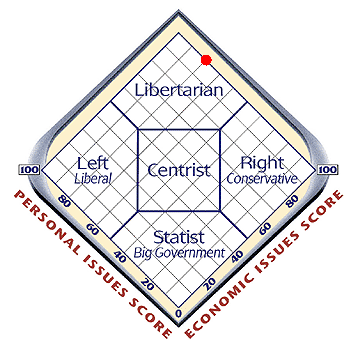


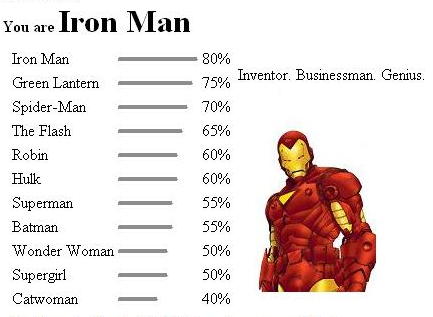





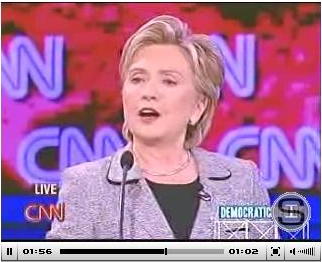
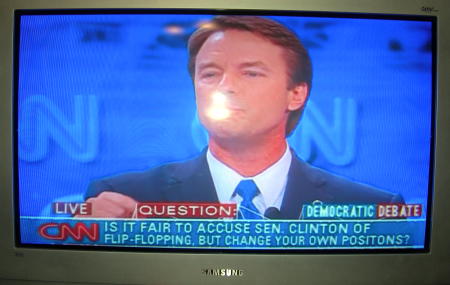

 I think Hillary is going to do well in Iowa. According to