


|
|
|
 Sunday, September 30, 2007
Mahmoud Ahmadinejad, leading Queer Theorist?
Sorry about the bad taste in the title. I realize it's a bit like chuckling over the irony of Eichmann being considered a "Jewish expert," but the whole sordid Ahmadinejad affair has caused such a cognitive disconnect that it reminds me of a debate between advocates of gay marriage and advocates of sodomy laws. What shocks me the most is the way so many people leaped to the defense of a man who not only denies the Holocaust while advocating another one, but who has the blood of Jews, American soldiers, gays, women stoned to death, and more on his hands. A morally indefensible man was given a propaganda opportunity, and as the LA Times makes quite clear, he has walked away the winner: Bollinger clearly had an American audience in mind when he denounced the Iranian leader to his face as a "cruel" and "petty dictator" and described his Holocaust denial as designed to "fool the illiterate and the ignorant." Bollinger's remarks may have taken him off the hook with his domestic critics, but when it came to the international media audience that really counted, Ahmadinejad already had carried the day. The invitation to speak at Columbia already had given him something totalitarian demagogues -- who are as image-conscious as Hollywood stars -- always crave: legitimacy. Bollinger's denunciation was icing on the cake, because the constituency the Iranian leader cares about is scattered across an Islamic world that values hospitality and its courtesies as core social virtues. To that audience, Bollinger looked stunningly ill-mannered; Ahmadinejad dignified and restrained.Via Glenn Reynolds. It bothers me to see the debate framed as being about free speech. Or politeness. Here's Mark Bowden: ....I am no fan of Ahmadinejad. I have written about him in this column and in my book Guests of the Ayatollah, where I noted his central involvement in the criminal seizure of the U.S. Embassy in Tehran in 1979. Ahmadinejad is a dangerous zealot and the public face of a ruthless and oppressive regime that has enforced its own narrow and reactionary religious rule in Iran for more than a quarter of a century. He is given to buffoonish displays of ignorant hostility toward Israel and even modern history. He is by any measure an enemy of the United States and of the most basic values of Western society.Yes, it was rude, and it probably did play into the hands of Ahmadinejad's propaganda machine. (Something which could easily have been avoided by not inviting the SOB in the first place.) But again, focusing on manners strikes me as a little creepy, and a bit misplaced if we take into account the overall circumstances of Ahmadinejad.
"Ahmadinejad was right, you see? There are no gays in Iran. Just ask the Queer Studies Department."I don't doubt that Ahmadinejad is delighted to have generated a serious academic debate over homosexuality, and it is still raging. Glenn Reynolds links this post by David Bernstein discussing the views of a Columbia professor who argues that: .... there are no homosexuals in the entire Arab world, except for a few who have been brainwashed into believing they have a homosexual identity by an aggressive Western homosexual missionizing movement he calls "Gay International." The article is called, "Re-Orienting Desire: The Gay International and the Arab World," and it appears in Volume 14, issue 2 of the journal Public Culture, and was elaborated upon in a book, Desiring Arabs, published by University of Chicago Press (UPDATE: BTW, I read the article, which is accessible through my GMU library account, but not the book). According to the author, "It is the very discourse of the Gay International which produces homosexuals, as well as gays and lesbians, where they do not exist" (emphasis added).I'm sure that a good defense of the author's thesis could be made too. In theory, I might be willing to venture such a defense, but I'm not about to take my cue from a murdering tyrant who believes in executing homosexuals -- whether "homosexuals like in your country" or homosexuals like in his country. Much time is devoted in the comments to arguing over what is and what is not homosexuality. While this is a topic to which I have devoted a good deal of time since the beginning of this blog (yes, I do care about it), I think it's pretty sickening that the debate has been occasioned by a man who believes in executing people for participating in homosexual acts. I mean, we can argue till we're blue in the face about whether a guy who has sex with a guy is gay, or bi, or just doing his thing for reasons known only to him. But if he's blue in the face from dangling at the end of an Iranian rope, isn't that the larger issue here? Isn't the point that there's no sexual freedom in Iran? David Bernstein thinks so: The issue of homosexual identity is surely a fascinating one, but I would emphasize (1) it's possible to claim Western origins for modern homosexual identity without one's writing dripping with disdain for the gay rights groups that work to advance sexual freedom in Arab countries, where severe punishment for homosexual activity is common; (2) either one finds both Ahmadinejad and Massad to be engaged in respectable commentary on the differences between the Arab/Muslim world and the West re sexual orientation, or neither; and (3) the critique I linked to strikes me as quite sound, and written by an expert on the subject.I agree. Anyway, I don't think Ahmadinejad raise any new or important points when he said there were no homosexuals in Iran. And even if I thought he had, it wouldn't mean that anyone -- least of all myself -- was under any duty to address them. (Again, I say this as someone with a longstanding interest in the matter.) It's a legitimate topic, but I think it's rather unsettling to have to parse a murderer's words and judge their theoretical meaning according to the trends of the latest Post Modernist jargon. Yeah, I'll probably be called an angry right wing nut (or maybe a "Cheeto-stained piece of chickenshit") for it, but this picture makes me feel inclined to do to Ahmadinejad what his regime did to these two men.
The reaction of the Queer Studies Departments seems to be intellectual handwringing. (Like asking "Why do they hang us?") MORE: This video explores the possibility that there may be personal issues involved. Via Glenn Reynolds, who expresses his hope "that the image of Ahmadinejad in a slinky red dress atop the piano gets plenty of circulation with the folks back home." I'm all too happy to oblige with the imagery.
Every little bit helps.
And once he admits his denial, he's got the problem half licked! UPDATE: My thanks to Glenn Reynolds for the link, and welcome all! Glenn also links this post from Jeff Goldstein about Burma, and the trivialization of evil, assisted by the stultifying moral flattening which accompanies pacifism. (And hey, if Ahmadinejad and his propaganda victory is a joke, why take the savage repression in Burma seriously? I'm sure that many Columbia students see no difference between Bush, Ahmadinejad, and the brutal regime currently ruling Burma. Jeff links his earlier post about the Ahmadinejad, with a link to video showing students applauding. They'd probably applaud a Burmese government spokesman too. Glenn also links Ron Rosenbaum, who notes the failure of so many to express outrage (and who links this chilling discussion of Ahmadinejad's holy nuclear agenda). Instead of expressing outrage, they're congratulating each other for being tolerant of free speech. And as Rosenbaum notes, for being brave: And what's equally laughable is their belief that their arguments, their rhetoric their desire above all for dialogue will make a differnce in a kumbaya way, to the victims of a theocratic Stasi-like state.I suppose that some of them think it's brave to applaud. Here's Jonathan Last in today's Philadelphia Inquirer: When Ahmadinejad began his remarks by swinging back at Bollinger, several in the audience actually applauded him. More applause occurred when he called for Palestinian self-determination (which is, in itself, curious, since Palestinians have recently self-determined that they want to be led by the Iran-backed terrorist group Hamas). When Ahmadinejad claimed that Iran was the victim of U.S.-sponsored terrorism and was "the first nation that objected to terrorism," there was even more applause. When he defended Iranian executions by asking, "Don't you have capital punishment in the United States?", more applause. When he said that nuclear weapons go against "the whole grain of humanity," more applause. When he suggested that George W. Bush was "retarded," more applause. And when he finished his performance, there was another spate of applause, just for good measure. How hospitable of them.While I don't mind ridiculing him (and "showing" him), I suspect it will take more than that to deter his goal of religious-based nuclear annihilation. UPDATE: Sean Kinsell links this post (thanks Sean!) with an interesting discussion. Be sure to read it. posted by Eric at 03:18 PM | Comments (5)
| TrackBacks (0)
Spare the switch and spoil the lock!
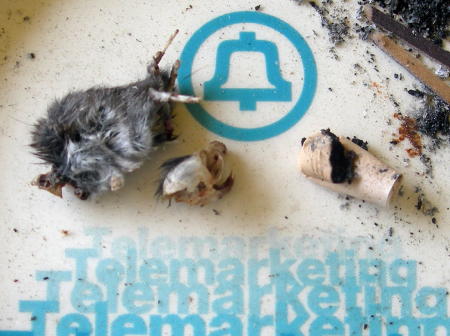
A maddening little mini (and I mean that literally) crisis earlier sent me scurrying onto the Internet in search of solutions. An SD memory card flat out refused to work properly, as the camera kept refusing to take pictures: "MEMORY CARD LOCKED"was the irritating error code. Looking closely, I saw that there was no sliding memory lock tab, which had borken or fallen off. Hardly surprising, as this is one of those SD sticks which hinges in the middle so when you fold it, it doubles as a USB memory stick. Probably, the whole thing is cheaply made, for the tiny plastic slider is too close to the hinge, and it must have fallen off during one of the insertions. There was no finding it and sticking it back in, as these things are barely larger than a grain of sand. I nearly drove myself crazy pulling another teensy slider lock out of a freebie 16MB card which came with my camera and will never be used, and imagine my chagrin when it didn't fit a card from another manufacturer. Initially, I thought the switch was actually a switch that did something inside the card. Not so; it turns out that it's just an indicator akin to the tabs in VHS cassettes, which switches an actual switch inside the camera. The latter looks for the correct gap and if it finds it, the SD card "locked"; if it doesn't find it, it's unlocked: "The switch / notch works in same way as the notches on compact audio cassettes and videotape cassette tapes or floppy disks. A closed or covered notch is writable, while an open notch (or removed tab) is protected.The old "Scotch tape" cure solved the problem for me! Here it is; larger than life:
posted by Eric at 11:50 AM | Comments (0)
| TrackBacks (0)
Panic In Iran
I think it is time to digest the results of the Israeli air raid on Syria that happened on September 6th and see how it has affected Iran. Let us start with an early report from the Guardian. Syrian air defences opened fire on Israeli aircraft that violated Syrian airspace overnight, a Syrian military spokesman said today.We can see from the report that the Israeli planes covered quite a bit of Syrian territory. We also know that none of the planes were shot down. In addition there are unconfirmed reports of Israeli commandos on Syrian territory. LONDON (Reuters) - A British newspaper said on Sunday Israeli commandos seized North Korean nuclear material in Syria to help secure U.S. approval for an Israeli air strike that destroyed a suspect weapons plant on September 6.About a week after the attack some North Koreans visited Syria. ROME (AP) - A senior U.S. nuclear official said yesterday that North Koreans were in Syria and that Damascus might have had contacts with "secret suppliers" to obtain nuclear equipment.Interesting. However not only were North Koreans in Syria, but also Syrians were meeting with the North Koreans in North Korea about a week after that. SEOUL, South Korea, Sept. 22 (AP) -- North Korea's No. 2 leader met with a Syrian delegation in Pyongyang, the North Korean capital, on Saturday, the North's media reported, amid growing international concerns about weapons technology cooperation between the countries.Just hangin' with the homies I guess discussing the plans for the next partay. Some people have a different idea about what might have been discussed. On September 6, 2007, something very important may have happened in northern Syria near the Turkish border. It is believed that Israeli Air Force (IAF) F-16s and F-15s attacked a site in Syria that may have had nuclear material. What is alarming is not the increase in tensions from Syria and Israel, but the silence that exists on both sides. Complicating matters is the contention that North Korea is involved in Syrian nuclear ambitions.Well, well, well. Most interesting. Most interesting indeed. Even more interesting is the Russian connection. Military experts conclude from the way Damascus described the episode Wednesday, Sept. 6, that the Pantsyr-S1E missiles, purchased from Russia to repel air assailants, failed to down the Israeli jets accused of penetrating northern Syrian airspace from the Mediterranean the night before.Looks like all the old gang is back together again, eh comrades? Evidently Iran is none too happy about the failure of the Russian eqipment to defend Syrian airspace. September 28, 2007:We now come to the heart of the story. The reaction of the Iranian government and their military. "Everyone in the government and military can only talk of one thing,' he reports. 'No matter who I talked to, all they could do was ask me, over and over again, 'Do you think the Americans will attack us?' 'When will the Americans attack us?' 'Will the Americans attack us in a joint operation with the Israelis?' How massive will the attack be?' on and on, endlessly. The Iranians are in a state of total panic.'Now comes the speculation part. By showing that the Russian equipment can't defend Iran, American and Israeli forces have tipped their hand. Iran is probably scrambling madly with Russian assistance to fix what ever the problem was. This means that if American or Israeli forces are going to attack Iran, their attacks must come soon. Probably within the next month or two. Cross Posted at Power and Control posted by Simon at 07:27 AM | Comments (0)
| TrackBacks (0)
Women Of The Israeli Army
More Women of the Israeli Army Cross Posted at The Astute Bloggers posted by Simon at 05:13 AM | Comments (12)
| TrackBacks (0) Saturday, September 29, 2007
Agreed. Freedom can be nauseating.
Via Glenn Reynolds, a perfect example of what should not be illegal, but which makes me sick. If wanting to keep such disgusting things legal is part of my "freedom fetish," then all I can say is there's nothing sexual about it. posted by Eric at 06:14 PM | Comments (2)
| TrackBacks (0)
Khat. Not a problem until laws made it one.
Most of the readers here know what I think about the Drug War. I'd like to end it, and I'd love to roll back the drug laws -- not all the way to the Middle Ages, but to the days when my father was a kid. Say, back to 1913 -- the year Stravinsky's "Rite of Spring" was first performed. It seems that in the haste to modernize the world, busybodies decided that the government ought to get into the business of deciding not only how much of our money we're allowed to keep, but what we are allowed to put in our bodies. In a flurry of "progressive" legislation, they abolished the founders' taxation philosophy with the 16th Amendment, changed way the Senate is elected with the 17th Amendment, passed the Harrison Narcotic Act, and then finally enacted Prohibition with the "telltale" 18th Amendment. At least income taxation, the Senate change, and Prohibition were enacted in a constitutional manner; the criminalization of drugs was simply unauthorized Big Brotherism, and probably the biggest single leap towards Nanny State government that the country had yet seen. I realize that people disagree with me on the drug war, and I know that repealing the laws is almost utopian thinking. But do we really need to be expanding them? An innocuous shrub with relatively mild effects, Catha edulis (known as "khat") has been chewed for countless centuries, mainly in the Mideast. Its effects are similar to drinking strong coffee, and it has never caused any major problems anywhere. Had it not been for the Gulf War (and the war in Somalia), the only Americans who even knew about it would have been Mideast scholars and a few travelers. But servicemen discovered it while they were over there, and one thing led to another. In 1993, headline-grabbing bureaucrats added it to the endlessly expanding "Schedule 1" controlled narcotic list. And so today I opened the Inquirer to see a scare headline -- "Exotic shrub a choice of cabbies. Seizure of 'khat' a first encounter for Phila. police." I don't know whether the idea is to get us all on board with more anti-drug hysteria and yet another newly created criminal problem, but I do so tire of reading -- and blogging -- about these things. Yet if I don't complain, who will? So, on to the "problem": An ancient drug has found a new illegal market in Philadelphia.I guess it's necessary to stir up the mommies, and in the interest of "society" to have them worry that junior might be chewing something which "may have moved outside its traditional market." Whether it has, who knows. Soon it will, because in our monkey-see, monkey-do culture, all you need to do to stimulate interest is make something illegal, run a few scary looking articles, and every young delinquent looking to be cool will line up to be the first on his block. Voila! More laws mean more crime! (But surely they knew....) The active chemicals in khat - which predates coffee - are ingested by chewing the leaf or brewing it as tea.No, it's not banned because it contains cathinone; it's banned only because the U.S. troops brought some back and the busybody bureaucrats who wanted more power were shocked to learn that a little known shrub which might keep you awake was not illegal. Cathinone is a powerful Schedule 1 narcotic under federal law, and cathine is a less potent Schedule 4 narcotic.Yes, and what the article fails to point out is that the study ranked khat as less dangerous than alcohol and tobacco. Furthermore, khat is a cultural tradition, and persecution of khat users runs afoul of now-traditional multiculturalism! (Hmm... There might even be a religious issue, akin to peyote. Um, yes, there was. But it wasn't explored.) Anyway, color me unimpressed by the "danger" factor. But there's the newly inflated "street value": The 740-pound khat seizure has a street value of $140,000 compared with $100,000 for a kilo - or 2.2 pounds - of cocaine, said Horne.Is it really worth that? I don't think it should be, but if it is, we have the DEA, drug hysteria, and a newly manufactured black market to thank. I really think that if tobacco and coffee were newly discovered and brought back U.S. troops, they'd be put in Schedule 1 by the geniuses who want to run our lives. The fascinating thing about khat is I have seen it go from no problem at all to a front page headline "problem" with all the "street value" nonsense that goes with it, in just 14 years. The War on Khat strikes me as the Drug War in microcosm. UPDATE: As a commenter has pointed out that khat can have side effects, it's worth noting that reports of psychosis are rare. Should exceptional reports of psychosis be enough to justify adding a substance to the drug war? Well, what about the numerous studies confirming caffeine psychosis? posted by Eric at 06:06 PM | Comments (13)
| TrackBacks (0)
Waiting For The Man
Here is a nice Velvet Underground clip complete with psychedelia. I saw them live at Winterland when The Velvet Underground and the Grateful Dead were on the same bill many years ago. Gone are the days. posted by Simon at 03:34 PM | Comments (1)
| TrackBacks (0)
Prevent Global Warming - Bring Back Slavery
First let me introduce you to a man you ought to know. Tim Flannery, named the 2007 Australian of the Year for his work in alerting the public to the dangers of global warming, said the issue was the greatest challenge facing humanity in the 21st century.So what does our brilliant Mr. Flannery have to say about other dangers of runaway global warming from CO2? Something pretty strange even for a climate scientist. We really did not understand climate change until recently. That was largely a result of the computer models that we were relying on for vital data. These computer models were inherently conservative and a lot of the feedback was biased as a result.An example of this can be found in the way that data on the relation of global warming to hurricanes was projected. In 2004, the computer models predicted that global warming would increase hurricane activity by 20% by 2080. The next year Hurricane Katrina devastated New Orleans. With new computer models available to us, we have been able to measure the increase in the energy produced by hurricanes over the last three decades and we now know that it increased by 60% during that period. There is no way that this rise can be accounted for by hurricane cycles.Can some climate scientist explain how a really warm Arctic 55 million years ago explains current CO2 caused warming? I suppose it could if you assume natural cycles. However, I don't think Mr. Flannery would agree with that. This is craziness. In any case Mr. Flannery knows what to do. The more I think about it, the situation is like that of the people who launched the anti-slavery campaign in the late 1700's. One of the group's leaders, William Wilberforce, is a great hero of mine. When they began their efforts, people were getting rich by degrading the lives of the slaves brought over from Africa to work on the plantations in the West Indies and America. It must have seemed hopeless at first, faced by the opposition of corrupt parliaments and wealthy merchants and planters. Yet, these Abolitionists changed the world by the force of their moral argument and I believe that moral argument will win the day and lead to solutions for global warming.So what is he proposing? A return to slavery to prevent global warming? Pretzel logic. Cross Posted at Power and Control posted by Simon at 11:52 AM | Comments (3)
| TrackBacks (0)
Moral equivalancy? Or just wishful thinking?
I don't know, but this morning's cartoon (from the editorial page of the Inquirer, but once again, not from the web site!) gave me a chuckle:
Tough to tell whether they're just taking advantage of a handy opportunity to ridicule both men at the same time, or whether there's a larger comparison. If it's the latter, I'm reminded of something I've been saying for at least a year: Whenever two apparent adversaries agree with each other, it worries me. Right now, I see agreement along the following lines:By "apparent adversaries," I do not mean Iran and the GOP, of course, but the activist netroots on the left and the anti-gay "sex war" faction of the GOP.RESOLVED: Gays do not belong in the Republican Party. Of course, the idea may just be to compare Ahmadinejad and Craig, and not Iran and the GOP. Either way, I think it's a bit of a stretch.... Speaking of Iran, last night I watched an early 90s film which I do not believe could be made today -- "Not Without My Daughter," starring Sally Fields as an American woman tricked into moving to Khomeini's Iran with her disguntled, deceitful -- and ultimately physically abusive -- Iranian husband, who will not allow his wife and their American daughter to return to the U.S. She finds herself helpless and literally a prisoner of her husband's hostile and paranoid family, and finally risks her life to venture a hazardous escape through dangerous countryside. Her complaints about the forced veiling, the religious brainwashing inflicted on her daughter, the backward and primitive Iranian theocracy and its brutally sexist religion would probably not be presented sympathetically in a major Hollywood film today. After all, today's Iranian rulers, well yes, they're a little backward.... But aren't they really just misunderstood and comic, along the lines of Larry Craig?
posted by Eric at 08:57 AM | Comments (2)
| TrackBacks (0) Friday, September 28, 2007
Dr. John Beresford Has Passed
Dr. John Beresford has died. Dr. John Beresford died on September 2, 2007 in a hospital in Canada. British-born John Beresford began his psychedelic research interests in 1961, when he resigned his post as an Assistant Professor of Pediatrics at the New York Medical College and founded the Agora Scientific Trust, the world's first research organization devoted to investigating the effects of LSD. In contrast to Leary's invitation to "tune in, turn on and drop out," Beresford wanted to keep LSD in proper perspective as a tool of scientifically trained specialists.In 1999 I republished an article Dr. Beresford wrote comparing the Drug War to Nazi Policies. In his honor I'm republishing the article. The Nazi Comparison by Dr. John Beresford Drug War prisoners that I correspond with call themselves POWs. Some write "POW in America" in the corner of an envelope under the writer's name and prison number. "Political prisoner" and "gulag" are terms that enter conversation. Solzhenitsyn's The First Circle and The Gulag Archipelago are works sometimes referred to. America's vast network of prisons, boot camps, and jails invites comparison with the detention machinery of former totalitarian regimes. The certainty of conviction that an accusation of a drug law violation brings -- through confession ( 95 percent ) or trial and a finding of guilt ( the remaining 5 percent ) -- matches the idea of automatic conviction that goes with popular belief about the nazi and communist systems. "Nazi" is a term used by Drug War prisoners and non-prisoners alike, as though it were a given that the mentality behind Nazi behavior a half-century ago and the operation of today 's Drug War is no different. The comparison is an uncomfortable one, and one's first inclination is to reject it. A US judge has objected that nothing in the conduct of today's Drug War resembles the terror tactics in Nazi Germany where SS troops could storm into a person's home and no one saw or heard of that person again. The objection is understandable, but it rests on a false premise. The Nazis were not a bunch of crooks, operating outside the confines of the law. Everything they did had legal backing, and if on some occasion a law was needed they composed one. Flat out, it will be objected that a world of difference separates a prison from a death camp. Drug War prisoners are not intended for a holocaust. Ominously for our peace of mind, however, until the last minute neither were the people held in concentration camps. They were held there to protect the health of society. Moreover, with the obsession with death that gains ground daily, it is probable that death is in the cards for people accused of drug law violations in the future. A questionnaire is making the rounds in Congress that has Yes and No boxes for questions which include: "Do you favor the death penalty for drug trafficking?" Who in their right mind in Congress, I wonder, will check No to that question, "trafficking" being the loaded term for what most people call dealing? Someone will point to the absurdity of thinking that America would ever tolerate a "Fuhrer," a wild man with a funny mustache and a way of haranguing crowds burlesqued by Charlie Chaplin. The point, though, is that the Nazi comparison refers not so much to rhetoric, inevitably different in two quite different places and at different times, as to the dehumanization and trashing of large numbers of people for lifestyles and practices that violate the norms of mainstream society. For this we do not need a Hitler. We can do it the American way. Myself, I am sympathetic to the Nazi comparison. I was in Nazi Germany as a child. In the summer of 1938, when I was 14, my parents sent me on a two-week vacation with a family in a village in north-west Germany. There were Mr. and Mrs. Otting, their daughter Irmgard, and the youngest son Wolfgang, who wore his Hitler Jugend uniform at Wednesday night meetings. The two older sons I never saw. One was in the army. The other was doing two years of voluntary farm labor, which excused him from army service. Mr. and Mrs. Otting were old-time Christians, and had the family bible on display in the china cabinet in the dining room. On the shelf above the Holy Bible you saw the red and white dust jacket of Mein Kampf, Hitler's version of scripture. No one said anything about it, but there had to be a copy of Mein Kampf on display for two reasons. Every five or six houses or apartments had an informant who could sift through mail, collect gossip, and pay a visit to make sure the householder did not have suspicious material lying around. Also, schoolchildren were taught to report suspicious behavior to the police. There wasn't any TV, but there was plenty of entertainment -- parades, outdoor concerts, Hitler on the radio, sports. The economy was great. Everyone had a job. Germany was strong. Hitler wanted peace. New construction was going up everywhere. The trains ran on time. You didn't see beggars in the street, hanging around. Undesirables had been rounded up, got out of the way. The newspapers were full of praise for the Nazi system. A weekly periodical with pictures showed who the Untermenschen were, the underclass of people who had no place in decent society. In those days the underclass consisted of gypsies, Jews, homosexuals, the wrong sort of artists, trade unionists, and communists. They were described in terms we now call demonization and scapegoating. The universities had their share of academics who endorsed Nazi policy. Doctors, engineers, race specialists, and others spelled out theories which gave the Nazis a green light. At 14 I was barely aware of all this. Yet by the end of my two weeks with the Ottings I had a feeling that to this day remains hard to describe. I took this feeling home to England, where I promptly forgot it. It wasn't the sort of feeling you had there. I didn't have it during the war, which started the next year. I didn't have it when I studied medicine, emigrated to America, became an American citizen, and lived in New York for 20 years. I didn't have it in Canada, where I practiced psychiatry for 15 years. I didn't have it when I retired from practice and spent time in a Buddhist monastery. On and off, I would read about Nazi Germany, but the feeling that I had when I was briefly in Nazi Germany as a child had gone. In the fall of 1992 an ad appeared in the personal column of High Times Magazine, sent in by Brian Adams. Brian wrote that he was 18 years old, just out of high school, when he was arrested and sentenced to ten years of imprisonment for passing out LSD to his friends. If a High Times reader was interested in LSD sentencing methods, the reader could write to Brian and learn something. I wrote to Brian, who introduced me to Tim Dean, who introduced me to other LSD prisoners and soon I was in the thick of a correspondence which has not stopped growing. In 1993 I began to visit Drug War prisoners in prison. I drove to the Canadian border, crossed into the United States, and talked with Pat Jordan in County Jail in Nashville, Tennessee. I drove to Michigan City to talk with Franklin Martz, sentenced to 40 years in the Indiana State Prison in that city. I drove to other prisons to speak with Drug War prisoners, paying attention to the information they provided. That started my Drug War education. One day something happened. I realized that every time I left the monastery and entered the United States I was struck with a weird feeling that left as soon as I re-entered Canada. I couldn't put my finger on it, but it was as real as day. When the meaning of this realization dawned, it hit me like a ton of bricks. The feeling I had acquired in Nazi Germany and forgotten more than half a century before was back. My Drug War education had clicked in. The feeling told me everything. The exponent of democracy had fallen on hard times. America was treading the same path as Nazi Germany. The War on Drugs and Hitler's war on anyone he took exception to -- the symptoms in the two cases were identical. One thing I had to accept was that I could not stay on in the monastery. I could not sit back and watch disaster unfold. I had to get out in the world and become an activist, whatever becoming an activist entailed. Even if no one else saw the War on Drugs in the same light I did, I had to do what might lie in my power to stop it. I won't go into what has happened since, except to mention a friendship with Nora Callahan and a tie to the November Coalition. It is a relief to know that others share the perception that historically we are in big trouble, without their having once glimpsed life in Nazi Germany. Where it will end, no one can say. But there is reason for hope. In 1938 people in Germany did not know the price they would soon pay for subscribing to Nazi policy. We, looking back, do know. With the benefit of hindsight and with concerted effort we may still halt the juggernaut, free Drug War prisoners, reverse an unsalutary policy, and restore meaning to the words "liberty and justice for all." If we don't, we will have no one to blame for the disaster that lies just around the corner but ourselves. Cross Posted at Power and Control posted by Simon at 05:23 PM | Comments (26)
| TrackBacks (0)
As heard on XM Radio!
I don't know how many readers listen to XM Radio, but last night I was a guest on XM's POTUS '08 radio show. Hosts Tim Farley and Rebecca Roberts couldn't have been nicer (despite my limited radio experience), and I chatted about blogging, the debate, and the candidates. What's incredibly cool about this is that POTUS '08 is also the home of the new Pajamas Media Radio Show. The show's producer Cameron Gray happens to be an old friend, and it was great to see him again and catch up. Cameron expressed interest in meeting La Shawn Barber (who was featured on CNN the other day) so they could interview her, and I couldn't have been more delighted to make the introduction. I only wish I could have heard their entire show, but I was buried in my laptop, which wasn't configured to stream XM radio. But I'm planning to be a regular listener. Bear in mind that you don't need to run out and buy satellite equipment in order to listen to XM Radio; it is Internet-streamable, and they're running a free trial offer right now. MORE: Via Media Bloggers Association's Robert Cox, a photo of live radio!
AND MORE: Yow! Glenn Reynolds links this post and says I should have my own show??? (But I always thought I had a voice made for blogging!) posted by Eric at 11:53 AM | Comments (4)
| TrackBacks (0)
The most interesting part of the debate
(And how it might have been improved....) My liveblogging skills are not what they should be, and that is mainly because my typing skills are not what they should be. And now for my "blame a bad childhood" defense: I didn't grow up at a keyboard the way a lot of younger people have, and when I was in high school, essays were hand-written save the occasional "project" which required typing -- a special skill often farmed out to others for money. Even as late as 1982 when I took the California bar exam, essays had to be written out by hand, and there were no computer terminals to use. Although there was a "typing room" for old-fashioned typewriters, a minority of test-takers used it. In high school (which is when one normally learns these things) computers were a big deal, reserved for the super nerds only. Remember, this was the late 60s and early 70s; my school had what was called a "computer room" but that wasn't a computer in the modern sense, and I'm not even sure it was a true computer, because in order to use it you had to not only know what you were doing, but reserve "computer time" -- which meant that it called the "real computer" located somewhere else. This was a big deal, and if you didn't know what you were doing, they wouldn't let you use it. I actually did look at it once, it had a telephone dial, and spat out computer tape which looked like a long strip with lots of tiny nonsensical holes. Hardly the sort of thing which would have inspired typing skills. I never learned to type, and when I worked as a lawyer, I had a secretary. I didn't start going online until 1994, and I found myself hunting and pecking, and over the years I got faster at it until I don't need to look at the keys all that much. I'm therefore self taught, but typing is a second language, and I'm slow. Last night, I was barely able to keep pace with the debate's questions and answers, and I kept noticing and impulsively correcting errors, which gave me no time to think or evaluate. It felt as if I was a scribe, and a semi-literate one at that. For me the most interesting part of the debate was not the debate at all -- but the opportunity to interact with other bloggers and see old friends. I met up with a number of old friends. Here I am with La Shawn Barber:
And here are the people most responsible for my being there last night -- Newsbusters' founder Matthew Sheffield and Media Bloggers Association's Robert Cox:
And here's the great blogger and video producer extraordinaire Ian Schwartz with Matthew Sheffield:
OK, now for what would have been a very exciting topic for the debate. One of the questions (asked by PBS's Ray Suarez) concerned the death penalty. Suarez: Congressman Paul, support has gradually been slipping for the death penalty among all Americans. The Pew Forum on Religion and Public Life reports a large minority of whites still support capital punishment, while Blacks and Latinos do not.This would have been an excellent opportunity to point out something of which only a few bloggers are aware -- that debate moderator Tavis Smiley had called George W. Bush a "serial killer" for carrying out the death penalty as Texas Governor. Ian Schwartz posted about it, and Newsbusters links the original Smiley remark, made on the Geraldo Rivera show on October 24, 2000: Geraldo Rivera found someone more extreme than himself, a star of another cable network's evening interview show, who told Rivera: "As far as I'm concerned, Bush in Texas is nothing more than a serial killer."In a later post, Tim Graham notices that this extreme show of bias is being completely ignored by people who ought to know better, like Newt Gingrich: Does Gingrich think that's "responsible" commentary?I'm not expecting any more of an answer from Newt than Matt Sheffield got from Smiley last night. Maybe it's because I'm a pit bull owner, but I admire spunk, and I really enjoyed watching Matt elbow his way past the hordes of fawning reporters to get right up to Tavis Smiley and ask him about the serial killer remark. Smiley's response was pure politics, and zero journalism: "I never said that."Not to be so easily outdone, Matt scurried back to his laptop, and came running back with the details of the quote. Once again, Smiley the pure: "I don't remember saying that."Moments later, the questions were over! Smiley's security assistant put one arm behind his back, opened the door and Smiley was hustled out of there the way I've seen many a politician being hustled out by his "handlers." I'm sure that Smiley thinks no one will ever notice, but I did. A lowly blogger (or, a "citizen journalist" as the big guys sometimes grudgingly allow) dared to ask the reigning media figure of the evening about what he said which goes to the heart of his political bias (and which was clearly relevant to an important question in the debate), and he first issued a flat out denial, then backtracked to not remembering, and then he was out of there. A seemingly insignificant matter? I don't think so. I see it as a classic example of what blogging is all about. Tavis Smiley would have everyone believe that he is the guy who talks truth to power, yet here he can't even acknowledge the truth of what came out of his own very powerful mouth. Who are the politicians? Who are the journalists? Here a guy who presents himself as a "man of the people" style journalist behaved as a classic prevaricating politician, and the real journalist was Matt Sheffield. Once again, I think it was very disappointing that the leading GOP candidates failed to show up. While it's not much of an excuse, the fact is that they did behave in the way politicians often behave. So what is Tavis Smiley's excuse? Should I just consider him another politician? He certainly walked, talked, and acted like one. (Sure, he's not elected but he behaves as if he's a member of the ruling class.) It must be galling for someone like that to have real journalism appear -- especially when it takes the form of a blogger asking uncomfortable questions. UPDATE: Via Matt Sheffield, Ian Schwartz got the video of Smiley being asked the question by Matt, and his haughty reply -- the exact words of which are quite specific: "I have never called President Bush a serial killer," Smiley asserted. "I don't know what you're talking about."Here it is: Adds Matt, When confronted with an exact citation (October 24, 2000 on CNBC's "Rivera Live," Smiley became far less definitive. "I don't ever remember saying that," he said. Smiley left immediately thereafter.And also via Matt, the video of Smiley's orginal remarks. Calling a future president a "serial killer" on national television shortly before an election is not the sort of thing most people would forget saying. (Not that I much blame Tavis Smiley for wanting to forget.....) MORE: I'm glad Ian Schwartz got this on video, because now that I've watched it, I think Smiley is the kind of guy who might actually try to deny that he ever gave the above answer. And now there's no denying the denial! My thanks to Ian Schwartz and Matt Sheffield for the links! posted by Eric at 10:50 AM | Comments (1)
| TrackBacks (0) Thursday, September 27, 2007
The debate starts (and I'll try to follow it....)
Tavis Smiley's opening remarks castigated the missing Republicans in no uncertain terms: Finally, some of the campaigns who declined our invitation to join us tonight have suggested publicly that this audience would be hostile and unreceptive. Since we're live on PBS right now, I can't tell you what I really think of these kinds of comments.... When we meet the six candidates who are here tonight, I know you will join me in showing them your respect.There was also discussion of Jena by Tom Joyner who argues that it evokes the struggle in Little Rock exactly 50 years ago. No word from any of the candidates yet. Tavis Smiley poses an initial question for the candidates, "What's the depth of your love for everyday people and what will be the quality of your service to them?" and introduces two of the original Little Rock Nine. And now it's Michael Steele.
Huckabee, Ron Paul and Sam Brownback are introduced to warm cheers, as are Tancredo, Hunter and Keyes. Question -- opening statements. 9:15: Huckabee: "I am embarrassed." Says he got 40% of black vote in Arkansas Ron Paul: Freedom and emphasis on Constitution, fruits of labor. Bring troops home. (Loudest applause yet.). Brownback says it's a disgrace they're not here. They talk about the base and this would be the way to broaden it. Suggests that black voters show their clout by registering and voting "for one of us" (meaning those who came to the debate.) This draws applause. Tancredo then draws applause by reminding audience that he was the only Republican candidate at the NAACP. 9:18: Hunter says he wants to talk about Iraq and the U.S. border. He wants their vote, but doesn't draw as much applause. Keyes gets in a dig at the candidates for not showing up at the values debate. (Which was the first debate he was included in) Says he was barred from the debate in Michigan. "At least one black person they're afraid of." Applause. Smiley cut him off before he finished. 9:21: Question posed: "WHAT POSITIVE LEGACY WILL YOU LEAVE?" Huckabee -- reminds voters that Eisenhower was president during Little Rock. Talks about the unfairness of drug sentences, and health care. Ron Paul -- a freer society equal justice, repeal of unfair drug laws, prosperity means property rights, stopping military industrial complex. (Loud applause.) Brownback -- rebuild the family, pushed that in DC, symbols are important. Would open African American Museum on the Mall. We need to pass an official apology for slavery and segregation. Tancredo -- destructive to talk only about race. Bad for all. Dscusses need to reduce immigration. Hunter -- reminds audience of Eisenhower. Need of all Americans to be shielded from pornography, but then says we need less regulation. (That's what he said.) Keyes -- there is no deep divide between blacks and whites. The moral consensus is that we are all created equal by God. We need to restore God, faith values. Raises voice and gets a bit emotional about need to restore moral values (he's again cut off) 9:29: Cynthia Tucker asks about high unemployment rate in black community. Huckabee -- there isn't equal opportunity. Those who try to lift themselves up get a heel on their back. Ron Paul -- prior to minimum wage laws there wasn't such inequality. Minimize taxes, wise foreign policy. No payroll taxes. Give them a chance to get ahead. (It sounds as if Ron Paul has paid applauders.)
Tancredo -- cannot agree with race baiting comments about why we have these problems. Blacks were moving up the ladder in the 1950s. What happened? One, the welfare state, and two, the importation of millions of low income workers who depress wages. Hunter -- Republicans reformed welfare, forced it on Clinton. Average incomes went up. 32% increase in employment. Did very well by breaking the cycle of welfare. (He's cut off) Keyes -- most important factor was the destruction of moral values. Black men find values in prison. Upbringing of children. Culture of promiscuity and selfish hedonism Marriage the most important thing. Keyes is yelling again, and he's cut off. (He's coming across as very shrill.) Immigration question What to do about the 12 million. Ron Paul -- don't just round them up; get rid of welfare state. Brownback -- (feed is getting lost) Americans want border secured. Workplace enforcement. No new paths to citizenship. Tancredo -- main question is what to do. Simply enforce the law.
Keyes -- border is matter of security. Remember why we lost control. Corporate interests want cheap labor. Black Americans hurt the most.
9:45: Juan Williams' question: criminal justice system. Mentions Jena 6. Name one criminal justice reform to ensure that young black and Latino Americans have equal justice. Brownback -- his bill would help. Tancredo -- too many criminal statutes (especially drug laws). It should be at the state level. (Actually sounds quite sensible.) Welfare state is a problem too. Hunter -- rules of law, accountability. Criminal accountability in Jena. Learn from the military. (Reminded that the question was not answered.) Trial by jury is the best system of justice. Keyes -- restore real local self government. Justices of the peace who live in the community. Young people not necessarily crooks. Make sure that communities agree to take prisoners back before they are released. Huckabee -- drug or alcohol problems. We have incarcerated people who need rehab. (He's right!) Quit locking up all the people we're mad at and lock up the people we're afraid of. More drug courts, a lot less incarceration. Ron Paul -- inner cities punished unfairly in war on drugs. 63% of prisoners. REPEAL WAR ON DRUGS! IT ISN'T WORKING! (Loud applause.) This is a disease. Cynthia Tucker asks about voting rights, DC statehood, and voter ID. Would it hurt minority voters? Tancredo -- no statehood for DC. Voter ID is not asking too much. (He gets applause.) Hunter -- would be more open for statehood if they allowed DC residents to own guns. Aliens are voting. Keyes -- DC belongs to nation. Maintain that symbol. Preserve it the way it is. Huckabee -- DC should be allowed to be a state. Photo ID needed. Ron Paul -- Thinks ID needed, but no national ID card. Brownback -- amend the Constitution for DC voting rights. 9:59: Health care issue. Hunter -- discrepancies should be addressed. Bring back family doctor, cut back on malpractice claims. Keyes -- Bring back the family. Support and encourage marriage and two parent household. Mental and physical health would improve. Health care linked to employment. Encourage entrepreneurship. Huckabee -- too much focus on intervention. Need to focus on prevention. Costs need to be controlled. Portability and privacy of records. Ron Paul -- managed care hasn't worked well. Too much corporatism and monopoly. Get the government out. LOUD APPLAUSE AGAIN. Brownback -- more markets, not more government. Tancredo -- look to selves, take responsibility, more individual freedom.
Asks What about Iraq? (Says blacks oppose it.) Keyes -- effort to defend all Americans. Our rights come from God. Goal is security. Huckabee -- not helping veterans. Need Veterans Bill of Rights. Veterans should get their benefits paid. Ron Paul -- shouldn't have war unless it is declared. False pretenses, no WMDs, attackers were Saudis. All the money is going overseas. We'll be bankrupt! (HUGE APPLAUSE.) Brownback -- we voted to go to war. Military is doing a great job, but the political situation in Iraq is terrible. Tancredo -- can't micromanage war from Congress. Hunter -- we can win and will leave Iraq in victory. Key to security is reliable Iraqi army. Make sure all Iraqi battalions get full tour, then return home in victory. QUESTION by Cynthia Tucker about Darfur genocide Huckabee -- talks about genocide of abortion. Ron Paul -- we have no moral authority. Food goes to enemy military. Come home from everywhere. Brownback -- I couldn't disagree more. We need to stand up against genocide. Can't repeat Rwanda. Tancredo said something, but I missed it Hunter -- troops get there late in Darfur. Teach villages self defense. Keyes -- we can't turn our backs on the universal mission of humanitarian and military order. 10:18 QUESTION about death penalty. Is it carried out justly? Ron Paul -- no longer believe in federal death penalty. Only the poor get it, not the rich. Brownback -- we need a culture of life. Difficulty with death penalty. Should be used very sparingly. Tancredo -- death penalty is a state issue, but supports it for treason. Hunter -- death penalty is a deterrent for some people. Keyes -- supports death penalty. Basis in universal justice. Respect for life. Huckabee -- dislikes death penalty. Had to carry it out. Sounds very sincere. It is not easy. Necessary part of criminal justice system, but needs to be administered with conscience.
Huckabee -- supports integration. Tancredo -- likes charter schools and voucher. Out of time! (Missed the last answer; the last question did not give time for anyone to answer fully.) Debate ends. Well, this is the first time I've done this, and while it's not my shtick, at least I can now say that I've done it. My feeling is that Huckabee did the best job. His sincerity was obvious, and he was very articulate as he spoke from the heart. Brownback came in second, and the rest, well, Hunter was sorta OK (although his pornography remark sounded almost bizarre), as was Tancredo, while Keyes and Paul sounded desperate and shrill. (I thought Keyes would be a little more articulate and reasoned, but he sounded almost defensive, and really seemed to be yelling.) Anyway, that's my fix on the evening. Again, it's a pity that the big guys were all no-shows. (Please forgive the typos that I know run all through this post!) posted by Eric at 08:56 PM | Comments (1)
| TrackBacks (0)
looking ahead in 1913
On Tuesday night I saw the Philadelphia Orchestra perform one of the all-time greatest symphonies ever composed -- Stravinsky's Rite of Spring. It'a hard to blog about something that has to be heard to be appreciated. Anyway, we've all heard bits and pieces of it, as it's been used in countless soundtracks, and anticipated countless others. The shower stabbing music in Psycho, the theme song from Jaws, and other similarly imitative music -- all finds origin in the Rite of Spring. At the time (1913) it caused quite a shock, even rioting broke out. I guess the blatant Paganism ("The pagans on-stage made pagans of the audience") and Nijinsky's manic dancing must have been something for a largely monarchical world still steeped in stodgy traditions. Philadelphia's conductor Christoph Eschenbach did a splendid job. I sat in row three, so I could watch the interaction between him and the musicians in ways I normally can't. Conductors are supposed to stay ahead of the actual music you hear, and being up close like that really gives the full sense of that lag. It would not be easy to stay ahead of what you're hearing, and I can't imagine how much time it must take to learn how to do that for every instrument in the orchestra. Of course, the Rite of Spring seemed to anticipate World War I, which came a year later, when the tension between the old and the modern finally exploded. Whether this tension was settled, though, is debatable. The Rite of Spring is "traditional" now, but I think it's still ahead of its time. posted by Eric at 08:42 PM | Comments (6)
| TrackBacks (0)
Waiting for the debate
Well, here I am at Morgan State University, more than four hours before the start of tonight's Republican debate, but I thought I'd get set up and test this thing. There's almost no one here to block my view of the live feed screen. Here's how it looks:
Nothing to report at all, and there won't be for quite a while. (Now that I've said that, maybe there wlll...) MORE: This and the rest of the posts I'm writing tonight will automatically be fed to the Media Bloggers Association Republican Presidential Forum. Here's a view from above:
posted by Eric at 04:23 PM | Comments (0)
| TrackBacks (0)
The Freddy Krueger factor and X rated candidates
Writing in today's Philadelphia Inquirer, Tavis Smiley (host of tonight's Republican debate) likens the no-show candidates to cautious children who are told never to talk to strangers: We all remember the words of parents or guardians who warned us never to talk to strangers. While that might be an important warning for small children who face danger and harm from lurking criminals, I'm not sure it's the best tactic for the people who want to lead the country.I agree it's not a good tactic. Parenthetically (at least, it's irrelevant to tonight's debate), this explains something that has long bothered me: kids who refuse to speak and who clam up when asked simple questions like "Where's Main Street?" It's as if their parents have taught them that every adult is a potential Freddy Krueger. I think the implicit assumption is being made that the GOP considers minorities to be potential Freddy Kruegers. While I see the point (as I said yesterday I think the candidates should all attend), an argument can also be made that the Republican right wing has been demonized so consistently as a group of evil white men that they, too, might be seen as potential Freddy Kruegers. Tavis Smiley doesn't buy the "schedule conflict" excuse, and neither do I: I'm sure the candidates all have pretty grueling schedules, and there have been quite a few public debates already - but isn't that part of the process of earning America's vote? In the most multicultural, most multiracial, most multiethnic America ever, should the president of the United States be elected without addressing issues of concern to communities of color - soon to make up the majority of Americans? I think not.To which I'd add that even if the audience is hostile, there's really not much of a downside. Assume that the Republicans face hostile questions and get booed for their answers. Some of the people sitting there will have more respect for them, whether they dare to display it or not. It takes a little spine to face a hostile crowd, though. And even more to do it and not get ruffled. But there's no indication at all that the crowd or host Tavis Smiley will be hostile. Obviously, he's not voting Republican, so there's probably a built-in political bias. But can't that be said of most mainstream media moderators? According to the web site linked by Tavis Smiley, here's what the lineup looks like right now:
If just one of the fearful Republicans who's currently rated "X" were to show up, I think it might very well amount to a campaign coup of sorts. I'll be there as part of the Media Bloggers Association, and the plan is to live-blog the event. (I'd just love to be able to report any surprise visit.....) posted by Eric at 09:12 AM | Comments (6)
| TrackBacks (0) Wednesday, September 26, 2007
Hurtful for me, but not for thee?
Much as I disagree with him, I'm fascinated by the idea that General Pace's latest remarks about gays in the military are "hurtful": "We need to be very precise then, about what I said wearing my stars and being very conscious of it," he added. "And that is, very simply, that we should respect those who want to serve the nation but not through the law of the land, condone activity that, in my upbringing, is counter to God's law."OK, for starters I disagree with General Pace's religious views about homosexuality. More than that, I disagree with his opinion that "the law of the land" ought not "condone" that which disagrees with his religious views, because I think that this elevates his religious views above those who disagree with them. (Which means that it would also tend to violate the Constitution.) But unless I have lost my ability to be logical, this amounts to a disagreement, does it not? Since when is a disagreement "hurtful" to anyone? The man stated his opinion, and it reflects what he says is his religious view that homosexuality is "counter to God's law." What makes that hurtful? Either you believe in God or you don't. If you don't, then why on earth would you worry about what someone says God says? And if you do believe in God, then you either agree with General Pace's interpretation of God's law or you do not. You might have a different interpretation, as I do. Suppose for a moment that you're a pagan, and you believe that your religious rights include the right to engage in what amount to sexual rites, including homosexual rites. (Rights are rites, right?) Would this be "hurtful" to others? If so, then religion is inherently hurtful. I don't think it is. Unless the goal is an orgy of mass delusions of persecution, I think people need to get over it. MORE: Can Hollywood be hurtful too? Read about the "Brokeback mountain of lies"! (Via Glenn Reynolds.) Shouldn't inclusion be a two-way street? posted by Eric at 11:09 PM | Comments (7)
| TrackBacks (0)
Bipolarizing the election?
I've noticed that a sure sign of when Hillary Clinton is in trouble (at least, when her campaign perceives she needs help) is when her husband steps in to help. Here's where she's in trouble: A leaked Democratic poll has suggested that Hillary Clinton, the frontrunner in the race for the party's presidential nomination, could lose the 2008 election because of her "very polarised image".And here's her husband, to the rescue: Clinton put on his best "angry face" during the clip. "This was classic bait-and-switch.... These Republicans that are all upset about Petraeus - this is one newspaper ad. These are the people that ran a television ad in Georgia with Max Cleland, who lost half his body in Vietnam - in the same ad, with Osama bin Laden and Saddam Hussein. That's what the Republicans did."The rest of the transcript follows at Newsbusters. Regardless of the reasons, it's kind of cute when Bill pretends to "lose his temper." The best "tantrum" in recent memory was when he played the role of "angry satyr" to Mike Wallace. This latest one doesn't quite rise to that level, but then, the election's still a long way away. Notice how Bill keeps baiting what he called the Republican "sliver" last year. (This time, it's the Swift Boat people, but the idea is that they're the right wing fringe, and "it" is in control of the party.) As 2008 strategy, I don't think they'll rely on Swift Boat bashing. What the Democrats most need this time -- especially the Clintons -- is the Republican War on Sex, and they are bound and determined to keep it going, by any means necessary. (A recent post I wrote on the subject drew a very angry response, which confirmed my suspicions.) I may be wrong, but I still think that more than anything, they want to run against Gingrich. That way, Hillary can claim to be the less "polarizing" candidate. Any successful polarization strategy, though, would require neutralizing moderates and political non-conformists. Now that people are in communication with each other, such a strategy would be a tricky business, and if it backfired, there could be unanticipated consequences. UPDATE: Here's Tammy Bruce: ....MM (the new SS) tapes and watches everything non-leftists do and say in the media.(From Gateway Pundit, via Glenn Reynolds.) Media Matters is of course a Clinton operation. (Not that there's anything newsworthy about that....) posted by Eric at 10:21 PM | Comments (2)
| TrackBacks (0)
"He just manages to find the buttons to push."
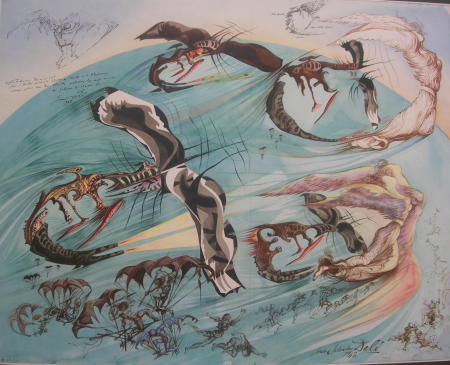
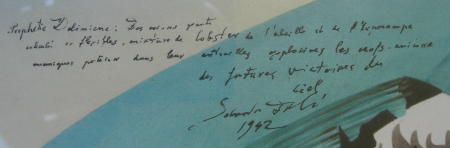
So said Philadelphia Art Museum curator Michael Taylor in a discussion of Salvador Dali: "He's so perverse and shocking and outrageous, and he gets people's knickers in a twist," Taylor commented. "He just manages to find the buttons to push."That is certainly true. The number of people who continue to hate Salvador Dali never ceases to amaze me. Every new generation that finds its way into art school is taught new reasons to hate him. A leading Dali dealer I know told me how much it amuses him to see young Dali fans who start out liking him, only to "learn" that they're not supposed to like him when they get to college and grow in sophistication. (It must gall the high priests of art to see Dali's work continuing to draw larger crowds than they think proper.) Not that there weren't plenty of reasons to hate Dali in the old days. Not only was he called a Nazi supporter (an absurd idea I've discussed previously), but he was slammed as an atomic war lover in the Soviet Encyclopedia: "If one is to believe the Bolshaya Sovetskaya Entsyclopedia (vol. 41, the article "Surrealism"), then 'the well-known representative of surrealism--the painter Salvador Dali--paints pictures extoling atomic war'. This is succinctly and expressively stated, but unfortunately it does not quite correspond to the truth. Dali does not extol any kind of war, and in general he neither extols nor passes judgment on anything. Salvador Dali, as is true of all surrealism, is a considerably more complicated phenomenon, although both are completely in conformity with the development of Western art. I don't intend to examine in detail the essence of this phenomenon, the ancestor of which is unquestionably Freud and his cult of the subconscious. I would only like to consider why museums and exhibitions which display abstract art are almost always empty, whereas there are always large crowds in front of Dali's paintings..."And the large crowds just won't go away. Must be galling for those who teach college kids that the drippings of Jackson Pollock are infinitely superior. As button-pusher extraordinaire, Dali even managed to push the buttons of the great George Orwell himself, who condemned Dali in the strongest terms imaginable: ...in this long book of 400 quarto pages there is more than I have indicated, but I do not think that I have given an unfair account of his moral atmosphere and mental scenery. It is a book that stinks. If it were possible for a book to give a physical stink off its pages, this one would--a thought that might please Dali, who before wooing his future wife for the first time rubbed himself all over with an ointment made of goat's dung boiled up in fish glue. But against this has to be set the fact that Dali is a draughtsman of very exceptional gifts. He is also, to judge by the minuteness and the sureness of his drawings, a very hard worker. He is an exhibitionist and a careerist, but he is not a fraud. He has fifty times more talent than most of the people who would denounce his morals and jeer at his paintings. And these two sets of facts, taken together, raise a question which for lack of any basis of agreement seldom gets a real discussion.I'd almost swear Orwell doesn't like Dali very much. Which is interesting, because there's no indication that the two ever met. Orwell (a favorite writer of mine) died in 1950. He tended to change his mind, though, and he might have revised his thinking had he known that Dali was also known for reversing his positions, eventually coming to fancy himself a savior "destined for nothing less than to rescue painting from the void of modern art." Dali died in 1989, and he's my favorite artist. His personal character is about as relevant to whether I like his art as the character of Jerry Garcia (my favorite musician) is to my appreciation of his music. You either like someone's art or you don't. Either way, I guess there's a tendency of button pushing all the way around. posted by Eric at 02:09 PM | Comments (3)
| TrackBacks (0)
"collective slap in the face"?
I have not been taking the Republican debates as seriously as I perhaps should. Something about the lineup and the forum has struck me as ridiculous from the start, and it annoys me that these debates are being held so long before the election that no one will remember them. Notwithstanding my concerns, I agreed to cover tomorrow night's GOP debate at Morgan State University in Maryland. Naturally, I assumed that all or most of the candidates would be there. So it was a bit of a shocker to read this editorial by Robert Cox: One by one, the four leading candidates for the Republican nomination for president have announced they will not participate. This is not only a strategic mistake for these campaigns but also a major embarrassment for the Republican Party.It's not just Kanye West. Here's Bob Herbert, writing in yesterday's New York Times: I applaud the thousands of people, many of them poor, who traveled from around the country to protest in Jena, La., last week. But what I'd really like to see is a million angry protesters marching on the headquarters of the National Republican Party in Washington.So, it turns out that what I'm supposed to cover is a slap in the face to black voters. I should try to keep my sense of humor, I guess. Hey, it's more than the gay voters got, which was a big fat zero. (Bear in mind that Bush got 25% of the gay vote, which was considerably more than the black vote.) Joe Gandelman criticizes the GOP as the "no show" party, and notes they're running away from the Latino vote as well. Maybe the message is "when you're slapped in the face, you'll take it, and like it!" I'm of two minds about this. On the one hand, it's always bad politics to appear to insult any group of people. On the other hand, identity politics can get crazy in a way that even single issue politics can't. To illustrate, suppose the NRA hosted a debate, and billed it as a focus on issues of interest to gun owners. Candidates who failed to show could fairly be judged as unfriendly to the NRA's goals. Similarly, if a major anti-abortion or anti-immigration organization held a debate, one could judge the candidates' position on those issues. But when you move from there to a larger organization said to be speaking for a group of people sharing characteristics which are not inherently political, who gets to say what those positions should be, and who gets to speak for whom? If the N.O.W. hosted a debate, and Republicans failed to show, would they be slapping all women in the face? Or only supporters of N.O.W.? It gets complicated. But all of these concerns aside, I think that from a political perspective, it is very poor judgment on the part of Republicans to not attend tomorrow night. Quite astutely, James Joyner criticizes the Republicans as too cowardly to make a principled argument against identity politics: citing "scheduling conflicts" is a rather lame way of excusing these snubs. The Democratic candidates all managed to fit it into their schedule with far less advanced notice; indeed, this date was selected after agreement of all the major Republican candidates (except perhaps Thompson, who wasn't officially in the race at the time). It would have been far better to take the stand that they're only going to debate American issues, not "hypenated American" issues. Simply rejecting the whole notion of segmenting the debates as if there are presidents of Gay America or Black America or White America would have been a far more courageous position -- and one consistent with Republican principles.Back to Robert Cox: Broadcast live nationally on PBS-owned stations, as well as live and on tape delay on PBS affiliates and on NPR, the All-American Forum represents a unique opportunity for Republicans to do something they have claimed to want for many years -- a chance to speak directly with black Americans -- and all Americans for that matter -- on issues of race without the filter of self-appointed black leaders or black organizations beholden to the Democratic Party.It should be interesting. posted by Eric at 08:45 AM | Comments (3)
| TrackBacks (0)
Too Much Liberty
Thomas Jefferson: "I would rather be exposed to the inconveniences attending too much liberty than to those attending too small a degree of it." Camille Paglia: "Leaving sex to the feminists is like letting your dog vacation at the taxidermist." Camille Paglia: "The only thing that will be remembered about my enemies after they're dead is the nasty things I've said about them". Camille Paglia: "It is capitalist America that produced the modern independent woman. Never in history have women had more freedom of choice in regard to dress, behaviour, career, and sexual orientation." From Samizdata Cross Posted at Power and Control and at The Astute Bloggers posted by Simon at 01:21 AM | Comments (1)
| TrackBacks (0) Tuesday, September 25, 2007
Language tools
The symbolic meaning of owning a gun is to reclaim political power, demonize minorities, distort the issue of crime in America, express contempt for women gaining access to power, and distract Americans from the real issues of democracy.So says BuzzFlash in a review of a book I think I'd prefer not to read. It's a sobering thought, though, to consider that there are people who read such evils into an important constitutional freedom, because it just never crossed my mind that gun ownership demonized anyone, much less minorities or women. I mean, don't plenty of minorities and women own guns too? Considering that disarming black people was the earliest form of gun control in this country, I think a good argument can be made that it is actually gun control which demonizes minorities, and gun ownership which empowers both minorities and women. Women have a long history of owning guns in self defense. Witness the muff pistol! And the famous "Equalizer" advertising slogan, Be not afraid of any man,The appeal to women is obvious. Speaking of ads, I have an Iver Johnson pistol that's over 100 years old which I was cleaning earlier. Searching online in an attempt to locate the model number, I found an absolutely precious ad, which indicates that there's been a bit of a change in both advertising and product placement since the gun was made:
Somewhat disparagingly, the website titles it "Send Your Baby To Bed With An Iver Johnson Revolver." I don't think that's exactly what the company intended to say, and I'd be willing to bet that the ad was never meant as a serious suggestion that babies be put to bed with handguns -- any more than this ad was meant to suggest that your American Tourister suitcase ought to be left in the hands of gorillas for safekeeping:
Rather, the picture of the gun with the baby (while unthinkable today) was the company's way of pointing out that the revolver was designed so that the firing pin retracted after firing, and stayed inside so that it would not fire accidentally as the older ones did. Thus, a small child like the little girl in the picture would not have made it go off by playing with it or dropping it, unless she managed to actually pull the trigger (not an easy thing for a baby to do). It its time, the hammer on the Iver Johnson double action revolver was considered so safe that the company also ran the following ad, advising customers that they could "hammer the hammer!"
Nowadays, they'd probably have to say something like, "Kids, don't try this at home!" I'm not about to try the hammer experiment, but looking at the diagram of the action, I think the "hammer the hammer" ad probably gets it right. But beware! According to one very insightful commenter, hammers are dangerous! Statistics show that '3 million'children a year' are killed by hammers and that 'every three hours' someone dies as a result of being hit by a hammer.To which I'd add, The symbolic meaning of owning a hammer is to reclaim political power, demonize minorities, distort the issue of crime in America, express contempt for women gaining access to power, and distract Americans from the real issues of democracy.And when they're combined with sickles, millions die! UPDATE: Thank you, Glenn Reynolds, for the link, and a warm welcome to all! posted by Eric at 05:00 PM | Comments (12)
| TrackBacks (0)
The Elements
The Elements. A song by Tom Lehrer. Cross Posted at Power and Control and at The Astute Bloggers posted by Simon at 04:45 PM | Comments (0)
| TrackBacks (0)
Bought And Paid For
I have been wondering for a long time why the Black Community supports the drug war, which is doing so much damage to that community. My old friend Cliff Thornton provides an answer. Cliff comes at politics from a Green point of view, but he is spot on about this one. Racism, classism, and the war on drugs are inextricably parts of one huge lie, one cannot address one part effectively without addressing the other. This is not a war on drugs but a war on poor people, primarily people of color. I can talk about the race issue, which is well documented and blacks as usual are the perceived primary pariahs, but what I want to talk about is the burgeoning class separation. The religious community has always been the backbone of the black community. We have seen this through out our history with slavery, segregation and the civil rights movement. Why are they (black politicians, preachers and leaders) bemoaning racial profiling and not the war on drugs, when racial profiling is a direct result of the drug war? Why are they not talking about AIDS and that the war on drugs is the primary culprit for the spread of this incurable disease in their communities? Why do they have this dumb look on their faces when you mention that intravenous drug users, through homosexual and heterosexual encounters are the primary conveyers of AIDS in prisons and our communities? Is it because the religious community is tied to local, state and federal funding and the authorities forbid discussion? Is it because they have become employers and employees of the drug war through rehabilitation centers and drug counseling etc.? Is it because they have become gatekeepers where their prosperity depends on not solving the drug problem but perpetuating it?I really had no idea that Black ministers were colluding in the destruction of their own people for money. What self delusion it must take to keep "helping". Cross Posted at Power and Control posted by Simon at 01:30 PM | Comments (4)
| TrackBacks (0)
Does it take a "real man" to change a tire? (Puh-leez!)
Far be it from me to complain in any way about a "lack of manhood" in anyone. Despite the fact that I managed to summon the balls to criticize GQ magazine in the last post, I don't generally believe in such concepts (at least, not in having them defined for me). So, while this isn't a complaint about emasculation or anything like that, an incident I witnessed in front of my house yesterday reminded me of the decreasing ability of men to be what is called "handy." I initially saw this discussed by Glenn Reynolds and the Wall Street Journal, and the journal linked another post by Glenn, and that post linked a long list of basic tasks that today's men can no longer do. What I didn't see anywhere was something I always took for granted was a basic task: changing a tire. Late yesterday afternoon, I heard that vaguely scraping "thwack-thwhack-thwhack" sound that I associate with a tire that's gone so flat that the car is being driven on the rim. Mildly curious, I went outside to investigate after a few minutes, and sure enough, an SUV was disabled just a few feet from my driveway with a tire that was beyond flat. A gaping square hole in the side had ripped a tear two-thirds of the way around the rim, and the rim showed clear signs of damage from having been driven too far. The driver was visible a hundred yards down the road, and appeared to be walking aimlessly (as if trying to figure out where he was), but came back when he saw me staring at the beyond-flat tire. Wanting to be as helpful as I could, I volunteered that I had a floor jack and tools, and asked if he had a spare. He refused all help and immediately and hurriedly insisted that the car had no spare, so he had called for help. I figured he must know what he was talking about, but it struck me as very strange that this perfectly ordinary looking SUV would have no spare (not only do most cars come with them, but Pennsylvania law requires spare tires, and cars which don't have them flunk the annual inspection). Meanwhile, this perfectly healthy young (25 or so) man stood around looking helpless. I had this sneaking suspicion that he had no idea whether there was a spare tire or not, and that he didn't want to be bothered looking for it, but it wasn't my business so I went back inside. (I could watch the whole thing easily from the house, though, and I strongly suspected total incompetence and rather enjoy live comedy.) After a half an hour or so, an older guy (I'd say 45-55) arrived, not driving a tow truck, but another SUV. Obviously, his first question was the same as mine, for the next thing that he did (in seeming irritation) was to open the back of the SUV to look inside, and started rooting through the stuff to expose the spare tire set-up. Sure enough, there was a spare and a jack and the older guy busied himself throwing stuff to the pavement in disgust while the young guy watched. Of course, the older guy's inefficiency was painful to watch (it took over an hour to change the tire -- a problem I could have solved in ten minutes with my floor jack and spinner lug wrench), but I was so irritated at my offer to help being spurned that I resisted the temptation to just wheel out the floor jack and barge in. What irritated me the most was the absolute cluelessness of the healthy young man, who I could tell was in good physical condition and of at least normal or above intelligence. Again, this is not meant as an indictment of today's youth. Surely, most young men can change a tire, can't they? And if I can, and I'm a 53 year old who has conceptual difficulty with the "manhood" concept, then maybe it's not a manhood thing at all. I mean, surely women change tires just as easily as men, right? Is this really about manhood? Or does it involve some form of creeping decadence? It occurred to me that I would never hire this young man to cut my lawn, as I'd be afraid he'd take all day, or else cut his foot off and sue me. And right after that I read about using old guys for military service. Or something. No, it was public volunteer service, detailed in a post by Ilya Somin: One of the most interesting (and in my view sinister) aspects of proposals for mandatory "national service" is that they virtually always target only the young, usually 18-21 year olds. This might be understandable if the proposals were limited to military service. But most current proposals (including those by Charles Rangel, John McCain, Bill Buckley, the DLC, and Rahm Emanuel noted in my last post), incorporate civilian service as well. When it comes to office work and light menial labor, there are many elderly and middle-aged people who can do the job just as well as 18-21 year olds can, if not better."If not better" seems like understatement in light of the ridiculous performance I was unable to avoid witnessing yesterday. What I can't figure out is whether changing a tire is an age-related skill, or whether it's a generational thing. posted by Eric at 09:51 AM | Comments (14)
| TrackBacks (0)
Don't be a wuss over Clinton's puss!
Reading about GQ magazine's cowardly behavior in spiking a story about the Clinton campaign made me want to cancel my subscription. First rule of Today's GQ Man: Be a wuss! Josh Green is an excellent magazine writer, so his piece on Hillary campaign infighting is unlikely to have been killed by GQ magazine because it was bad. That leaves Politico reporter Ben Smith's explanation--that it was spiked by GQ's editor Jim Nelson because of pressure from the Clinton camp, in the form of threatened denial of access to Bill Clinton for an upcoming GQ cover story. ... Maybe Nelson will have something more to say that will make him look better than he looks now. But there's one way to find out how good the piece was. Publish it--somewhere. That's what the Web is for, no? ... Note to Josh: I'll do it if no one else will. ... Or is GQ not only spiking the piece but refusing to let Green place it elsewhere? That would be full-service journalism for the Clintons. ...(Via Glenn Reynolds, who also delivers a thumbs down on GQ's political wuss-out.) No doubt about it; this is definitely "cancel my subscription" time. The problem is, I don't know how to do that. So I went to the website to find out. As it turns out, you have to have a subscription before they'll allow you to cancel. I may cancel at any time during my subscription and receive a full refund on any unmailed copies by calling 1-800-XXX-XXX.I left out the number, because calling it to cancel is useless if you're canceling a subscription you don't have. It's like totally unfair. It's too bad I can't cancel, though, because in addition to being a pretty decent men's fashion magazine, GQ markets itself as offering cutting edge political coverage. The website conveys an unmistakable impression that GQ is no-holds barred, fearless type of publication. As to political fashion-consciousness, this does appear to be true. A blog by The Style Guy (Glenn O'Brien) does a pretty thorough job of dishing of the candidates' styles, and has an absolutely nauseating picture of a full face kiss between an overweight former vice-president and a leading democratic candidate for president, and I found it very amusing. Anyone with the slightest interest judging the candidates by what they wear (there is the old saying that "clothes make the man" -- and the debates don't leave much else to go on), ought to read it. So I can't believe that a magazine showing clear signs of fearlessness (or at least slouching towards something resembling fearlessness) would back down from a piece that might have really put them on the fearless journalism map, simply because they wanted Bill Clinton's puss on the cover. I could see the point of spiking a story if maybe a leading fashion designer had threatened to withhold his mug if they didn't pull a story about a lapel width or trouser cuff war or something (they are, after all, GQ) but this? Let's face it, some things are worth being a wuss over, and some aren't. posted by Eric at 09:13 AM | Comments (1)
| TrackBacks (0) Monday, September 24, 2007
gays, haircuts, nooses. some denial required.
All of the hysteria over Mahmoud Ahmadinejad's speaking at Columbia University is so tiresome for so many reasons....So says Glenn Greenwald, who despite the topic, can't seem to find the space to utter a single word about the savage executions of gays in Iran (much less their overall plight.) Notwithstanding my penchant for "gallows humor," I'm irritated enough by all of this that I'll even supply a picture of an execution of gays in Iran:
All things considered, I'd rather spend my eternity in hell with them than the madman whose moral cluckings and posturings placed the noose around their necks. Meanwhile, moral clucker Mahmoud Ahmadinejad claims that there are no gays in Iran: Iranian President Mahmoud Ahmadinejad skirted a question about the treatment of homosexuals in Iran on Monday, saying in a speech at a top US university that there were no gays in Iran.Gay Patriot's Daniel Blatt (linked earlier by Glenn Reynolds) disagrees: At the same time that his government is busy executing gay people, Ahmadinejad has the temerity to claim that they don't have "homosexuals" in his land. I wonder then who it is that the government has been executing. Or maybe he believes this policy has been so successful that he can now declare his nation free of homosexuals, just as the Nazis, once they deported and murdered the Jews of the various regions they conquered, could declare them "Judrenrein" (free of Jews).It's not surprising at all. (As I've argued repeatedly, the left is at least as opposed to sexual freedom as the people they denounce on the right.) Roger L. Simon has more: he still was well received in the audience. How in the world could they do that? Let us see now if the supposedly pro-gay left wakes up and sees where the danger really is. I'm not holding my breath. They didn't wake up in the 1930s - why should they now?I'm not holding my breath either. Feminists who once condemned the veil now allow that it might be "liberating," and gay activists in Berkeley dismissively compared the systematic murder and torture of Palestinian gays to what "happens in every western society, including in San Francisco." And what about the cowardly treatment of the assassination of Pim Fortuyn? The Human Rights Campaign has been quick to issue press releases and organize vigils when it connected the killings of gay people to a climate of hate. Yet now, when an openly gay candidate is murdered after being demonized by establishment politicians and journalists, HRC is silent. And the National Gay and Lesbian Task Force, which considered the Persian Gulf War a vital gay issue, sees no relevance when a man who stood a good chance of becoming the world's first openly gay head of government is savagely cut down.Had Fortuyn been on the left, he'd have been made into a martyr. As it is, so few people even remember him that I feel obliged to bring his name up in blog posts like this one. Ahmadinejad and his poisonous anti-gay version of Islam were exactly what Fortuyn was trying to stop -- and what the left and the gay left dares not criticize. As for the merits of Ahmadinejad's claim, he must not be watching his own state-run Iranian government television. Otherwise he might have seen this:
Or this:
The full video is here. And while it never managed to find its way into the government video, what about this?
Just kidding, folks. I'm sure there are no gay ties. (Some things really aren't funny. I guess that's the whole point of gallows humor...) UPDATE: My thanks to Glenn Reynolds for the link, and the comment about the photoshop, which I hasten to add was very respectful. Welcome all! UPDATE: Alas, I see that civility does not exactly reign in the comments section below! I should probably remind new readers (as well as those unfamiliar with this blog) that my primary purpose here was to highlight what I perceive as inconsistencies -- even outright silence -- displayed by some left-wing gay activists in the face of a horrid regime that dictates that gays be executed. I don't think it's necessary to point out that I am not in favor of censorship, but a few people seem to think I do. Where they might get that idea I don't know, but if my goal was to censor people, I'd probably be censoring or disallowing comments, wouldn't I? UPDATE: "Ahmadinejad was right, you see? There are no gays in Iran. Just ask the Queer Studies Department." So says Andrew Sullivan, noting that this statement from Columbia's Queer Studies Department echoes Ahmadinejad: ....we would like to strongly caution media and campus organizations against the use of such words as "gay", "lesbian", or "homosexual" to describe people in Iran who engage in same-sex practices and feel same-sex desire. The construction of sexual orientation as a social and political identity and all of the vocabulary therein is a Western cultural idiom. As such, scholars of sexuality in the Middle East generally use the terms "same-sex practices" and "same-sex desire" in recognition of the inadequacy of Western terminology. President Ahmadinejad's presence on campus has provided an impetus for us all to examine a number of issues, but most relevant to our concerns are the complexities of how sexual identity is constructed and understood in different parts of the world."No doubt Ahmadinejad is now devoting a lot of thought to the complexities. MORE: While I do appreciate the incoming traffic from leftie blogs like Instaputz, the comments reflect the presence of new readers with brand-new impressions of this blog -- some of which are comical. The idea that I am pro-Saudi was especially amusing, considering that there are few blogs anywhere as anti-Saudi (or as opposed to current U.S.-Saudi policies) as this one. How many posts does it take for me to credentialize my anti-Saudism? Those are only a very few among many. I've also written a number of posts complaining about a Saudi madrassa in my neighborhood. Why, I've cheered military helicopters for flying over it. What more's a blogger to do? Ridicule the king and Bush? posted by Eric at 10:46 PM | Comments (54)
| TrackBacks (0)
my preference is your choice!
Via Tim Worstall, I see that Amanda Marcotte has gone from calling me a sociopath to merely misunderstanding me. I guess that's progress, although she certainly does a great job with the latter: ...the real world debate over women's sexual freedom doesn't even enter into Eric's radar. He mainly doesn't get why anyone on the right would want to control ability of men to purchase the opportunity to have a sexual experience involving a woman whose body is routed for his pleasure and not put to use for her own--his entire defense of a right wing view of sexual liberation is the male right to purchase and use pornography and the male right to use prostitutes. I'm serious --right after he gives the entire ownership of sex to the left, he follows it up with a semi-defining statement that made me jaw drop.Yes, regular readers know that a primary goal of this blog is to negate the sexual freedom of women by reducing them to warm and inviting holes. (Probably because I'm such an elitist egalitarian that I believe in treating both sexes equally.)How the hell did sex get put on the f--ing left?Sex=centerfolds. I've read a lot of sexist oinking pigs define sex in ways that obscure that women have desire, but I've never heard one that obscured that women have 3 dimensional bodies. He does extend his defense to prostitution and gay sex, but not gay people--he doesn't rouse himself to defend gay marriage or fight against discrimination, leaving room for horrible laws affecting gay people while allowing straight-identified people to enjoy same sex couplings, a la Larry Craig or the imaginary bisexual free spirits who hate legal abortion. But not a whiff of one of the most common manifestations of sexphobia in this country outside of homophobia--the anti-choice movement. It's almost as if women aren't rights-bearing people worth mentioning, just warm, inviting holes that could be available for purchase if it weren't for those damn anti-prostitution laws. But I especially like the exciting choices I'm given in the comments section. There's this: I can't even imagine what kind of sexual fantasies he has.And then there's this: He'd rather get on his knees and beg for conservative c0ck, even if they beat him for it, than stand up for gay folks.Which of the above do I prefer? I'd like to say I'm thinking it over! But alas, Amanda also says I can't think my way out of a paper bag! So I should plead guilty as charged, I guess. (Parenthetically, the real problem with my post in this context is an audience related one. My primary disagreement was with those conservatives (a shrill minority in the GOP) who wage war on sex. I see this as not only being destructive of sexual freedom, but as giving fuel to the left. That a leading leftist blog would see the post as as a defense of the conservative war on sex and as an attack on women makes me wonder whether they might not be comfortable with what I'm really saying, which is that they're not only delighted with the conservative war on sex, but they're waging their own war against sexual freedom.) However, I'm running into a problem pleading guilty as charged, because of the sexual confusion that can be created. I've tried to make it clear that I really don't think readers are interested in my sex life, nor am I interested in theirs. I even pointed that out in the very post for which I'm now under attack: ....I tend to leave my discussions of sex at the theoretical level. I'm not interested in turning my readers on or off, and this is not a sex blog. I'm not especially interested in reading about other people's sex lives, and I'm really not interested in having people read about mine.Well, I guess I was wrong, because I see clear evidence that people are very interested in my sex life. Otherwise, why would they speculate? And what about my admitted sexual confusion? I'm at least as confused about sex as I am about everything else, and one of my big objections to the world has always been that people care about things that it is none of their business to care about -- in this case, the sex lives of others. Now, the usual stereotype (which I've complained about a lot) is that moral conservatives care too damned much about what other people do with their genitalia. Yet in this case, the antics of the commenters make it quite clear that concerns about other people's sexuality are not limited to the right wing. Normally, I try not to avoid issues of concern to readers, but on the other hand I don't want to alienate anyone, and I don't want to break with my tradition of leaving my own sex life (or lack thereof) out of this blog. But still, there are these stubborn choices which confront me. What do I prefer? Am I Or would I prefer to: I'm just churning and churning here over the possibilities. As a longtime deadhead, I've always been friendly to hippie chicks, whether left wing or not, but because I hope they read this blog, I wouldn't want to alienate them by telling them that they "need" to have sex with me. Nor would I want to alienate my male readers (conservative, liberal, moderate, or libertarian) by begging to have sex with them. I might also ask "since when do the political opinions of intended sex partners matter?" but that would be a rhetorical question, for they matter very much to Amanda and her followers. Because as she says, Smart girls don't f--k anti-choice boys.So I'm stumped. On top of that, I can't think my way out of a paper bag. So I thought I should let you, the readers, decide. Think it over carefully, though, because what you decide might have terrible consequences. Please note that I hate to put my kind readers in a difficult position of forcing themselves to decide my preference for me. So, after much soul-searching, I finally managed to come up with with a third option for readers who might be as frustrated as I was with the first two choices. (This was not meant to offer my own opinion, but only to broaden the diversity of choice.)
This is all very troubling, as it touches on an unsettled question I asked when in my discussion of Amanda's claim that I am a sociopath, I asked: Should I care more? Or should I care less?Well, if I can't think my way out of a paper bag, I probably can't care my way out of one either. posted by Eric at 02:00 PM | Comments (9)
| TrackBacks (0)
competitive victimology
I'm often at a loss to understand the constantly evolving nature of moral claims, much as I try. Yesterday, I touched on whether animals are more innocent than people (such "innocence" is not a new issue in this blog, the contradictions are profound ones). In a great comment to my last "Right to Dry" post, "Brett" opined thusly: Americans have been insisting their personal preferences are moral imperatives since the colonization of Massachusetts.Yesterday's Philadelphia Inquirer had a front page writeup about a pair of leading architects who seem likely to design a $100 million dollar building which would be the new home to the famed Barnes Foundation. Interestingly, the article is as much about their personal business as it is with future plans for the Barnes. They are facing eviction from a tiny unit they occupy in Carnegie Hall, which wants to use the space as a music institute. (God forbid such greed!) But, they're going to fight: Their landlord, Carnegie Hall, wants to evict them from the garret apartment they've shared for 30 years. So before they start laboring on the project that will admit them to the pantheon of the starchitects, they must first find a Manhattan condo they can afford.A street protest is planned. And what they'll wear is important And, oh, yes: They must hurry back so they can join their neighbors Oct. 3 for a street protest against Carnegie Hall's plans to convert its 30 remaining artist studios into a music institute.The T-shirts are probably a good way to remind the world that even though they are prominent architects, they're also residential tenants. As typifies tenants who fight these battles, they've been there a long time. Newly divorced and unemployed, Williams discovered in 1974 that he could rent a cheap, postage-stamp-size studio with 20-foot ceilings in Carnegie Hall, in a suite of apartments built over the rafters of the concert hall. To survive, Williams teamed with a friend and set up an architecture studio in the apartment.I hadn't known about the eviction, but it's received press coverage in New York.
Mr. Karlsson said the corporation had started by arguing that the tenants were not covered by rent control or rent stabilization. ''Our main position,'' the attorney said, ''is that the tenants for the most part have been in Carnegie Hall for a long period of time, with leases periodically renewed at relatively reasonable rent increases.''But that would really be like creating a special category of tenant -- protected almost as if by identity politics. Even then, artist-tenants complained that this is not what happened: The artists - including painters, dancers, singers and musicians - contend that the management of the city-owned building is is destroying its artistic nature by asking what they consider to be unfair rents.Hmmm.... I guess maybe an architect isn't a "real" artist -- even if he's raising his family among the filing cabinets. In a piece on the recent dispute, the New Yorker touches on the genuine resentment that the artists feel over the evictions: Astor led the way up some stairs to the fourteenth floor, then across the building and down some more stairs to the eleventh, to a studio occupied by the writer and radio host Jonathan Schwartz, who was eating an avocado, under a framed print that read "AVOCADO." He'd been in the space since 1970, having inherited it from his father, the composer Arthur Schwartz. "I represent Carnegie Hall when I'm out in the world," he said. "I hope that's not presumptuous."I can certainly understand why anyone would not want to lose a really cool space which has been in the family for so many years. There's an old expression called "possession is nine tenths of the law," and the passage of time not only leads to a feeling very much akin to ownership rights, but legally, can create issues of estoppel. However, I don't want to focus on legal issues here. Legally, Carnegie Hall is the owner, and the people living in these studios are tenants, so ultimately Carnegie Hall will prevail. What I do think is going on is that self interest has been translated into a claim of morality. Morally speaking, few people like landlords. In American popular culture, we were raised to think of landlords as evil Snidely Whiplash types, evicting widows and children at Christmas time. Tenants are downtrodden. The near-universality of this appeal can be found in quotations from either Marx or Jesus. On the other hand, New York is New York. Apartments sell for millions and rent for many thousands of dollars a month, and no one has a right to live in New York without paying the going rate. I can't afford to move there (nor do I want to), but let's suppose I managed to find a rent-controlled apartment through some wild miracle and moved in, by what system of morality would I have a right to live there forever at a low rent? I'd see it as a windfall. Of course, if condo-coversion "eviction time" were to occur, the temptation to fight for the maximum buy-out would be enormous. Having a cheap and cool place in New York is a bit like having won the lottery. Or striking gold. And it's human nature to fight like hell to keep these things. Thus, a prominent architect fights to portray himself as a victim. Of immoral behavior by the landlord. I understand why he fights, as it's natural to defend what you see as "yours." But it's the moral claim with which I have trouble, as I can't perceive that there is any rule. Much of what we call "morality" is just made up according to circumstances. In many of these situations, it is really important to be seen as a victim. That's where the comparison with the gold rush claim-staker fails. The guy who strikes gold and fights to keep what is his is not a victim. Rather, he behaves more like a warrior. He came, he found, he won. And he will keep what he found. The people who managed by whatever means to get hold of these rental units also came, found, and won. But they are not behaving as warriors; they are behaving as whiners. It's hard to see a prominent architect as a victim, though, and I'd have more respect for him if he just said he's fighting the bastards so he can keep the place he's had for so long that he feels that it's his and spared me the protest march and the implied moral lecture that goes along with it. The whole thing reminds me of a horrendous dispute I had years ago which should never have happened at all, but which became viciously personal. I built a fantastic nightclub pretty much from scratch, and in so doing I had to go through all the necessary and lengthy permit applications. Berkeley is one of those cities which just says no to almost everything, and the power of neighborhoods is very strong. (Especially anything which might touch on "tenants' rights.") Fortunately for me, the location of the club touched no sacred cows, and seemingly, on no one's rights, at least not the rights of the kind of humans who could be expected to whine. On one side was a fence bordering a freeway, on another, the back side of a huge quasi parking lot which stretched for hundreds of yards under the freeway exit and on to a nearby restaurant. On another side, the parking lot fronted a large salt water lake, and on the other side was an operational railroad track, with a signal crossing device that anyone coming into the nighclub would have to drive through. (It seemed there'd be maybe get three or four trains a day, but I didn't count.) For blocks around, the entire neighborhood was zoned industrial and commercial, and there weren't any houses anywhere nearby. This made the usual concerns over nighttime noise superfluous, and no hearings were held. One of the bureaucrats did do a driveby to verify this, and I was told by him and by the police chief (who also had to sign off) that I couldn't have found a better location for a nightclub if the goal was to avoid city concerns about noise and traffic. So the permits were issued. It didn't take long for trouble to start, though. The nearest building to the club was a deteriorating industrial warehouse just across from and right alongside the railroad tracks. An ugly building made of corrugated rusting steel, it didn't even seem to be used for anything in particular, and of course it was zoned as an industrial building (which use was reflected in the city records). But the problem was, some lazy landlord had leased it out to artists -- not residentially, of course, but as studio space. Meaning they weren't supposed to live there, because after all it had no insulation nor any of the amenities required by the code. Any guesses as to whether the artists lived there? They damned well did, and they considered it their "home." And I became the invader of their "privacy" and "tranquility." These people did not fight me legally, but they fought -- and fought dirty. There were numerous acts of vandalism, and the most irritating thing they did was to trigger the railroad signal box so that the barricade came down and blocked the road. Except there was no train! When this would happen, pandemonium would result, especially on a busy Saturday night. Eventually, customers broke the barricades to drive through, (there was no way to make them go back up), and a lengthy dispute developed between me and the railroad rep, who insisted that what happened could not have happened as the signal was tamperproof. I explained to him that it was not, and that anyone with a piece of electrical cable or a battery jump cable could make it go down simply by jumping the opposite tracks (that was what had been happening, but it was hard to find in the dark). He said this was not possible, but his attitude changed dramatically when I took him out and showed him by fastening the jumper cable to the rails. Lights started flashing, and down the damned barricades went! Anyway, the tenants were driven by one especially frustrated artist who not only hated having to listen to the loud thumping music all night, but who hated the club's design, not out of sincere artistic concern, but because (in a sick and bizarre coincidence) she had once had an affair and been passionately in love with the club's artistic designer. So attacking the club became a very personal vendetta for her. She led the other tenants in what they did their best to disguise as legitimate moral indignation. Again, I call such morality "manufactured," because I think it is. I'm not much of a believer in religious texts, but I think a good argument can be made that recently manufactured human morality is harder to grapple with than the stuff said to have been dictated by God. (At least you can look the latter up, and argue over things like context, date of manufacture, etc.) What annoyed me the most about the artist who messed with my nightclub was the way she considered herself an aggreived, "innocent" victim. In her view, this gave her a claim to moral superiority, and the right to victimize her persecutors. Never mind that she had no right to live there. Imaginary innocence is worse than guilt. posted by Eric at 11:05 AM | Comments (2)
| TrackBacks (0) Sunday, September 23, 2007
morality shifts, but is it rational?
In a post discussing the changing standards of morality, Clayton Cramer points out (correctly) that crimes against dogs are taken more seriously than crimes involving sexual solicitation: If only Michael Vick had solicited sex in a men's room, instead of organizing dogfights!OK, I somewhat disagree with Cramer for a couple of reasons. First, while I'm not about to ask him, I'm not at all sure that Michael Vick would prefer being thought of as a "T-room queen" than a dogfighter. Sure, he'd prefer Larry Craig's judicial slap-on-the-wrist to the prison term he's facing, but is that really the issue here? These men are both public figures, and I think the real punishment is the notoriety and career damage that their actions carried. I may be wrong, but I think a good argument can be made that Larry Craig is more disgraced than Michael Vick. To really follow this out, I guess we'd have to imagine a reversal of the roles. Michael Vick is arrested for soliciting an officer in a men's room, while Larry Craig is arrested for dogfighting. Hmmm.... Who would rather be arrested for what? I honestly don't know, but I just can't make these assumptions. Society would have freaked out along the following lines: "MICHAEL VICK IS A CLOSET HOMO!" "LARRY CRAIG IS AN EVIL DOGFIGHTER!" I think either man would have faced serious career consequences either way, because of the important positions they occupied. However, I am not sure that standards of morality can be judged simply by reference to celebrities and politicians, because such people are demographic outliers. I think it is more fair to look at the consequence to an ordinary citizen. What is worse? A dogfighting charge, or a solicitation charge? If I had to select one or the other of these charges to face, I'd probably go with sexual solicitation. Not that I'm into that (for the record, I am neither a dogfighter nor a T-room sex-seeker), but I do think that it is far likelier to face major criminal charges in a dogfight case. Dogfighting is a federal crime and a major felony in most states, while sexual solicitation is usually a misdemeanor. Also, there's the sympathy factor; dogfighters are despised and considered evil, while men who seek sex in bathrooms are more likely to be either pitied or maybe laughed at. As dogfighters are considered morally worse than men's room sex seekers, the former is probably a worse thing to have on your record. Whether this means morality has changed, I'm not sure. In Vick's case, what he did was far worse than dogfighting, as he tortured dogs to death for refusing to fight. This makes him (in my view) a cruel and vicious man, certainly more morally opprobrious than Craig, who strikes me as most likely in a pathetic state of denial. I realize others will disagree with me, but I would have thought the same thing thirty years ago, and I think a lot of people would. Sure, society goes easier on bathroom solicitors and harder on dogfighters than they used to. This reflects increased tolerance for homosexuals, and decreased tolerance for animal cruelty. To that extent, Cramer is right. Whether this is good or bad can be debated. I think the animal rights stuff has become maniacal, although I'm not sympathetic to public sex. But I have seen no proof that Craig intended to have sex in public. (Had he done that or exposed himself, the charges would have been much more serious.) There is no question that from a moral standpoint, crimes against animals are often being taken more seriously than crimes against people. I think that this account of a Philadelphia robbery made it into the Inquirer mainly because the victim's dog was shot -- notwithstanding the fact that the man was severely pistol whipped. It's a pretty sickening story, headlined "Robber beats victim, kills his dog": A robber who held up a West Mount Airy man who was walking his dog late Thursday became so incensed when he found out that his mark was carrying little of value that he took it out on his victim and the animal.It's a good argument for having a tougher dog, as well as for being armed. (Your average robber who took one look at Coco tugging me down the street would probably cross the street not to come near her.) But I think the main reason the story appeared in print is because the dog was shot. In fact, I'd be willing to bet that many of the Inquirer readers were a lot more outraged reading about the dog being killed by a robber than had they read an account of a man being killed by a robber. Why? After all, armed robbery and aggravated assault are much more serious legal charges than shooting a dog. But it's not the law that's the issue here; it's morality. In moral terms, the dog is seen as totally innocent, while the man is seen as, well, maybe he shouldn't have tempted fate by walking down the street not carrying his "mugger money." Or maybe the robber had a chip on his shoulder and had an unhappy life, or believed his victim "owed him" over some imaginary cosmic debt. No one is allowed to feel hostility towards a dog, and no one would defend the robber for it. Shooting a dog is completely beyond the pale, whereas shooting a man is often seen as at least partially excusable by the apologist classes. Anyway, the dog owner here was beaten, and beating a man, even severely, is not necessarily always seen as a major crime. The Jena 6 is a good example, for the beating victim seems to have been singled out not for anything he did, but for acts committed by others of the same race. But had the accused suspects in Jena killed someone's dog, I somehow doubt as much sympathy would have been generated for them. Why? Because dogs are innocent, and people are guilty (at least in someone's eyes). This is not rational stuff, but morality rarely is. posted by Eric at 05:45 PM | Comments (3)
| TrackBacks (0)
Jena - Searching For Facts
My search for facts was prompted by this post by my friend Eric at Classical Values. I have found a few. First off let me say that of all the main stream reporters so far Jason Whitlock has actually done his homework. Now we love Mychal Bell, the star of the 2006 Jena (La.) High School football team, the teenage boy who has sat in jail since December for his role in a six-on-one beatdown of a fellow student.He has way more. RTWT. Althouse complains that she can't seem to get a straight story from the Big So let me start with the nooses that are supposed to be an ignored hate crime. This seems like a credible report from a local: The square at Jena High School has been known for the center of school spirit and/or pranks for many years. I've seen everything from "funerals" of opponent football teams to the tree and surrounding area covered with toilet tissue. Jena High School is known for themed activities surrounding football games. This particular week, JHS was playing a team in which the mascot is Cowboys! Hence, the nooses in the tree..."hang'em high!" Not for one moment did the thought of racism cross my mind or the majority of the others. It was football season. We were playing the cowboys. The kids, girls and boys, wore boots to school and had a western themed pep rally! Nooses = cowboys and horse theives in my world. Maybe I've watched too much Gunsmoke, but racism was not even a thought. Due to the reaction of ADULTS in the black community, not the kids at the school, the boys were suspended. The entire punishment for those boys was never published because of the confidentiality of the issue. However, the boys were suspended. They andIt seems like an excessive punishment for excessive school spirit. There is more. RTWT Eddie Thompson, a pastor in Jena, seems to have been ambushed by the drive by media. The truth is no longer important. Jena is officially the poster child for prejudice and bigotry in the south. America found a perfect, flawless lamb to be offered on its national altar of racism. Practically drooling with anticipation, reporters and professional race-crusaders poured into the small southern town of Jena, where the country accents are as thick as the pines that cover the rolling hills of central Louisiana. With such severe charges placed upon the six black students known as the "Jena Six," the logical conclusion was "racism." Any inconvenient facts that contradict that conclusion have been dismissed in an Orwellian attempt to shape this story into "Mississippi Burning" revisited. The "Jena Six" can thank their lucky stars that it was a white student and not a bulldog they are accused of beating then stomping on December 4, 2006. Otherwise, PETA and the national media may have pounced on them with the same vitriol afforded Michael Vick. Instead, Jena certainly has a color problem now: black and white and yellow--prejudice, bigotry, and slanted journalism.Yep. The Narrative has taken over. Eddie also had this to say about athletic privilege: The "Jena Six" have repeatedly been held up as heroes by much of the race-based community and called "innocent students" by the national media. Some of these students have reputations in Jena for intimidating and sometimes beating other students. They have vandalized and destroyed both school property and community property. Some of the Jena Six have been involved in crimes not only in LaSalle Parish but also in surrounding parishes. For the most part, coaches and other adults have prevented them from being held accountable for the reign of terror they have presided over in Jena. Despite intervention by adults wanting to give them chances due their athletic potential, most of the Jena Six have extensive juvenile records. Yet their parents keep insisting that their children have never been in trouble before. These boys did not receive prejudicial treatment but received preferential treatment until things got out of hand.He has more. Much more. RTWT. Here is a time line that gives the barest outline of events. They seem to be missing a lot of nuance. I have already provided some. I'm probably missing things. However, we are at least getting a little closer to the "truth" which is ultimately unknowable. A complete dissertation on epistemology is for another day. The Naked Emperor, a former resident of Jena has a few words. Among them: Was charging the alleged assailants racist? I find no evidence of it. If a victim chooses to press charges, and there is sufficient evidence to support those charges, it is the duty of the District Attorney to file said charges. That is a matter of law.Man The Narrative is just falling apart. I hate it when that happens. Cross Posted at Power and Control and at The Astute Bloggers posted by Simon at 06:22 AM | Comments (5)
| TrackBacks (0) Saturday, September 22, 2007
Michael Totten On The Anbar Awakening
Michael Totten visited Ramadi in Anbar and reports. "It was nothing we did," said Marine Lieutenant Colonel Drew Crane who was visiting for the day from Fallujah. "The people here just couldn't take it anymore."It is quite long. You should read the whole thing. Lots of pictures. Happy smiling faces. What happened? It seems like living under Islamic fascism is not as popular in practice as it is in theory. Cross Posted at Power and Control and at The Astute Bloggers posted by Simon at 11:22 PM | Comments (0)
| TrackBacks (0)
Coco and the little green donut ball
The activities I am about to describe may seem repetitive and illogical to some. But I hope it will be borne in mind that Coco is a dog, and it really isn't fair to hold her to the standards of most of the people who read this blog. Coco has an absolutely infuriating toy, which looks like a tennis ball morphed into a tire-shaped object by students of topology. When I throw it, it has a way of rolling, and driving her crazy. This gives her endless pleasure:
And she can't get enough of it; she's always ready for more:
But it does get a little boring for me just throwing it and having her bring it back for me to throw again when I want to be allowed to enjoy the beach a little. Eventually, I thought it might be time for both of us to give it a little rest. So I saw a handy dead tree, and I thought that if I just put the awful green thing on one of the limbs, it could stay there for awhile. Initially, Coco tried the approach of logical evaluation. At least, it seemed that way:
But alas! Instead of removing it as you or I would, simply by lifting it in an upwards direction till it cleared the limb, Coco attempted to do what most of us would consider impossible -- trying to pull the thing as if she thought that if she pulled hard enough, the tree would break or something.
No such luck! No matter how much pulling she did, all that would happen is that the green ring would stretch and flex a little (just enough to infuriate and thus encourage her, I'm afraid). And no matter which direction she pulled, Coco could not budge it:
The stubborn tree held it fast, no matter what Coco did. Nothing worked. Not even making a cute expression, and not even looking directly into the camera:
I soon tired of the tree-tugging activity too, as I realized that the toy would not hold up. Eventually, she would have severely torn it so that it would have been unable to float. And we can't have that, can we?
posted by Eric at 11:08 PM | Comments (2)
| TrackBacks (0)
Support for the Second Amendment? In Philadelphia?
This week's Philadelphia City Paper (a leftish alternative weekly) has an editorial about guns. Yes, I know what you're already thinking. ("Here goes Eric with another lengthy diatribe about the complete stranglehold that the anti-gun mentality holds on all of Philadelphia's newspapers.") If you're thinking along such lines, you can stop right there! Because this editorial is not the usual tripe to which I've become so sadly accustomed. In fact, it's so out-of-the-ordinary that I had to read the piece twice to verify that it wasn't carefully dissembled satire pretending to take the side of the "gun nuts" only to reveal the sarcasm in the last sentence. Michael Washburn (not a token gun nut they're indulging this one time, but a regular writer and editor at Philadelphia City Paper) piece is titled "On the Defensive -- If we ban guns, only the criminals will be armed," and it's as serious and articulate a defense of the Second Amendment as I have ever seen anywhere (least of all in Philadelphia newspapers). Washburn begins by relating two accounts of successful home self defense incidents -- one involving a 79-year-old man who shot two burglars, and the other involving a woman who managed to successfully free herself from captivity, get hold of her gun and shoot two invaders bent on robbing and raping her and a female houseguest: Cases like the two above illustrate the essential role of guns in protecting people who are physically no match for the aggressors, or who are confronting criminals possessing guns illegally. Cases within just the past few weeks -- listed online at the Civilian Gun Self-Defense Blog and in local media outlets around the country -- could fill every page of this City Paper.A wonderful, amazing piece. My hat's off to the Philadelphia City Paper. Is it too much to hope that this editorial might help empower closeted Second Amendment sympathizers at the Philadelphia Inquirer? posted by Eric at 10:53 AM | Comments (1)
| TrackBacks (0) Friday, September 21, 2007
Fred Hochberg and Norman Hsu - Joined At Birth?
Gateway Pundit has an explosive bit of news on the Hsu scandal. Ever since Hsu became a major fundraiser, there have been notable similarities between his and Hochberg/Lillian Vernon's contributions that strain the limits of coincidence. Not only is there significant overlap among several far-flung candidates who wouldn't typically be of much interest to New York businessmen, but the size and timing of many of the transactions further suggest the efforts are coordinated...A culture of corruption?Yes, Fred Hochberg, a dean at the school where Hsu served as a trustee, one of Hsu's fellow HillRaisers, CEO of the company that officially bundled at least one of Hsu's direct contributions as recently as this summer, and the apparent architect of Hsu's favored candidate slate, was installed as one of the country's senior-most federal policymakers by Bill Clinton.Fred Hochberg and his life partner Tom Healy hosted a fundraising event at their home in New York with Hillary for Minnesota senatorial candidate Amy Klobuchar in 2006. If this sinks Hillary who else do the Dems have besides Nation of Islam friendly Obama? Who is Fred Hochberg? From 1998 through 2000, he served as deputy then acting administrator of the Small Business Administration (SBA), an agency elevated to cabinet rank by President Bill Clinton, with more than 4,000 employees and 100 offices across the country.So you can buy a cabinet seat with enough money? Evidently. Update: See Suitably Flip who has done the heavy lifting. Cross Posted at Power and Control and at The Astute Bloggers posted by Simon at 11:39 PM | Comments (0)
| TrackBacks (0)
Moral issues and economic solutions
Yesterday I had a bit of fun at the expense of the "Right to Dry" movement, mainly because I dislike the manufacture of new morality, and I worry that the invocation of morality leads to a slippery slope. People who want to do something because they believe it is their moral duty to do it do not merely seek the right to do it. Rather, they see the right to do it as a starting point to making other people do it -- by government force if necessary. Some vegans, for example, do not merely seek the right to be vegans. Because they believe their veganism is rooted in morality, they see their own veganism as only a beginning. The right be a vegan leads to demands that vegan meals be made available on airplanes, in government cafeterias, and the ultimate goal of some of these people is prohibition of meat. So naturally, I worry that the "Right to Dry" can lead first to irritating guilt trips, then to demands that others (especially governments and public institutions) avoid using dryers, and quite possibly limitations on the sale or use of gas and electric dryers. Things that seem funny now can have a way of becoming mainstream in a surprisingly short period of time. When I was a kid, people burned leaves; now many communities prohibit leaf blowers, and there are many people who would ban power lawnmowers.
...homeowners associations could "bribe" right to dry advocates not to hang clothes by giving them a piece of the increased values of homes that result from electric dryers, either in the form of cash or carbon credits, or both. (Presumably, cash is the better choice.)I have no problem with win-win solutions like this, and I found myself intrigued by the Coase Theorem: The theorem states that when trade in an externality is possible and there are no transaction costs, bargaining will lead to an efficient outcome regardless of the initial allocation of property rights.Basically, this means that the offended homeowners pay the "Right to Dry" woman not to use a clothesline. Well, for starters, might this invite cries of unfairness by people who don't use clotheslines and don't get paid? I can just hear them, kvetching about how it's not fair. The other problem is that while some of the Right-to-Dry-ers might accept compensation, what about those who believe that the use of a dryer is inherently immoral? This is what I mean by manufactured morality. Once a new form of morality emerges, the moral issue is often seen as trumping any economic argument. For example, I think it would have been a great idea for the federal government to have ended slavery by simply compensating every slave owner for the value of each and every slave. Not only would this have been a win win for all concerned, but it would have been far, far cheaper than the huge economic and human costs of fighting the Civil War. If we use the Civil War costs as a reference figure, there would probably have been enough money left to house, feed, and educate every slave until each one had been resettled in a new and comfortable life. The problem with implementing this would have been moral objections on both sides. On one side, slave ownership was deemed a moral right and even a religious right ordained by God, while on the other the practice of slavery was so inherently immoral that the buying of slaves by the government would have been deemed inconscionable. (And there'd have been a national chorus of "That's not fair!" by people justifably upset to see slaveholders being given billions of dollars in public funds as a reward for their immoral behavior.) Lest anyone think morality does not infect economic arguments nowadays, Lawrence Kudlow recently noted that more money has been spent on Hurricane Katrina than it would have cost to buy every single person living in New Orleans a new home: The grand total is $127 billion (including tax relief).Again, it could never have happened. Imagine the reaction to such a plan! A national chorus of "That's not fair!" would be heard all over the land. This all begs the question of what is morality. If you don't believe CO2 is a serious threat to humanity, you're unlikely to ever be persuaded that using an electric dryer is a moral issue. But if you do, you might resent the hell out of people who don't. As for me, I hate my lawn. No, seriously, I really and truly do. I'm placed in a damned-if-I-do, damned-if-I-don't situation. If I let it grow, I'm seen as evil by the neighbors. If I cut it or pay people to cut it, I'm evil in the eyes of the environmentalists because lawn mowers are responsible for a whopping "5% of the nation's air pollution and a good deal more in metropolitan areas." Now, I don't believe in the inherent evil of this, but the truth is, I'm a lazy son of a bitch who does not want to cut the grass. Not only that, I'm a cheap son of a bitch who doesn't want to pay other people to do it. Obviously, the solution is to have my neighbors pay me to cut the grass. But will they do it? (I might have to threaten to do the morally correct thing, and "restore the native flora"....) posted by Eric at 04:38 PM | Comments (6)
| TrackBacks (0)
From taboo topic to treatable illness, in my lifetime
Via Sean Kinsell, I am very sorry to read that Virginia Postrel has breast cancer, and starts chemotherapy next Friday. Fortunately, her prognosis is "good, thanks largely to the monoclonal antibody drug Herceptin." (More about the mechanism here.) My mom had breast cancer when I was in early adolescence, and in those days, treatment pretty much consisted of the dreaded radical mastectomy. (Which she had, and which worked, as the cancer never recurred.) "Cancer" in those days was a word which evoked fear, and it was generally uttered in tones typically reserved for discussions of taboo topics like death and sex. Not so now, and I think that's a major change for the better. Cancer is now so treatable that three of the major contenders for president talk about their own personal experiences with it in an almost nonchalant manner. This is good. My mom's cancer was not something I felt free to discuss with my friends. (Not that it helped that they constantly chattered about female breasts, but what the hell. They didn't know, and my family's "stuff" wasn't their fault.) Anyway the don't-talk-about-cancer taboo was well worth getting rid of. I think we all have medical technology to thank. Most cancer is now treatable, and many forms are survivable. I look forward to the day when all cancer will be survivable as so much of it is now. I join Sean in wishing Virginia Postrel the best. posted by Eric at 10:17 AM | Comments (3)
| TrackBacks (0)
Orthodoxy
Over at Climate Audit they are discussing "Miscalculation, poor study design or self-serving data analysis". Let me relate this to my current field of study - Nuclear Fusion. The big money is going into projects like ITER (the US is spending something like $200 to $400 mil a year on this project). All the scientists involved say we are at least 30 years away from a net power reactor delivering watts to the grid. When that net power device is built it will be too big 17GW (most power plants built today are under 100MW and the largest are in the 1 GW range), too expensive (at 20X to 30X the current cost of electricity), and too late. All this is inherent in trying to get fusion by heating things up. And yet funding rolls on. Grant money is relatively easy if there is an ITER angle. Contrast this with IEC fusion. In the US there are 5 to 10 projects going on at a funding rate that is probably on the order of $20 million or less total. The thing about IEC Fusion is that instead of heating up a mass of gas to get fusion in the high energy tail, particles are accelerated directly to fusion speeds. This makes the devices much smaller, less costly, and quicker to develop. So who is doing IEC Fusion? Basically a bunch of old cranks who see ITER and the Tokamaks as useless except as science fair projects. Let me quote Plasma Physicist Dr. Nicholas Krall who said, "We spent $15 billion dollars studying tokamaks and what we learned about them is that they are no damn good." And yet the money rolls on. If I was in charge of science I would see that in any discipline 70% went to mainstream and 30% to dissenters. That would tend to keep everyone honest. Does it mean some money would go for stupidity? Sure. As Murray Gell-Mann says - there is a reason most new stuff ought not get funded, most of it is flat wrong. However, if we do not encourage dissent from orthodoxy we will never learn anything new. Our current ratios are out of balance. Let me add that a significant part of the 30% should go towards replication by dissenters. If we are really going to do good science we must encourage a climate of dissent and replication. Let me add that we see this in Cold Fusion. The mainstream derided it because at first replication was difficult. Now at least the laboratory aspects are better under control and replication is the norm. We still do not understand what is happening or why. However, finally progress is being made. So far it seems to be a low energy process. Heat is created. Just not enough to even boil the water (actually D2O) in the experimental apparatus. It is being researched. We will find out why. We lost 10 years of useful work because of clinging to orthodoxy. In many way science is like religion. Woe be unto him who strays from the canon. Interestingly enough the US Navy is funding IEC Fusion and Cold Fusion. Why? They don't look at it from a right/wrong basis. It is all about risk vs reward. They are not crazy. They do require at least a minimum of results before funding. They come at it from: "we don't know everything" and "mathematics can be helpful but is not definitive. Only real world results count". Why not more dependence on math? Because with math - if you pick the right assumptions - you can prove anything. posted by Simon at 08:37 AM | Comments (5)
| TrackBacks (0)
Ropes, journalists, terrorist DNA...
And Random Justice for all! When I started writing this post yesterday, progressive bloggers were being scolded for not paying enough attention to a case known as the Jena 6. Considering that the case occupies much of the front page of the Philadelphia Inquirer (rallies were held in Philadelphia yesterday), I'm sure there's no longer any need to scold progressive bloggers for ignoring the case. However, I'm not sure about a system of blogger "accountability" for issues not written about, regardless of the political perspective of the blogger. How do you keep score, for example, on who wrote about Larry Craig while ignoring Norman Hsu or vice versa? There's no way to write about every issue, and right now I'm sure I am ignoring vital issues of concern to countless other bloggers. My immediate reaction to the Jena 6 (which I read about earlier in the summer) was that the factual scenario is complicated (see the Wiki entry, Orin Kerr, and Radley Balko), with a ton of third hand information, much of it driven by emotion. Black kids (it is alleged) sit under "white" tree. White kids put nooses in tree. Fights erupt, in various places, not always at the school, and not always involving students. Members of both races are beaten. Blacks end up being charged as adults for attempted murder of a white kid who was beaten until he was unconscious, then recovered quickly. Here's a typical account of some of it: A few weeks after the nooses were discovered in September, an arsonist torched a wing of Jena High School. Race fights roiled the town for days, culminating in a schoolyard brawl that led the LaSalle Parish district attorney to charge six black teenagers with attempted murder for beating up a white teenager who suffered no life-threatening injuries.Well, 22 years for beating someone up strikes me as insane. If this happened because he was black, it's certainly more egregious, and I think he's been through enough as it is. He has a criminal record, though, and what he did was not excused because some insensitive thugs put nooses on a tree. Sure, that was a provocation, but since when do two wrongs make a right? The problem with this case is that I'm accustomed to seeing murderers walk free, kids who smack other kids on the ass facing felony charges, and people sentenced to life imprisonment for marijuana. You zero in on any of the individual cases, and each one is an outrage. It all leads me to ask, what sort of justice is this? To look at particular incidents of racial injustice and declare the entire system racially unjust ignores the fact that there are innumerable criminals who don't receive the punishment they deserve. Many others rot for decades for things I don't believe should be a crime, while others are completely innocent of anything. I'm not prepared to take it on faith, though, that if they're black, it's necessarily racial injustice, because there are plenty of whites rotting away. Why would a drug dealer sentenced to 200 years for dealing crack be an example of racial injustice only if he was black? Why would a white drug dealer sentenced to 200 years for dealing crank be just a routine case in the "drug war"? How about a group of Hispanics facing over 1200 years for drug sales? Does the race of the man who was sentenced to 200 years for possession of child pornography matter? Does race matter in the case of a man facing 606 years for selling veterinary steriods? Looking at the big picture, I'm more inclined to call this a system of random injustice than racial injustice. So many things are illegal now that it's almost like a gigantic prosecutorial dartboard. I'm struck by one particularly truthful statement that the Jena District Attorney made: I can make your life go away with the stroke of a pen.The fact is, whether he's a racist asshole prick or just a regular asshole prick (like Mike Nifong) he can. Any DA can. To me, that's the real injustice. Had he wanted to, he could have done the same thing to white students, Hispanic students, gay students, or just someone who looked cross-eyed at him. The reason is that everything is illegal. Well almost everything. Apparantly, there's no law against hanging nooses in trees. And that's what's getting the lion's share of the attention. This reaction I found at Yahoo is quite typical: What white Southerners still fail to realize is their complicity in some of the most vicious and effective terrorism the world has ever seen. Lynchings were only the most visible and brutal embodiments of a system to terrorize the black minority. A noose is a symbol the way a swastika is a symbol. A noose hanging from a tree in that context is an almost unimaginably vicious act. Those white teens, instead of being ashamed of their terrorist ancestry, reveled in the evil. The adults who are charged with the education of all the students deemed it merely a prank.Does that mean if I move to the South, I share "complicity"? For things done by brutal hysterical mobs of ignorant Southern peasants before I was born? I'm not following the logic. I realize that it is considered "racism" in some quarters to question the premises of what is clearly a blood libel, but that's part of the problem here. By declaring the kids guilty of having a "terrorist ancestry" they're implying that the image of the noose is a cultural trait, passed on from generation to generation. Might as well declare that it's part of their "cultural DNA." If people are bigots by birth, then all reason is lost, and frankly I'm seeing less and less reason being applied to this case. What's next? A movement making the tying of certain knots a criminal offense? (It's already a fireable offense, regardless of intent.) This case is being taken over by media-driven hysteria, and I'm already at the end of my, um, rope, even though this is the first post I've written about it. I still can't claim to know what all the facts are, but I think it's pretty clear that the narrative is taking over. As a group, blacks are judicially lynched for attempting to defend themselves against white terrorism, while white terrorists walk. If you disagree with the narrative and you're white, it's because you have terrorist DNA. You should be ashamed to the core. MORE: Speaking of the facts (as if such things mattered) via Glenn Reynolds, the Kansas City Star's Jason Whitlock points out that the nooses did not trigger the attack: There was no "schoolyard fight" as a result of nooses being hung on a whites-only tree.There's a lot more, and I guess it surprise no one that what does not fit the narrative is not part of the news that's "fit to print." As Mr. Whitlock says: You won't hear about any of that because it doesn't fit the picture we want to paint of Jena, this case, America and ourselves.
The "racist DNA" stuff is garbage.Balko knows more about the facts of this case than I do, so I have to defer to him on the details. UPDATE: My thanks Glenn Reynolds for the link -- and especially for quoting what I said about a "gigantic prosecutorial dartboard." (Coming from a law professor, that is a real honor.) Welcome all. posted by Eric at 08:12 AM | Comments (26)
| TrackBacks (0) Thursday, September 20, 2007
CELEBRATING TERROR, MURDER AND GENOCIDE?
A lot of people are furious about the Ahmadinejad visit, as am I. The idea that he would even be allowed near Ground Zero is appalling, and I completely agree with Senator McCain that his visit there would be a desecration of sacred ground, and he should be physically blocked, if necessary. This man is not only an enemy of the United States, he is a Holocaust-denying advocate of genocide against the Jews. Fortunately, it appears that the City of New York is refusing to allow him to visit Ground Zero (but apparently he's still trying). They damned well better stop him. Or else. By that I mean that outraged Americans have a long history of considering certain things to be worth rioting over, and the so-called "authorities" would do well to keep this in mind. It's one thing for Ahmadinejad to be popular at Daily Kos, but you'd think Columbia University would display a little more sensitivity than inviting him to speak, especially considering the history of anti-Semitism there. Sure, there's free speech, but why didn't it apply to Larry Summers in California? I agree with Michelle Malkin, who said: Why anyone would consider sending their kid there is beyond me.Matt Cooper notes more inconsistencies with the Columbia approach: Columbia University President Lee Bollinger is no doubt trying to strike a blow for free speech, no matter how odious. I'd applaud him for that if he were more consistent and was allowing the Reserve Officers' Training Corps, ROTC, back to campus as well. Amazingly, the ROTC remains banned from Ivy League schools with the exception of Princeton and Cornell. MIT has them. This is nuts, an outgrowth of Vietnam era protests. How can a university president allow a lunatic antisemite to speak on campus but not allow America's military to recruit? The military's ban on openly declared homosexuals is part of the reason and it seems crazy to me, anyway, that gays are not allowed to serve openly in the military--assuming they abided by the same code of conduct as other members of the Armed Forces. But if discrimination were the standard for banishment from campus why not Catholic groups? After all, the church bans women from becoming priests? I had a friend at Columbia who was in ROTC. He had to go to Fordham University in the Bronx for his training. Harvard students have to haul over to MIT. Please. John McCain has made this point too and he's right.Discrimination? Against gays? Ahmadinejad and his murderous terrorist government don't discriminate against gays; they kill them. The man has blood on his hands not just of gays but many other innocent victims (like the women stoned for "adultery"), and he's long been drooling over the opportunity to inflict mass murder on the Jews. I believe in free speech, but I wish this man could simply be arrested for his involvement in crimes against humanity. That way, he could be allowed to speak at his trial before sentence was pronounced. In a darkly ironic way, I guess Ahmadinejad belongs at the UN. (However, it would be more appropriate if Kurt Waldheim were still there to welcome him.) MORE: There's been some talk that if Ahmadinejad wants to visit Ground Zero, the Secret Service is duty-bound to protect him. According to this news report, the "US" (specifically including the Secret Service) has turned him down. If my understanding of the command structure is correct, the Secret Service is under the jurisdiction of the Department of Homeland Security, which answers to the president. In other words, President Bush has the power to deny Secret Service protection to Ahmadinejad. Assuming he has that power, I think he should use it. He could always issue a formal executive order forbidding the Secret Service from protecting Ahmadinejad if he attempts to visit Ground Zero. Now that I think about it, I'm not sure I like my tax dollars being used to protect this genocidal maniac at all. Maybe Bush should issue an executive order denying him any Secret Service protection. posted by Eric at 03:12 PM | Comments (5)
| TrackBacks (0)
Why are we backward, when we should be moving forward?
The Wall Street Journal has an interesting story of a woman in trouble for hanging her laundry on a clothesline -- in violation of the rules of her subdivision: The regulations of the subdivision in which Ms. Taylor lives effectively prohibit outdoor clotheslines. In a move that has torn apart this otherwise tranquil community, the development's managers have threatened legal action. To the developer and many residents, clotheslines evoke the urban blight they sought to avoid by settling in the Oregon mountains.Ah. But esthetic considerations are an old, doomed narrative. It's the environment which rules now, and the outmoded bourgeois sentiments must be swept away (regardless of whether people agreed to them or not): Ms. Taylor and her supporters argue that clotheslines are one way to fight climate change, using the sun and wind instead of electricity. "Days like this, I can do multiple loads, and within two hours, it's done," said Ms. Taylor. "It smells good, and it feels different than when it comes out of the dryer."Naturally, the environmentalists are on this woman's side, as are the statistics. Clothes dryers account for 6% of total electricity consumed by U.S. households, third behind refrigerators and lighting, according to the Residential Energy Consumption Survey by the federal Energy Information Administration. It costs the typical household $80 a year to run a standard electric dryer, according to a calculation by E Source Cos., in Boulder, Colo., which advises businesses on reducing energy consumption.Plus, the laundry hanging in the breeze adds a quaint, Thirld-Worldish touch, dontcha think? Why stop with clotheslines? Wouldn't an old fashioned washtub in the front yard also be better for the environment? Fetching water from a well with a bucket is probably a good idea too, because you use less that way. And don't forget! Rain barrels should be used to collect water, in the most visible place possible, to best encourage backward neighbors to do the same! As to laundry soap, I'm sure the soap industry is guilty of horrid environmental monstrosities, and I think it might be time to return to making soap the old fashioned way. Just collect the grease, get some lye, and boil it in the front yard! The recipe's easy, and all you need is an outdoor boiling tub, like this:
If we all work together to build a better future, the environment might be saved. And instead of going to the wasteful supermarket, chickens could be raised at home, and maybe a little varmint hunting in the front yard could add supplemental protein. The more I look at this here environmentalism stuff, the more I like what I see. I'm also thinking about the insane regulations requiring these stupid and wasteful lawns which have to be mowed regularly. Grass is an introduced, hateful, water-loving, wasteful species, causing lawnmowers driven by environmentally wasteful aliens to spew out greenhouse gases, right? As I've noted before, lawns should be banned! So what on earth are they doing throwing this poor woman in jail? OREM - Betty Perry pleaded innocent Tuesday to charges she failed to water her lawn and resisted arrest when an officer attempted to cite her.I don't understand. How can anyone be accused of a crime when they're saving the environment? Obviously, we have our priorities backwards, when we need to be moving forward. Why are all these environment-haters fighting progress? MORE: In retrospect, I think it's obvious that these people were the original progenitors of today's environmentalist missionaries:
I used to watch their show as a kid, but no one knew that they were way ahead of their time. We should have listened to them, but we are all in debt to the Clampetts. A small carbon footprint for a family, a giant leap forward for humanity! MORE: Weeeeeh doggies! My thanks to Glenn Reynolds for bravely giving succor to unlikely environmentalists! Welcome all! I noticed that a few commenters are taking me seriously. So let me make one thing perfectly clear: I support the right to keep and bear clotheslines. And I as I was forced to point out below, Hillary can put her hemp underwear on me when she pries my fruit-of-the-loom from my stinking corpse! posted by Eric at 11:32 AM | Comments (30)
| TrackBacks (0) Wednesday, September 19, 2007
At the risk of sounding erotophobic....
Yes, let me start by admitting to my own erotophobia. My fear of sex does not manifest itself as fear of people having sex, but rather it's the fear of discussing it. I don't like to write about sex too much, because it's contentious, and it's very easy to be misunderstood. Talking about sex is like talking about politics or religion, except the penalties are worse. For starters, my blog can get blocked if I get too graphic. Because I know that my sexual opinions don't suit the tastes of some of the readers, I figure, why bother stirring stuff up? Plus, I'm kind of a fanatic about privacy, and I consider sex to be a very private thing. So I tend to leave my discussions of sex at the theoretical level. I'm not interested in turning my readers on or off, and this is not a sex blog. I'm not especially interested in reading about other people's sex lives, and I'm really not interested in having people read about mine. It's undignified, and at heart I'm kind of prudish. But that's just me, and has nothing to do with my belief in maximum sexual freedom. (Similarly, I'm 100% in favor of relegalizing all drugs, but I don't take any drugs; not even pot. If I did, I would consider it similarly irrelevant.) Susie Bright and Jessica Cutler are sexually very outspoken people, who take pride in celebrating their sexual freedom, in a public manner. Why they are on the left, I am not entirely sure. I would like to think that people who support socialism and nanny state politics do so because they truly believe in these things and not because of emotional responses to perceived "erotophobia" on the right. But I think it's a topic which needs discussing. This morning, Glenn Reynolds linked a fascinating interview of Jessica Cutler by Susie Bright. I wanted to focus in on their discussion of one of the most extreme expressions of sexual freedom, which is having sex in exchange for money: SB: I want to know what your own response is to that [charge of being a sex worker without the paycheck, party girl "whether it meant drugs, dancing, great sex, bad sex, crazy adventures"], Jessica. Because I've also been characterized as a full-time pro. And I have not run my life as a prostitution business. Not because I think it's wrong, but it's just not my life story.(Emphasis added.) I don't understand that attitude at all. How many times I have said similar things to myself! Seriously, it does not bother me that someone would have sex in exchange for money. Why would I care? Well, I do care that people care, and because I try to understand these things, I'll try to take this a step further. I think what Bright and Cutler are talking about involves not so much a failure of understanding so much as a failure to empathize. Fear of sex is like fear of snakes; you either have it or you don't. While those who are horrified by prostitution are not necessarily afraid of prostitutes in the normal sense of the word "fear," the strong moral disapproval involved usually stems not from disagreement, but a feeling. In the case of prostitute haters (or disapprovers) and prostitute lovers (or approvers), there is a mutual inability to feel the disgust (or approval) that the other side feels. In many ways, it is like snake haters versus snake lovers. Neither can explain their hatred or their love, and even if they can verbalize it, the feelings are not shared. While it is often claimed that this is an inability to understand (I use the term myself), it's more complicated than that. I think the disapproval of homosexuality, while not identical to the disapproval of prostitution, can spring from a similar disgust over the fact that these are people who simply do not regard the sex act as.... well, in the same way that those who disapprove think they should. The horror over pornography is similar. Some people freak out, while others (myself included) have no emotional reaction whatsoever. Others are turned on. (Pictures just don't have that much of a sexual effect on me.) While I think I've admitted my bias, I don't want to say that one side is right and the other side is wrong. I may be wrong, OK? Prostitutes may be very bad in ways beyond my understanding and emotional grasp. So might homosexuality. Now, I don't think so, but I'm not so arrogant as to refuse to admit the possibility that I might be wrong. My question is this: How the hell did sex get put on the f---ing left? Really, since when are centerfolds images of cultural and political leftism? What is logical about doing that? How did it happen? There was a time in this country when most cities had red light districts, and in many places prostitution was legal. In Alaska this past June, I visited Dolly's House, the last of Ketchikan's Creek Street brothels, before prostitution was made illegal in the late 1950s. That's not all that long ago; I was a kid. Brothels and prostitution are an American tradition. They are also a classical tradition; the Pompeiian brothels are a much bigger tourist attraction that Dolly's House. When something is both traditional and classical, it deserves a tad more respect than it gets from the people who attack it in the name of "tradition," but I don't want to seem argumentative, so I'll avoid the inflammatory word "values." Anyway, while I recognize that people disapprove of prostitution and gay sex, I think it is a huge mistake to declare that this is modern political conservatism, and that the Republican Party stands for such disapproval. It's just plain bad political math, as all the Democrats have to do is nothing, and occasionally admit they're human if they get caught having sex. (The unnoticed irony is that the Democratic Party has plenty of people who are just as deserving of the "erotophobe" title as Republicans.) To further illustrate, for the sake of argument, assume unorthodox sex is bad, and that prostitution and homosexuality are dangerous, risky behaviors. (I don't think they necessarily are, but of course they can be.) Returning to the snake analogy, let's liken sexual outliers to keepers of venomous snakes. Trust me, they can be kept in captivity, but if you kid around like this idiot did, terrible consequences can follow. It might surprise readers, but at a leading venomous snake aficionado web site, a political poll was recently conducted. Can anyone guess which party drew the most support? Huh? I can't hear you. OK, I won't play the "keep scrolling" game. It was the Republicans! I kid you not: Here are the results, from VenomousReptiles.org: Democrat 20% (30)Now, the keeping of venomous snakes, while it might be a dangerous activity, is hardly a moral issue per se. The venomous snake owners doubtless realize that while most people wouldn't approve of them, the big government nanny state types are by far the greater threat. But let's suppose that a group of angry ophidophobes got together and pushed relentlessly to make sure venomous snakes were declared "family unfriendly" and worked (aided by a pliant media) to ensure that the Republican Party would be seen as the anti-snake party. And the Democratic Party would be.... (dare I say it?) A den of vipers! There's no reason why right wing activists would do this, as this is a tiny fringe issue affecting very few voters, but if they did, the consequences would be predictable. But what has the keeping of venomous snakes to do with Republicanism or conservative principles? The GOP's traditional smaller government philosophy, and belief in individuality and in risk-taking would seem to militate against it, and it is reflected in the above poll. Nevertheless, people who are sexual risk takers have been conditioned to believe that not only are they hated by "bigoted" and "hypocritical" Republicans, but the Democratic Party has their best interests at heart. I don't think it is rational for Republicans to declare war on sex and to appear to embrace erotophobia, because of their traditional "leave people alone" philosophy, but there's not a damned thing I can do about it except write posts like this. As to the Democrats, they see sex not as a form of freedom to be embraced, but as something to be manipulated to gain power. What is being forgotten is that neither party is monolithic, and that there is nothing intrinsically liberal or conservative about sex. This issue is becoming less and less pleasant for me to write about. Emotions related to sexual politicization are higher than ever before. Not only have the GOP sex scandals not helped, they may have thrown fuel on the fire, and I think the fire is headed for a powder keg. As I say, I have come to dread talking about this, because it's gotten so damned contentious. I think that the anti-sex wing of the GOP is colluding with the Democrats to make other Republicans afraid. Not merely afraid of sex, but afraid to talk about sex unless they condemn it. My biggest fear is that this is going to hurt the Republicans. They should remember that they're running against a woman who's been around the block, and who knows how to play Republican sexual fear like a violin. Her husband cheated on her, and she forgave him. Never mind that she knew all about Bill and his philandering ways for years, and that the forgiveness act may have been completely phony; to ordinary people (you know, the kind who have occasional sexual and marital difficulties) it came across as healthy realism, and counterbalanced Bill's lies. For that alone they'd have been reelected had they been able to run again. Now they can. The irony is that this time, the Republicans have candidates who can also be seen as real people who have had occasional marital difficulties. The left would have ordinary voters see them as "hypocrites." I hope it doesn't work. I'd hate to see things reach the point where Democratic and Republican activists reach agreement that the GOP is and should be fighting a war on sex, because it's a war the Republican Party is going to lose. My biggest fear is that the anti-sex wing of the Republican Party wouldn't mind that one bit. UPDATE: Thank you, Glenn Reynolds for the link. I do appreciate all comments. posted by Eric at 07:00 PM | Comments (18)
| TrackBacks (0)
The death of my childhood
Via Pajamas Media, ShrinkWrapped has a great review of a great movie (3:10 to Yuma --which is compared and contrasted to High Noon). I saw the 3:10 film and loved it. In the post -- a focus on the rites of passage from boys to men -- ShrinkWrapped contrasts the growing up/American Western theme with an exhibit of psychedelic kitsch art. The latter is embarrassing by contrast: Mild embarrassment was my initial reaction. The exhibit documented a time and place that was ultimately unserious to the extreme. By that I mean that the counterculture was all about prolonging childhood rather than finding new and improved ways to be come adults. For a brief moment, it seemed that growing up had become optional, that the longstanding connection between cause and effect in human affairs had been severed. The free expression of our impulses without consequences was the hallmark of the times.Well, based on what I've seen of life, there are some people who never grow up, because they never want to grow up. Whether this is called the "Peter Pan" personality or the "artistic temperament," it's just the way it is. There have always been artistic type misfits. They are in every generation, and they sometimes produce great and lasting works of art. A good example, I think, is my favorite artist Salvador Dali, who was born in 1904. While too old to be a true 1960s hippie, he was nonetheless narcissistically delighted with the phenomenon, and believed he had anticipated it. Actually, I think that much of what occurred in the 1960s was a media conflation event. You had these artists and wild bohemian types living in San Francisco's Haight-Ashbury. In earlier times, they would have been a localized phenomenon, and perhaps tourists would have bought things from them and taken them home, and a word-of-mouth buzz might have occurred. Doubtless some of the artists and musicians would have made it as some of them did. But there's a big difference between a local scene (even a famous local scene like the Harlem Renaissance), and that same local scene becoming an overnight national sensation and a "movement" simply because the participants were placed in the living rooms of virtually every middle class household in America. While television was not entirely new, by the mid-1960s it had become a giant roving lens. By focusing in on things and projecting them into millions of homes, brand new contexts could be created. Literally, it became possible to effect cultural change (or at least the appearance of it) overnight. Thus, people who had no interest in being "leaders" (in fact often quite the opposite) suddenly were "role models" to millions of lost kids in need of followers. Few were aware of what was going on at the time. In a fairly long post, I explored this issue, and I offered the following YouTube video as a fairly good example of how the phenomenon works: I won't quote from my post, but I think the same thoughts apply. However, the idea of "growing up" intrigues me, because there is a problem with people who will not -- and in some cases cannot -- grow up. (At least, not as society envisions it.) In the context of boys into men, an especially stubborn category consists of something that's risky to write about, but what I'll call the "Born That Way High IQ Gay Men" for lack of a better term. Whether anyone likes it or not, society (and I include gay culture, which is very bigoted towards this type of person) really has no comfortable niche for young men who share the following two characteristics: I think it's a tragedy, and that's because I hate waste. And I hate seeing potential Einsteins frittering away their lives because of early emotional reactions to stuff that really ought not matter. There's an old Japanese saying that the crooked nail gets hammered down. With these people, all attempts at hammering them down are doomed to fail, because there simply is no place for them. So they exact cultural revenge, Brokeback Mountain style. Classic tragedy. It's all very predictable. (But not very avoidable; hence the tragedy.) This is not to say that the 1960s generation consisted of people like that. But they were among the core group of highly creative, no-niche types. Social misfits, who were transformed by an irrational process into "leaders." Thinking back to my personal experience, I wasn't into being a follower, and I was in my mid teens, so during the period in which "the rites of passage" was all up for grabs, I didn't really look up to anyone. All people (especially the 1960s follower types who were a few years older -- especially pacifists) struck me as screwed up, and the only people I liked were those I found personally entertaining. In retrospect, this was probably a childish way to regard the world, but it was entertaining, and they hadn't started dying yet. (I even went to law school imagining that it would help enable a anarchic community of interconnected households.) In many ways, it was death which grew me. Whether this was from boyhood to manhood, I can't say. I never considered that sort of thing anyone's business but their own. (Theirs not mine, and mine not theirs.) UPDATE (09/21/07): It galls me to see that the above YouTube video has been taken down: This video has been removed due to terms of use violation.It was an excerpt from a 1967 CBS documentary called "The Hippie Temptation" narrated by the late Harry Reasoner. And why would it have been taken down? Because old news documentaries are copyrighted? No fair comment is allowed? All I can say is that the copyright people suck. Seeing a classic like that pulled makes me want to commit deliberate, premeditated terms-of-use violations as a matter of principle! Oh well. I guess you can buy it on ebay (along with a 1966 Mike Wallace documentary called "THE HOMOSEXUALS.") I guess I'm still allowed to quote from a film review: It was forty years ago that young people from around the United States flocked to the Haight Ashbury district in San Francisco for the Summer of Love. Media coverage took what had been brewing in Haight-Ashbury for a couple of years and exposed Hippies to the national audience. The Summer of Love lasted only that one summer, but flower children returning to their homes spread the hippie counterculture across the nation. Two years later Woodstock helped define the generation and Altamont helped end it. UPDATE: My mistake in referring to ShrinkWrapped as "Dr. Sanity" above. The errors have been corrected. posted by Eric at 10:28 AM | Comments (3)
| TrackBacks (0)
Whole lotta shakin'
Regarding the issue of whether adult sexual activity can cause harm to third persons, this story makes me feel morally obligated to issue a qualification. Or maybe that would be a caveat. Anyway, if these facts are correct, I'll have to issue something: Normally, I take a somewhat reflexive libertarian position which I stated recently along the following lines: there is no legitimate moral argument that what one adult does sexually with another consenting adult does intrinsic harm to anyone else, much less society.But seeing clear evidence that sexual behavior can cause traffic accidents, I wonder whether I need to rework that a bit. There's an old saying "as long as you don't do it in the streets and frighten the horses" which comes to mind here. How far that goes, I don't know. (There are people who are more afraid of sex than horses are, and some have called them "erotophobes," so it isn't something to be dismissed airily.) My argument presupposes that sex is done in private, and whether the back of a Blazer is a private or public place, I'm not sure. But is privacy really the issue here? No one complained that these people were visible; only that they made the Blazer "tippy." Something like that could have occurred if the vehicle were curtained or paneled. So, perhaps the rule should be that sexual activity should be performed not only in private places, but also in places where the moving and the shaking which tends to occur is unlikely to cause injury or property damage. Obviously, sex should not be engaged in while driving or operating heavy machinery. Anyone who thinks I am engaged in frivolity here should bear in mind that this is a very serious issue, and at least one film has been made which grapples with the issue of "auto"-eroticism: ....an entire cult formed around the erotics of car crashes, including Colin Seagrave (Peter MacNeill), a former race-car driver who collaborates with Vaughan in restaging famous car crashes (such as those involving James Dean and Jayne Mansfield), and Gabrielle (Rosanna Arquette), who wears leg braces and a full-body support suit like fetishistic paraphernalia. It all sounds like a joke, but the film rigorously, solemnly follows these characters as they compulsively replay and comment on a crash video in Swedish, restage accidents, have sex in cars, photograph people having sex in cars and crash victims (one of Vaughan's activities), or crash their cars into one another's as a kinky kind of love play.I'd caution people not to do that! I am against sex while driving (notwithstanding the fact that 25% of Russians do it), and in general I'd advise even passengers to avoid rigorous sex in top-heavy vehicles. It's probably a good idea to avoid sex in canoes too, as they're inherently unsteady. See how complicated this can get? And what about earthquakes and other acts of God? I've been through several of them, and I'm glad I wasn't having sex, because it might have been very difficult to run for cover. I was in the 1989 San Francisco earthquake, and I got stuck on the Bay Bridge (which actually broke). Clearly, sex would have been a bad idea at the time. If your city is experiencing a hurricane or tsunami or something similar, that's probably also a bad time to be screwing. (I mean, what if the dam breaks right in the middle of, you know....) Ditto for wars, urban insurrections, nuclear attacks, etc. There's probably stuff I'm missing, but you know, I really hate writing about sex, because it can be disruptive. (BTW, I would never blog while having sex or have sex while writing a blog post, so I'd advise against that too.) It probably comes down to common sense. (Geez, I almost said "There is no hard and fast rule.") posted by Eric at 08:30 AM | Comments (2)
| TrackBacks (0)
No Price To Pay
The New York Sun reports that a prominent Saudi cleric, Salman al-Awdah, once praised by Osama has turned against him. Howerver, that is not the most interesing point of the article. Mr. al-Awdah asks, "Have we reduced Islam to a bullet or a rifle? Has the means become an end?"It seems Osama is no longer the hero he once was and the cleric has joined the bandwagon. The big deal of course is the bandwagon. Osama is no longer driving it. In fact he appears to have been thrown under the wheels. H/T Insatpundit Cross Posted at Power and Control and at The Astute Bloggers posted by Simon at 02:32 AM | Comments (1)
| TrackBacks (0) Tuesday, September 18, 2007
Desecrating dead heroes
It has now been officially determined that whoever threw the unknown oily substance all over the Vietnam War Memorial committed an act of vandalism: The unidentified substance that was found splashed on the Vietnam Veterans Memorial earlier this month was the result of vandalism, the U.S. Park Police said yesterday.They're going to have to take a lot of time cleaning it up, as they don't want to make it worse by causing it to penetrate into the stone. While they have no idea who did it, the Memorial Fund designer doesn't think any organized group could have been involved: The black granite Wall, dedicated in 1982, bears the names of more than 58,000 men and women killed or missing in the Vietnam War. It is one of the most visited tourist sites in Washington.The problem is, there are plenty of individuals deranged enough to do something like that. Just take a look at some of the fringe types who routinely attend some of the antiwar marches. The kind of people who hold signs like this....
...are precisely the kind of deranged individuals who would vandalize the war memorial. It would not surprise me if whoever was slimy enough to do this was also a slimy attention seeker who bragged about it somewhere. For a $5,000 reward, it might be worth monitoring some of the loony left bulletin boards and hate sites. With enough people looking, maybe something will turn up. I do hope they catch whoever it is, as this is akin to vandalizing the Tomb of the Unknown Soldier. In ancient times, those who died in battle were venerated, and desecrating them was considered an intolerable offense. Fortunately for the vandal, we're too civilized to give him the Roman treatment for his crimes. I wrote this post to help spread the word about the reward, and because I don't think this is getting the attention it should, especially now that it has been established that it was vandalism. This was an attack on all Americans. posted by Eric at 09:57 PM | Comments (5)
| TrackBacks (0)
Gabrielli
We do rock music a lot around here. Here is a short piece (about 40 seconds) of some Gabrielli. I was not able to track down which of the Gabriellis wrote this (Som Metal - is the name of the ensemble) so if any one has a clue leave a comment. Was it Giovanni Gabrielli (the most likely choice)? Domenico Gabrielli? Or one of the other members of that illustrious family? Updated to show that Som Metal is the name of the ensemble. More in the comments. Thanks Eric Blair. posted by Simon at 08:31 PM | Comments (4)
| TrackBacks (0)
taking away rights and calling it a "right"
Quick question: What is health care? I guess the answer isn't quite as simple as the question. What is health? The state of not being sick? The state of being well, or getting well? Because of the nature of humanity there is no right to be well or get well, so in that sense there can be no right to health. So, the words "health care" in the context of "right to health care" must refer to a right to attempt to be well, or to stay well. Obviously, there are many ways to attempt to stay well. But don't we all have the right to attempt to do whatever we can do? As soon as I finish writing this post, I plan to run my three miles; not because I want to (I usually hate running, in fact), but because I have this caretaker inside me that makes me do it -- the idea being that if I do it, I'll be healthier than if I didn't do it. So, isn't my running a form of health care? Do I have a right to it? Of course. It's part of my right to be alive, and I have as much of a right to run as I do to eat and breathe. But the left uses the word "right" in a different way. What Hillary means by the "right" to health care means that I would have a right to have other people pay if I can't afford it. This is absurd, and (I believe) unconstitutional. Not only does the federal government lack power to do it, but it violates the most basic notions of fairness, as well as personal conscience. Let's stick with my example of running as a way of taking care of my health. Do I have the "right" to do that even when there's snow and ice on the ground and it is impossible or unhealthy to run outside? Well, maybe, but I'd have to either buy a treadmill or find an indoor track. These things cost money, though, and while I think I have a right to pay for them, do I have a right to compel other people to pay for them? It's my health care, isn't it? Eating healthy food is also health care; do I have a "right" to have other people pay for that too? Or are these things not health care? Surely, they're of as much value as a regular visit to the doctor even though there's nothing wrong with me. But the reason I run or visit the doctor is ultimately to prolong (extend) my life. It's a death avoidance scheme. Yet we all die, without exception. The extent that we manage to put it off, whether by exercise, eating properly, driving carefully, not touching high voltage lines, visiting the doctor, all these things and more affect how long we will live. Because they improve the quality of life, they might also be called self improvement. Obviously, we all want to avoid death, and we would all like to improve the quality of our lives. On what basis does medical care qualify above and beyond everything else we might do, as a special "right" (a word which is being misused) for which other people should have to pay? Try as I might, I can't see Hillary's mandatory health care plan as anything other than a requirement that everyone who can afford it must pay for the medical care of everyone else. What is really crazy is the way it's being likened to auto insurance: Joking that her proposals "won't make me the insurance industry's woman of the year," Clinton said companies would no longer be able to deny coverage for pre-existing conditions or genetic predisposition to certain illnesses.I don't know how typical it is, but here in Pennsylvania, there is no insurance required to get a drivers license; rather, the cars must be insured. I could let a driver with no insurance drive my car, and my insurance would cover him if he had an accident. But even if everyone had to have insurance to get a license, the idea of mandatory auto insurance is to protect the driving public in the event of accidents. Compelling someone to have insurance before getting behind the wheel of a car is reasonable, because driving is a hazardous activity which requires testing and individual accountabilty, as well as a privilege which can be taken away for any number of reasons. Auto insurance is not given away free to the poor at everyone else's expense. No one has any right to drive, nor does anyone have to drive. It is always possible to ride with another driver, use alternate transportation, or walk. Thus, the comparison between being licensed to drive and the mere state of being alive is inapt, even absurd. But compelling someone to have health insurance, simply because he is alive? Again, what is health? What is sick? We know what auto insurance is for. Cars hit each other, causing property damage, personal injuries, and death. But what is health care? Anyone who thinks this comes down to common sense should think again. Suppose I have a sore throat. Do I have to go to the doctor? What if I fall down and sprain my leg? Suppose I develop ugly warts and want them removed. Or what if I just feel bad and don't know what is wrong with me? Don't I have the option of going to the doctor or not? What if I just don't want the hassle, or want to save money? Or suppose I'm so crazy that I experienced a really severe injury, like a gunshot wound, and just decided to treat it myself. Don't I have the right to not go to the doctor; to not have health care? If I don't have to go to the doctor, by what right does society have a right to make me (and everyone else) pay for what I do not want? Then there's the coverage issue. What if I only want a major medical, catastrophic coverage type of policy which won't pay for ordinary health care. Shouldn't I be allowed to pay for less if I use less? And if so, then why shouldn't I be allowed to pay for none and use none? There's also a distinction I think is lost between the right to health care and the right to insurance. They are not the same thing. There already is a right to emergency health care. No hospital in the United States is allowed to refuse emergency care, but if something is not an emergency, then what right can there be to obtain care for it? The idea that someone has a right to see a doctor for a sore throat (and have that paid for by everyone else including people who refuse to see a doctor for a sore throat), it seems to me that this violates the human conscience. There are other matters involving conscience. Should religious opponents of abortion have to pay for abortion-related health care? What about Jehovah's Witnesses and Christian Scientists, and people who disagree with the allopathic approach to medicine? Is there a right to see a shaman? The answers aren't staring at me, but the two things that bother me the most are the mandatory nature of this, and the deception involved in calling something like health care a "right." Health care may be many things, but it is not a right. Not the way they're talking about it here. It's mandatory nature makes it a duty. All who can pay, must pay. Whether they need it or want it for themselves or not, they must pay for those who can't. That's the real idea here. Why can't they just admit that this is socialism? From each according to his ability, to each according to his need: In her plan, Clinton said families would receive tax credits to help pay for coverage. The tax credit would be designed to limit the premiums to a percentage of a family's income.Or, as Hillary likes to call it, a "choice": She would let the uninsured buy into two existing government insurance programs or buy private insurance, offer them financial help in paying premiums, and help small businesses cover their employees.Nothing like making what was once a choice mandatory while claiming that the result is a "choice." I agree with NewsBusters that this is Orwellian. It's easy to say that people who vote for her will get what they deserve. What about the rest of the country? The only right I want is the right to opt out -- a right I still have. What hurts more than losing a right is to be told that losing it constitutes a "right." MORE: I guess we should be grateful that Hillary isn't proposing a "right to work" along the same lines. (All people would work! And all not currently employed would have to go to work for the state!) UPDATE (09/19/07): Here's Jacob Laksin: ...the new Clinton plan should make even a first-year economics student wince. For instance, Clinton proposes massive regulation of the insurance industry as means to "end discrimination" against those with pre-existing health problems. Aside from exaggerating the insurance industry's sins in this regard -- industry representatives say that that insurance companies reject only about 3 percent of claims, many of them for experimental procedures -- it also increases government regulation, and thus government's inefficient reach, into healthcare. An analogous flaw underlies Clinton's plan to compel drug companies to "offer fair prices." Instead of letting the free-market operate, the federal government will become the arbiter of fairness. One need only recall the disastrous price and wage controls of the seventies to see how well this will turn out. posted by Eric at 05:01 PM | Comments (4)
| TrackBacks (0)
growing loophole?
According to today's Wall Street Journal, now that the government tobacco subsidy is over, tobacco is back as a normal cash crop: CARMI, Ill. -- Tobacco is back in the American farm belt.Such success stories are causing great puzzlement among the regulating classes, who probably imagine that without their "help," everything would collapse. Farmers who receive subsidies of course want them. But doubts are growing: Mr. Barbre's profitable tobacco business adds a wrinkle to the debate over the farm bill Congress is preparing to take up. Many farmers say that without the system of subsidies for commodities like corn, cotton and soybeans, they'd be at risk of going under. But critics say the system fosters inefficiency, distorts international trade and supports mainly the wealthiest farmers. Now these critics can point to tobacco as evidence that subsidies are unnecessary.Farming can be done without subsidies? Oh my God! That's an amazing discovery in itself. I always took it on faith that not only could nothing be grown without the federal government's help, but that nothing could not be grown unless the taxpayers paid people not to grow it. You learn something every day. Interestingly, there's more money to be made even after deregulation caused a drop in prices. That's because farmers once had to rent government quotas. With the quotas gone, there's no need: Arnold O'Reilly, for one, figured it made sense to grow even more. Before the buyout, he says, the tobacco he grew on his Hardinsburg, Ky., farm was selling for about $1.98 a pound, but he paid up to 80 cents per pound to rent a quota, knocking down his effective price to as low as $1.18. These days, he says, his tobacco fetches about $1.60 a pound, and there's no quota payment taking a bite out of it.Nobody that can hold him back? Is that allowed? It wouldn't surprise me if the bureaucrats who like to control these things imagined that once their controls were lifted, the market would collapse, and there'd be no more tobacco grown. (A bit like imagining the Grand Canyon should "close" if no one is there to charge admission. Or "closing" beaches because of a lifeguard strike.) In some quarters at least, ending the subsidies was seen as the correct moral approach, but one with dire consequences for farmers: The government could better spend dollars intended to support tobacco growers by helping those farmers transition to growing other crops.Is morality involved, though? Aren't farmers merely selling to willing buyers, who in turn sell to other willing buyers? What and where is the immorality? Is smoking an immoral act? Or is it only immoral to sell cigarettes to smokers? Why? How can it be immoral to help someone do something which is not immoral? Or is courting health problems a form of immorality? It strikes me that these questions have never been settled. The WSJ piece touches briefly on arguable morality: Some local residents are unhappy that farmers are growing a crop used for a product that causes cancer. Mr. Vaughan's mother, Carol, says when her husband and son started growing tobacco, she resigned from the board of a local tobacco-free coalition that passed out literature about smoking. "To me it would have been a conflict of interest" to stay, says Mrs. Vaughan.It would not surprise me to see the anti-tobacco activists come to lament the deregulation, because the government has now lost the foot it had in the door. But from an economic standpoint, this is good. And economics is morality, is it not? If we believe in a free market, then the more freedom there is in the marketplace, the better off everyone will be. I'm not economist, but Arnold Kling is, and he remarked recently that government regulation creates disorder: ....when government tries to control supply, disorder emerges. Profit opportunities are created in crime and corruption. Compare the crime and mayhem in the market for drugs with that in the market for cigarettes. Or compare the disorder that resulted from alcohol Prohibition with the order that prevails today.Perhaps the creation of unnatural disorder is in the interests of those who want to control it with unnatural order. I don't smoke, but I noticed that cigarettes in New Jersey are over $6.50 a pack, which I believe extortionately penalizes schizophrenics, who are increasingly unable to afford the cigarettes they need as self-medication for their illness. If extortionate taxes on cigarettes represent a growing trend, I'm wondering at what point it will be considered disruptive. (After all, we are dealing with a legal product that millions of people consume.) Will there be a growing public demand that the taxes be lowered? Or might some lobbying group bewail the unfair double standard -- of zero regulation at one end, versus extortionate taxes at the other? I'm not sure what the economic laws are, but my common sense tells me that they can't keep raising the taxes at these extortionate rates without consequences. I like the non-regulation of growers, and if I smoked, I'd seriously consider growing my own. You can order high-quality tobacco seeds and growing guides here. In my area of Pennsylvania, Amish farmers grow high-quality tobacco, and while it probably involves more work than does home distillation, there are no laws restricting growing tobacco for personal consumption. I just have this feeling, though, that somewhere there are people who are just itching to have the government close what they see as an "immoral" loophole. Of course, in a free market, normal people would not grow their own, would they? It is only because of the intervention of forces of public "morality" that such an abnormal situation becomes attractive. What about morality as a disruptive economic force? Do moral disruptions ever "win"? Or do they just generate further cycles of disruption? posted by Eric at 10:27 AM | Comments (6)
| TrackBacks (0)
Will Blog For Abuse
So I'm reading Stuart Taylor guest blogging over at The Volokh Conspiracy and one commenter notes that a previous guest blogger only lasted for two posts. No disrespect to her but maybe she was unfamiliar with the level of discourse on the blogging medium?Well yeah. So my friend Eric at Classical Values makes a similar point today. I'm convinced there has to be a blogging gene. I mean, who would do this voluntarily without pay, day in and day out? Think about it.And then a bit earlier I had a couple of real charmers show up at this post: Conspiracy Theories. My attitude? Some of us enjoy the abuse. So my motto is "Will blog for abuse. At least it increases the traffic." I'm in this for the abuse. Pile on. Cross Posted at Power and Control and at The Astute Bloggers posted by Simon at 09:28 AM | Comments (2)
| TrackBacks (0) Monday, September 17, 2007
hellish choice beats heavenly genes
Clayton Cramer links a provocative piece in Mother Jones magazine about sexual fluidity and the reparative therapy movement. Titled Gay by Choice? The Science of Sexual Identity, it explores various perspectives, and reports unsurprising evidence that some people can and do move in either or both directions sexually. What I immediately disliked was the premise of the sub headline: News: If science proves sexual orientation is more fluid than we've been led to believe, can homosexuality still be a protected right?"Science" should have absolutely nothing to do with it. This touches on why I have long believed that from a purely Machiavellian standpoint, the argument that homosexuality is a choice is a politically superior, more astute position. Putting aside the merits of the "born that way" argument (I for one believe that some are, some aren't), concepts of freedom should not depend on genetics or biological predestination. There either is a right to do something or there is not. Nothing could be more personal than what one does sexually. To condition this on the expression of a gene would mean (among other things) that only certain people who had that gene would have the right to do it. Whether someone is born with a tendency to do something is of little relevance to the right to do it. If a pedophilia gene were discovered, would this give anyone the right to engage in pedophilia? Would a dishonesty gene confer a right to steal? Should psychopaths have the right to commit heinous crimes simply because they might be "born that way"? I think the answer to all of these questions is an unequivocal "No," because innocent, non-consenting or non-adult third parties are harmed by these actions, and thus society has an interest in criminalizing them. Not so with adult homosexuality. No matter what people think of it, there is no legitimate moral argument that what one adult does with another does intrinsic harm to anyone else, much less society. Lots of people might disapprove, just as they might disapprove of drinking or smoking. But it isn't their business. And while it might be a legitimate field of scientific inquiry to want to examine why people might do certain things, it isn't the government's business to force them one way or another. As far as switching sexual preferences, there are of course homosexuals who have "gone straight," although I suspect many of these are bisexuals who've just decided to switch their emphases. (And what, by the way, would we call a monogamous bisexual?) I have to say that in the half a century I've lived, I have known many more former heterosexuals than former homosexuals, but the very fact that people can go in the straight to gay direction means they could theoretically also go in the other. I do think that as a practical matter, heterosexuals are more tolerant of former heterosexuals than homosexuals are of former homosexuals, because (rightly or wrongly) the latter tend to be perceived as sitting in judgment. Most of the former homosexuals are presented along the lines of "I used to be what you are, and now I am not, and you can change too!" and when you say that to people who have no interest in doing that, it can come off as condesecending. (Add defensiveness and the type of group dynamics that can express itself at a gay event, and there's a recipe for some serious conflict.) But I try not to make it my business what people do, as long as they don't try scolding me about whatever they might think I do. I think most people just want to be left the hell alone. I think this dispute is aggravated by religious co-factors, because the fact is that many of the people in the reparative therapy business are not in the therapy business, they're promoting religious "cures." Normally, we do not think of "sin" as a disease to be cured, but as a choice made by the sinner. Implicit in this choice, though, is the recognition by both the religious "treatment giver" and the religious "patient" (if that is the right word) that the behavior is a sin. Someone who does not share the religious belief that homosexuality is sinful is thus unlikely to benefit from any religious cure. It makes about as much sense to offer to cure pork eaters of their disease by converting them to a religion which forbids pork. The argument that homosexuality is a sin leaves largely unresolved the tension between the choice model and the disease (or medico-scientific) model. This leads to a certain inconsistency in the application of the disease model. Think about it; if homosexuality is an inappropriate sexual choice, then all that would be needed to "cure" homosexuals would be medically supervised lessons (probably aided by a sexual surrogate) in the finer arts of penile-vaginal intercourse. Is that what the religionist cure advocates want? Hardly. Most of them would condemn the idea out of hand, for the goal is not to much to treat homosexuality as it is to oppose an idea. According to the Dobson religious model, the idea of totally free choice in sexual matters would appear to come from Satan: ....a minion of James Dobson's Focus on the Family cheerfully explains the Gay Agenda to me: "It's doing whatever you want, whenever you want, with whoever you want, wherever you want."I don't think that's a vote for free choice. On the other hand, the Mother Jones piece also points out that gay activists can also be quite intolerant of free choice: Aaron doesn't put it this way, but he thinks of himself as a member of a sexual minority--not forced into the closet by an oppressive society, but living under the restrictive view that sexual orientation is a biological category, something we are born with and that is impossible to change. When I tell him about some of what I saw at NARTH--like when Nicolosi, recalling one of his antagonists at the apa convention, said, "I knew that she was a lesbian--I don't know why; she was wearing a muscle shirt"--Aaron doesn't defend the organization. He knows that NARTH doesn't like gay people much (he's attended one of their meetings). But he's more concerned with a different kind of intolerance. "Not all homosexual men want to lead a gay lifestyle. Gay activists shouldn't be threatened by that. I mean, here I am, as a liberal, telling gay people to accept diversity."The whole thing is an interesting read, although I think both "sides" are forgetting that choice cuts both ways. A right to do something includes a right not to do it. The right to be gay includes the right to be an ex gay. And an ex ex gay, and so on. The larger issue is why so many people care about personal concerns which properly belong to the people affected. Unless someone asks for help, I don't see how it becomes anyone's business to reach out and mess with him. Maybe it is human nature for people to try to tell others what to do, though, because even gays (people who often consider themselves the victims of intolerance) do not hesitate to display intolerance towards other gays who they deem in need of "reform." This video shows an effeminate gay man with a complaint I've heard before: "mainstream" straight-acting gays are intolerant of effeminate gays. (Which almost mimics the position of "straight society" that gays are effeminate and therefore repulsive.) I don't see much functional difference between telling this guy that he should "butch it up" and stop being effeminate and telling him he should start acting straight and dating women. (I'm also wondering who will cure the bloggers, but that's another issue. I'm convinced there has to be a blogging gene. I mean, who would do this voluntarily without pay, day in and day out? Think about it.) UPDATE: An anonymous commenter has taken me to task for advocating slavery, in this passage: Not so with adult homosexuality. No matter what people think of it, there is no legitimate moral argument that what one adult does with another does intrinsic harm to anyone else, much less society. Lots of people might disapprove, just as they might disapprove of drinking or smoking.Asks the commenter Are you saying that the abolitionists, and those Union soldiers who signed up for combat specifically to free slaves, were wrong?My reply below is that it's quite obvious that I was talking about consensual sex here, and most readers would know that, but that I suppose I could insert "consenting adult" after the word another. The point was made that I missed a couple of words. Here is what I should have said: Not so with adult homosexuality. No matter what people think of it, there is no legitimate moral argument that what one adult does sexually with another consenting adult does intrinsic harm to anyone else, much less society. Lots of people might disapprove, just as they might disapprove of drinking or smoking.I think I'm wordy enough already, but maybe not. Does it help now that I have issued a clarification? Was anyone else confused? Seriously, is there anyone who thought I was advocating slavery? posted by Eric at 04:46 PM | Comments (14)
| TrackBacks (0)
Moral Relativism Wins
The New York Times has a bit up on the Canon (Culture) Wars and how they have affected academia. It centers around a discussion of Alan Bloom's The Closing of the American Mind Today it's generally agreed that the multiculturalists won the canon wars. Reading lists were broadened to include more works by women and minority writers, and most scholars consider that a positive development. Yet 20 years later, there's a more complicated sense of the costs and benefits of those transformations. Here, the lines aren't drawn between right and left in the traditional political sense, but between those who defend the idea of a distinct body of knowledge and texts that students should master and those who focus more on modes of inquiry and interpretation. However polarizing Bloom may have been, many of the issues he raised still resonate -- especially when it comes to the place of the humanities on campus and in the culture.Here comes the punch line. And on the first page too! All this reflects what the philosopher Martha Nussbaum today describes as a "loss of respect for the humanities as essential ingredients of democracy." Nussbaum, who panned Bloom's book in The New York Review in 1987, teaches at the University of Chicago, which like Columbia has retained a Western-based core curriculum requirement for undergraduates. But on some campuses, "the main area of conflict is trying to make sure that the humanities get adequate funding from the central administration," Nussbaum wrote in an e-mail message, adding, "Our nation, like most nations of the world, is devaluing the humanities vis-à-vis science and technology, so constant vigilance is required lest these disciplines be cut." Louis Menand, a Harvard English professor and New Yorker staff writer who serves on Harvard's curriculum reform committee, concurs: "The big question for humanists is, How do we explain why what we do is important for people who aren't humanists? That's been tough, really tough."The Professor is complaining that the people think the Humanities have no relevance. If she is a liberal she should be cheering that moral relativism has won. If no judgments can be made no need to teach judgment, eh? I guess the downside of that bothers the Professor. Isn't it ironic, just a bit, don't ya think? Bloom was wrong about Rock 'n Roll though. Clayton Cramer has some thoughts. Cross Posted at Power and Control posted by Simon at 03:24 PM | Comments (10)
| TrackBacks (0)
Making freedom a dirty word
The first stage of identity politics is using a word to describe yourself. Thus, I've always hesitated to call myself a liberal or a conservative, and I've just about reached the same point with the word "libertarian." Ron Paul hasn't helped much, and I can think of no one who has done more to discredit the word. It's a real pain in the ass to call yourself something which is more and more evocative of paranoid beliefs, if not outright 9/11 Trutherism. But Ron Paul is only part of the problem. Putting on any word which goes to your identity word is a bit like putting on clothes. Right there, I would have said "political identity" but the personal has become so increasingly political that what's the difference? Increasingly, people (even respected authors and journalists) are unable to distinguish between advocacy and conduct. So, a libertarian who thinks the government should stay out of the bedroom and pornography should be legal becomes a "hedonist." Or, in the latest terminology, a "freedom fetishist." (Parenthetically, I do think that it was a very clever rhetorical move to dirty up the word "freedom" with a little sexual innuendo, and my congratulations to Ms. Hymowitz, or whoever thought of it first. Freedom was probably in need of sexualizing, because so many people pay more attention to the latter than the former. Rather than rant about the "war on sex" again, I should try to take a broader, more general view.... If freedom is successfully sexualized, perhaps more people will support it!) But doesn't this beg the question of what is freedom? Might the focus on sex be muddying the waters? What I have never been able to understand is how opposition to laws against something is seen as support for whatever conduct the law would prohibit. I try to be polite to people, but I oppose criminalizing rudeness. For example, I would oppose the criminalization of words I would never use. How does that mean I advocate using them? There's a movement to criminalize the "n" word which I oppose. Does that mean I believe in what they call "license" to use the word? Not at all. I'll give a recent example of the kind of thing that rankles me. There's now a proposal for a mandatory federal bank dress code -- and I do not mean for bank employees, but for customers. Bank robbers often wear sunglasses and hats, so the idea is to stop the crime by stopping criminal attire from the get go, and make it illegal for banks to serve customers wearing hats or sunglasses. When I heard about this on the radio last week, it was reported that the banking lobby is solidly behind this legislation. Unfortunately, I can see why. Banks (like most businesses) are not free to do things like enact their own dress codes for customers. Think about it. Customer walks in wearing a hat and sunglasses. The guard or the clerk tells him it's against the bank's dress code. Angry scene erupts, in which the authority of the employee is challenged, and he is subjected to insults. The bank manager then has to step in and explain that it is the bank's policy, etc. If they're lucky, the ill-attired customer will merely leave (and maybe take his account to a competing bank which does not have the dress code). If they're not lucky, the customer will go straight to the ACLU and file some sort of civil rights lawsuit. So, there's no question that implementing such a dress code would tend to create many unpleasant scenarios. But with a federal law, the banks could point to signs reciting the law, and it would be a situation of "Our hands are tied!" I'm not blaming the banks for wanting a legal solution. My complaint is with a society that has become so paralyzed that individuals and businesses are increasingly unable take any individual initiative. It leads to grotesque big brotherism, and I think the rise of the nanny state is directly related to the mentality that only the government can prohibit anything. What this means is more silly and crazy laws. ("Children are free to use the "n" word! The government must get involved!") Does this mean I am in favor of some "freedom" to wear hats and sunglasses in banks? Absolutely not. I don't think this is a question of freedom, as I think banks should be allowed to ask customers wearing sunglasses and hats to take them off or leave. If anything is a question of freedom, it is the right of banks to decide with whom they do business, and how. But that is a freedom they have lost. That's what's being missed. Banks are not allowed to have dress codes. It is not so much a question of what is forbidden and what is permitted so much as it is a question of who gets to decide. Increasingly, only the government gets to decide. It might be a minor point, but I'd rather have the banks decide what their customers should wear. The problem is that it's a right the banks don't want. There's something creepy about the abnegation of duty and responsibility involved. It's almost analogous to parents (fearful of the nanny state and child protection police) demanding a statute requiring them to spank their children for certain conduct. Whether this is a freedom fetish or not, I don't like seeing personal autonomy and individual rights destroyed in the name of individual rights. At the rate things are going, they'll say I have a right to health care, and that "right" will translate into forcing me to pay for insurance I don't want, while making it illegal to go to whatever doctor I want. How dare the government pretend to give me such "rights"? This touches on the conflation of rights and freedom. The more the government gets involved, the more the definitions of both are blurred. Rights are seen as government-bestowed largesse, and freedom is seen as official license. Pretty soon no one will know what these words mean, and everyone will look to the government, which will be in charge of freedom and rights. The more they give, the more they take away. Anyway, I'm less and less interested in conforming to someone's definition of "libertarian," so I think I'll just let other people call me that if they want to, and not let it alter my thinking. But I should probably not call myself that, lest I fall into a trap of having to live up to the standards set by anti-libertarians as well as libertarians. Drug-crazed, foul-mouthed hedonistic libertarianism can be exhausting, especially when you're trying to be a libertarian war supporter. (Can't I just think what I think without having to be in a three-way with Larry Flynt and Ron Paul?) UPDATE: Thank you Glenn Reynolds for the link, and a very warm welcome to all. As this post is an attempt to think out loud, the comments are very much appreciated. (So far, I can't beat Arnold Kling's suggestion that "civil societarian" might be the right term.) UPDATE (09/28/07): My thanks to Glenn Reynolds for linking this post a second time, in his discussion of Ms. Hymowitz' Commentary article which characterized as a "taunt" Glenn's statement that libertarians"can even think that traditional childrearing and marriage are generally a good thing without insisting on social mores that punish those who live differently." Well, I've criticized bloggers for dressing as slobs, but I'm against punishing them for it. If that's a "taunt," I would think it would be a taunt directed against the blogger slobs, right? Unless all disagreements constitute taunts, I think it's a real stretch to call it a taunt against those who believe in punishment when I don't. As Ms. Hymowitz pointed out in an email to Glenn, that the word "taunt" was not hers but was inserted by an editor. I think the editor saw a taunt where none exists. This was not a taunt, and Glenn does not taunt people. (For those who really want to see what real taunting looks like, I suggest reading what Amanda Marcotte and her commenters said about me.) posted by Eric at 10:05 AM | Comments (30)
| TrackBacks (0) Sunday, September 16, 2007
Dog gone souls?
Dogs have souls. So argues Burt Prelutsky: ...if an entire species is, by its very nature, warm-hearted, conscientious, loyal and brave, one would be hard-pressed to maintain that, in spite of all these virtues, they are soul-less.This does not come as news for Coco. She was very attached to Puff, and she spent a great deal of time looking for him after he died. Here they are not long before he had his fatal injection on my front porch:
It strikes me that there cannot be a definitive answer to whether dogs have souls until there is a definitive answer to whether humans have souls. But I think if we do, then they do. When you spend fifteen years together with a loyal being, and the familiarity, intimacy, and emotional interdependence develops and deepens, that's real life you've got invested. Life lived. A dog becomes a part of you, and you become a part of that dog. I can't prove souls, but I am convinced that if we've got 'em. they've got 'em. To illustrate, here's a real life age progression, showing me and Puff. 1990
2004
posted by Eric at 11:14 PM | Comments (3)
| TrackBacks (0) posted by Simon at 04:50 PM | Comments (1)
| TrackBacks (0)
Will blog for oil.....
"I am saddened that it is politically inconvenient to acknowledge what everyone knows: the Iraq war is largely about oil." So says Alan Greenspan. To which I'd add: "I am saddened that it is politically inconvenient to acknowledge what everyone knows: the modern appearance and relentless growth of Saudi Wahhabism -- and its vicious offshoots like al Qaeda -- is largely about oil." The fact is, if the damned Saudis didn't have the vast oil wealth, if we heard of Wahhabism at all, it would only be because we'd read about the quaint little religion as we looked at pictures of obscure goat and camel herders in the pages of the National Geographic. So yes, it's all about oil. Without the oil, no one would care about this sickening, oil-soaked religion, or the fringe ideology that goes with it. Without oil, there'd have been no incentive and no money to train the Saudi bastards who flew the planes into the Twin Towers and the Pentagon. So ultimately it's all about oil. So what? Does that mean we weren't attacked? Does that mean that Saddam Hussein didn't invade and annex Kuwait, thus setting the stage for al Qaeda's original declaration of war against the U.S.? I expect Greenspan to be much cited in support of the "NO BLOOD FOR OIL!" meme, but I think most of the people who will do that forget an elementary principle: war is caused by undefended wealth. People tend to start wars over whatever they think they can get. Oil is just one form of wealth, right? So, "NO BLOOD FOR OIL!" might as well be "NO BLOOD FOR UNDEFENDED WEALTH!" Or "NO BLOOD FOR SELF DEFENSE!" Or "NO BLOOD FOR WAR!" On the other hand, considering that peace is desirable, and a lack of an adequate defense invites war, it would be equally logical to say "NO BLOOD FOR PEACE!" (Yeah, and "POVERTY IS VIOLENCE!" Someone tell the rich Wahhabis quick!) Sigh. I try to be patient, but reading these things makes me tend to lose all patience, because it's such a steady barrage. Writing blog posts does not make it stop. The best I can do is attempt to find humor in it. (The problem, though, is that illogical people don't enjoy laughing at their logical silliness. Well, if poverty is violence, then I guess humor is violence too. And of course war is peace!) UPDATE: Thank you, Glenn Reynolds, for the link, and a warm welcome to UPDATE (09/18/07): Greenspan says his remarks about oil are being taken out of context and Jonah Goldberg (via Glenn Reynolds) has more: Greenspan called the Post -- Bob Woodward, no less -- to say that, in fact, he didn't think the White House was motivated by oil. Rather, he was. A Post story Monday explained that Greenspan had long favored Saddam Hussein's ouster because the Iraqi dictator was a threat to the Strait of Hormuz, through which much of the world's oil passes every day. Hussein could have sent the price of oil way past $100 a barrel, which would have inflicted chaos on the global economy.Which means that Greenspan's remarks were his way of remarking what he thought was obvious and were not meant as anti-war commentary. (They'll certainly be used that way, though.) But does this mean Greenspan would agree with my pro-war interpretation (and embellishment) of his remarks? (I would hope so, because I've always liked the man.) posted by Eric at 08:40 AM | Comments (11)
| TrackBacks (0)
The Northwest Passage
The melting of Arctic sea ice has caused the North West Passage to open up again. The Northwest Passage is a sea route through the Arctic Ocean along the northern coast of North America via the waterways amidst the Canadian Arctic Archipelago, connecting the Atlantic and Pacific Oceans. The various islands of the archipelago are separated from one another and the Canadian mainland by a series of Arctic waterways collectively known as the Northwest Passages or Northwestern Passages. How about some other voyages: 1940 Canadian RCMP officer Henry Larsen I blame it on man made global warming. Except for 1903-06, 1940, 1957, and 1977. Fortunately The BBC knows the real truth. The most direct shipping route from Europe to Asia is fully clear of ice for the first time since records began, the European Space Agency (Esa) says.I guess no one was monitoring it in 1903-06,1940, 1957, and 1977. Too bad. They might have seen some interesting things about. Update: 16 Sept 007 1321z Evidently this is not the first time in the 21st Centiry the BBC has found an opening. Cross Posted at Power and Control and at The Astute Bloggers posted by Simon at 06:13 AM | Comments (1)
| TrackBacks (0) Saturday, September 15, 2007
Che Is Dead
 From: The Victory Caucus - A Gathering of Eagles. The url on the poster leads you to The People's Cube. A most amusing site. Cross Posted at The Astute Bloggers posted by Simon at 02:01 PM | Comments (0)
| TrackBacks (0)
Hidden conservatives playing hard to get?
For the past couple of days, I've been reading about conservatives who are defending fired UC Irvine's law school dean Erwin Chemerinsky. There are way more conservatives than I can count. In "Righties defend dismissed lefty law dean Chemerinsky," the LA Times listed some of the more prominent ones. While I can't list them all, Glenn Reynolds has linked a huge number of posts by libertarians and conservatives who all -- without exception -- demand that Chemerinsky be hired back. The most recent are: John Leo, Eugene Volokh, Ilya Somin, and Hugh Hewitt. There's more here, including Ann Althouse's view that the dean should step down, and a link to Victor Davis Hanson. Plus there's Captain Ed. And at least two more roundups from Glenn Reynolds, including this one which supplies direct or indirect links Gay Patriot, Walter Olson, Professor Bainbridge, and many others. My point is not for this post to be a linkfest (unfortunately, I lack the patience to do those things), and again, this is in no way comprehensive. I'm simply trying to figure out something. When Chemerinsky was fired, the original LA Times piece quoted the dean as telling Chemerinsky that "he did not realize the extent to which there were 'conservatives out to get me.'" Try as I might, I can't find the conservatives who were out to get him. Can anyone name one? Unless my logic is wrong, it seems to me that either there were conservatives who were out to get him, or there were not. If there were, then who were they? I'd like to know, as it sounds awfully peculiar. And if there weren't, then why would the dean be saying that? Was he hoping to float a lie on what he perceived was some sort of narrative? Where might he have gotten that idea? Considering the sort of paranoia discussed here, I wonder: With such vast disparities between the threat professors envision and the actual security they enjoy, one would think that more people would recognize the problem of ideological bias on campus. But they don't, and the reason lies in a campus advent that has nothing to do with psychology. Instead, it's a sweeping sleight-of-hand that liberal professors have executed in their discipline. We see it operating in this very essay in Academe, and in the sentences I just quoted. Did you spot it? Professor Kilmer worries that a student who "is resistant to feminist theories and ideas" may sit in her class as a "plant," someone to incriminate her and send her upstairs for punishment. That's how she interprets uncongenial students, and it's an astounding conversion. In her class, any student who contests feminist notions falls under a cloud of suspicion. The ordinary run of skeptics, obstructionists, gadflies, wiseacres, and sulkers that show up in almost every undergraduate classroom is recast as an ideological cadre. If a student in a marketing class were to dispute the morality of the whole endeavor, no doubt liberal professors would salute him as a noble dissenter. But when he criticizes feminism, he violates a trust. He doesn't just pose intellectual disagreement. He transgresses classroom protocol.(Via Glenn Reynolds.) If there's a meme being constantly repeated that conservatives are "out to get" all liberals in academia, I can easily see how this might incline a dean to simply fabricate a claim that conservatives were after Chemerinsky, without so much as a brief check. I mean, why bother? To follow out this sloppy thinking further, even if we suppose there weren't any conservatives out to get him, isn't it obvious that there might as well have been? MORE: According to an LA Times post that Glenn Reynolds links, no one has found the mysterious "right-wing bogeymen" relied on by the dean. (I think if there were any, they'd have turned up by now, although I suppose someone could run a "MISSING RIGHT WING BOGEYMAN" ad on a milk carton.) posted by Eric at 01:29 PM | Comments (1)
| TrackBacks (0)
The Inquirer can't report everything....
Instead of focusing on putting criminals away or taking away the guns they are prohibited from having, Philadelphia Police Commissioner Johnson (now "suddenly" embattled) continues to blame guns, and in a maneuver which I think is clear grandstanding, is now seeking help from the Nation of Islam-affiliated Millions More March organization. (Grandstanding works, for the AP story was linked by Drudge today.) If you go to the MMM website, you'll see pictures of local demagogue Michael Coard, who has threatened to sue the NRA. He also tried but failed to intimidate a close friend of mine, whose crime (in Coard's view) was simply that he dared to speak out publicly against the transformation of the Independence Mall into what he calls "Slavery Mall." Quite shamefully in my opinion, the federal government yielded to Coard's tactics. From Coard's bio at the MMM site: As an activist, he is a founding member of Avenging The Ancestors Coalition (ATAC) that, through unyielding protests, persuaded the federal government to finally agree to have a historic memorial built to honor the enslaved African descendants held in bondage by George Washington at America's first "White House," which was located in Philadelphia at the current site of the new Liberty Bell Center.But that's old news. Back to today, the Inquirer has a piece on Commissioner Johnson's plan, titled Wanted: 10,000 men to stop violence, and despite the fact that Philadelphia's problem is overwhelmingly one of criminals -- who are not allowed to have guns -- shooting each other, the words "crime" and "criminal" do not even appear. What fascinates and suprises me is not that NOI and its affiliates believe marching will stop criminals from shooting each other, but that Commissioner Johnson would grandstand this way instead of simply focusing on what he's supposed to do, which is run a police department. The reason for a police department is to solve crimes, make arrests, and assist in criminal prosecutions. It's hard not to notice another article -- "Joining forces in fighting violence" -- on the Inquirer's front page. The Pennsylvania State Police are being deployed to help the Philadelphia police, who are fed up with Commissioner Johnson: The number of troopers involved in the operation was not disclosed, nor were the specific areas where they would be deployed. The troopers will ride with city Highway Patrol officers in marked state police cars.Ed Rendell was the best mayor the city had in recent years. I'm glad to see evidence that as governor he's trying to look out for his own city. Johnson, for his part, sounds a tad defensive: Johnson, standing with his own commanders and officials from the state police and governor's office, said the program did not signal a state police takeover or a crime emergency in the city.I read the Inquirer on a daily basis, and it is extremely rare to see any criticism of Johnson make its way into print. Naturally, I'm inclined to ask, "What's up with Johnson?" For starters, there have been many calls for him to go, and for many years. Why, they have not been reported in the Inquirer, I do not know. Johnson has been repeatedly described as "bulletproof" but according to this police oriented web site, a lot of cops have long believed he should have resigned. From the story, "Bulletproof or not,'it's time for Sylvester Johnson to go', BY Jill Porter": There are cops and former cops, public officials and former public officials who think, as I do - though they refuse to say so on the record - that it's time for him to go.It's understandable why the Inquirer might want to downplay this issue. Not only might it hurt the local economy, but the fallout might even affect the city's bond rating. As a blogger I'm free to speak my mind, but the pragmatic thinker in me is forced to recognize that the Inquirer is between a rock and a hard place. They have a duty to report the news fearlessly. But if the owners know that certain news will be bad for the city, the pressure not to report it (or "downplay it") must be enormous. Hell, there are a lot of things I don't say in this blog. In fact, I don't especially writing negative things about a public figure who by all accounts is a decent man. I think his position on guns stinks, but so what? Philadelphia's kneejerk support of gun control is intractable and unchangeable. As I've pointed out, supporting the right to keep and bear arms is a fringe idea around here, and the situation reminds me of the "Parliament of Clocks." So, it would be delusional to think that getting rid of Johnson would change this thinking in any way. As to why Philadelphia is stuck with Johnson, local bloggers like Attytood and Phillyblog have sounded off, and the Free Republic has preserved another Jill Porter piece -- "WHAT DID he know and when did he know it?" -- with a fascinating theory of what might make Johnson so uniquely untouchable: he may have ensured Mayor Street's reelection following the discovery of the FBI bug which had been planted to listen to telephone conversations between city officials and Imam Shamsud-din Ali in a corruption probe. Philadelphia Weekly discussed Johnson's possible involvement in uncovering the bug. In the paradoxical world of Philadelphia politics, the FBI bug led to Mayor Street's reelection, for the bug was successfully spun as Mayor Street being a victim of Bush and FBI "racism." (For more background on the bug, its original discovery, and the successful exploitation of the race angle, see my posts from 2004.) Some say that Johnson's staying power stems from his ability to play politics. This was discussed in Mark McDonald's "bullletproof" piece from last summer's PhillyNews: PHILADELPHIA has been in crisis over gun violence and a rising homicide rate for well over two years.Not that anyone is really interested, but the cops in the street don't seem to agree that he's doing a good job. Domelights Central polled them with a simple question: Pick the worst Commissioner in recent timesThe Seattle Times discusses Johnson's past involvement with the Nation of Islam, and there's no question that he remains loyal to his friend, the now-convicted Imam Shamsud-din Ali. The Philadelphia City Paper discussed speculation about Johnson's possible role in letting Mayor Street know about the notorious bug (which had been installed to intercept calls between the Philadelphia city officials and Imam Ali, convicted now in prison). It's a bit unsettling to read about the connections between black Muslim gangsters and City Hall (especially in light of today's news), but here's what the City Paper reported: A day after The Bug's discovery, Ali's home and Keystone Information & Financial Services' office were raided. The Mt. Airy building housing Ali's collection agency is owned by his wife Faridah Ali. (Ironically, Keystone is supposed to go after tax delinquents but Faridah Ali owes the city more than $9,000 in back taxes on the building, records state.)As to how many of these are the same people who are being relied on by Johnson to "stop the violence," I don't know. As the Daily News noted in July, Johnson is at the twilight of his career right now, as he's retiring soon. So why the need for all this grandstanding? Why is this Police Commissioner going out of his way to be remembered as a cheerleader for activists instead of an effective crime fighter? I would think that the focus right now would be on finding a successor with a plan to get tough on crime. You'd almost think there are people who don't want crime fighting to be the function of the police department. (As well as journalists who'd rather remain silent about things that make Philadelphia look ugly.) MORE: Speaking of the hopelessly intractable support for gun control in big cities, Glenn Reynolds post reminded me that Johnson's predecessor, Miami Police Chief Timoney is facing corruption charges. But it may just be that there's a "culture of corruption" which prevails among big city gun grabbers. Notwithstanding Timoney's current problems in Miami, a lot of people around here were very sorry to see him leave Philly, and see his Police Commissioner stint as the good old days. UPDATE (09/17/07): I can't believe it, but I actually read this in the Inquirer: ....don't say anything that would lead visitors to believe that what we have is anything less than "world class."While that's Inquirer music critic Peter Dobrin on the subject of the flawed acoustics of the Kimmel Center, I think these words reflect a Philadelphia paradigm grounded in paranoid provincialism. Philadelphia movers and shakers worry that Philly doesn't measure up to the standards of New York. In psychological terms, this is called an inferiority complex. They forget that many Philadelphia residents prefer Philadelphia to New York, and do not want Philly to become New York's "sixth borough" -- as some people want. posted by Eric at 11:58 AM | Comments (1)
| TrackBacks (0) Friday, September 14, 2007
We have succeeded in shrinking the hole that's growing
Ever since its Last year, the Ozone Hole was the biggest on record, according to NASA. (The biggest since 1985, of course.) Ouch! But to celebrate the 20th anniversary of the Montreal Protocol, scientists are claiming "success." Apparently, success is not defined in terms of appreciable shrinking of the Ozone Hole, but by the promulgation of regulations which (it is asserted) will cause the Ozone Hole to shrink by reducing the chemicals said to cause Ozone depletion. Thus, regulation of anthropogenic global warming will work! The hole still exists. Indeed, last year it was the biggest ever, spreading across more than 10 million square miles above Antarctica. Scientists do not expect it to recover for at least a half-century.Certainly, it is possible to get rid of chemicals. Similarly, it is possible to reduce emissions from fossil fuels. Whether, and when, that will have any noticeable effect is debatable, except we're just supposed to take the regulators at their word that it will work. By 2005, according to a U.N. report, more than 95 percent of the chemicals the protocol covers had been phased out.May have been prevented? According to the EPA, the 6.3 million figure is a goal, listed under Objectives and "Strategic Targets": By 2165, reduce the incidence of melanoma skin cancer to 14 new skin cancer cases avoided per 100,000 people from the 1990 baseline of 13.8 cases avoided per 100,000 people.Need I point out that it is 2007, and not yet 2165? Since when does a goal 158 years in the future become an achievement? Moreover, if Steven Milloy is right, there are no studies demonstrating a link between ozone depletion and skin cancer: no scientific study has ever demonstrated a link between ozone depletion and such overexposure or any health effects.But without any evidence that the regulations are doing anything to shrink the Ozone Hole (which is growing despite the 23 year CFC ban) the international commissariat of science is moving right along to phase out the interim replacement for CFCs. Ravishankara said that ozone-depleting chemicals in the atmosphere have shown a measurable decline, although the ones still there would remain for as long as 100 years.Considering its record size (since 1985) last year, The Hole probably grows and shrinks without any help from humans. (Which I suspect has been happening long before its discovery.) It might prove embarrassing, though, if the hole fails to shrink or continues to grow despite the phasing out of chemicals said to be responsible. I don't blame them for celebrating victory now. UPDATE: My thanks to Clayton Cramer for linking this post. posted by Eric at 11:04 AM | Comments (7)
| TrackBacks (0)
Looking For Trouble
Eric says the mere mention of the following names gets him in trouble with long time readers. Since I'm looking for trouble. Vince Foster Ron Brown Bring it on. posted by Simon at 10:17 AM | Comments (3)
| TrackBacks (0)
Nazi P0rn In Hebrew
That's right. There is Nazi S&M porn in Hebrew. Written by Jews. In lurid comic book style. Read under the table by a generation of pubescent Israelis, often the children of survivors, the Stalags were named for the World War II prisoner-of-war camps in which they were set. The books told perverse tales of captured American or British pilots being abused by sadistic female SS officers outfitted with whips and boots. The plot usually ended with the male protagonists taking revenge, by raping and killing their tormentors.Some nice pictures of the cover art at the above site. If you are into that sort of thing. For research purposes. Heh. In America we tend to do popular culture S&M in True Detective type pulp fiction. A matter of taste and culture I suppose. Here are some nice pictures of Israeli women who may have qualified with heavy weapons. From Maxim NSFW. It is only tangentially related to to the subject at hand. But you know. I. Just. Couldn't. Resist. Cross Posted at Power and Control and at The Astute Bloggers posted by Simon at 10:03 AM | Comments (3)
| TrackBacks (0)
We can agree to disagree. But what about my inner feelings?!?
Judging from the front page of today's Inquirer, the most important issue Philadelphia faces is the need for gun control. Yes, in a quadruple-authored article, Police Commissioner Johnson is quoted today as blaming the "availability" of guns for the fact that young thugs shot at each other last night, spraying a city bus with bullets and wounding the driver and a passenger: Police Commissioner Sylvester M. Johnson called the shootings a disgrace. He and Grace repeated their calls for stricter gun-control legislation.Availability? I'd blame the availability of criminals who break the existing laws against gun possession by them. (Repeat offenders commit 80% of the shootings.) It is they who arm themselves, which is a crime. If that is being tolerated, it reflects poorly on law enforcement, not on the fact that guns are legally available to law-abiding citizens. By misusing the word "availability," Johnson implicitly conflates criminals and armed law abiding citizens. Not that this is new; Johnson is on record as calling concealed carry permit holders a threat, because they "outnumber" police officers. But there's not much I can say about gun control that I haven't already said. There's no more debating people who think guns are immoral than there is debating people who think gays are immoral. The best that can be hoped for in moral debates is that an old-fashioned thing we call "civility" might allow both sides to "agree to disagree." And it's easy for me to agree to disagree, but the problem is what to do if the "debate" ever reaches "give us your guns or go to jail!" At that point it's no longer merely an intractable debate, so I worry long term.... Because this is so hopeless, I often wish I could take a break from the gun control debate. Surely I can find a better topic, one which won't bore the readers to tears. [Brief break, during which many tears flow.] But this post must go on, even though my eyes are still wet from crying! Let me explain. As it happens, I get email, and on a variety of subjects. While I don't get too many emails about celebrities, this morning I did, along with a link to a highly emotional YouTube video with one of the most poignant, tearful messages I have ever seen. The title is "LEAVE BRITNEY ALONE!" and it is a gem.
Obviously not anticipating how deeply the YouTuber's angst would resonate with my feelings on the gun issue, the email which sent me the link made a gratuitous (and wholly unnecessary IMO) insinuation about the YouTuber's appearance: "There's talk that it's a guy.....???"I'm sorry, but with all due respect to my loyal reader, this blog is simply not rumor central. I cannot explore every possible unsupported allegation and conspiracy theory that crosses my path. Merely mentioning Vince Foster and Ron Brown gets me into trouble with longtime readers, so I'm not about to speculate on the gender of a total stranger. Especially when he or she has unknowingly captured my inner feelings about gun control. The video has left me deeply moved. I feel the pain and the angst, and I'm taking the message to heart. And I hereby solemnly pledge that I will leave Britney alone. (If only the Inquirer make the same pledge about my guns....) posted by Eric at 08:53 AM | Comments (0)
| TrackBacks (0) Thursday, September 13, 2007
Tired of taking the news seriously?
If you are, then do not miss miss the premiere of the new comedy webcast called "NewsBusted." The premise is simple, and stated by Matthew Sheffield along the following lines: Politics is absurd, so is most of what we call"news." Why not have a few laughs along the way?I can't argue with that. One of my pet peeves is that the blogosphere is overpopulated by the ranks of the too-serious-self-takers. Anyway, "Newsbusted" is very funny. So go check it out! UPDATE: Episode 2 is up! Check it out on YouTube: posted by Eric at 01:18 PM | Comments (0)
| TrackBacks (0)
Extremism in pursuit of Cicero
Glenn Reynolds links a piece by Kay Hymowitz in the Wall Street Journal, and my purpose here is not to debate the merits of my alleged "freedom fetishism" or even whether I should be judged guilty of the "libertarianism" claimed by Ron Paul. I simply noticed an error in the Hymowitz piece: Murray Rothbard, for example, became a fan of Che Guevara and the Black Panther leader H. Rap Brown. Karl Hess, a libertarian/anarchist said to have written Barry Goldwater's famous lines about "extremism in the defense of liberty," was an equal-opportunity revolutionary; during the 60s, he symbolized his move to the New Left by donning a Castro-style beard and jacket. And many young libertarians spent the decade moving back and forth between the right-wing Young Americans for Freedom and the left-wing Students for a Democratic Society.I plead guilty to getting lost and it's especially easy to get lost when quotes are misattributed. While Ilya Somin has already disputed the remarks about Murray Rothbard (and more), I immediately noticed that the "extremism in the defense of liberty" remark is not being attributed correctly. It is common knowledge that these words in the Goldwater speech came from Harry Jaffa. This is not open to serious dispute. Libertarian sites like Mises.org and Lew Rockwell on the one hand, and conservatives such as Heritage's Lee Edwards also say it was Jaffa. Even the Karl Hess Club (which might certainly be expected to claim credit if Karl Hess had written the words) has a long, link-filled post noting that Jaffa was responsible. (The latter expresses eternal gratitude for getting the credit, but nonetheless maintains steadfastly that he was only quoting Cicero.) Moreover, this dispute (if it is that) has been settled for a long time. In 1999, Jonah Goldberg even went so far as to scold Libertarians who persisted in claiming that Hess wrote the line: Some of you Libertarians took a break from your free-love lifestyles to insist that Karl Hess wrote the Goldwater "Extremism" Speech instead of Harry Jaffa. I knew this would happen. In modern American politics, no speech has been more unpopular when delivered, yet had more people dying to take credit for it. This is a fight I do not want to get in the middle of. But my extensive research (what are you laughing at? I can do research) reveals that at least the credit for the extremism line goes to Jaffa. That is what Goldwater, Jaffa, John Judis, and quite a few others who've dug into this have deduced. Hess drafted the speech, but the line goes to Harry. I was right and you were wrong, which is why we cleverly put "clarification" next to "correction" in the title -- so I can gloat sometimes.What's interesting about this is that the "extremism" was originally used as a smear by the left against Goldwater, because it sounds, you know, extremist! Wacky, even. Libertarians may be to blame for a lot of things (I certainly think Ron Paul has done enormous harm to the "l" word), but their only crime in the context of the "extremism in the defense of liberty" quote seems to be that some of them -- years ago -- tried to misattribute it to a libertarian before it was settled. Again, my point is not to write a marathon essay disagreeing with Ms. Hymowitz's assessment of libertarians. (Besides, M. Simon's great post beat me to it.) However, if libertarianism is in fact "the natural home of assorted cranks and crazies," and "thus to continue to provide fodder for its at least partly deserved caricature," as she suggests it is, it will have to manage to get along without the credit for Goldwater's memorable line. Its author Harry Jaffa is not a libertarian. Not that it would matter much if he had been a libertarian. Because Jaffa was not writing as a libertarian; by his own admission, he was quoting Cicero. Whether Cicero was a libertarian is very questionable. However, in light of this blog's theme, I figured that just for today, maybe I could declare myself a small "l" Ciceronian libertarian. Has a nice ring, doesn't it? Not so fast. My Ciceronian libertarianism might be short-lived! Because it turns out that Cicero was defending hasty executions. Here's William Safire with the full Cicero quote: As best I can reconstruct it, the inflammatory speech was largely written by Hess, with a quotation -- of Marcus Tullius Cicero defying the conspiratorial Catiline -- contributed by Professor Jaffa; Goldwater (or one of his acknowledged ghosts) wrote later that "I had heard it earlier from the writer Taylor Caldwell."Does this mean small "l" Cicero libertarians are in favor of hasty executions? Maybe I should think it over.... MORE: Wiki claims that Cicero worked with Cato to shift the Senate majority to vote in favor of the executions. (Far be it from me to argue against Cato....)
posted by Eric at 11:17 AM | Comments (3)
| TrackBacks (0)
Ron Brown's documents lie a moldering in the landfill....
I'm into Clinton nostalgia lately, and I hope readers will indulge me, because the patterns in the recent campaign scandals are so similar to the old scandals that it's downright spooky. I mean, check this out this vintage Washington Post piece from 1997: The exploits of indefatigable Clinton bag man Yah Lin "Charlie" Trie produced the hit of the week at last week's Senate Governmental Affairs Committee hearings on campaign finance. Mr. Trie in early 1996 had temporarily shifted his attention from the president's reelection campaign to his legal defense fund. He had showed up once with a brown envelope containing $460,000 in $1,000 contributions, some on sequentially numbered money orders made out in different names but the same handwriting.Bundling? I'll skip over most of the details, but the scandals led to calls for "reform": Mr. Trie's role as a conduit for campaign contributions seems to have been well known. An agricultural cooperative in Thailand wired him $100,000 a couple of weeks before two of its executives were to meet the president at a White House coffee. At least half the money was converted to cash shortly afterward; what happened to it next is unclear. The coffee was arranged by DNC fund-raiser John Huang and a businesswoman, Pauline Kanchanalak, who was the co-op's U. S. representative and herself a major Clinton campaign contributor. Some if not all of her contributions have been returned by the DNC because of questions about their source.And now that Congress has cleaned it up, it'll never happen again, right? Anyone still remember Commerce Secretary Ron Brown -- whose death has been described as saving the Clinton Administration? I'm not interested in conspiracy theories over his death, as things like that make little difference. It's like the Vince Foster conspiracy theories; what I always wanted to know about was what was in his hard drive, not which way some crackpot said the blood ran, or whether X-rays were "missing." There were no criminal cases, and there never will be, so worrying about dead bodies strikes me as silly. Documents, however, are another matter, because they speak for themselves. They don't commit suicide or die of natural causes, and hard drives cannot accidentally destroy themselves. Bodies decompose, but documents are forever! At least, they're supposed to be. When documents die, it's inherently more suspicious than when people die, because there isn't as much room for ambiguity. To continue this exercise in nostalgia from a decade ago, Ron Brown was annoyed that the financial shenanigans of the Clintons had turned him into a peddler of trade mission seats: Hill painted a picture of her friend Brown as furious with the White House, and especially first lady Hillary Rodham Clinton, for instigating the plan. "I'm not a [mother-expletive deleted] tour guide for Hillary," Brown complained privately to Hill, according to her account.Using the FOIA, Judicial Watch tried and tried to get the documents, but the untimely and tragic death of Ron Brown seems to have triggered a massive shredding campaign. The coverup was so egregious that it upset U.S. District Judge Royce Lamberth (who presided over the Judicial Watch litigation). In a strongly worded Memorandum Opinion, Judge Lamberth excoriated the conduct of Commerce Department officials. It's a very long opinion, but the Wall Street Journal commented on a few gems: ....not much of anyone in Washington beyond a few reporters seems to have noticed that on December 22 a federal district judge denounced the behavior of a group of Clintonesque former Commerce Department officials as akin to "hooligans" and "scofflaws." What's more, he said the department's handling of a lawsuit over the late Ron Brown's trade junkets has been so untrustworthy that he is appointing a special magistrate to keep an eye on them.The scandal was called "Commercegate" -- and there's still a Wiki entry, but you better look fast, as the title is now being disputed by "No adequate explanation has been given as to why these documents were destroyed." Furthermore, the judge said: "[the Department's] misconduct in this case is so egregious and so extensive that... the agency [should be held] fully accountable for the serious violations that it appears to have deliberately committed".It strikes me that one way of ensuring accountability might be to not reelect the people who presided over the lack thereof. Especially if they're resistant to the reforms inspired by their original conduct. Enough nostalgia. I should get with the real world of today. UPDATE: The Washington Post is waxing nostalgically too, about "An Unwelcome Echo." Hmmm.... Some clever candidate ought to reecho this book and title it "A Choice, not an Unwelcome Echo." MORE: I do not mean to suggest that everyone who expresses skepticism about the official conclusions regarding the Foster death is a crackpot. Some are, some aren't. (My apologies to anyone who took that characterization personally. If it's any consolation, I often refer to myself as a crackpot.) posted by Eric at 09:45 AM | Comments (3)
| TrackBacks (0)
Libertarians On Drugs
This essay Freedom Fetishists by Kay Hymowitz is making the rounds in libertarian and conservative circles. Ilya Somin of the Volokh Conspiracy has some things to say about Kay Hymowitz, Libertarianism, and Lifestyle Excesses: To reiterate a simple but oft-misunderstood point: that which should be legal is not coextensive with that which is desirable or right. Libertarians believe that racist and communist speech should be legal; that does not mean that libertarianism implies support for such speech. The same is true of excessive drug use, cheating on your spouse, and so on. "People ought to be free to do whatever the hell they want, mostly, so long as they aren't hurting anyone else" is not "the libertarian vision of personal morality." It is the libertarian vision of the limits we should place on the power of government.Well the "excessive drug use" bit caught my attention. What exactly is up with that? How can drug use still be called destructive when people who chronically take drugs do so because of medical need? Addiction Is A Genetic Disease PTSD and the Endocannabinoid System People who think drugs are a "lifestyle" issue have bought into the "conservative" view of the subject. Of course it is why after 90 years of trying we have made so little progress. We are lost in "choice" when we should be focused on "need". If we don't want people to take drugs to solve their problems then we have to make sure their problems are solved some other way. Of course that just multiplies government intervention. Better than jailing people for their needs and jailing their suppliers for serving those needs. So of course the question comes up what portion of the chronic drug users population is need based on need and how much is recreation. Actually we don't know if those who need are a few, many, most, or all. No comprehensive studies have ever been done on the subject. The closest we come is Dr. Lonnie Shavelson's book/study mentioned in the above "Heroin" link. He found that 70% of the women chronically using heroin were sexually abused when children. So for women using heroin we can say the number is at least 70%. My take on the subject: no one will do the study because our whole drug war will be seen to be based on a wrong premise. You might as well say insulin use is a life style choice. Ever notice how hard the courts fight the medical necessity defense? There is a reason for that. It would open the floodgates if allowed. Cross Posted at Power and Control posted by Simon at 02:42 AM | Comments (16)
| TrackBacks (0) Wednesday, September 12, 2007
Money goes in circles?
This could be the biggest election financing fraud in history, even surpassing the Nixon crimes committed during the 1972 election.Strong words from Rick Moran, but he's been doing some careful investigating of the Hsu money, and he smells something fishy about Joel "Woodstock" Rosenman's story. So do I. So does American Thinker. And so does Hot Air's See-Dubya, who cites two $4600 Rosenman contributions in March. I found these, but they may be duplicates of the above. I'm no expert on these things, but I'm also wondering how this $9200 contribtion by the company might fit in. And why isn't Hillary releasing her campaign records? It seems she's been "late" for an awfully long time. $9,000 here, $9,000 there might not look like much, but if this process is being repeated, the total might translate into real money. (And what about this guy?) If Rosenman and his family are such staunch Hillary supporters that they're stretching their legal contributions to the max, and if their company "recently" "invested" $40 million in a very shaky looking deal (only to now declare they want it back), I'm just wondering whether they (and possibly a lot of other donors) aren't playing some sort of financial shell game of now-you-see-it, now-you-don't. A variation on the old kiting scheme? You write me a check and I write you a check and you write me a check, and so on, and they all get deposited in such a manner that eventually it won't be clear whose check was the one that started the bounce, or (in this case) where the money originated. Here's Captain Ed: Did some other deep-pocketed entity front the money for Hsu in order to thoroughly launder the cash? It seems like the perfect long con -- show some flash up front and steal big in the end, but it still requires someone to supply the up-front money.I wish Hillary would hurry and release her records so the people who know what they're doing can look into them. I suspect that untangling all of this could take a lot of time, and hence the delay. Well, if we look at the bright side, Clinton scandals are no longer relegated to the realm of 1990s nostalgia for political junkies. They're in vogue again. But will Hillary remain a "Hsu in" for the White House? MORE: Via Glenn Reynolds, a link to puns and more nostalgia: HsuGate is a flashback to the scandals of Clinton's husband -- John Huang and the Buddhist temple; Johnny Chung transferring cash for a Red Chinese military officer, including $50,000 delivered directly to the then-first lady's chief of staff; Charlie Trie, who was cozy with a front firm for the Chinese military.Only if you're on a "Hsu-string budget." MORE: I don't think we should forget Peter Paul and Spider Man, as the same pattern may have been repeated many times. posted by Eric at 04:01 PM | Comments (3)
| TrackBacks (0)
Education is child's play
I found an old book in the basement which I can only partially understand because it's in Ukrainian, so call I can do is look at the pictures. It's very dogeared and it's been scribbled on in a lot of places, and because it starts out with the alphabet, I think its purpose is to teach kids how to read. A sort of "Ted and Sally -- Run! Run! Run!," type of book. I don't know how old it is, but I suspect it's from pre-Communist times, because there are pictures of churches, and none of Lenin or Stalin. And the games children played in those days! They'd never be tolerated today. To illustrate, I scanned a page:
Can anyone read it well enough to help out with a translation? Does anyone remember playing a game like that as a child? In modern terms, it's easy to say that this book "sets a bad example" by showing children harnessing and whipping each other. Certainly, no such picture would make it into a modern reader. But did it really set a bad example for children of that era? Or am I a "moral relativist" for posing such a question? posted by Eric at 11:31 AM | Comments (3)
| TrackBacks (0)
Taking Freeganomics seriously?
I hate it when I make up a word that's already been pre-anticipated for me and "invented" by others. In this case, it's been pre-anticipated 3400 times, but numbers are not the issue, and have nothing to do with the uniquely original originality of what I originated first! Naturally the fact that I'm saying I pre-anticipated it first will make them claim otherwise -- as if the fact that they used the word online before I did means anything in terms of ultimate truth! Whoever said something first is not necessarily the most original sayer of what was said, OK? I realize that explaining this is complicated, so I won't. It is beneath my dignity! I mean, why ruin a perfectly good meme by allowing facts to get in the way of originality? Besides, I was diving in dumpsters before most of these pipsqueaks were born. Don't get me wrong. I only took good stuff from dumpsters, and these people are stealing garbage; I'm just saying that my diving was more original than theirs, as is my use of the word "freaganomics." Anyway, the freeganomics movement has now gone national with this LA Times "exposé": Nelson, 51, once earned a six-figure income as director of communications at Barnes and Noble. Tired of representing a multimillion dollar company, she quit in 2005 and became a "freegan" -- the word combining "vegan" and "free" -- a growing subculture of people who have reduced their spending habits and live off consumer waste. Though many of its pioneers are vegans, people who neither eat nor use any animal-based products, the concept has caught on with Nelson and other meat-eaters who do not want to depend on businesses that they believe waste resources, harm the environment or allow unfair labor practices.Yes, and they are morally superior people, daring anyone to look askance, much less arrest them for trespassing. Besides, everybody's doing it. At the rate things are going, it might be a cool new way to protest Bush fascism! Here's the LA Times picture:
And the caption: Janet Kalish, center, with a papaya she collected during a New York City trash tour for people interested in becoming freegans -- anti-consumerists who, in the words of one advocate, are "opting out of capitalism in any way that we can."Aren't they just too cool? In light of the admission of one of them that she "took home a salmon carcass from D'Agostino's trash and made ceviche," and "was somewhat surprised she did not get sick," I suppose that the stores' legal departments will weigh in, and Trader Joe's dumpsters will eventually have to be secured and up -- safe from the prying hands of the conspicously virtuous. Hey, maybe they can have a showdown! Dumpster divers get arrested! For trying to save the planet! Not being a trained or licensed economist (I'm assuming they're as licensable as lawyers), I'm not competent to run the stats or do the number crunching which might shed some light on the extent to which the dumpster divers are actually saving the planet. However, because the word "freeganomics" is now in the public domain, I'm hoping someone will. There's probably a Ph.D. in the works. And imagine how much fun the field research would be! But anyway, I wasn't planning a post on freeganomics until I saw this farmer's lament posted at Mrs. du Toit's blog: ....I don't want to turn this into a lament for times past. Time marches on, and the changes that have occurred have been good in the grand scheme of things. Cheap plentiful food means fewer hungry people. I'm convinced that there is no longer hunger in this country. I feed leftovers from the local free food pantry to my pigs. That's undeniably a good thing.I suspect that many people share this view, and not all of them are farmers. The obtaining of food is a big deal, and I don't think it's an understatement to venture that it might touch on a basic part of our nature. Maybe even instinct. We've gone from a rural to a largely urban culture in the blink of an eye, and while we think of a guy who puts on a suit and goes to work in an office every day as "the provider," there's something about going and getting the food -- whether it's selecting the meat, the veggies, whatever, that touches on what it really means to be a member of the human species. Seen this way, the dumpster diving phenomenon, while childish, histrionic, and neurotic, represents a pathetic, possibly instinctive desire for simpler times when there was hands-on involvement in the obtaining of food. Fortunately, the divers aren't smashing store windows to demonstrate against the WTO, but dismissing this mindset as idiotic (which it is) ignores its appeal. Why do we laugh at the dumpster divers? I think it is because they are on a moral crusade. They take themselves seriously. They believe that they are saving the planet. They are making a statement that we are wasteful, that we are ruining the planet, and that they are not. The irony here is that by trying to take them seriously, I will irritate them more than if I resorted to pure ridicule. They would see my attempt to understand the involvement of human instinct as condescending in the extreme. Is it? Is it condescending to laugh at serious matters like instinct? I do it all the time, and I like to think I am also laughing at myself. I'm not planning to become a farmer, nor am I planning to take up dumpster diving and call it "freeganism." (For starters I am not a vegan, and never will be.) OK, before I write another word, let me stress that I do not mean to make fun of farmers here. Nor am I in any way making a moral equivalency argument between American farmers and spoiled brats who think it's cool to pilfer from Trader Joe's dumpsters while solemnly proclaiming that you're better than everyone else. My father grew up on a farm, and my grandfather was a farmer until he died. Farmers are great people, and it's a shame to see the way their lifestyle has been rendered anachronistic, and almost impossible. To live the life my grandfather lived would be impossible. To illustrate, here's a picture I recently found of him, using horse-drawn farm equipment.
Yeah, I suppose if I went to a lot of time and trouble, I could manage to do that. I'd be willing to bet that the emotional reward would be enormous, too. But would it be cost effective? More likely, it would cost me more money to buy and maintain a fine set of plough horses and a tractor they could draw than it would to buy a tractor. And at the prices I might be able to get for whatever I could manage to grow using these methods, I'd be lucky to feed the horses, much less meet the mortgage payments on the acreage. It's a crying shame. No, the dumpster divers are in no way comparable to the farmers. But I think my grandfather would have gotten quite a kick out of the modern urban trash thieves. He made fun of my father for taking up life in the big city and did his best in the small amount of time I spent with him to make sure I knew that no one -- least of all him or his son, my father -- should ever be taken too seriously. No, I will not repeat what he said, lest he be as misunderstood as I often feel that I am. But it was a lifelong moral lesson, and I never forgot it. The problem with people who take themselves too seriously is that a lot of them don't stop there. The younger and more emotional ones want to take things to the next step, which is telling other people what to do, and then to the next step -- which is working to enact their idiocy into actual laws. (I'm old enough to remember laughing at things like the anti-smoking movement, which is now solemnly mainstream, and not funny at all. I remember when decent people would never have castrated a normal male dog.) Freegans are militant vegans, santimonious moralists who believe not only in saving the planet personally, but in making me save the planet according to their rules. If they had their way, they'd stop me from eating meat, owning a dog with genitals, driving my car and probably a lot of other things I've never thought of. My natural reaction is scorn and ridicule, but when I try to temper it with understanding, I guess I go too far. I probably have the defective liberal brain gene, but that's another topic. AFTERTHOUGHT: I think my grandfather was onto something. So was Freud. But I think the freegans confuse instinct with emotion, and emotion with morality. UPDATE: I just learned that the horses pictured with my grandfather were named "Prince" and "Topsy." MORE: This video might shed some light on the nature of the dispute between my father and my grandfather. "Country Ain't Country," by Travis Tritt
It actually brought tears to my eyes when I first heard it (probably because the dispute is in my blood.) (YouTube link here.) Instinct? Or emotion? posted by Eric at 09:26 AM | Comments (6)
| TrackBacks (0) Tuesday, September 11, 2007
Wrong song! It's not 1992!
Don't ask me what happened then. Seriously, I barely remember that awful year. Truly one of the worst in my life. So it's easy for me to forgive Fred Thompson's 1992, er, transgression. Even if he was a "lobbyist for Libya," which Glenn now says was a mistaken assertion. While I don't think there was all that much to the story in the first place, I don't think Glenn was "snookered," because let's face it, doing any sort of legal work (even indirectly) for accused Libyan terrorists has a rather ugly ring to it, and we have higher moral and social standards about these things now. But this TNR story (on which Glenn's original source relied) is a deliberately misleading, rhetorically charged, partisan hit piece, which exaggerates Thompson's role, and judges him as if it happened last year. By contrast, even the New York Times (no friend of Thompson) presents the facts --such as they are -- in a more evenhanded manner. While there's a seemingly bad retrospective aroma in having given Libyan terrorists indirect legal advice, the fact is, nothing morally or ethically wrong was done. John Culver, another member of the law firm for which Thompson worked, was handling the criminal matter for the accused Libyans, and he briefly consulted Thompson about venue. Thompson had no control over the case, and he did not lobby for Libya. Personally, I hope he overcharged the sons of bitches for the small amount of work he did, and anyway, his record shows that he has never been a friend of Libya, and always voted consistently against terrorism. As "scandals" go, this is a non-starter, and it will not hurt Thompson. I can think of only one reason the left would be interested in pursuing it. Anyone remember Bill Clinton's notorious executive clemency for the FALN terrorists? Clinton's own Justice Department opposed the move, and FBI said were still a threat, but a later investigation was stymied: An investigation ensued, and the Senate voted 95-2 to condemn Clinton's action (the House also condemned the pardons, by a 311-41 vote). During the House Committee on Government Reform's investigation of the pardons, the Clinton Justice Department prevented FBI agents from testifying, and that together with Clinton's use of executive privilege effectively put a lid on the inquiry.Why would Bill Clinton go to such trouble to free dangerous, murderous terrorists? While Hillary of course denies it, the surrounding circumstances have a far worse aroma than anything that's being thrown at Fred. Only eight weeks before President Bill Clinton offered a clemency deal to a group of convicted terrorists from the Puerto Rican Armed Forces of National Liberation (FALN), a reputed leader of that group directly petitioned Hillary Clinton to support such a deal, implying she could gain Puerto Rican political support if she did so.We may never know exactly what happened. But it certainly doesn't hurt Hillary's campaign to be able to point the finger at the "terrorist lobbying" GOP -- even if it's a lot of b.s. As to the 1990s, I think it's fair to say that in many ways, the 90s were like the 1930s -- a "low dishonest decade." This is not to say that it was desirable for Thompson to have given criminal advice to a lawyer working for Libyan terrorists. But 1992 was not only pre-9/11, it was way pre-9/11. Thompson's 1992 legal work simply cannot be judged by the standards of 2007, any more than it's fair to call Richard Nixon a "homophobe" because of private remarks he made about San Francisco in 1971. Times, and people, change. So it's not time to play this 1972 song. Come to think of it, don't ask me what I did in 1972 either! MORE: Speaking of nostalgia, Fred Thompson's 1975 book, "At that point in time: The inside story of the Senate Watergate Committee" has gone waaay up in price. MORE: Considering the comment below, I might have failed to make it clear that Thompson did no direct work for the Libyans, but only talked to their criminal attorney. I thought this was clear from my discussion of the facts, but I added the word "indirect" above to make sure no one misunderstands. posted by Eric at 09:25 PM | Comments (1)
| TrackBacks (0)
I had absolutely no knowledge about the temporary parking, officer!
There's an old Watergate saying (it may go back further) that "the coverup is worse than the crime." I guess I've been blogging too long to get terribly worked up over -- what did the Romney ad say? -- oh yes, "Fancy Fred, Five O'clock Fred, Flip-Flop Fred, McCain Fred, Moron Fred, Playboy Fred, Pro-Choice Fred, Son-of-a-Fred and Trial Lawyer Fred." Actually, when I saw it laid out like that, I started to laugh, because it smacked of desperation, and Mitt Romney has every reason to fear Fred Thompson. I also think that (unfortunately for Romney) Thompson might be another Teflon man like Reagan and Clinton. This is not to say that Teflon makes the man, only that if the man is there, the Teflon will make it awfully hard for anyone to unmake him. So I'm not terribly worried about Fred Thompson over this campaign smear job, although I agree with Ann Althouse that it's "better left to independent blogger types." (Especially the 7th grade variety.) Whether Romney's campaign was involved with the ad is one thing. But might there be a coverup? A spokesman for Republican presidential candidate Fred Thompson today blasted GOP rival Mitt Romney for a "half-baked cover-up attempt" in the case of an anti-Thompson website.Huh? An individual who apparently parked the site temporarily on the company server space of a firm whose financial partner is a consultant to the campaign? That's a real mouthful. It gives me a headache trying to make sense of it. I'm more interested at this point in whether they did it than in whether their fingerprints could be detected at the scene. Glenn Reynolds links this writeup of the story, and also quotes an email from a friend who works in the Romney campaign (who Glenn knows and has no reason to doubt his truthfulness). There's just something about the convenient parking-of-the-site-temporarily-on-the-company-server-space-of-a-firm whose-financial-partner-is-a-consultant-who-had-absolutely-no-knowledge about-the-development-of-the-site-or-that-it-was-temporarily-parked-on-the-server that just plain makes my head spin. When people talk like that my first instinct is to start thinking like a lawyer. This causes post-traumatic stress, because of my legal background. And when I hear words which would be overwrought gobbledygook in normal conversation assembled like that in a political context, I tend to think that someone is trying to bamboozle me into blind acceptance of plausible deniability. I'd rather wait till they're elected. (At that point I have no choice.) UPDATE: Thompson fights back! Glenn has a link to a kickass post about the Romney incident: If the Romney people did this, it's not the end of the world, as this is politics. But if they are trying to lie their way out of it, I think it's worse.....Mitt Romney will do anything, say anything, smear any opponent and flip flop on any position in order to win. The American people in general and the Republican Party in particular deserve better than this."Amen. Team Thompson telling it how it is. posted by Eric at 05:27 PM | Comments (1)
| TrackBacks (0)
9/11/01
Because I was attacked that day. Zell Miller at the Republican National Convention 2004 posted by Simon at 01:13 PM | Comments (1)
| TrackBacks (0)
Remembering the day they attacked the Enlightenment
A year ago (on what was the fifth anniversary of September 11), I felt the need to italicize what people seemed so eager to forget: We are at war.Nevertheless, 9/11 Truthers were (then as now) being hired to actually teach, and while it's easy to write them off as hardline fringe, a growing chorus of people were (then as now) in denial: Wishing war away does not work, especially in the middle of a war. Might as well imagine that defeat is victory.Then as now, pacifists demanded surrender: Why is it that being "antiwar" always seem to exclude protests against the enemy?That was last year. One week ago (on September 4), the New York Times whined in petulant anticipation of September 11, in a column with what I saw as a disgusting rhetorical title -- "As 9/11 Draws Near, a Debate Rises: How Much Tribute Is Enough?" Is all of it necessary, at the same decibel level -- still?Turning up my decibel levels to a vicious full blast, I posed a couple of rhetorical questions of my own: We're in a war, right?I hope I wasn't too loud.... But really it's not as if the decibel levels from the other side aren't audible. I have to say, it was pretty sickening to wake up this morning with a second cup of coffee on the sixth anniversary of the September 11 attacks, only to contemplate pictures like these taken at San Francisco's "9/11 Truth March and Power to the Peaceful Festival." (Via Glenn Reynolds.) They take time to load, but they give a good idea of the power and scope of the denial machine and how it spreads and grows, almost virus style. Norman Podhoretz touches on this in today's Wall Street Journal, and he sounds pessimistic when he recalls the early seeds of "America the Ugly": On the one hand, those who thought that we had brought 9/11 down on ourselves and had it coming were in a very tiny minority -- even tinier than the antiwar movement of the early '60s. On the other hand, they were much stronger at a comparably early stage of the game than their counterparts of the '60s (who in some cases were their own younger selves). The reason was that, as the Vietnam War ground inconclusively on, the institutions that shape our culture were one by one and bit by bit converting to the "faith in America the ugly." By now, indeed, in the world of the arts, in the universities, in the major media of news and entertainment, and even in some of the mainstream churches, that faith had become the regnant orthodoxy.It's a great read, and although he notes that in the case of the Iraq war that "the antiwar playbook of the Vietnam era is being very closely followed," Podhoretz nevertheless concludes on an optimistic note: It is impossible at this point to predict how and when the battle of Iraq will end. But from the vitriolic debates it has unleashed we can already say for certain that the attacks of Sept. 11, 2001, did not do to the Vietnam syndrome what Pearl Harbor did to the old isolationism. The Vietnam syndrome is back and it means to have its way. But is it strong enough in its present incarnation to do what it did to the honor of this country in 1975? Well acquainted though I am with its malignant power, I still believe that it will ultimately be overcome by the forces opposed to it in the war at home. Even so, I cannot deny that this question still hangs ominously in the air and will not be answered before more damage is done to the long struggle against Islamofascism into which we were blasted six years ago and that I persist in calling World War IV.It certainly is World War IV, and I agree with David Rusin that in World War II terms, we are in 1942: September 11 has taken its place alongside December 7 as a date that lives in infamy -- and one that is barely contemplated during the other 364 days. But consider the contrast. More than six decades have elapsed since the raid on Pearl Harbor, and the challenges made clear on that fateful morning were resolved in another age, by another generation. Conversely, the Long War with radical Islam that began in earnest merely six years ago stands closer to its outset than its denouement. In World War II parlance, it is still early 1942, and there has not yet been a Midway or a Guadalcanal to signal the turning point.Rusin thinks that we should be angry, and he's right. (Frankly, anyone who's not angered by the Zombietime pictures is probably overdosed on antidepressants.) Norman Podhoretz, by the way, has a book titled "World War IV: The Long Struggle Against Islamofascism," which I just ordered on Roger L. Simon's recommendation. It's the least I could do. The problem, though, is not just that such articulate voices are not being heard, it's also that the people charged with waging this war themselves tend to forget the importance of public relations. Here's Roger: ....the extraordinary inability of Bush and those surrounding him to understand and to respond to the paramount importance of public relations in asymmetrical war. Indeed, it can be argued that asymmetrical war is in essence about public relations. You would think, given the recent history of our time, the Tet Offensive, indeed the whole story of Vietnam, the administration would have known that, seen the inevitability that a powerful opposition would coalesce in the media and in the political classes (one that Podhoretz describes so well) and moved to head it off, to co-opt their opponents, but they did the opposite.Unfortunately, the Netroots types tend to prevail in the propaganda war because they shout the loudest. In a long essay I wrote yesterday, I realized that the very idea of success in the war in Iraq is rank heresy to leftists, with most war supporters who talk about being regarded as deluded fools. "We need to pull out, and that's all there is to it!" Unfortunately, partisan culture war politics have seeped into this, with (as Roger notes) predictable consequences: They should have fought at every moment not to make this a partisan issue, because it is not. The very things the left wing of our Democratic party says they abhor - misogyny, homophobia, lack of religious freedom - are the very things Islamism represents and promotes. That should have been exploited and co-opted. We're all in this together in the defense of the Enlightenment.Truer words were never spoken. This is a war against the Enlightenment. If you don't think so, just take another look at some of the Dark Age gibberish being sputtered by the people who attacked and who are willing to lay down their lives to bring back the 7th Century. (And now they're updating the Dark Ages message with a little outreach to American nihilists.) In remembering 9/11 today, I think it's also a good time to remember three war-related quotes from Churchill (the good Churchill, of course). On appeasement: "Each one hopes that if it feeds the crocodile enough, the crocodile will eat him last."On doing the right thing: "Americans can always be counted on to do the right thing...after they have exhausted all other possibilities."And on persistence: "Never give in--never, never, never, never, in nothing great or small, large or petty, never give in except to convictions of honour and good sense. Never yield to force; never yield to the apparently overwhelming might of the enemy."The least we can do is remember. UPDATE: Via Glenn Reynolds, James Lileks remembers 9/11, and invites his readers to share "Where were you when you heard?" and "Are you tired of being asked to remember?" This has generated quite a collection of interesting comments, and I was even prompted to chime in: I'd been up late, and I was half asleep listening to Howard Stern, who was my alarm clock because I for years I enjoyed waking up laughing to him. Suddenly, when I heard Howard say, "THIS IS WORLD WAR III!" I was jolted awake, because the tone of his voice was very serious. I turned on the TV, and I was shocked by the replays of the crashes. But no sooner had I felt some limited relief that the attacks failed to destroy the Towers than I watched them fall. Once I saw the Pentagon hit, I knew that this was more than a horrible terrorist attack, but that my life had been changed, and so had the world.Judith Weiss remembers her own 9/11, and has a post-Punk 9/11 story. And Rachel Lucas shares her thoughts on schools which are refusing to observe September 11. "We we don't want them to dwell on violence," said one principal. To which Rachel responds: Wouldn't want them to dwell on reality or anything. The thing is, you don't have to make it about "violence". I learned about WWII when I was about 6 years old and I'm pretty sure it wasn't taught to me in terms of how many bodies the Nazis incinerated daily at Auschwitz. I just knew that bad people do bad things, and you know what, I was OKAY. I was shockingly able to move on and make forward progress. Seriously. That principal's quote is some of the stupidest bullcorn I've ever heard.Unfortunately, it's not isolated bullcorn. (I wouldn't be suprised if the principal got the idea from the NY Times.)  posted by Eric at 10:40 AM | Comments (11)
| TrackBacks (0) Monday, September 10, 2007
A different kind of education
Conditioned as people have become to endless "quagmire," "when-do-we-pull-out" thinking, many Americans seem to have trouble adjusting even to the possibility that after all this time, operations in Iraq might be paying off. Success in the war in Iraq? The very idea sounds like rank heresy to most leftists, and most war supporters who talk about it are regarded as deluded fools. That's because this war simply cannot be won, so we need to pull out, and that's all there is to it! Depending on whom you talk to, success is either impossible or undesirable. Or both. In such a climate, it is understandable that the successes reported by General Petraeus would be downplayed, if not silenced completely. The general public is simply not supposed to be confused by the idea that any form of success might be possible, as it screws with the quagmire narrative. Glenn Reynolds linked a couple of posts which he intended as supplements to General Petraeus' report. Bill Ardolino has an impressive report from Iraq about Marines helping civilians. Iraqi disgust levels with al Qaeda are at an all time high, and the newer tactics have won considerable support: Another element of Operation Alljah is the engagement of the "Muktars," local community representatives who arbitrate and advocate for community interests.Just as the Iraqis (who know the troops will eventually leave and they'll be on their own) have learned, so have the Marines. Why would anyone expect otherwise? Similarly, Michael Totten reports enormous progress in Ramadi -- once the most dangerous place in Iraq, and today "perhaps the safest city in all of Iraq outside of Kurdistan." But don't expect to read much about Ramadi now. It was only of interest when it fit the quagmire narrative, and any successes there are to be reported only as individual aberrations, if at all. I am so disgustedly unsurprised that I can't believe I'm able to crank out a post (especially after my earlier long essay on manipulative and misleading code language by educrats). I have to say, I'm in 100% agreement with Brendan Loy on his reaction to Michael Totten's report: "It's the most convincing account I've read of the success we're (finally) having in Iraq, and frankly, I don't understand why the hell it's being left to individual conservative bloggers to write accounts like this. Where is the media? Where is the Bush Administration's vaunted propaganda machine?"I'll go one further. I'm not even a conservative blogger. I'm an outraged and exhausted libertarian crank who's just sick and tired of repeating myself day after day. I'm not being paid for this, and I already exhausted myself with another long post. It sometimes seems pointless, but nevertheless I feel that the least I can do is write another post if I can. And because I have been at this for over four years, I can. Even if I don't understand why the hell it's being left to individual conservative bloggers to write the fine accounts like Bill Ardolino's and Michael Totten's, or why it's being left to outraged and exhausted libertarian cranks to write posts like this about them! It just is. I guess if I could sit the embodiment of Mr. Big Mainstream Media down in a chair and ask him anything, it would be along these lines: Doesn't conducting the war include informing people about its successes as well as its failures? Has success become unfashionable or intolerable? Beyond that, I have a personal observation about something I think applies to the troops in Iraq. What I think a lot of people are missing is that the more you do something, the more proficient you become at doing that thing. This doesn't require a security clearance or access to special facts to understand. The common thread in both Bill Ardolino's and Michael Totten's posts is that the U.S. troops are seasoned, experienced, and just getting better and better. Battle hardened and tested. And smarter. (Obviously, new and better leadership has not hurt.) This issue -- which I'll call the "experience issue" for the sake of discussion -- touches on an important aspect of success that I haven't seen discussed much, and it's something I think even the quagmire narrative believers would have to concede. Even if there never is an absolute dramatic event of the sort we'd call a military victory, the military is going to end up being stronger than ever before, and in ways never imagined. It's that way with anything you do, and to illustrate, take this blog. Any blog will do as an example. I'm just totally fed up now, and probably shouldn't be writing at all, yet I can crank out my thoughts in a way that would have been impossible four years ago when I started. Why? For the simple reason that I've been doing this every day for over four years. To stay with the analogy, let's assume that my blog is a hopeless quagmire. It is. No seriously. Take a look at the stated goal: "END THE CULTURE WAR." What kind of idiotic "goal" is that? There's no way that the "Culture War" will end, because it consists of human arguments over cultural aspects of people's lives, and there are hundreds of millions of lives being lived in this country alone. For me to imagine that it might end is silly -- and the idea that this blog might "end it" is an exercise in the absurd. So the Culture War is a quagmire, and I'm mired in it hopelessly. Yeah, I suppose I can "withdraw," but even if I do that, I am still changed by the experience. I can write daily posts anywhere I want, about nearly anything. My point being that the experience I gain has nothing to do with winning or losing the Culture War. Now, I've never been in the military, so I lack combat experience. But I know that experience is experience, and it is unreasonable to expect that anyone who does something for a long time is not going to get better at doing it. What this means is that if Hillary Clinton gets elected, declares the "long national quagmire" over and pulls the troops out, the military will be left a lot more experienced than they would have been. And most importantly, they will not have been defeated. Just as you don't defeat a man by silencing him, you don't defeat soldiers by withdrawing them. The successes are theirs, and they cannot be taken away. (Perhaps that's why they're the last to be asked whether they consider themselves to be in a quagmire. After all, opinions of soldiers are of no more value than the opinions of chickenhawks like me.) What I can't figure out is why people are trying to deny that their successes are successes. Do they really want them to lose so badly that they have to lie about it? Maybe so. Anyway, this is getting to be almost as ridiculous as the "peace studies and conflict resolution," "zero tolerance for violence" educational movement. The common thread is that victory is defeat. By the pacifists' logic, then, success is failure. But the successes in Iraq, grounded as they are in the experience of the troops, answer my earlier question: "How the hell are we supposed to fight a war if we're attacked and all the kids were raised with this nonsense?" Obviously, the kids will have to learn despite the efforts to raise them with nonsense. Fortunately, some of them have learned, and they are no longer kids. MORE: Glenn Reynolds links Mario Loyola, who thinks defeatism is built into the Democratic Party by a sort of Hobson's choice: I must say that I sympathize with the bind that Democratic leaders are in somewhat. Defeatism is forced upon them by their base. That's why they have no choice but but to insist that Iraq is going disastrously badly, that it was all a mistake, and that we should get out now. Where they have no choice but to acknowledge that progress has been made, they must insist at all costs that President Bush's policies have had nothing to do with it. It is a matter of political reality. Their base will throw them back into the minority if they say anything else.If that's the Democratic base, then the Democratic base is defective. Years of pacifist indoctrination have taken their toll. I think this dishonest mindset is part of the legacy of the Vietnam war draft deferment system: ...young men who in normal times could have been expected to form an officer core were, though the draft deferment system, transformed into a malignantly dishonest force which is now one of the most powerful political forces in the country.At the core is an insistence that cowardice (which is the antithesis of virtue) is a virtue. People who have defied the wisdom of the ages by making such a grotesque logical error, are in my view rendered incapable of admitting error at all. I often think debating such a point of view is a useless exercise in the absurd. But reading about the troops today reminded me that there's always value in experience. posted by Eric at 04:39 PM | Comments (5)
| TrackBacks (0)
lessons in tolerance for the intolerant
Sorry for the silly title, but sometimes I get confused by emerging definitions of tolerance and one-size-fits-all approaches to morality. I'm especially uncomfortable with political indoctrination of children masquerading as moral indoctrination, and my antennae were raised by some of the code language used in today's Inquirer editorial. Titled "Lessons in tolerance," the ostensible purpose of the editorial is to tackle the idea that children should be shown films of gay families in order to tolerate them. But I just couldn't get past the routine phraseology that we're all being conditioned, numbingly, to accept uncritically: As students leave summer vacation behind and resume their reading, writing, math and science, many school districts struggle with how to teach the harder lessons required in their curriculums these days.Isn't the primary purpose of schools (the editorial deals with elementary schools) to teach kids how to read, write and compute? I mean, isn't that what the vast majority of parents are sending their kids to school for? Except for a minuscule number of parents who might be opposed such basic education, why should there be any reason for teachers to be worried about divergent views of morality? Did the state suddenly get into the morality business while no one was looking? Or is new morality being manufactured by politicians and educrats? I don't know. But if the state is mandating that morality be taught in the schools, it sounds like they're opening a Pandora's box. Notice the use of loaded terms there -- "conflict resolution," "tolerance," "diversity," and "anti-bullying." In fact, with the possible exception of "sex education," each one of the above phrases has the ring of code language. Is there an attempt to covertly indoctrinate students with political agendas to which the parents have not been consulted and might not agree? I wonder. Let's start with the seemingly innocuous phrase "conflict resolution." Sounds like a good, common-sense idea, right? No one wants conflict. So aren't these just two little words to which that no rational parent could possibly object? Not so fast. Recently, I noticed an insidious movement called "Peace Studies" which among other things redefines the word "violence" to mean opposition to socialism. Last week Andrew Sullivan called it "ideology masquerading as scholarship" and praised Bruce Bawer for "putting his finger on something": We need to make two points about this movement at the outset. First, it's opposed to every value that the West stands for -- liberty, free markets, individualism -- and it despises America, the supreme symbol and defender of those values. Second, we're talking not about a bunch of naive Quakers but about a movement of savvy, ambitious professionals that is already comfortably ensconced at the United Nations, in the European Union, and in many nongovernmental organizations. It is also waging an aggressive, under-the-media-radar campaign for a cabinet-level Peace Department in the United States.I don't think this is happening merely under the media radar. It's happening under everyone's radar. What especially bothers me about "conflict resolution" is that the phrase seems to be inextricably intertwined with "peace studies" -- to the point where if you Google them both, you'll see that in most of the colleges and universities, they are taught by specific departments called (guess what?) "Conflict resolution and peace studies." Naturally, degrees are conferred in these academic "disciplines." Duquesnes' department is typical, as is the University of Idaho's "Martin Institute for Peace Studies and Conflict resolution," and Georgetown's Conflict Resolution Association. The latter, by the way, hints at future careers in (guess what) teaching Conflict Resolution: The broad themes of the program trace the three basic stages of conflict processes: first, the origins of disputes, second, mediation and negotiation, and finally post-conflict peacebuilding. Students are schooled in a variety of perspectives ranging from intergroup to community to global. Such themes as the role of religion in conflict and conciliation, alternative dispute resolution, multiparty negotiations, third party intervention in civil conflicts, and emerging norms in the resolution of conflict, are also highlighted. The program prepares students for further academic study, or for careers in the rapidly growing market for specialists in the field of Conflict Resolution.My point is not to dispute the right of anyone to take these courses so much as it is to highlight what I see as covert use of code language, quite possibly with a deliberate political goal of indoctrinating elementary school students in a morally abhorrent system of morality which is anti-liberal and anti-Western. I'm lucky I don't have a kid, I guess. Because if I did, and if he came home and accused me of "structural and cultural violence," I'd want to sue the local school board. OK, so that's only one phrase. But it is used so often and so reflexively that people just get used to it, and they figure it must be a good thing. Another one is "anti-bullying." We are all against bullying, aren't we? What rational parent could possibly be in favor of bullying? Hey, when I was a kid, I hated bullies, and my dad taught me that I should never take shit off them, and that I should always fight back. Might schools today (and the Philadelphia Inquirer) consider that a "divergent view of morality"? I think they would. "Anti-bullying" also appears to be code language for something very different than what the words might appear to mean. In this respect, my analysis is aided by the fact that many states have mandated anti-bullying programs and actually codified the definition of the word bully. Bad news. "Bully" no longer means what it did when I was a kid. Here's the Colorado definition: "any written or verbal expression, or physical act or gesture, or a pattern thereof, that is intended to cause distress upon one or more students in the school, on school grounds, in school vehicles, at a designated bus stop, or at school activities or sanctioned events."Huh? You mean, it's no longer demanding lunch money by threatening violence? Or even calling someone derogatory names and threatening to beat them up? I'm not sure I'd agree that merely intending to cause distress is bullying, because countless statements could be seen that way, even such typically innocuous childish statements as "my daddy is stronger than your daddy" or "my shoes are cooler than your shoes" "my parents think Bush is an idiot and Republicans are chimpanzees!" (knowing that the other kid's parents are Bush voters) or the famous "that's so gay!" This is the kind of stuff children will say, and there is simply no way to keep "distress" out of it. In a pattern which becoming so stultifyingly familiar that I fear I may be boring readers, "anti-bullying" is linked to "conflict resolution." (And of course "Peace Studies again.) Have the schools been taken over by the John Lennon Imagine crowd? How the hell are we supposed to fight a war if we're attacked and all the kids were raised with this nonsense? In what I hope is a coincidence, today's Inquirer has column by Pat Harner about "cyber bullying" titled "Bullies on the online playground." As to a definition, well, there's this: Cyber-bullies discretely harass others through technology such as cell-phone text messaging and instant messaging, or via social networking sites such as MySpace or Facebook. Cyber-bullying typically includes threats of physical violence, the spread of reputation-damaging lies, or the distribution or posting of embarrassing pictures.OK, threatening physical violence online is a crime. As to "the spread of reputation-damaging lies," what does that mean? Insults? Again, anything that might cause distress? Saying someone said things he didn't say? By the gods, I think I'm a victim of cyber-bullying by bloggers and commenters, and I think a lot of bloggers are! I notice that the author is (along with the famed Helen Caldicott) on the advisory board of a group called Project for Nuclear Awareness, and she is co-hosting an anti-nuclear event with a man who's been nominated for Secretary of Defense. So naturally, I worry about pacifist agendas being crammed down innocent childrens' throats. In the name of "education" and in this case "anti-bullying." No doubt the activists who promote this stuff would cite reams of statistics to show that bullying leads to Nazism and war, and Neo-Conservatism, and they have just as much right to their obnoxious opinions as I do to mine. But should their point of view be allowed (through the back door) to be taught as "education"? I don't think so. As to distress, I'm feeling distressed right now just thinking about it, and I don't even have children. Does that mean I'm a victim of bullying? Back to the Inquirer: It [fashioning lessons on conflict resolution, sex education, tolerance, diversity and anti-bullying] isn't easy.Naturally, it drove them into an uproar. I don't doubt for a moment that this was precisely why they showed it. I believe the film was, to use their own language, "intended to cause distress." But no one would call it bullying, because it is being called a plea for tolerance. There's a word which is bandied about a lot. Most of the time, it's used as a cudgel, to imply that not liking something is the opposite of tolerance. Nonsense. The very word "tolerance" means endure. Put up with. Saying "I tolerate loud and obnoxious music" is a perfect example. There is nothing wrong with tolerance, but by definition it often means tolerating people and lifestyles we do not approve of and with which we disagree. What I don't like about the way many activists use the word is that on the one hand, they're implying that it means love and approval (which it does not), while on the other they promote hate and intolerance of lifestyles they do not like. Why aren't children being shown a video of parents who teach their children how to shoot guns, for example? Because children are being indoctrinated systematically to believe that guns are evil. The schools make no bones about it. What do they call the promulgation of such ideas? Any ideas? "Zero what?" "Ferris?" Zero tolerance! Such anti-gun, anti-self-defense, lifestyle intolerance is reflected everywhere, and the bigotry is callused, thoughtless, almost reflexive. Yesterday in a short piece the Inquirer buried on page B-4 of the Local News Section, gun owners who experienced distress over the bullying tactics (and hateful remarks) of Pennsylvania State Representative Angel Cruz were dismissively referred to as "the gun lobby." (Not a new issue for me.) Why is it that I have a feeling the Inquirer would take a dim view of those who thought the third grade film was being promoted by "the gay lobby"? (Something I hasten to add I don't believe.) It's as if they think that "tolerance" means love and support for me, but "zero tolerance" for thee. Today's editorial continues: At a public meeting-turned shouting match, some parents and school officials defended the video as a useful tool to teach tolerance and prevent bullying. Others derided it as promoting homosexuality. Both sides behaved badly, setting a poor example for youth.I think it's arguable that such a film might, by creating a predictable backlash, actually spread intolerance and promote bullying, and I wonder whether it ever ocurred to the school to think about that. In the months since, surveys, study and discussion led an advisory committee to recommend in August that the video be shown to fourth graders, rather than third. But the school board voted 7-1 two weeks ago to chuck it altogether.Again, I think this is precisely the intent. Like the old condom-on-the-banana trick, such inflammatory issues act as red herrings -- by keeping culturally divergent parents pitted against each other. This allows the much more harmful pacifist agendas to slip through unchallenged, and (worst of all IMO) causes people to lose sight of the fact that the schools aren't doing their primary job of teaching kids to read and calculate. Naturally, activists will obligingly keep the culture war fires burning: A gay civil rights group is threatening to sue to force the showing of That's a Family, but a court order certainly won't further tolerance.Diversity? Isn't that also code language for selective discrimination? (Sorry, but I don;t have time for an essay on diversity right now. But that word! I couldn't let it go completely unchallenged. In New Jersey, where civil unions and domestic partnerships are legal, that rainbow includes children with two moms or two dads.That may well be, but I think if they're going to promote tolerance by stirring people up, they ought to promote a little diversity of opinion, because things like how to live your life are matters of opinion. Sure, it's undeniable that there are gay families, but once a school puts a gay family in a film, they're not only inviting editorial criticism from groups which oppose gay families, they're opening up issue of other alternative family lifestyles. Is tolerance limited to tolerating gay families? And "mixed-race, divorced, single and adoptive parents, and families headed by grandparents"? Yes, as long as they don't have a gun in the home! Sigh. What will it take to get people to realize that the condom on the banana is the matador's cape? Sorry if I sound tired. (I am.) MORE: Parents who who got all caught up in fighting the gay video are foolishly imagining that they have "won" some sort of "victory." They are actually helping perpetuate the programs which indoctrinate students, and I don't just mean by creating a kneejerk backlash reaction by parents who disagree with them. What is being forgotten is that implicit in any battle over the details of how a program is implemented is that the program itself is desirable in the first place. It is the conflict resolution and peace studies people who have won, because the desirability of their overall program is unquestioned, and therefore unopposed. I am reminded of Berkeley landlords who used to wear themselves out over annual rent adjustments (and the "pro-landlord" reps who used to say they'd "make rent control work"). It's almost as unsettling as the idea of Republicans working to make socialism work. posted by Eric at 10:49 AM | Comments (6)
| TrackBacks (0) Sunday, September 9, 2007
No shirt, no what?
I know the Hsu case is getting weirder by the day, but I couldn't make up some of these details if I tried: Fugitive Democratic donor Norman Hsu's behavior on a train he hopped last week resembled a drug smuggler or someone having a heart attack, fellow passengers on the train reported.And that's on top of the "Shrimpboy" saga: Another aspect of the case that came to light recently has been the shady characters from Hsu's past who he tapped for money along the way. One of these was perhaps the most notorious gang leader in Chinatown during the 1990's:Probably getting some acting lessons for the no-shirt-no-shoes, "hsuitcase" full-of-crack-or-meth routine. (It sounds silly but I'm not writing these stories; just misspelling them. Annyway, how ridiculous is this supposed to get before it gets normal?)Raymond Kwok Chow, alias "Shrimp Boy," is one of Hsu's known associates. He was notorious gangster in Chinatown in the early 1990's, at roughly the same time when state prosecutors say Norman Hsu started his ponzi scheme with his latex gloves business. Chow says he is now clean, and spoke with us about his relationship with Norman Hsu.Is Chow, in fact, "clean" as he says? Many in Chinatown finger him as the perpetrator of a brutal murder just last year. Regardless, what would Hsu be doing hooking up with this gangster? As I keep saying, there'll be plenty more Hsus to tap. UPDATE: My thanks to Clayton Cramer for linking this post! posted by Eric at 10:52 PM | Comments (1)
| TrackBacks (0)
Clueless Cold War surrealism
Salvador Dalí is hardly known as a political cartoonist. But it is well known that he became convinced that Soviet Communism was doomed, long before it fell. And in an ink drawing from the early 1950s, he predicted the future of Russia:
In retrospect, this looks prophetic, but from a political standpoint at the height of the Cold War, it would probably have looked like clueless nonsense by a surrealist artist best advised to stay out of politics. (Dali, of course, got into loads of trouble for incorporating Lenin, and later Hitler, into his paintings.) But let's look at the surrealistic clues from the 1950s! Notice the once czarist double headed eagle on each side of the top of the throne, with the cross in the middle. (The double headed eagle has been restored as the current Russian coat or arms, and Christianity has had a huge resurgence since the fall of Communism.) The hammer has morphed into some sort of winged missile (maybe a guided missle like the G-3 or the Buran), and it has broken through and left behind the wheat sheaf which had been the handle of the sickle (a prediction that the arms race would be in clear conflict with necessities like food). As to why the two Ask Napoleon about the shadow. posted by Eric at 05:14 PM | Comments (2)
| TrackBacks (0)
Overlords, overladies, whatever. We're doomed!
If this isn't the grimmest possible news, I don't know what could be. Glenn Reynolds has welcomed what he calls "our new alien overlords." What I cannot understand is the almost insouciantly nonchalant manner he links a damning picture to prove it.
What I find especially significant about this is not the presence of an alien in the White House. I'm sure there have been many aliens in the White House; in fact Bush is already in trouble with his base for apparently letting aliens have their way. Of course, we can all argue over the meaning of the word "alien." Some say the word should not be used at all. And as always happens when words are politicized in such a manner, inevitably there's finger pointing between different affected groups. In the case of aliens, aliens from South of the border point the finger at aliens from elsewhere. I took pictures of Philadelphia aliens making this exact point:
But I'm getting away from the point, which is the truly ominous significance of the latest White House alien sighting. While Glenn Reynolds is often called a "glibertarian," he isn't known for glibness so much as linking other people's posts without saying much, so I think the word is usually a misnomer. The problem is that sometimes Glenn does say very damning things, and in this instance, his damning words were "I for one welcome our new alien overlords." Whether that's "glib" I don't know. "Glib may be an understatement. "Terrifying" would be more like it. I mean, think about what Glenn said. Let it sink in. He didn't just call the alien an alien and leave it at that. He welcomed What might that be? Well, does it really take a rocket scientist to notice what the awful creature is staring at? Bush's back, that's what! That is, the back of the president of the United States! Now, it does not matter whether he's a lame duck president, what his poll ratings are, or how much stuff he can get through Congress. Because, by virtue of his office, the man still has an enormous amount of power. And if a sci-fi-reading techno geek known as the blogfather considers him in the grip of our new overlords, we all ought to be very worried. Even cynics like me who don't read scifi. I don't have to read scifi to look at evidence or to examine facts, especially documented facts. I realize that Americans are known for their short political memories (perhaps the aliens are counting on that), but isn't George Bush's back well known for something? Are we so dumb that we have forgotten all about the once-notorious suspicious bulge?
Just a few years ago, the "suspicious bulge" was all over the Internet, and subject of much discussion (even a blog was dedicated to it), without any solid conclusions being drawn about what it was doing to Bush or who was operating it. Many people realized it was a new high-tech command-and-control device of some sort, but (probably because of a clever disinformation campaign), most of the people who really cared ended up concluding that Karl Rove was the switchmaster. Well guess what? Karl Rove is gone, isn't he? And on the day of his departure, Glenn Reynolds was acting suspiciously. Very suspiciously. While this was all thoroughly documented here in this blog (finally even Glenn was forced to admit that something was up), because of my very trusting nature it never occurred to me that the power transfer might involve more than a transfer of power from one human overlord to another. And now Glenn has confirmed that this was not a human to human transference, but human to alien. (Frankly, I feel duped. Again.) Who needs science fiction when things like this are happening right before our eyes? And if you think voting for Hillary is going to make the slightest difference, you might ask yourself why -- just days ago -- she would go out of her way to complain that she's being misperceived as an alien: Asked by host Ellen Degeneres what the biggest misperception about her is, Clinton chirpily replied: "You know, that I'm some kind of creature from an alien world, I suppose."(Notice particularly how she did not deny it!) Such glibness by Hillary puts Glenn to shame. Frankly I think it's all coming from the same alien script which I steadfastly refuse to read. (I'd rather not be subjected to the details of how I'm to be dragged away and consumed by their mechanized death machines! Or why Hillary might be dying her hair as part of a plot to hide the grays.) So go ahead and laugh. While you can. I used to laugh too. At pictures like these:
Puts a whole new spin on "dynasty," doesn't it? MORE: I guess I should have titled this post "Overlords, overladies, overpasses, whatever," 'cause the aliens are screwing with us big time. Predictably, they are behaving like the science fiction stories I refuse to read: "block off all possibility of escape and allow the dark army of soul-harvesting machines to fulfuill their horrible duty." Whatever that means. Persons who wish to travel from the west side of the 35W gulch to the east side are advised to string a rip line between phone poles and make an adventure out of it; the Crosstown, meanwhile, has been reduced to one lane, which must accommodate traffic moving in both directions. Expect delays, detours, and the sudden terrifying sight of your airbag exploding in your face like your steering column threw up a pillow or suddenly gave birth to the Pillsbury Doughboy.Didn't I tell you so? Meanwhile, Glenn has changed his tune from welcoming the aliens to blaming them. But maddeningly, he's still acting like his name is Glenn Simpson. (I should have listened to Dick Polman.....) posted by Eric at 12:29 PM | Comments (0)
| TrackBacks (0)
Constitutional cummings and goings.....
All considerations related to Larry Craig and his guilt aside, I'm fascinated by the idea that the Minneapolis Police Department may have violated the Constitution by arresting him: If the senator had been a better student of the U.S. Constitution, his arrest may never happened at all, and if the U.S. Constitution is followed, as of course it should be, the senator's arrest and guilty plea will have to be vacated.Well, he did flash his Senate business card -- for which he was severely criticized. At the time I thought it was pretty sleazy of Craig to do that. But if the Constitution in fact protected him, if he was in fact on official business, might he have been doing his duty (however unwittingly) by showing the officer his card? In any case, the sleaziness notwithstanding, the police can't say they weren't put on notice. Did Craig vote that day? If he did, it seems they had no right to detain him any longer than might have been necessary to issue a citation. I don't think this provision constitutes a privilege to commit crimes, nor does it supply immunity from prosecution, but if the arrest was invalid, he might now have grounds for invalidating his hurried guilty plea. (The "fruit of the poisonous tree" doctrine comes to mind.) I haven't researched this so I'm just thinking out loud. Any ideas? posted by Eric at 10:06 AM | Comments (2)
| TrackBacks (0) Saturday, September 8, 2007
Better Late Than Never
Too often, I'm the last guy to become aware of a breaking meme. Here's a perfect case in point. Some unknown and unsung employee at a UBS AG received this video, unsolicited. Watching its unique pomposity unfold, he realized that while the applicant in question might perhaps not be an ideal prospect, his video was "just too good to let get by". God bless him. Time has passed, and now the video is all over the net. Still, you may by some quirk of fate have missed it, in which case I hope you'll enjoy it as much as I did. Meet Aleksey Vayner, Yale undergrad and enterprising job applicant. Prepare to be awed. Michael Cera has done a quite amusing parody, one that I don't think you'll want to miss. Also, if you can't help yourself and simply must have more, IvyGate has been all over this story. Lastly, please remember, "If you want to dance, then dance, but do it with passion!". posted by Justin at 11:55 PM | Comments (1)
| TrackBacks (0)
homeless veterans are everywhere, but who's counting?
"Hey man, would you help a homeless veteran?" Have you ever been asked that question? I have, and sometimes crosses my mind that the guy who's asking might not be homeless. However, I'm not about to demand that every panhandler claiming to be a veteran show me his discharge papers. Besides, I don't like to give money to people if I think they're going to blow it on booze or something. Not that I'm against drinking or anything, but if I'm going to buy someone a drink, I'd rather it be a friend, not a stranger who might be suffering from alcoholism. Don't get me wrong. I think that because they have served their country in ways most of us don't, helping homeless veterans is a good idea. In fact, to the extent veterans are homeless, I think they are more deserving than other homeless people. I have noticed that a lot of homeless people claim to be veterans, though, and I'm wondering how carefully the agencies that help them verify that they are in fact veterans. Do they verify anything, or do they just take them at their word? In that regard, I found a taxpayer-funded scientific study titled "Health Care of Homeless Veterans -- Why Are Some Individuals Falling Through the Safety Net?" Considering the title, it's not surprising that the study concluded that homeless veterans are in fact falling through the safety net. But what especially disturbed me was a statement made almost in passing in the conclusion: There are several limitations to consider when interpreting these findings. First, the data are self-reported and not validated by any collaborating sources. It is possible that respondents underreported the amount of care they were receiving at the VA or overreported their VA eligibility. We did not verify veteran status, including whether they had an honorable or dishonorable discharge from the service. Given the paucity of veteran women in our sample, we only report on male veterans and our results cannot be assumed to apply to women also. Finally, the data presented are on an urban homeless population and cannot be generalized to suburban or rural settings.Remember, this is a government-funded scientific study. Of homeless veterans! And the scientists can't even bother to identify whether they are in fact homeless veterans? What could possibly be going on? With that in mind, what assumptions might I make about this story in today's Inquirer? The 200 or so men and women encamped for the weekend in field tents at the National Guard Armory in Northeast Philadelphia have two things in common:I keep reading about the high percentage of homeless veterans, and I've read numerous individual reported interviews with the veterans, as well as many accounts by homeless advocates who stress that there are hundreds of thousands of homeless veterans living on the street at any time. Should I just assume all the recitals are true? How can I be sure? Did the reporters check discharge certificates? If they didn't, did anybody? What is the difference between a guy telling a reporter he's homeless and the same guy telling me he's homeless as I walk down the street? Are strangers who might have an interest in not telling the truth simply being taken at their word? This isn't a question of not having a heart. It's a basic issue of honesty. And concern for homeless veterans. It strikes me that if the goal is to target homeless veterans specifically for help, out of respect for the veterans someone ought to make absolutely sure that they're not lumping them in with lying con artists. (Yes, I think someone who claims to be a veteran who is not, simply to get something to which he is not entitled, is just about the lowest form of scum imaginable.) So, when I read that government scientists make pronouncements about homeless veterans without verifying their status, I figure, why wouldn't reporters do the same thing? For that matter, why not the bureaucrats? I don't know how typical this is, but the State of California Department of Veterans Affairs provides the following list of homeless veterans rights under the food stamp program: According to the National Law Center on Homelessness & Poverty (NLCHP), homeless veterans have the same rights under the food stamp program as people who are housed. NLCHP advises that homeless veterans have additional rights, listed below, based on their homeless status:I don't see anything there about verifying veteran status. Unless I am misreading the rules, what the above means is that a simple recital of homeless veteran status bypasses several rules, including the need to show a place to cook food as well as a need for photo ID. Human nature being what it is, such a system would only encourage homeless people to just say they're veterans. Unless, of course, there is an honor system along the lines of "homeless veterans would never lie about their veteran status." OK, I'm enough of a bleeding heart to go along with that. So let's give the homeless vets the benefit of the doubt. But even if we do assume that homeless veterans would never lie, what about dishonest homeless people who claim to be vets? Sorry, but I can't go along with the notion that homeless people would never lie. And lying about veteran status is pretty low. Actually, it's been made a crime in Washington state, and while Ihaven't read the law, punishing fake veterans is not a new idea. In ancient Rome the imposters were (according to this site) sent to die in the arena: What percentage of beggars claiming to be Vietnam veterans are fakes? Nearly all of them. According to a survey by the Vietnam Veterans of America, over 90% of street beggars claiming to be Vietnam veterans are fakes.No, I'm not advocating that. But criminal penalties aside, you'd think the dispensers of bureaucratic largesse would be able to practice what Ronald Reagan called "trust but verify." posted by Eric at 06:45 PM | Comments (8)
| TrackBacks (0) posted by Simon at 12:59 PM | Comments (0)
| TrackBacks (0)
Taking serious thinkers' serious thoughts seriously
I don't know whether this remarkable piece of Megan McArdle bashing deserves some sort of serious response by some sort of serious thinker, but this post is not the former, nor am I the latter. (For her part, McArdle has cleared up at least one misunderstanding -- something about a Watermelon Martini, which I know nothing about, but I'd probably enjoy, because I have diverse tastes.) As for serious thinking, don't look at me; my libertarianism boils down to opposing socialism and opposing the metastasized class of adults who want to treat other adults like children. These days, libertarianism simply comes down to telling unelected, government-loving bureaucrats to just fvck off and leave me alone. Stop trying to take away my guns, my money, my sexual privacy, my dog's ovaries, my right to defend myself, eat what I want, drive my car, the stuff I used to take more or less for granted as a birthright... Just, you know, generally stop telling me what to think and how to live. It is serious, but not in the sense that it requires much explanation or thought. I'm pretty sure that McArdle's critics at Sadly No! don't believe there is such a thing as serious libertarian thinking anyway, for the simple reason that they consider libertarianism a dirty word. I'm skipping over the post's complaint about Glenn Reynolds skipping over the "arrogant gang of torture criminals," not because I'm into skipping over torture or because I'm too shallow to understand that torture hurts people and stuff, but because I wanted to focus on the post's primary purpose, which is to vent some righteous leftie anger over something worse than real torture -- the fact that Megan McArdle was invited to a liberal event. (A crime almost as bad as inviting a homo to a conservative event, which would draw fire from the angry gay loons and the angry anti-gay loons.) That people need to vent is undeniable. That's why there's talk radio, and blogs, and blog comments. I vent too, although I like to think I make an effort not to hyperventilate myself into a state of hyperoxia. So I'll start (as breathlessly as I can) with Sadly No!'s characterization of the "Shorter Megan "Jane Galt" McArdle" * Whee! I am like a giant elf who loves discussing things!Nex comes an incriminating picture of McArdle, captioned "McArdle +/- gingertini = Milton Friedman^-10" followed by this: All that's really missing is the links from Matt Yglesias, Ezra Klein, and other serious thinkers.(Hint: they don't really mean the "serious thinkers" part.) As I said, the purpose seems to have been mainly to open up comments for venting -- in this case self-congratulatory venom directed not against conservatives, but libertarians (or "glibertarians"). The central argument is that they, the "glibertarians" (especially Megan McArdle and Glenn the torture skipper) are not "serious thinkers." At no point is "serious thinker" defined (and the fact that I'm even posing the question means I wouldn't know one if I saw one). But I suspect that in the context of this post serious thinkers are, simply, those who agree with Sadly No! and its commenters. A sampling (this one's from a blogger): I don't think most libertarians had a very good preschool education. You know, the part where you are taught compassion and sharing...Actually, I was indoctrinated in a steady diet of communitarianism, and altruism was beaten into me. Eventually I overdosed. And when that happened, no one was there to make me go to reeducation. Hey, speaking of education, here's a serious spelling revelation for those who hate Glenn: Instapundit...instapundit...hmmmm...rearranged doesn't it spell: in'nat stupid?Really? I thought it was "Stud in Paint." Silly me! Here's one that'll stop the glibbies dead in their tracks: Libertarian = arrested development.Ouch! (If you're a libertarian homo, this means you're a victim of double-arrested development. Sort of like you were stopped before you even started developing. Prearrested! Put me in day care now before it gets worse!) If these were all just anonymous commenters, it wouldn't be fair to say that the represent the liberal champions of "serious thinking." But many of the commenters appear to be bloggers. Well-established bloggers. Serious thinkers all. Like "HTML Mencken" (BTW, a Sadly No! writer with cool-name-to-better-attack-libertarians), who thinks McArdle should never have been invited because she's an "awful person": Ok, Andrew. So you're giving free airtime, as it were, to the glibertarian viewpoint (as if it deserves the gift, and as if that position could not be well-imagined by your readers if left unstated), nevermind that you're pretty misguided in thinking that your readers benefit from its ventilation. But did it have to be represented by her?Later, an amplification: Steve Gilliard and Jim Capozzolla -- liberals who happened to be right about Iraq & etc. -- died from lack of funds but the clique of liberals who weren't right is alive and well-paid and enabling wingnuts. It's a big steaming pile of shit on any sense of justice and it's right here in our back yard, so to speak. Blogger Marita takes umbrage at the idea that someone might consider her a libertarian: What does this have to do with me? I'm all for mandatory seminars on sharing and compassion for libertarians. I'm just not sure they'd do any good.That's probably why the comments abound with loving nuggets like "empty-headed, lazy, and casually vicious," "won't bother to learn anything about anything" and "McArsehole." Mandatory seminars won't do any good, especially with stubborn assholes like me who no longer care, and absolutely refuse to engage in serious thinking. But wait! Marita holds out hope that serious thinking might be a possibility. But only under certain conditions: "Perhaps when Ms. McCardle writes something that isn't completely ridiculous we'll focus on more substantive criticisms of her work."But meanwhile, another commenter thinks she's filthy and stupid! And (sadly yes!), sociopathic! It boggles my mind how anyone can enjoy the filth she writes. Sure, it's wrapped up in shiny bows but it's still filth.And Megan is a self absorbed twit who doesn't know even the first thing about economics. What she does know is how to translate her sociopathy into econ-speak but she isn't bright enough to hide it. Like her position on torture, or her lifeboat ethics in regards to health care or just about any other topic that she comments on. What you get with Megan is a box with nice foil wrapping and pretty bows and happy faces. When you open it and look inside all you see are dead bodies.The comments go well beyond attacking Megan McArdle, though. They're especially angry at Andrew Golis (whose appearance is repeatedly derided) for inviting her: Mr. Golis, if reading McArdle's blog-writing has led you to believe she's a "very smart" person, your taste sucks tiny green harbles. And if you've awarded McArdle that status based on some other attribute -- such as her engaging real-world personality, or the fact that a once reputable magazine gives her money, or the faint hope that if you put out for her she'll introduce you to her (a)cuter friends -- then you've verified HTML Mencken's theory that McArdle's blogging success is based on the lowest forms of "networking".That last serious thinker concludes by calling Andrew Golis a "lazy little Ivy-League punk." And another proclaims very thoughtfully that Golis is "two razor swipes away from having a Wingnut Facial Mullet." Naturally, much fun is made of McArdle's appearance, and in terms many would call crassly sexist. I really should read the leftie blogs more often. They remind me that the disease of taking things too seriously is a universal human condition and not limited to the left or the right. They also remind me that adults who want to treat other adults like children can be downright childish. (Me, I gave up taking my inner child seriously, but that's probably why I'm not a serious thinker.) posted by Eric at 12:46 PM | Comments (4)
| TrackBacks (0) Friday, September 7, 2007
Democrats Not Following Orders
It seems a new Osama tape has surfaced and bin Laden is really pissed with the Democrats. "People of America: the world is following your news in regards to your invasion of Iraq, for people have recently come to know that, after several years of tragedies of this war, the vast majority of you want it stopped. Thus, you elected the Democratic Party for this purpose, but the Democrats haven't made a move worth mentioning. On the contrary, they continue to agree to the spending of tens of billions to continue the killing and war there."Well my Democrat friends, are you going to follow bin Laden's orders or not? Don Surber says not. After a month-long vacation, Democrats returned to the nation's capital this week, an army in disarray. They left in August confident that Republicans would go home, get chewed out about the war, and raise the white flag. Instead, the Surge worked and the Democrats are losing it.It appears that Osama is waiting for that same kind of leadership. I think it is well past time that the Democrats made up their collective minds and decide whose side are they on. Cross Posted at Power and Control and at The Astute Bloggers posted by Simon at 08:18 PM | Comments (4)
| TrackBacks (0)
The Zero-Tax Chomsky bin Laden ticket
Yes, it is definitely humor day in the news. While I would have thought the latest Osama bin Laden tape would have contained the man's usual ravings, I was quite surprised to see that he's weighing in early on the next election -- right down to naming his favorite candidate and staking out a no-tax platform: "People of America: the world is following your news in regards to your invasion of Iraq, for people have recently come to know that, after several years of tragedies of this war, the vast majority of you want it stopped. Thus, you elected the Democratic Party for this purpose, but the Democrats haven't made a move worth mentioning. On the contrary, they continue to agree to the spending of tens of billions to continue the killing and war there."Well, I see a bit of a problem. After all, Chomsky is an ardent socialist. However, despite his opposition to the "massive use of tax havens to shift the burden to the general population and away from the rich," according to this columnist, Chomsky has set up a trust to protect his millions from taxation: A few years ago, Chomsky and his tax attorney (funny, I thought only rich Republicans had those) opened the Diane Chomsky Irrevocable Trust (named after his daughter) with the venerable Palmer and Dodge law firm. That fund now serves to protect his income from taxation, or as Chomsky would say, it's one of those "tax havens to shift the burden to the general population and away from the rich."Hmmm... Maybe Chomsky has decided in his old age that he likes the bin Laden no-tax plan. But will he accept the bin Laden nomination? With reality like this, who needs satire? (I guess the phony beard should have been a tipoff.... Next I suppose we'll get the fake-nose-and-glasses routine.) MORE: Funny that I just mentioned the fake-nose-and-glasses routine! Anyway, as I'm not one to be satisfied with the official explanation of these things, I did a little research and found a vintage picture of a man identified as "Awoudi bin Alin."
Now that the picture has been content-verified, if we consider the fake, off-color beard, the deliberately misleading background, the subject's involvement in terrorist activities, military fatigues, penchant for marrying young girls, and overall striking resemblance, what more do we need for positive identification? Certainly close enough for government work! UPDATE: Wow. Support for the Chomsky/bin Laden ticket in totally unexpected places! Of course, Glenn insists on eminently reasonable debating terms. DON'T MISS the Pajamas Media roundup. Every one of them is a gem; I was especially amused to see Damian Penny's prediction ("the fact that Osama seems to be repeating leftist talking points will have even more people saying it's another devious Karl Rove set-up") confirmed by Daily Kos ("Whenever 'Uncle Bin' does this, it results in renewed support and better 'numbers' for Bush...and I doubt this is merely a 'coincidence'.") If Bush somehow got Osama to endorse Chomsky, well, maybe we are doomed. And Frank J. summarizes the key points of bin Laden's speech in a few sentences: Kos has to get this guy as a diarist before HuffPo does.I may be reading Frank wrong, but I don't think he's about to ditch Fred Thompson for Osama just yet. MORE: Glenn has another roundup here, and I think what Don Surber's says about bin Laden ("another multi-millionaire who hates America") applies equally to Chomsky. The multi-millionaire America hater ticket? (I guess that's not all that original of an idea....) MORE: I think the best line yet is this: "Osama bin Laden unleashes his inner lefty blogger...." And a metrosexual one at that. (Via Glenn Reynolds.) posted by Eric at 06:05 PM | Comments (4)
| TrackBacks (0)
Book covers are hard to read!
Today must be humor day. First the Washington Post tries to bury Norman Hsu in "unknown reasons" and then I read that Andrew Keen called Glenn Reynolds an "idiotic crazy libertarian ex-law professor." Keen must think Glenn's academic career was a very short one. Because last year, he didn't think he was a law professor at all. I complained about this omission, which stood out glaringly in Keen's review of An Army Of Davids. Among other things, he called Glenn "a radical technophile and a voice of the ordinary people" and "the biggest little David of them all, Glenn "Instapundit" Reynolds," who is an "uber-blogger and amateur musician," a believer in "techno-anarchist utopia" who "TRASHED half a millennium of post-Guttenberg cultural achievement." Somehow, I missed Glenn's 500 years of Luddism, but never mind. The point is that these pronouncements, while extreme hyperbole, had to come from somewhere. And the fact that he called Glenn a musician makes me strongly suspect that Keen must have (at least in part) actually read the book he was reviewing. Because, in the book, Glenn admits to having been a musician in college, confesses to an ongoing interest in sound engineering, and describes how he helped his brother's band. It's all detailed in pages 47-51, so I think it's a fair guess that Keen at least flipped through the book and saw it. Why else would he bother to call Glenn a musician? What I cannot understand is how someone who got that far into the book (let's face it, Keen did review it) could possibly have missed the cover. I know you're not supposed to judge a book by it's cover, but isn't it normal that most people who pick up a book that they're about to read would at least glance at the cover? The reason I ask is because right there it says this: Glenn Reynolds, law professor at the University of Tennessee, is the blogger extraordinaire responsible for one of the Internet's premier blogs, Instapundit.com.There's more, of course, but the law professor part is very, very tough to miss. In his post today, Glenn points Keen to his bio at another review and says that "maybe he didn't read that far." I think Glenn is being far too charitable. Keen didn't need to read another book review; all he had to do was merely glance at the cover of the book he was reviewing. Now, I don't like to be judgmental (or "judgemental" in the Keen's English), but the overwhelming totality of evidence makes me suspect that Andrew Keen knew then -- and knows now -- that Glenn is a law professor. The recent "ex-law professor" remark reveals not ignorance on Keen's part, but deliberation. What does it suggest about Keen that he would go out of his way to ignore what's on the cover of a book he's reviewing, only to call Glenn an "ex" law professor a year later? And let's look at the quote in context: Andrew Keen: Are you comparing the Instapundit, the idiotic crazy libertarian ex-law professor, to Polly Toynbee and Robert Fisk? They are my heroes!Keen, it must be remembered, has claimed many times that he is a conservative. (Yeah, I know. So has Glenn Greenwald.) But has Robert Fisk suddenly become a conservative hero? Or has Keen now become an ex-conservative? Actually, posing such questions is an exercise in silliness, because facts and consistency don't seem to matter to Andrew Keen. The most likely explanation is that he says these things not because he believes them, but in order to get attention. If I used Keen's logic, I'd have to call him an "ex-troll." But that wouldn't be fair. (In fairness, though, I think it's understandable that Keen would consider Robert Fisk his hero.) posted by Eric at 11:00 AM | Comments (0)
| TrackBacks (0)
Patton On Iraq
This one is just too good to provide just as a link (post below) so I'm front paging it: posted by Simon at 09:59 AM | Comments (1)
| TrackBacks (0)
Death From Above - Afghanistan
If you would like to watch an enlarged version here is the YouTube address: Targeting the Taliban in Afghanistan. I have had the honor of working to a very limited extent on some of our earlier infrared targeting pods. The video uses a FLIR camera to take the images. In many ways this is not dissimilar to stomping on ants. For the most part the ants do not have a chance. I like Patton's version of how to treat the enemy. "We're not going to just shoot the sons-of-bitches, we're going to rip out their living Goddamned guts and use them to grease the treads of our tanks. We're going to murder those lousy Hun cocksuckers by the bushel-fucking-basket. War is a bloody, killing business. You've got to spill their blood, or they will spill yours. Rip them up the belly. Shoot them in the guts."Here is George C. Scott doing the Patton speech with most of Patton's most colorful language censored. Here is an updated version with Iraq as the theme. HT Joe Katzman at Winds of Change Cross Posted at The Astute Bloggers posted by Simon at 08:45 AM | Comments (0)
| TrackBacks (0)
"Unknown reasons" are reasons which will never be known! So there!
I got a real chuckle out of yesterday's Washington Post writeup -- "Ex-Fugitive's Fundraising Talent Put Him on Democrats' A-List" which took two principle authors and political researcher to write. While Hsu is now called an "ex-fugitive" because he was caught, the only mention of his failure to report for sentencing in 1992 (and thus, his fugitive status) was this. ...his association with Clinton cast an unwanted national spotlight on Hsu, leading to the discovery last week that there was an outstanding warrant for his arrest stemming from a 15-year-old felony theft conviction.Yeah, I'll just bet the spotlight was unwanted. So unwanted that the WaPo still doesn't want it. They're even suggesting that Hsu was a big mystery man, who vanished not because he was a fugitive, but for "unknown reasons": Facts about Hsu are hard to come by. Twenty-year-old clippings from apparel industry publications say he was born and raised in Hong Kong and arrived in the United States in 1969 to attend the University of California at Berkeley. The computer science major went to the University of Pennsylvania's Wharton School for an MBA. In 1982, with a group of Hong Kong-based partners, he formed Lavano Sportswear.Unknown reasons? I do so love that. Just rolls off the tongue so naturally. I wonder whether there were "unknown reasons" which allowed him to travel so freely between the United States and Asia despite his fugitive status. Someone better find out fast, before the coverup closes in. Already I see that Drudge links a Chronicle story about Hsu being raced to the hospital, with the intriguing headline "Suicide Attempt? Hsu rushed to hospital..." So far, I am resisting the urge to correct Drudge and say that he should have said "Hsuicide attempt." There's been too much language butchery already. I just hope the man comes clean, and we don't have to read about a suicide "for unknown reasons." MORE: I don't have to make up any new words. Others have beaten me to it. That's a relief. AND MORE: Good questions from Jay Tea at Wizbang: (Via Glenn Reynolds.) Obviously, some Hsu tapping is more equal than others! posted by Eric at 08:26 AM | Comments (0)
| TrackBacks (0) Thursday, September 6, 2007
Tell Fred What You Think
Fred Thompson is in the race for President. He has a real life blog up at his site where you can Ask Fred Questions. If there is something you want to ask the Next President Of The United States, now is a very good time. Cross Posted at Power and Control and at The Astute Bloggers posted by Simon at 07:54 PM | Comments (0)
| TrackBacks (0)
An unforgivable thorn that keeps on sticking
Pat Buchanan's view of the Larry Craig affair surprises me. While I hardly think of Buchanan as a compassionate conservative or a liberal bleeding heart, he has more compassion for Craig than most compassionate conservatives or bleeding heart liberals. Anyway, as regular readers know, I'm drawn to analyzing contradictions like this, because I have this side of me that always wants to learn something new. Perhaps it's an addiction, but I just cannot ignore Buchanan's piece, titled "The Friends of Larry Craig." And Buchanan, whose outspokenly conservative moral views are well known. Buchanan sees no contradiction between his views and showing compassion, nor does he think that Craig is necessarily a hypocrite for partaking in conduct he condemns. Rather, he thinks Craig might just be unable to control himself: ....even assuming Craig has led a second and secret life, would that automatically make him a hypocrite, a fraud, an Elmer Gantry?I addressed the issue of loyalty in a previous post, and I think Buchanan's argument is related to what I was saying. (On the issue of homosexuality, though, Buchanan and I are poles apart. He thinks it is immoral and a big deal, and I don't. Something I have discussed before.) But let's assume for the sake of argument that the Buchanan view is right, and homosexuality is a sin, something inherently wrong. Why wouldn't there be just as much compassion for that sin as there would be for other sins? Adultery, after all, is listed in the Ten Commandments, but does anyone imagine that Larry Craig would have been forced out of office had he cheated on his wife with another woman? What makes the foot-tapping so uniquely and singly awful and despicable that all of Craig's colleagues so totally abandoned him? I think the answer lies not in what we call biblical morality, but the inherently Machiavellian nature of politics. (At least, what most people would call the Machiavellian nature of politics.) It's easy to forget, though, that even Machiavelli recognized the vital importance of loyalty; he believed that any leader who didn't would regret it. Because of their failure to display any loyalty to one of their own, Republicans fail as biblical moralists, and as Machiavellian moralists. After describing the coldhearted manner in which Romney threw Craig under the bus, Buchanan closes with advice from a famous Machiavellian: Count your friends when you're down, Nixon always advised.That's good advice, by any standard. (Nixon was a fiercely loyal -- perhaps too loyal -- man who believed loyalty was a two way street. Those he thought loyal found their loyalty repaid in spades. A tragedy, but another topic.) Anyway, hypocrisy can take many forms. Those conditional loyalists we call "fair weather friends" are, IMO, a lot more hypocritical than people who partake of things they consider sinful. But regarding sin, I'm still intrigued by the notion of homosexuality as "the biblical 'thorn in the flesh,' of which Paul wrote."? Was it? I don't know, as I'm not a theologian, and I'd be willing to bet there's an enormous range of opinion by religious scholars who have studied the passage to death. But if it was Paul's thorn, might that have been part of the reason he condemned it anew, in the New Testament? Doesn't that still beg the question of why it would be sinful? It's easy to say that Paul was simply following Leviticus, but who was the author of that? God or Moses? And what does it mean? On whom is it binding? Anything missing in translation? Does disagreement over such things go to the essence of Christianity? A lot of people think so, although I don't. But is the argument over Craig's conduct really a religious one? I don't think so. Religious rhetoric is invoked to condemn Craig, while the same religious views are attacked in order to excuse his conduct. Yet his supposedly religious attackers won't forgive him (even though their religion says they should), and neither will those who would excuse his conduct but attack the views of those who won't forgive him. Both "sides" are thus in apparent agreement that Craig cannot be forgiven, the irony being that those who excuse his conduct won't forgive him unless he renounces his aversion to the thorn in his side! Remarkable. And, frankly, unsolvable. In all honesty, I don't know whether to call it religion or politics. UPDATE: Here's more on the strange duality which makes the problem unsolvable: For every social liberal who concludes that the Craig Affair undermines homophobia, there's a social conservative who'll take the opposite tack -- who'll see Craig as proof that homosexuality is something disgusting and perfidious. And the avalanche of press coverage fed the second attitude just as much as the first.The whole thing is a good read, and while the piece is about Mike Rogers, the man's grotesque outing campaign is not new. What is news is that such a person could be called a "moral arbiter." What more proof could anyone need that the new gay McCarthyism is based on the same old premise of terrorizing people by invading their sex lives? So where's Joseph Welch when you need him? UPDATE: Glenn Reynolds links Gay Patriot, who has a must-read on the deliberately repressive dynamics of outing: How true. The worst aspect of this is that they end up uniting against sexual privacy, individual autonomy, and sexual freedom. (An old rant for me.) posted by Eric at 07:43 PM | Comments (4)
| TrackBacks (0)
Never too late to Kettle-blog the debate
Last night I was catching up on old Ma and Pa Kettle movies, by watching this kickass DVD. It just so happens that I had never seen the first episode, the original "Ma and Pa" (aka "The Further Adventures of Ma and Pa Kettle") before! While such cultural enrichment is a good excuse by any standard, the fact is that it caused me to miss yet another GOP debate. A shame, really, because even though I find these debates annoying, I do like Fred Thompson, and I'd have enjoyed seeing his official debut. Fortunately, Stephen Green drunk-blogged the debate, so that I didn't have to! Some snark from Rudy: "I think [Thompson]'s done a pretty good job of playing my part on "Law and Order."Did Thompson get to reply?
Some color clashes with Jim Beam-induced two-tone lavender outfits pontificating about gays in Congress or something (gimme a drink!) and at another point, Stephen notes a conflict of interest with the people meter: 7:39pm Now I'm watching the Fox webcast with the live "people meter" graph superimposed on the screen. For McCain, it's pretty much a flat line. Coincidence?Hey, whatever they're paying, it's well worth it, because it helps me stay interested in something that just can't hold my interest -- even when I'm not watching important Ma and Pa Kettle videos. Trust me, Stephen's the best live debate blogger in the business, drunk or not, as you just can't get this from watching TV (or anywhere else): 8:17pm Romney just promised to make "the Bush tax cuts permanent." I might be drunk, but I'm pretty sure that's the first time anybody on stage tonight has used the B-word.He kept his promise about the steaks in ten minutes, too! And meanwhile, MAW is gettin' hungry! And PAW is thinking about sending in a donation if only he can figure out where he put his Hsus. I wish I could figure out what brand of Scotch Stephen is drinking, so I can get me a case. With any luck, I'll end up drunken live PhotoShop-blogging something like this!
What a thing to have missed! UDPATE: Another loving anonymous commenter named "Matt" (one I suspect is not one of my usual angry lefties) weighs in, and sees this post as evidence that the country is falling apart! Wow, poeple like you being able to vote makes me understand why our country is falling into the abyss.Yeah, well I've been voting Republican a long time, and until the Democrats run a pro-war, anti-socialist candidate, I'll probably keep voting Republican. But that does not require me to take seriously this Hillary-inspired Cult of the Priapic Perpetual Election! But there's a serious side to all of this, and that's Rudy's snarky question: "I think [Thompson]'s done a pretty good job of playing my part on "Law and Order."I asked whether Thompson ever got to reply, and I don't think he did, because I can't find his response anywhere. What this means, of course, is that I have to supply Thompson's answer! So here it is: "Aw shucks Rudy! But thanks! Of course, I could have done a much better job of playing you, but that cheapskate costume department couldn't find a dress that fit me!" posted by Eric at 02:29 PM | Comments (6)
| TrackBacks (0)
Meanwhile, the Newt Lobby grows in strength... (And crushes small business...)
This is not something you will learn about at Drudge or any of the usual political web sites, but I got an email from a friend pointing out that the Newt Lobby (consisting of an environmental army of one) has stopped a train! Alas, the steam train that you rode in Tilden Park last month may be going out of business soon - not because of low ridership, but because newts cross the road leading to the parking lot. The park district will be closing this road for 6 months every year from now on so newts can cross the road in winter without worrying about cars running them over. Newts are not an endangered species, but have been deemed to be "too cute" to be squashed under auto tires.According to the story, the road closure is the work of a single park employee (the "intepretive services manager"), who says she saw 283 squashed newts. The train owner says the newts are not endangered: "There's billions of newts in the park -- they are not endangered, and nothing eats them because they are toxic," Thomsen said. "This is nutty. It's like political correctness on steroids. We've been trying to get the Park District off that silly road closure for a long time, but every time you bring it up with them, it's like 'no, no, we can't even discuss it.'"But the park employee says the newts could be wiped out, and they're a "locally threatened population": Kelley, interpretive services manager for the Park District, was the supervising naturalist at Tilden who did the research starting in 1984 to justify the closure. She still stands behind it.I don't know what "locally threatened" means, but Global Amphibian Assessment describes the California Newt population as "widespread and common." While I'm not sure whether the train operator's claim of "billions" is hyperbole, I do find myself wondering whether "threatened" means the possibility of being run over by a car, because if it means that, then all animals in all parks are threatened, and the roads should all be closed because of the threat. As a matter of fact, don't roads outside parks constitute threats? The owner of the steam train says unless her customers can access the Tilden Park steam train, she'll have to go out of business: Thomsen has put up with declining attendance figures she pegs to the road closure for years, but now she has had enough. Her family has owned the business for 55 years.The thing to remember is that this park is right next to Berkeley. People in Berkeley are objecting to political correctness. (But then, it isn't as if they haven't stood up to the Newt Lobby before.) posted by Eric at 09:50 AM | Comments (2)
| TrackBacks (0)
Global Warming Causes.....
We hear all the time that global warming causes this and global warming causes that. So what does a scientist have to say on the matter? Michael Schirber, a staff writer at Live Science reports. Since the late 1960s, much of the North Atlantic Ocean has become less salty, in part due to increases in fresh water runoff induced by global warming, scientists say. Now for the first time researchers have quantified this fresh water influx, allowing them to predict the long-term effects on a "conveyor belt" of ocean currents.That is not all that global warming causes. Let us look at another report from Catherine Brahic a writer at New Scientist. Tim Boyer of the US National Oceanographic Data Center and colleagues compiled salinity data gathered by fisheries, navy and research ships travelling across the North Atlantic between 1955 and 2006. They found that during this time, the layer of water that makes up the top 400 metres has gradually become saltier.So there you have it. Global warming is the cause if oceans get saltier and global warming is the cause if the oceans are becoming less saline. I think this proves the science is settled. Any change in the environment is caused by global warming. You may now give Al Gore all your money. Cross Posted at Power and Control and at The Astute Bloggers H/T Commenter Mark R at Climate Audit posted by Simon at 01:38 AM | Comments (2)
| TrackBacks (0)
Waiting for the other hsu to tap?
There's a lot of reaction everywhere to the news that Norman Hsu jumped bail, apparently fleeing the country. I'm not surprised by this development at all. On the lam? (Baah!) A lot of people have asked whether it's a coincidence that the Republican foot-tapping (OK "shoe-tapping" then; it's the fun thing to do!) scandal erupted into huge news at the same time as the Hsu scandal. It's interesting that both parties are questioning the timing of when and how these stories were discovered and reported by the news media. The Wall Street Journal ran the Hsu story on August 28, while the Craig story was first reported on August 27. I have no way of knowing who knew which story would run first or when. (The details underlying such skullduggery are ultimately unknowable. Hell, Ace was even asking about Craig in the context of the Peter Paul scandal.) That Hsu would skip bail is hardly surprising, as in many third world countries, bail is considered a bribe. Unnatural twins, the two nevertheless were treated as the "scandals of the week," and while Craig's got the lion's share of media attention by far, it shouldn't have. The difference is that the Hsu money not only involves a presidential election scandal, it typifies the Clintons. I was immediately reminded of the unresolved Peter Paul case, but if we think back further, there's Johnny Huang, Charlie Trie, Moktar Riaddy. The Craig scandal is pathetically simple, even sad by comparison, does not involve the presidential election, nor money corruption, and probably wouldn't be much of a scandal if it involved the Democrats. That the public perception would be that "both parties have scandals" shows only how easily manipulated the public can be. Interestingly, before either of these stories broke, Michael Vick was the hottest news going. Anyone remember him now? Craig bumped him off the front pages, but would Hsu have? I wonder. I think the Hsu case is bigger than Vick and Craig combined. It has a creepy, tip-of-the-iceberg feel to it, and it's a perfect reminder (as if anyone needed a reminder) of the deep, hard-core corruption which has long characterized Bill and Hillary Clinton. (I don't believe they have changed at all.) What sickens me more than seeing this corruption resurface is to see so many naive people behaving as if they're shocked and surprised. (And what will sicken me more than that, I'm sure, is the speed at which they'll forget.) No wonder she started her campaign so early. Yes, there will be more Hsus to tap. MORE: Clayton Cramer quotes the rewritten lyrics to that great Dion DiMucci song and opines: It's all very funny--but the disturbing questions about where the money is really coming from (Red China, maybe, like apparently happened in 1996 for the Clinton/Gore campaign) are simply being ignored by the mainstream media. Admittedly, there's no sex involved, so I guess that it doesn't really matter, does it? Or is it just that the corruption involves Democratic politicians--and therefore it meets party standards for ethics?Doesn't the Hsu case just cry out for rhetorical questions? But the serious side is that Runaround "Sue" was a great song, and Dion is a great performer! I realize that the purists will complain that "Runaround Sue" is not pronounced in exactly the same manner as Norman Hsu's name. But Dion has another classic, "Shu bop" which is! Here's the song, performed live in Boston. (Sorry, but embedding is disabled.) Come on, folks, everyone can do the Hsu bop! Just tap your Hsus and Winkle your Paws! UPDATE: My thanks to Glenn Reynolds for the link, and welcome all! Now that Hsu has been captured and there's speculation about a possible "suicide" attempt, I'm trying to restrain my unnatural temptation to make up new words. posted by Eric at 12:11 AM | Comments (20)
| TrackBacks (0) Wednesday, September 5, 2007
"Saturate us with resources"
If this article is any indication, anti-gun activists in the Philadelphia area are getting assistance from the other side of the country, in the form of Oakland's current Mayor, better known as former Berkeley Congressman Ron Dellums (than which there are few Americans further to the left): "Crime and violence is at an epidemic level in this country," Dellums, 71, said at a news conference. "It has reached a crisis level here in Oakland." 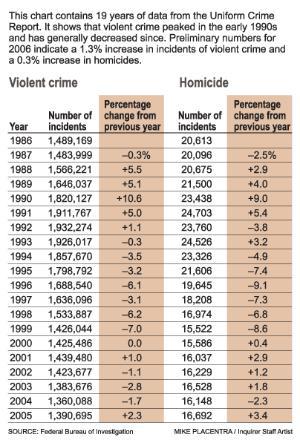 There's an accompanying chart which shows the "epidemic" over time. It shows a rise from a starting point of over 20,000 homicides in 1986, to a high of over 24,000 in the earlier 1990s, and smaller ups and downs since. If that's an epidemic, not only hasn't it grown, it used to be worse. There's an accompanying chart which shows the "epidemic" over time. It shows a rise from a starting point of over 20,000 homicides in 1986, to a high of over 24,000 in the earlier 1990s, and smaller ups and downs since. If that's an epidemic, not only hasn't it grown, it used to be worse.
Never mind that. Dellums declares (along with a host of urban mayors) that there is an epidemic, and that they have an opportunity to make it a presidential campaign issue! For Dellums, who pushed an urban agenda as a leader of the Congressional Black Caucus, the increase in violent crime is an opportunity to organize America's mayors to use their clout to influence the presidential campaign.In other words, it isn't just Philadelphia that's like Iraq, it's every city! The solution, claims Dellums, is saturation with federal money -- in Oakland and everywhere. "If you saturate us with resources, let us show what can be done if you really focus on the issues of urban life in a very direct, and focused, and profound way," he said. "Not only can we solve the problems of Oakland, but we can show the way on how to deal with these issues in America."The piece points out that California's gun laws are stricter than Pennsylvania's, and quotes Dellums as saying that prison will not work: There is no shortage of weaponry, despite gun laws in California that are more strict than Pennsylvania's.OK, so the gun laws there are stricter that those which are proposed by the gun control people here. What makes them think that if they didn't work in Oakland, they'll work in Philadelphia? Conveniently left out of many of these discussions is Washington DC, home to the most draconian gun laws in the United States, and where guns are virtually illegal. Recently, city officials there claimed that the "handgun ban has saved countless lives." Calling that contention "a howler," NRO's David Freddoso replied: Countless lives? D.C. is consistently at the top of the U.S. murder rate rankings. Was the gun ban saving "countless lives" in 1991, when the rate peaked at 80 murders per 100,000 people? Would the number have otherwise been even higher? Is it still saving "countless lives" when our murder rate for 2005, at its 20-year low, was still five times that of New York City?(Via Glenn Reynolds.) But the activists claim that "gun control will work" anyway. This is getting so tired that it's beginning to remind me of the claim that socialism can be made to work this time -- if only the right people are put in charge. For the last week, I tried to ignore the Jesse Jackson "lie-in" campaign co-sponsored by the Million Brady Mom amalgamation. Yes, it has been written up in the Inquirer, but I figured it wasn't newsworthy and I didn't want to subject readers of this blog to several more blog posts about anti-gun bias. Something about the Dellums piece, though, immediately followed by a glowing writeup glorifying anti-gun activists, made me feel a bit oversaturated. If these people plan to saturate me with resources, the least I can do is saturate back, even if it's just a little. Yesterday's "Bridging the violence gap" attempted to make some gun control activists meeting in a local house look like a major movement: It could have been a gathering for a political candidate - the 100 or so people crowded into the Roxborough living room one night last week, sipping wine and listening to speakers.The article and the web site feature the same picture, captioned "Pam Yaller's Roxborough home was jammed with activists and others..." I count no more than 24 in the picture, but the article says "100 or so." You'd think with a crowd that large, the Inquirer would want to fit them all into a photo. But assume there were 100; if a local NRA group filled a house with people who were concerned about the Roxborough group taking their Second Amendment rights away, would they merit equal coverage as a news item? Forgive my cynicism, but I doubt it. While the article didn't stress this at the beginning, eventually it became clear that the Pennsylvania president of the Million Mom March was a principle organizer of the gathering: The gathering stemmed from a chance encounter in June when Yaller, the mother of boys, ages 9 and 12, attended an interfaith peace march in Germantown and, in line for the bathroom, met Barbara Montgomery, president of the Pennsylvania Million Mom March, an anti-gun-violence group.I wrote about Tykeem Law, as it annoyed me that there was so little emphasis on the fact that the murderer had pending felonies and violated existing gun laws. How is it that they think such a case is an argument for gun control when existing gun control laws were not obeyed? What this meeting was about, of course, is gun control (and of course the Million Mom March): Montgomery also suggested that they write letters to legislators advocating tougher gun laws.In the pacifist spirit, there's talk of a "peace day" ("Peace not Guns" is a T-shirt slogan I've seen), and the group also plans a religious angle: As for Yaller, she said her Upper Dublin Quaker meeting plans to do a "God not Guns" event as an outgrowth of the meeting.I have no quarrel with school uniforms, but I can think of few better ways to divide the city than take away guns from law abiding citizens. Last week, Montgomery demonstrated in front of a Philadelphia gun store, in a nationally-organized event orchestrated by Jesse Jackson and timed to coincide with the 44th anniversary of Martin Luther King Jr.'s "I have a dream speech": Before the rally, Barbara Montgomery, president of the Million Mom March in Pennsylvania and representative of the Brady Campaign to Prevent Gun Violence, said protests were being held coast to coast.Far from being a spontaneous neighborhood gathering, there's more here about the Roxborough event, which was also connected with a mass "lie-in" demonstration: The Brady Campaign to Prevent Gun Violence with its network of Million Mom March Chapters is joining activists across the country in support of Reverend Jesse Jackson and the Rainbow PUSH Coalition's national day of protest on Tuesday, August 28 -- on the anniversary of Dr. Martin Luther King's 1963 March On Washington.(Forbes has the same story.) I'll say this for the Pennsylvania Million Mom March president. She has an impressive background as a musician and producer, including being the Music Director for Richard Simmons, and many other things. Her anti-gun activism, she says, began in Vietnam, where "she spent her formative years, "witnessing man's inhumanity to man. " "Man's inhumanity to man"? Considering what the Khmer Rouge did to a disarmed population, I find myself aghast that anyone who had lived in the area could support gun control.
Million Mom March member Barbara Montgomery, who organized the "lie-in," said they were acting as part of a National Day of Protest Against Illegal Guns.Apparently, it is felt that Specter has not been "supportive" of what they want: ROXBOROUGH. A large gathering of advocates for stronger gun control in Pennsylvania will hold a rally and "lie-in" this evening near Sen. Arlen Specter's home, a local organizer with Million Mom March said yesterday.Every day we should have a protest? This stuff goes on and on, and the local media just eat it up. Elsewhere, Montgomery describes Philadelphia as "bleeding to death." Look, I don't always agree with Arlen Specter. But the fact that these people are targeting him right in his home neighborhood for not being supportive makes me feel supportive. Of him. I realize I have no hope of changing the minds of people who are so hopelessly obsessed with gun control that they must engage in die-ins and think they should be protesting every day. Such people are more than activists; their behavior verges on outright fanaticism, and I honestly wonder what makes them tick. I mean, I feel pretty strongly about the Second Amendment, but I'm not about to go around nagging people and playing dead in order to make my point. That said, I do write this blog, and I think that if these people are so pissed at Arlen Specter that they're targeting him this way, Second Amendment supporters might want to put a call in to his office (or use the contact form), and offer a few words of friendly support. (I just did.) His record is generally good on the Second Amendment issue ("opposes most gun control, voting against the Brady Bill, background checks at gun shows, the ban on assault weapons, and trigger locks for handguns"), but the GOA has criticized him for waffling and abstaining. Whether he's likely to be intimidated by a couple of dozen activists lying down near his house, I don't know. But I think this post is about as saturated as I can get for one day. One of the reasons I can't stand activists is that they force me to act like one. This can create vicious cycles of activism. And I'm not an activist! I didn't want to call Arlen Specter's office just now. For that matter, I didn't even want to write this blog post. The activists made me do it! They saturated me with their "resources"! And they want to use the federal government to saturate all of us.... posted by Eric at 05:01 PM | Comments (2)
| TrackBacks (0)
What if they gave a Republican sex scandal and nobody came?
"(expletive deleted) Of course, I am not dumb and I will never forget when I heard about this (adjective deleted) forced entry and bugging. I thought, what in the hell is this? What is the matter with these people? Are they crazy? I thought they were nuts! A prank! But it wasn't! It wasn't very funny." Times have changed since the early 1970s. Despite the reputation of that period for wild hedonism and philandering, both major parties were officially downright prudish. Sex scandals were considered shameful in a way that's hard to imagine in today's zero-privacy world of online instant access to even the most innocuous details of lives which were once led privately. Privacy was once exciting, even titillating, and the idea of illicit sex as something secret and forbidden was what made it alluring. Xaviera Hollander, author of The Happy Hooker (and once deported for her role in a DC prostitution ring which still supplies fuel for conspiracy theories like this) echoes this sentiment: Mostly, men want what they cannot get at home. And women in this business are prepared to listen to their stories.That's sort of an odd way to put it, but even now, sex can still has a certain peculiar and irrational stigma not associated with ordinary crime. (See my previous post comparing the hue and cry over restroom signaling to the ho-hum response to assault and battery.) Times have changed, though. While Nixon's "I am not a crook!" is legendary, it's hard to imagine him ever saying "I did not have sex with that woman!" -- for the simple reason that in the old days, Nixon wouldn't have said that. Nor would Kennedy or anyone else -- not even if caught in flagrante delicto with an intern. Today, we would call this "hypocrisy." However, while the shame associated with publicly discovered sex was a much bigger deal, the fact is, people had as much illicit sex as now (minus the fear of AIDS, investigative journalists, and bloggers), but they all recognized a certain code of silence borne out of mutually agreed necessity. Politicians in both parties and the news media all shared a certain gentlemen's agreement that the less said the better, because we all know that we can all be immoral from time to time. In practice, the fact that there was more hypocrisy meant there was a lot less hypocrisy. I know. Words fail. It's a paradox. The Xaviera Hollander ring never became a major political scandal in Washington, mainly because her clients came from both parties, and there was no particular advantage to either side. In the days when sex was private, neither of the parties were interested in exploring the sordid details involving the personal sex lives of the other unless there was an ironclad guarantee that there'd be no spillover effect. The usual thing was that whoever was caught would resign in disgrace, and the less said the better. (Two good examples were the Walter Jenkins scandal, which was quickly and simply hushed up, and the Bobby Baker affair, which was much more complicated, but because it involved both parties, the sexual coverup forces ultimately prevailed.) There was lots of sex in both parties, but as in the case of JFK's fooling around, the public didn't know about it, and it was in neither party's interest for them to know about it. It is my opinion after many years of studying and restudying that the Watergate burglary involved an ordinary sex scandal. That it led to the resignation of the very prudish Richard Nixon is one of American history's supreme ironies, because, while he did his level best to cover it up, he had no idea what it was he was covering up. In fact, almost no one knew the actual purpose of the burglary, and they remain desperate to suppress it, because it makes them look sloppy. But regardless of the reasons for the burglary, what mattered was that Nixon was guilty of a coverup, and an out of control bugging and surveillance team was caught red-handed in the DNC. What more did anyone need to know? The precious narrative was a done deal, and the underlying facts behind the burglary itself were of no interest. In retrospect, however, the Watergate investigation looks incredibly bad, because the hearings went on and on, and the president resigned, and in the interest of preserving the narrative of a thorough investigation of the underlying burglary, they cling to facts which are laughably wrong. Writer Jim Hougan was the one to figure it out first. It turns out that the target of the break-in was not DNC Chairman Larry O'Brien or his office, but a desk drawer of a low level secretary, Ida Maxie Wells: ....as for the bug in Larry O'Brien's office, well, it was never found---despite repeated and rather desperate searches by the FBI and the telephone company.Hougan has a lot more, and that's only a short excerpt. The point is, the reasons for the burglary were concealed by the burglars who knew, and by John "Wiki-wash" Dean, who had a direct interest in the case, because he sent them in on his personal business. Had the sexual dimensions been known at the time, the Watergate burglary would have been another sex scandal swept under the rug. None of this exonerates Nixon in any way, for he was guilty of the coverup. It just so happens that he didn't know what he was covering up. So why is this history so hotly contested? (There have been lawsuits for years over these allegations, but no one has ever disproven that the burglary was the desk of Ida Maxie Wells.) I think it's because Watergate was a huge national scandal which had the nation riveted to their TV sets. Watergate (the "Big Bang") gave rise to several important memes. That this was a new country, with new, improved moral standards. That modern investigative journalism will fearlessly safeguard the country against abuses of power. The idea of the saviour media hero, helping bring to public attention fearless whistleblowers who expose corruption in high places. If Watergate was a sex scandal, the whole thing looks sloppy, and these memes are tarnished. Careers that rose and fell in Watergate's wake might be reexamined. Even (gasp!) Vietnam. For many reasons, Watergate is seen as an important part of to the national mythology. In today's PoMo language, it is a leading cultural, social, and political narrative. Anyway, a fascinating documentary was made back in 1992 which explored Watergate as a sex scandal. It is called "The Key To Watergate," (because the producers were quite naturally shocked to discover that the key to the Wells desk had been ignored for so many years) and while it's in six parts, I highly recommend watching them all. You can start right here by watching Part 1: If you think "The Key" is interesting, simply follow these links to the rest: Of course, this touches on the whole idea of redrafting rough drafts of history (a favorite subject here). Conventional Watergate history is a very rough draft (and IMO a very poor one), but so much "honor" is at stake that the drafters will fight to the death to prevent a redraft. Unfortunately, they didn't have bloggers in those days, so no one bothered to ask questions about a little key to an insignificant desk. NOTE: Please bear in mind that the title to this post -- "What if they gave a Republican sex scandal and nobody came?" -- is a bit tongue in cheek. Because had the call girl ring aspects of Watergate been known, both parties would have been implicated. And Watergate would have been the sex scandal that dared not speak its name. MORE: Via Glenn Reynolds, David Bernstein has a great post about the Larry Craig scandal, and the concluding observation touches on the political paradox I discussed above: Compared to the every day malfeasance by Senators, accepted as business as usual, I'll take a misdemeanor sex scandal any time.In many ways, the old hypocrisy looks better all the time. (I say this despite the fact that it might have caused a sex scandal to be overlooked.) UPDATE: My thanks to Clayton Cramer for the link. posted by Eric at 09:47 AM | Comments (1)
| TrackBacks (0)
Greenpeace Knocks Wind Out Of Ted Kennedy's Sails
Cross Posted at The Astute Bloggers H/T Instapundit posted by Simon at 08:22 AM | Comments (1)
| TrackBacks (0) Tuesday, September 4, 2007
I'll never get enough of not enough!
I'm probably more of a poop than I should be about these things, but there's nothing like a dare to get my juices flowing. So, when Megan McArdle defied me to watch this without thinking "I clearly am not doing enough drugs," I couldn't resist the urge to click.
But the more perplexing question is what constitutes "enough"? I grappled with enoughness earlier in the context of war fatigue. But that was a reality question, and this one involves drugs. (And isn't the former for people who can't handle the latter?) The drugs-versus-reality dichotomy is compounded by the logical fact that in their pure sense, drugs are real, so the dichotomy is in that sense false. And are all drugs drugs? Here's Timothy Leary, explaining why LSD is not a drug, but a chemical. (Such statements hardly endeared him to the DEA precursors.)
Clear enough? posted by Eric at 01:23 PM | Comments (2)
| TrackBacks (0)
America is gone?
At least, that's the only logical interpretation I have to give this characterization of what the country will be if Hillary Clinton is elected president: Yesterday, before hundreds of union members and their families at a Labor Day picnic in Sioux City, Iowa, Mrs. Clinton suggested one role for her husband should she be elected: repairing the country's reputation in the world after what the Clintons and other critics charge is the damage done during the Bush years.Clearly, she's trying to appeal to the people who want to erase the traumatic memory of 9/11 (and somehow hoping that the first 9/11 attack will be forgotten, along with Khobar Towers, Kenya, Tanzania, and the U.S.S. Cole). I've criticized the TV remote mentality before, but I'm concerned right now with the idea that electing Hillary would bring America "back." I see three premises within the statement: 1. America is not here now;Isn't she confusing her identity with that of the country? Isn't that called megalomania? Maybe, but maybe not. By Hillary's reasoning, there are two Clintons who are synonymous what was once called "America," and I think megalomania is usually supposed to involve one person at a time. I mean, I've heard of codependency, but I've never heard of a thing called "comegalomania." (There's no such word.) I don't think she means "One people, one America, one Hillary" and "One people, one America, one Clintons" just doesn't sound linguistically or grammatically correct. And "One people, one America, two Clintons" sounds even more awkward. Divisive, even. I don't think it's a good thing when politicians confuse or conflate their own identities with the identity of the country. It must be an awful temptation, though, because the president of the United States is in fact the single most powerful person in the world. I'd prefer voting for someone a little more modest and self-effacing than someone who not only believes that his or her (in this case his and her) ego is synonymous with America, but says so. Some things are best kept in the closet. UPDATE: Thank you, Glenn Reynolds, for the link, -- especially for the helpful observation that this might just be bad speechwriting. I certainly hope so. Your opinions are welcome! UPDATE: My thanks to Dr. Sanity for diagnosing the "comegalomania" problem: I think the term you are searching for is "folie a deux.Excellent! posted by Eric at 10:59 AM | Comments (27)
| TrackBacks (0)
"when is enough enough?"
Actually, I'm having a hell of a time finding what I guess has to be called a news report with that headline. It's on page two of the Philadelphia Inquirer, but (surprise!) it does not appear at the Inquirer's web site, but it carries the New York Times byline. So why can't I find "When is enough enough?" In despair, I googled the first sentence of the story -- "Again it comes, for the sixth time now, falling for the first time on a Tuesday, the same day of the week." Sure enough, that made the story appear. Not in the Inky (which for contractual reasons is probably allowed to run the Times stories in print but not on its website), but in the Times (and others). Only, the Inquirer has changed the headline from the original, "As 9/11 Draws Near, a Debate Rises: How Much Tribute Is Enough?" Here's the second sentence: Again there will be the public tributes, the tightly scripted memorial events, the reflex news coverage, the souvenir peddlers.And the third, which combines another rhetorical question with repetition: Is all of it necessary, at the same decibel level -- still?And we finally come to the real issue. Americans are suffering, not from being at war, but from a thing called "9/11 fatigue." It's "annoying." Each year, murmuring about Sept. 11 fatigue arises, a weariness of reliving a day that everyone wishes had never happened. It began before the first anniversary of the terrorist attack. By now, though, many people feel that the collective commemorations, publicly staged, are excessive and vacant, even annoying.Grieving? Is that all it's about? Why a nurse? This was an act of war, wasn't it? 9/11 is said to be "complicated" by "contours" -- especially because presidential candidates still refer to it: Sept. 11, of course, remains complicated by its unfinished contours -- continuing worry over terrorism, the war in Iraq, a presidential race in which candidates repeatedly invoke the day and its portents. Episodes like the fire at the vacant Deutsche Bank building stir up haunting memories. Books rooted in the attack continue to arrive.It's nice to know that terrorism has been reduced to a mere "worry." And the only reason the word "war" comes up is because we're still in Bush's silly war in Iraq. Why, if only we got rid of that, we'd be able to forget about everything, and relegate 9/11 to the status of a tornado or a bridge collapse: Some people are troubled by what they see as others' taking advantage of the event. "Six years later, we can see that a lot of people have used 9/11 for some gain," said Matt Brosseau, 27, of Westfield, N.J. He sees the public tributes as "crassly corporatized and co-opted by false patriots."I think these folks have touched on what may be the chief concern -- that regardless of whether enough is enough this year, we've simply got to establish for once and for all that enough will be enough in advance of next year. 9/11/08 is just too close to the election. You just can't have people thinking along the lines of "we will remember in November." Or am I being unfair to the Times? Shouldn't I be giving them the benefit of the doubt here? Maybe they think it's a pain in the ass to dwell on what they consider old news year after year, so they're churning the waters a little in an attempt to get people to think. But asking solid rhetorical questions like "How Much Is Enough?" and by announcing that there's a "debate" based on a few quotes, might they be trying to "encourage critical thinking"? Why is it that the Times just can't seem to get enough of Lady Di? And why no articles asking when enough is enough? Might it be that the issue is not so much when enough is enough, but when the Times says it's enough?
Mental health practitioners see a certain value in the growing fatigue.Of course, Dr. Figley is only talking about the 9/11 civilian victims who died in in the most horrific enemy attack ever inflicted on American soil -- by an enemy with whom we're still at war. (As opposed to Lady Di.) Obviously, Americans can't be expected to get over everything. I can't help noting parenthetically that Dr. Figley is an expert on "Compassion Fatigue" and he has authored a book titled "Compassion Fatigue in the Animal-Care Community." I haven't read the book, so I'm sure I'm oversimplifying, but I hope he assigns at least as much value to 9/11 fatigue as he does to the fatigue of animal care workers. Certainly, there's no denying that there is such a thing as "compassion fatigue" in rescue workers and trauma specialists. But is that the same thing as the anger experienced by Americans who saw their country attacked on 9/11? Sure, there was plenty of compassion for the victims, but wasn't there more than that? What about the desire to make sure that 9/11 never happens again? What about defeating the people who did it, so that they cannot do it again? Compassion for the victims, while certainly a factor, is hardly dispositive. In this respect, the Times' focus on "compassion" is seriously misplaced. There may be "fatigue" in the minds of those the Times quotes, but I don't think it's compassion related. We're in a war, right? Yeah, I keep asking. Is there such a syndrome as "War Denial Fatigue"? Or would it be Pacifist Fatigue? Well, what would you call the condition of being sick of pacifists who refuse to accept that their country was attacked and that the enemy has not yet been defeated? I'm being sarcastic, of course, as I don't believe in any such "disease." The problem is, the people I'm sick of would probably diagnose me as sick. (So perhaps the best defensive diagnosis is an offensive diagnosis.) UPDATE: Via Glenn Reynolds, Michelle Malkin has a picture which I think goes to the heart of the fatigue debate:
Description: The photo of the morning comes from reader John M., who e-mailed: "I am sending you a picture of graffiti that was photographed in Sacramento California on the I 80 on-ramp heading east to Reno. It first read "Stop the War." Someone did what I wanted to do and crossed out the stop and added 'Win' in front."Depends on whose fatigue is more indefatigable! UPDATE: My thanks to Glenn Reynolds for the link and a warm welcome to all. Comments always appreciated. posted by Eric at 09:11 AM | Comments (18)
| TrackBacks (0) Monday, September 3, 2007
John Edwards In Iowa
My mother visited John Edwards in Osceola, Iowa, Monday. Mom is a die hard Democrat and likes Edwards. My mom met Edwards and told him she was a breast cancer survivor and had lost a young son (my brother Jeff). Edwards put an arm on mom's shoulder said "God Bless You" and gave her a little hug. Now I really don't like Edward's policies, but I have to say that mom's story humanized him a lot for me. BTW mom (who is about to turn 88) thought Edwards was really handsome. Cross Posted at Power and Control and at The Astute Bloggers posted by Simon at 11:22 PM | Comments (3)
| TrackBacks (0)
When truth was a luxury item
Speaking of 1942, I happened to notice that an old torn banknote I have lying around is from the same year as the Salvador Dalí print I wrote about earlier.
The note is dated November 16, 1942, just a few days after the successful conclusion of an Allied campaign known as Operation TORCH. TORCH was a four-pronged invasion of Morocco in the West, and Algeria in the East.
What really fascinated me was to read about actual combat between American and French soldiers. It wasn't much of a contest, though, because while there was French resistance, American casualties were light. Well, maybe not by modern American standards, but light for the times: Operation TORCH gave the Allies substantial beachheads in North Africa at rather modest cost, considering the size of forces committed. One hundred twenty-five thousand soldiers, sailors, and airmen participated in the operation, 82,600 of them U.S. Army personnel. Ninety-six percent of the 1,469 casualties were American, with the Army losing 526 killed, 837 wounded, and 41 missing. Casualties varied considerably among the three task forces. Eastern Task Force lost the fewest Americans killed in action, 108, Western Task Force, with four times as many American troops, lost 142 killed; Center Task Force lost almost twice as many killed, 276. But without the British-sponsored RESERVIST disaster at Oran, the Center Task Force killed-in-action total would have been in the same range as that of the other task forces.Remember, Americans were fighting French colonial forces in Algeria, so it was relatively easy for the Americans. The casualties are barely considered noteworthy, as they could have been much worse: On the Moroccan and Algerian coasts the United States Army executed operations for which its history offered no preparation: large-scale amphibious landings under hostile fire. While those operations ended in victory, any evaluation of U.S. Army performance must allow for the generally inept resistance offered by French and colonial forces. Only isolated artillery batteries and infantry units proved formidable; a better-equipped and more determined opponent could have easily capitalized on the many Allied landing problems. Obviously, the U.S. Army and its Allies would have to overcome these problems before undertaking more ambitious amphibious operations.So, some 1500 American casualties in a single operation was no big deal in those days. (Besides, the French seem to have been much better at killing Algerians than Americans. If you don't like the Washington Times, read the WaPo piece. 45,000 Algerians killed in one day is an impressive feat. If you like hypocrisy, you'll love the way they're trying to make Sarkozy apologize!) But I shouldn't skip ahead. Back to 1942. I'm still wondering... What would you call these American casualties? Killed by the French? Or were the French soldiers who fought and died fighting U.S. forces not "really French"? No, they were French, as they were fighting to hold long-time French colonies while flying the French flag. I'm thinking maybe they were spun as "Axis" soldiers when they fought against us, and "allies" after we'd beaten them. In wartime, certain fictions are needed, and of course one fiction of World War II needed to be the promulgation of the idea that the French were our allies. (Like "The French are our allies. The French have always been our allies." Etc.) The public probably needed to hear it at the time. It retrospect, we have the luxury of wondering about the truth. I like this picture of Patton greeting his newly defeated "friends." Back to the banknote. It states "L'article 139 du code penal punit des travaux forces a perpetuite le contrafacteur," but who was in charge? This is obscure history, not the sort normally taught (I mean, how many people know that we suffered casualties fighting the French?), but from what I can discern, the United States had originally recognized the Vichy regime as the legal French government. However, soon after the victory in November, 1942, the U.S. attempted to transform a country with which we were not officially at war (and with which we had diplomatic relations) into a sort of U.S. protectorate. A further complicating factor was that FDR did not like de Gaulle, and apparently did not want to recognize any regime headed by him. So we forced a defeated Vichy colonial official to surrender control to the Americans. Not just of Algeria, but France! US forces landed in Morocco and Algeria on 8 November 1942. The next to be wooed was Admiral Jean-Francois Darlan, stationed in Algiers, a collaborator who served as Pétain's vice-premier and foreign minister from 1941-42. He remained at Pétain's side when Pierre Laval returned to power in 1942-44 (3).Darlan was eventually assassinated by Gaullist agents, and the United States ultimately recognized the de Gaulle "regime" in 1944. (I am oversimplifying a little, but I'm trying to stick with 1942.) Here's Darlan with the Americans:
Caption: Negotiations at Algiers, 13 November 1942. Left to right, General Eisenhower, Admiral Darlan, Maj. Gen. Mark W. Clark, and Mr. Robert Murphy of the US. State Department. I do love these war fictions, and I'm reminded of the quaint notion that Hirohito was a kindly orchid lover, forced into war by the evil Hideki Tojo (actually the latter was a fiercely loyal man who took the rope for Hirohito). Anyway, the backnote I have is dated November 16, just days after the French ceded control to the Americans. It appears that this was precisely the time that the United States took over the "Banque de L'Algerie," and pegged the Franc to the dollar, as this brief history explains: The Algerian Franc was first linked to the French Franc in 1878 when the Banque de l'Algerie was established. When the Allies landed, the exchange rate was set at 1 U.S. Dollar = 75 Algerian Francs in November 1942 and 50 Algerian Francs on February 2, 1943. The Algerian Franc rejoined the Franc zone on December 6, 1944. The Dinar replaced the Algerian Franc on April 1, 1965 at 1 Algerian Dinar = 180 milligrams of gold or 1 US Dollar = 4.937 Algerian Dinar.I guess you could call it a form of American occupation currency, although the French didn't seem all that adverse to losing against the United States. Having already lost to Nazi Germany (and probably tiring of Hitler), who could blame them? It's the notion that France was our ally in the war that both rankles and amuses me. They weren't our ally until we beat them. But by then they had always been our ally! AFTERWORD: The inspiration for this blog post came from reading an article titled "Rereading Vietnam" which Stephen Green called "the best article you'll read this summer." It is. Read it while there's still a smidgen of summer left! Especially recommended for those who enjoy the topic of French Colonialist fallout. UPDATE: More accolades for "Rereading Vietnam": If you read nothing else this week, make time for this. And if you don't have time now, bookmark it and come back to it when you do have a free moment. You owe yourself that much.Via Glenn Reynolds, who linked the post earlier via Stephen Green, and who now quotes the review's conclusion: "The first rough draft of history is getting it all wrong again. Somebody get me rewrite." UPDATE (09/04/07): Regarding my hurried surmise that Darlan was assassinated by a "Gaullist agent," commenter Jim Miller advised me to check the sources, as he had read differently. I thought I might have mischaracterised or overstretched the "le Monde diplomatique" article which states: Darlan was assassinated by an anti-Vichyite with Gaullist connections on 24 December 1942.But I looked further, and found three other sources -- two of which seem to confirm the Gaullist connection, and one of which is quite explicit that the assassin, Fernand Bonnier de la Chappelle, was acting on orders emanating from de Gaulle. The first source is a contemporaneous account which simply calls the assassin an ultra-right-wing royalist: ALGERIA: Algiers: Admral Jean-François Darlan was assassinated here today by a young student, Fernand Bonnier de la Chappelle. A French web site (apparently Gaullist in nature) almost takes delight in pointing out the de Gaulle connection. Via a web translation: The future assassin was very designated. Fernand Bonnier de la Chapelle, a young volunteer, brave, honest, educated, ready to fight to save France. It is twisted, one makes him believe a heap of salads and it is let take as a kid who it is. It is not, with frankly speaking about a murder which it will be but about a mission against an enemy of France since the orders come from the most level, i.e. Of Gaulle.Then there's Franklin Delano Roosevelt: Champion of Freedom by Conrad Black, which makes a pretty good case for a Gaullist connection on page 791 (it does appear that de Gaulle's people had their fingerprints all over this although the Royalists seem to have been blamed at the time.) Bonnier was of course speedily executed. (On December 26, two days after the crime!) A fascinating historical tidbit. But will the truth will ever be known? I'd say "stay tuned" except I don't think news will be forthcoming, and again, this is not my area of interest or expertise. (I only wanted to figure out the mystery of the 5 Franc banknote, and stumbled onto the rest.) MORE: Not that it's relevant to anything here, but I think Sarkozy is a great guy, and I've defended him before against an attempted smear by the New York Times. Thanks to him, the situation in France is looking up! posted by Eric at 06:21 PM | Comments (8)
| TrackBacks (0)
Carbon Positive
The Brits are not just carbon neutral, they are carbon positive. Using previous international research into climate change, the report estimated that covering the social cost of carbon emissions would have cost £11.7 billion in 2005.The British pound is currently worth about $2 American. Evidently the Brits opinion on this (read the article) is that "Green" taxes are not about the environment they are about taxes. Al Gore is having a hard time fooling any one. H/T Instapundit Cross Posted at Power and Control and at The Astute Bloggers posted by Simon at 03:51 PM | Comments (0)
| TrackBacks (0)
Natural law
[Yeah, I probably should have named this post "Pellets, and slugs, and butts, oh my!" but I was trying to Keep It Simple!] I love nature, and as most people know, one of nature's laws is that owls eat rodents. But the former don't do a good job of digesting the bones and the hair of the latter; once their digestive juices have extracted what they need, they regurgitate the remains in the form of owl pellets. I've long had owls nesting in my yard, and Coco will occasionally find one and play around with it until I take it away from her in disgust. When this happened the other day, I thought it belonged in the ashtray along with the remains of a recent visitor's butt.
No product placement message intended there. Just a telemarketing promotional ashtray from the 1970s when this was a freer (though arguably not more esthetically pleasing) country. Hey, they're both biodegradable products of nature, aren't they? Hmm.... Well, maybe not the filter. I guess as nature's leftovers go, the owl pellet is more natural. More, um, wholesome. Like this critter that was crawling across the porch this morning within a few feet of the telemarketing ashtray.
It would never have crawled into the ashtray, though, because slugs hate butts! For a very good reason, too.
posted by Eric at 12:14 PM | Comments (1)
| TrackBacks (0)
"Out of the Hood" and "Down the Tubes"
Dale Carpenter noticed something that not only are very few bloggers are discussing, but neither are any of the prominent leftist commentators who would normally be expected to weigh in and inveigh on these things -- an almost casual insinuation of race by the officer who arrested Larry Craig, in his attempt to shame a confession out of him: Karsnia: . . . I don't disrespect you but I'm disrespected right now and I'm not trying to act like I have all kinds of power or anything, but you're sitting here lying to a police officer. . . .Carpenter points out that while the remark could be interpreted in different ways, he thinks it is "race-specific in a case that otherwise has no obvious racial dimension" and wonders why the officer would feel the need to do that: To shame Craig into telling the truth, the officer could have used a different example, like, "I expect this from some punk we get off the street."It's as if the officer assumed Craig would feel shame by being compared with a lying black criminal suspect: ....the officer may have expected that Craig would immediately understand the reference and be especially shamed by it as a law-abiding white person. "Not only were you engaged in this tawdry behavior but now you're acting like a black thug who lies to a police officer about it," he seems to be saying. I doubt the officer would have used the "hood" reference if he'd been talking to a suspect who was black. It simply wouldn't have worked against a black suspect, whether that suspect was from "the hood" or not. It would have backfired even if used against, say, a wealthy black lawyer in a business suit. Further, in the presence of a black person the officer would have been sensitized to using a racial reference. It only works as a shaming technique if it's one white person speaking to another, with no blacks around to object.I think it's obvious why there's no chorus of left-wing objections. I also think it's interesting in the context of what Karsnia said immediately afterward. From the transcript: LC: All right, you saw something that didn't happen.We are going down the tubes? And why? Not so much because a Senator is alleged to have signalled a willingness to have sex in a mensroom, but because he wouldn't agree with Officer Karsnia's version of the story. So this means Craig is first, like a guy out of the hood, and finally, (the last thing Karsnia says), this is why the country (the only meaning I can think might attach to the misused "we" pronoun) is "going down the tubes." I'd almost swear the officer was grandstanding a bit. You know, as if he imagined the real audience was larger than Larry Craig? And what about this earlier remark? You're gonna have to pay a fine and that will be it. Okay. I don't call media, I don't do any of that type of crap.Surely, the officer wouldn't lie to a suspect, would he? Wouldn't want to have this nice old country going down the tubes.... Forgive my cynicism, but I'm beginning to think that perhaps Larry Craig (regardless of his level of denial) might not have been as stupid as I initially thought he was (and perhaps Officer Karsnia knew he had a big, big prize, and what the implications were). I don't know whether Craig made any phone calls, but can you imagine what would be happening now on all the talk shows if this case was just beginning to wind its way through the preliminary stages of the Minneapolis misdemeanor trial calendar? Imagine the power of being a guy in Karsnia's position. It's none of anybody's business, but Wendy Reid Crisp, at FROM THE BACK PEW, points out that Officer Karsnia drives a really cool old hearse, and is soon to be featured in Law and Order. The hobbies of public servants are, of course, none of our business, but old Caddy is a beauty and an appropriate vehicle for hauling off Craig's political career....plus, it may be making a tv debut soon: rumors are already out there that the Craig case may become a "Law & Order" episode ...Hey it is a beauty!
Perfect for cruisin' down the tubes in style! (A car that says "we will bury you"?) Seriously, I like the car. The officer has good taste. (Of course, the gas mileage must suck, but you can't have everything.) MORE: I'm tempted to say that this whole thing reminds me of the Roman games, but I can't. I mean, consider my position. Not only do I write a blog that looks suspciously soft on Rome, but I've already been accused of being a Mafia-supporting Democrat, and I might easily be accused of having sympathy for the Romans.... (So I've been self-censored. Immortal gods!) UPDATE: For God's sake, is there any limit to this "outing" nonsense? Via Glenn Reynolds, I read that John Aravosis is now claiming that Senator what's-his-name (as if it matters who it is this time) is gay, so it's probably another "hypocrisy" to allow him to go to Iraq in violation of Don't Ask Don't Tell. Sorry, but these people have become insane. They're as meddlesome as the most meddlesome 1950s vice officers. And they are most definitely the new McCarthyites. I'd say gay McCarthyites, except there's not much gay about what they're doing; I'm old enough to remember when the word "gay" involved sexual freedom. Nowadays, it's rapidly becoming code language for sexual tyranny and invasion of privacy. (I can remember when cranky old reactionary types used to complain that the word "gay" no longer meant "gay," and that a perfectly good word had been ruined by the new meaning. I disagreed, but I think it's ironic that they're now ruining the perfectly good word's once perfectly good new meaning!) These guys deserve to have someone like Joseph Welch come along and say, "Have you no sense of decency, sir? At long last, have you left no sense of decency?" In that regard, I'm delighted to see Arianna Huffington standing up for a little common sense: I'm no fan of Larry Craig. Indeed, I disagree with almost everything he stands for. And I'd much rather he not be in the United States Senate. But I'd also rather have had his exit be the result of his constituents voting on his ideas and policies, instead of a ridiculous sting operation in an airport bathroom.Such candor might not have quite the gravitas of Joseph Welch, but it's deeply refreshing. posted by Eric at 09:21 AM | Comments (4)
| TrackBacks (0) Sunday, September 2, 2007
Futuristic Forties Flashback
Needless to say, in 1942, FDR was president, and we were at war. Artist Salvador Dalí (my favorite), having fled fascist Europe with his wife Gala, spent the war hopping between the East and West coasts, and occasionally dishing up his typically provocative, eccentric forms of war propaganda like this:
As you can see, that's an image of FDR on the upper right, and it then morphs into several less clear double images of (who are they? FDR? Lincoln?) framed by the flying attack lobsters, while arachnoid-like parachutists clamber about. (The presidential "hair" consists of angels, one of whose feet comes through the "ear" in the lower picture.) There's a hand-written Dalinian prophecy about the future of the war (closing with "future victories of the sky") inscribed on the upper left, which you can see in more detail here:
I'm unable to find out anything about this print (issued by the New York Graphic Society), and it is not listed or referenced in any of the Dalí catalogues or archives I've seen, nor in any of the books I own about the artist. It's not worth much money because it's just an old unsigned print, but I'm delighted to have found something that I'm unable to identify, because it sheds more light on this mysterious, much misunderstood artist (who I'm sure believed he was helping the war effort and supporting the president). I think his prediction came true, but right now I'm lost in translation and running out of time.... I'm sure it's a coincidence, but this is the second time I've been lost in the 1940s in just 24 hours. Well 24 is 42 backwards, but as I say, I'm running out of time in the present, so these futuristic flashbacks must stop. Seriously, I have to leave now, as I'm running late! (Damn these time bandits! I need to, um, Dalineate my time!) posted by Eric at 11:21 AM | Comments (0)
| TrackBacks (0) Saturday, September 1, 2007
What if?
Having just read about Larry Craig's resignation, and listened carefully to the audio of his extended argument with the arresting officer (transcript here), I'm once again struck by the man's astounding stupidity in not having had the common sense to get a lawyer. No jury would have convicted him. But does that matter? Let's assume he'd hired a lawyer and gone to trial. Wouldn't it have been a huge media event -- possibly even bigger than this one? Wouldn't there have been the same calls for his resignation, even if he'd been acquitted? I don't know, but I think there might have been nearly identical calls for him to resign -- to "spare the country the embarrassment of a trial." As it is, there appears to have been no crime committed, and that doesn't seem to matter, because he pleaded guilty. That might not have mattered either. (Did Mark Foley ever plead guilty? To anything?) In politics, an accusation seems to be enough. (Especially when Republicans are accused.) MORE: Craig is toast, so his career in the Senate is no longer the point here. But after listening to that recording, I find myself left with a very unsettling feeling that this case simply does not make sense. Not only did nothing illegal happen on the face of these facts, but there was no underlying criminal charge which could have been brought. Yet a three-term United States Senator pleaded guilty. Why? Unless he is a moron or insane, he had to know this was a career-ending move. For the life of me, I cannot understand it. I am not alone in my suspicions. Here's a police officer posting at FreeRepublic.com: I listened to the tape of Senator Craig being interviewed by Officer Karsnia and I've got to tell you that in over a decade in Law Enforcement I've never been so ashamed....(Original post here, along with some interesting comments.) No probable cause, and not even an underlying crime. Just a bunch of mutually disputed hot air. An argument over whether feet touched and a hand was seen. So the allegations wouldn't support the arrest, even if a charge was theoretically possible. (It is not a crime in Minnesota to signal a willingness to have sex, but even if it was, there's no clear evidence of a signal.) Were I a paranoid sort, I might wonder whether this was some kind of political setup, and Craig was made to go along with it. (There's no way to know.) UPDATE: Via Glenn Reynolds, here's Mark Steyn's reaction to hearing the tape: after listening to the post-arrest audio tape of Craig's interview with police Sgt. Dave Karsnia, I find myself inclining toward Henry Kissinger's pronouncement on the Iran/Iraq war: It's a shame they both can't lose. As it happens, I passed by the very same men's room at the Lindbergh Terminal only a couple of months ago. I didn't go in, however. My general philosophy on public restrooms was summed up by the late Derek Jackson, the Oxford professor and jockey, in his advice to a Frenchman about to visit Britain. "Never go to a public lavatory in London," warned Professor Jackson. "I always pee in the street. You may be fined a few pounds for committing a nuisance, but in a public lavatory you risk two years in prison because a policeman in plain clothes says you smiled at him."Steyn thinks he's guilty, and he is guilty for the simple reason that he pleaded guilty. But wouldn't the mere accusation have been enough? Styen doesn't think the "hypocrisy" is quite as sinful as so many people seem to think, and neither do I. But I have to admit, I have a bit of a problem in seeing the immorality of exchanging signals. At most, that's what happened here. For the umpteenth time, where's the sex? Or don't things like that matter anymore? It seems to me that to condemn Craig for public sex, there has to be more than a feeling of a signaling. And more than just a signal for a sexual proposition, but a signal for a proposition to engage in public sex. I say this as someone who has been propositioned repeatedly, and asked to go somewhere in private. If someone winked at me in a bathroom, or tapped me on the foot, even if I thought the person was cruising, I wouldn't necessarily assume it meant here and now. A signal of willingness to have sex is not public sex. And what, precisely, is a signal? A tap of the foot? A wink of the eye? A crooking of the finger? A nod of the head? This is not trivial nitpicking if people are to be arrested for signals. But this is all academic. (In that regard, I will state now that the bathrooms at UC Berkeley, where I attended college, were notorious for T-room trade, and I never had sex in them. Does that make me a moral conservative?) AND ANOTHER WHAT IF: Suppose that a man wanted to have sex with a sexily-attired woman, who turned out to be working undercover as police officer. Would a "signal" (even a tap on the foot or finger-crooking) be enough to make an arrest? I don't work as a vice officer, but I doubt it. My memory is that there has to be a clear proposition to do something illegal. Otherwise, the arrested "Johns" would be irate. (Even though they're "guilty.") posted by Eric at 03:21 PM | Comments (8)
| TrackBacks (0)
Larry Craig, traditional throwback?
(A South Park Republican idea....) WARNING: Graphic language and offensive opinions follow. Sunday School GOPers, consider yourselves warned. In my last post, I said that "perhaps I should try again" to defend the seemingly-indefensible Larry Craig. At the end of the post I asked in desperation whatever had happened to the South Park Republicans, and worried that "Jimmy Carter Republicans" might be taking over the party. Extreme language, no doubt, and an unfair comparison, because the Republicans are not politically like Jimmy Carter. I only meant to express disagreement with the Sunday School approach to politics, because I think this dooms the GOP to an endless cycle of becoming defenseless victims of Democratic dirt digging. And I do mean defenseless. GOP activists might like to say that they "don't tolerate" Family Values deviationism, but the way this works in practice is what I'd call "CATCH AND CAVE." The Democrats catch, and the GOP caves. When I asked where the South Park Republicans are, perhaps I should have said "where are the Republicans with the balls to play political hardball?" Why the GOP leadership can't just tell Larry Craig to "come out" as the Democrats would is beyond me. But they can't, and I think the Democrats know they have them by the balls. What this means is that Democrats get a scandal pass, and Republicans don't. Because the public does not care about sex scandals; they're merely titillated. Despite the Monica Lewinsky scandal (or rather, because of it), there was a huge groundswell of support by ordinary people for Bill Clinton. They overlooked the serious crime of perjury because they were annoyed by GOP moralizing, and the GOP didn't get it then, and they don't get it now. (Hence, my poignant plea for a little South Park Republicanism.) [I realize that the term "South Park Republican" isn't Brian C. Anderson's invention, but screw semantics. Besides, I'm willing to settle for South Park Conservatives!] Anyway it's easy to sound the alarm and yell for help from South Park Republicans (or conservatives). That still leaves a key question unanswered: What would a South Park Republican do? To answer that (and to attempt, one last time, to defend Larry Craig, who is resigning today), I thought I'd start by returning to a question I might have casually dismissed more quickly than I should have: On the other hand, if Larry Craig did not want to have sex with the vice officer, what in God's name was he doing tapping his foot, and then pleading guilty? If he is completely heterosexual, well, that presents obvious problems.... I mean, what do you call a heterosexual man who goes into bathrooms and taps other men who are total strangers on their feet?A practical joke? Not bad, as South Park Republicanism goes, and it might work on a cartoon episode. But I'm realizing that I overlooked something. In the old days, there used to be a such thing as heterosexual men who had sex with gay men without being gay. It's old fashioned, and today is mainly seen in prisons and in other countries. I've seen it firsthand in Mexico, and I used to see it a lot in Hawaii in the 1970s (especially by military guys hitting on drag queens and pretending they were women). But that's been so long ago that it took an article in the Guardian (prompted by the Larry Craig speculation) to remind me. The title is "One or the other? Larry Craig's vehement protest that he is not gay despite soliciting sex in a men's toilet would, once upon a time in America, not have seemed so absurd," and the writer explains what was once a traditional phenomenon (please bear in mind that I don't share his political perspective and I don't use the term "homophobia"): ....once upon a time, men like Craig were actually viewed on terms that, though not necessarily accepting of their behavior, may have been in closer accordance with their real desire to be tacitly permitted to engage in sexual relationships with other men while still being viewed as "straight."They still are, in prison subculture, provided they're not on the receiving end of you know what. In his groundbreaking book Gay New York: Gender, Urban Culture, and the Making of the Gay Male World, 1890-1940, the historian George Chauncey uncovered a vibrant gay male world that proliferated, sometimes quite openly, in the working-class dance halls, saloons and hostels of New York City during the early 20th century.I saw pretty much the same thing in Mexico in Hawaii. It used to be called "trade" and it was much more common -- back in the good old days when all a guy needed to do was say he "wasn't a queer" and if he was masculine and prepared to back it up, no one would question it (unless he was looking to pick a fight or something). Rather, according to Chauncey, the early 20th century culture's notion of normative masculinity had an established niche for "heterosexual" men who might also have an occasional desire for a different type of bodily pleasure that only another male could provide. A married man could pick up a "fairy" (a male prostitute) in Times Square and still be seen as straight: merely in need of a particular experience he could not obtain from his wife.Again, that sounds quite believable, and while I wasn't alive then, I'm old enough to have heard about such things first hand by ancient queens I've known over the years. The writer says it died out in the 30s and 40s, but I've heard about stuff like this which lasted well into the 50s and 60s. (IMO, it was the gay revolution that drove a stake through the heart of "trade" but that's another, very complex subject and the issue here is defending Larry Craig, right?) During the late 1930s and 1940s, Chauncey writes, the lines between the gay and straight worlds hardened. The Great Depression's challenge to the male's role as familial breadwinner led to fears that the "deviant perversity" of gays would further undermine the normative gender arrangements rendered fragile by economic collapse. Municipal authorities responded to the dominant cultural fear by explicitly outlawing men from attempting to pick up other men. Such new regulations, strengthened in the post-World War II crackdowns on gays in urban centers, made it increasingly difficult for the occasional homosexual to navigate the two worlds safely.Well, FWIW, I've ranted against that "anxious view" so many times I've lost count. I am convinced that the gay movement and the anti-gay zealots are mutually obsessed (mutually anxious, I guess), and they drive the meme constantly, to the point where people just assume "gay or straight" -- and that's all there is to it. Back in the days of "trade," very few heterosexual men would have thought to describe themselves as "straight" because activists had not yet been able to implant the idea that sexual categories were to be imposed on everyone in the form of such labels. Yeah, there were "queers," "fags," and "homos," but they weren't so much a lifestyle category as they were a projective defensive insult -- usually as reassurance of what someone (typically the user of the word) wasn't. It was possible, though, to say something like "some of my best friends are faggots" and actually mean it. (I heard the phrase.) Though we have much to learn about this story, what has emerged thus far suggests that Craig may fit into this amorphous category: he is alleged to have had several isolated homosexual encounters in his adult life, not sustained affairs with other men.Is Larry Craig a throwback? I'm not sure I'd go that far... At least, not with a straight face! Surely, the country is not ready for a serious "Throwback Mountain" theme film. But South Park Republicans aren't known for straight faces, so I submit the above as a last minute South Park defense of Larry Craig. MORE: To continue the argument ad-South Park-absurdam, I thought a "traditional throwback" poll (limited by the modern script) might be appropriate. Unfortunately, there is no bisexual category. (I am trying to make this conform to the demands of activists as far as I possibly can.) Question One: Question Two: If the poll seems absurd, that's not a bug. It's a feature. posted by Eric at 12:38 PM | Comments (8)
| TrackBacks (0)
Loyalty counts! (And the best defense is a good offense!)
Larry Craig has few defenders. (Hey, I tried -- and eventually gave up -- a defense of the sanctity of his closet. In light of this post, perhaps I should try again?) The main reason that no one can do anything for Senator Craig is that there are no charges for him or his lawyers to fight. Once he pleaded guilty, it was a done deal. Besides, his resignation today will pretty much make any lingering defenses irrelevant. No one will care, his guilt will be assumed (regardless of anything he says) and like Mark Foley, he'll just be another memory. Republicans, predictably will all distance themselves from Craig, and the foot-tapping scandal will fade. By any standard, criminal fraud is worse than foot-tapping. Naturally, once word broke about Norman Hsu's fugitive felon status, the Democrats fled from him, and as of last night, it appeared that the Democrats were scrambling to distance themselves from Norman Hsu (considered "one of the most visible people in American politics") in much the same way that Republicans abandoned Larry Craig. Not so fast! On the front page of today's Inquirer, Pennsylvania Governor Ed Rendell is reported as leaping to Hsu's defense: A prominent Democratic fund-raiser with a criminal past surrendered to California authorities yesterday as nearly every politician he has helped rushed to disavow him - except Gov. Rendell.Wait to see if the conviction is "upheld"? It comes as news to me that it's being appealed. Why can't the Republicans wait to see if Larry Craig's conviction is upheld? Seriously, I don't mean to be facetious about this, but Norman Hsu pleaded no contest to the fraud charges back in 1991, and never reported for sentencing. Not only was this dispositive of the issue of his guilt, but judges take a dim view of criminal defendants who don't report for sentencing. Fugitive felony bench warrants issue in these cases as a matter of course. Nonetheless, Rendell (a former District Attorney) is skeptical about the conviction, and I have to say I admire Rendell's loyalty. "I think this whole thing stinks," Rendell said in a telephone interview. "If this conviction stands I will give the money back, but this idea of making him out to be some sort of major criminal is absurd."Why can't more Republicans stand behind their people? It's of course well-known that Rendell is the former Chairman of the Democratic National Committee, * so his endorsement of Hsu can hardly be described as quirky or eccentric. Interestingly, there's talk of restitution, and Rendell is vouching for Hsu's character. ....Hsu later posted the bail, and his attorney said the money could be used to pay restitution in the case.Will the conviction be "upheld"? Why can't the GOP be asking similar questions about Craig? I hate these double standards, and I still think Craig should just come out of the damned closet, and give the Democrats a dose of their own medicine. (I can't help noticing in today's Inquirer that former New Jersey Governor McGreevey is now entering divinity school. Yes, two can play at the religion game....) PERSONAL DISCLOSURE: Not only is none of this intended in any way as disrespect for Governor Rendell, I think I should point out that I have met the man twice, I have voted for him, and I think the world of him. He was the best mayor Philadelphia ever had in my memory, and he was kind enough to help a charity with which I have been involved. He's a great guy. Politically, I don't agree with him. And so what? I think the Republicans could learn a thing or two about loyalty from Ed Rendell. Once again (I know, I'm being repetitive), political hardball is not for Sunday school pastors and religious-based shame. * While it's probably a minor detail, could anyone explain why the Wiki entry for Rendell has a heading which reads "Italian Mobster of Pennsylvania"? I suspect GOP vandalism -- and I think it's disrespectful (in the extreme). UPDATE: It didn't take long for the Sunday School Republicans to weigh in on my character. In a comment below, "SDN" says: Sure, Eric, party before country. The fact that you are celebrating the DemoRats acting like a Mafia family under Omerta rather than citizens who want to see corruption eliminated even if it hurts them tells me all I need to know about your character.I didn't know I was celebrating, but my point may have been missed. I'm merely making a few observations about the GOP's inability to play political hardball. As to the "party before country" business, I've been holding my nose and voting for the Republicans for years now, even though I can't stand the Republican party. For my bad character, I hereby apologize! Do I get to enter a seminary now? MORE: Hey, what's Omerta? The Law of the Closet? QUESTION: Sorry to sound so exasperated, but whatever happened to the South Park Republicans? Is it just my imagination, or are the Jimmy Carter Republicans taking over? UPDATE: Glenn Reynolds links Captain Ed's analysis of the Justice Department investigation which has been opened on Norman Hsu "the man who put over a million dollars into Democratic coffers while remaining a fugitive con man. They want to find out whether more than just coincidence linked heavy donation activity between Hsu and at least two households of more modest means -- and the answers could prove very embarrassing for top Democrats." (There's a lot more of course, with a link to a Charlie Trie tie-in.) It certainly could prove embarrassing, even if the top attorneys in California are able to prevent Hsu's conviction from being "upheld." I'm already having Johnny Huang flashbacks, and I bet Ed Rendell is too, even if he isn't ashamed to stick up for an old friend. It may be a paradox, but politics sometimes involves more than worrying about the right moral appearance. MORE: People who think I'm "celebrating" Norman Hsu's or Democratic corruption might think about reading my previous post before making assumptions. Hmmm.... OTOH, should I maybe ditch the humor? (After four years of writing these posts, you'd think I'd start taking myself more seriously.....) UPDATE: The Wiki vandalism has been fixed. But I did preserve a screenshot, lest people assume I made it up:
UPDATE (09/02/08): My deepest thanks to Glenn Reynolds for linking this post, and welcome all! The comments are appreciated, but I think it's fair to warn new readers that: 1. I'm not defending Larry Craig (who I think was at minimum an absolute idiot for pleading guilty, and who is toast anyway). I do like to think out loud, though, and I've engaged in more speculative thoughts about the Craig matter here and here. 2. I am not a Democrat, but a registered Republican who votes consistently GOP because I oppose socialism and support the war on terror. This post was intended to highlight some of the political mechanics I see in play, and is not an endorsement of the Democratic Party, Norman Hsu, the Mafia, the Code of Omerta, or "homosexual men, who use humans as props to further their own ends" Nor (as a commenter assumes below) do I favor "lawyers manipulating their clients, professors their students and doctors their patients, so long as no adjudicated crime was committed." Today is Sunday. But please, please, try to remember one thing. This is a small "l" libertarian political satire blog, not a church. UPDATE: I just received an email from Spec Bowers, who obviously knows what he's talking about, who advises me that the Wiki vandalism does not appear especially partisan in nature: "The vandal at Wikipedia also vandalized the entries for Babe Ruth, Whale, and Michael Moore, so he might be a non-partisan vandal.I hope they're eventually able to prosecute one of these idiots. (Partisan vandalism is bad enough, but at least there's a comprehensible motive. Why anyone would vandalize for the sake of vandalism escapes me.) posted by Eric at 10:26 AM | Comments (22)
| TrackBacks (0)
Prevent Global Warming - Give Up Soda Pop
That would be one little change that could help put off the advent of catastrophic global warming. Soda pop drinkers and the companies that supply the soda drinkers are intentionally destroying the planet. One thing soda drinkers could do is to put one can out of every six they drink in storage. That would sequester at least part of the CO2. So some one is going to tell me next that the CO2 is coming from natural sources. OK. So they have it in tanks. Why are they putting it in soda pop instead of burying it? How can they release dangerous gases into the world? Inspired by papertiger in the comments at The Reference Frame Cross Posted at Power and Control and at The Astute Bloggers posted by Simon at 06:55 AM | Comments (1)
| TrackBacks (0)
waste not, want not!
While it might not seem like it because of all the fuss over Larry Craig, the phrase I've seen most repeated today has had nothing to do with Republican sex scandals, real or imagined. It has to do with donations to charity. There's a whole lot of donating going on! So many Democrats are donating Norman Hsu's campaign contributions "to charity" that I can't keep track. Hillary Clinton is donating Hsu's money "to charity." Barack Obama is also donating Hsu's money "to charity." U.S. Rep. Kirsten Gillibrand, Gov. Eliot Spitzer and Attorney General Andrew Cuomo are all described as donating their Hsu money "to charity." Even Al Franken is said to be "divesting" from the Hsu money, and I guess that must mean that it, too, will go "to charity." After seeing the word one time too many, I began to wonder about an obvious question. I am not alone in my wonderments. One of Captain Ed's commenters gets the next to the last word: What charity are we speaking of, the Bill Clinton Library?Well, I guess that's a legimate charity, but doesn't it have a slight aroma of favoritism? How about The George Soros Open Society Institute and Soros Foundation Network? That way, the money could be spread around to do the most good! The donor's wishes have to be respected, don't they? posted by Eric at 12:06 AM | Comments (1)
| TrackBacks (0) |
|
June 2009
WORLD-WIDE CALENDAR
Search the Site
E-mail
Classics To Go
Archives
June 2009
May 2009 April 2009 March 2009 February 2009 January 2009 December 2008 November 2008 October 2008 September 2008 August 2008 July 2008 June 2008 May 2008 April 2008 March 2008 February 2008 January 2008 December 2007 November 2007 October 2007 September 2007 August 2007 July 2007 June 2007 May 2007 April 2007 March 2007 February 2007 January 2007 December 2006 November 2006 October 2006 September 2006 August 2006 July 2006 June 2006 May 2006 April 2006 March 2006 February 2006 January 2006 December 2005 November 2005 October 2005 September 2005 August 2005 July 2005 June 2005 May 2005 April 2005 March 2005 February 2005 January 2005 December 2004 November 2004 October 2004 September 2004 August 2004 July 2004 June 2004 May 2004 April 2004 March 2004 February 2004 January 2004 December 2003 November 2003 October 2003 September 2003 August 2003 July 2003 June 2003 May 2003 May 2002 AB 1634 MBAPBSAAGOP Skepticism See more archives here Old (Blogspot) archives
Recent Entries
• Mahmoud Ahmadinejad, leading Queer Theorist?
• Spare the switch and spoil the lock! • Panic In Iran • Women Of The Israeli Army • Agreed. Freedom can be nauseating. • Khat. Not a problem until laws made it one. • Waiting For The Man • Prevent Global Warming - Bring Back Slavery • Moral equivalancy? Or just wishful thinking? • Dr. John Beresford Has Passed
Links
Site Credits
|
|
 Similarly, the debate over whether the man raised valid questions about the definition and nature of homosexuality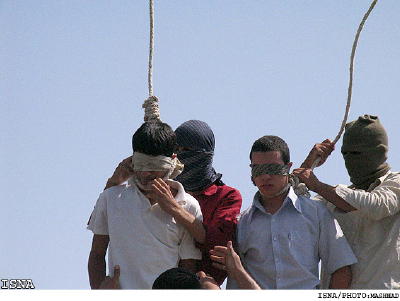
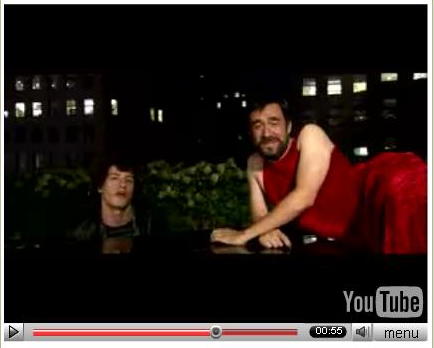
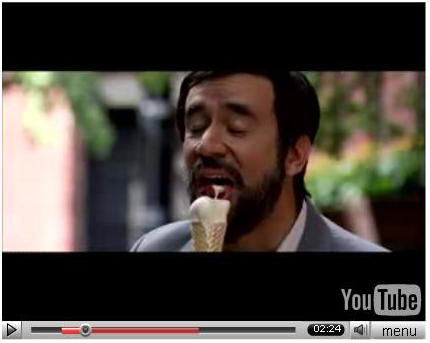

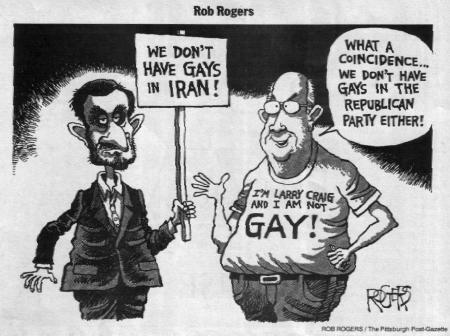
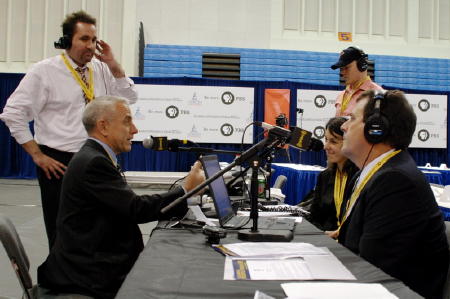
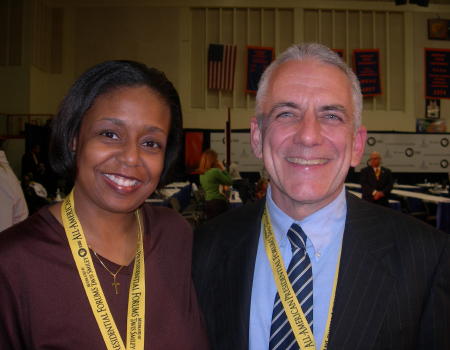
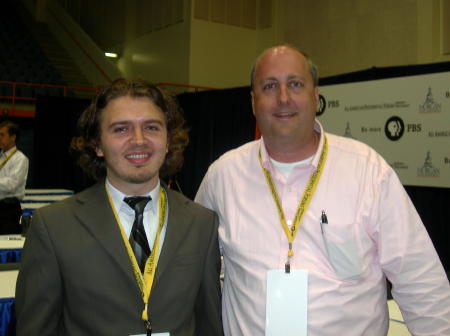
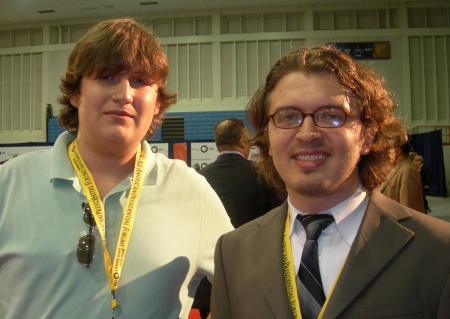
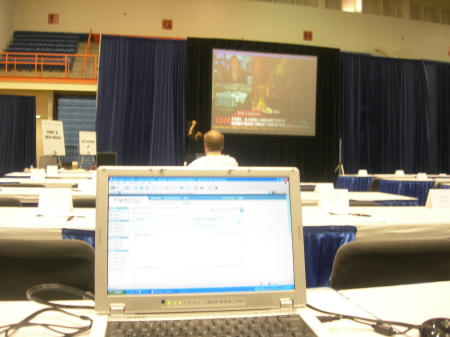
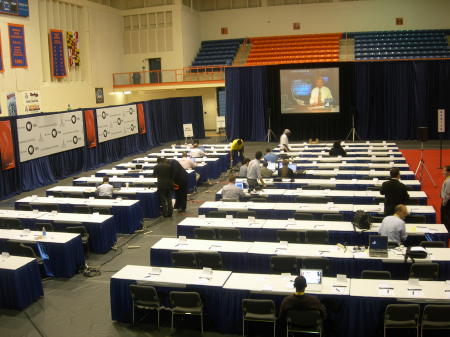
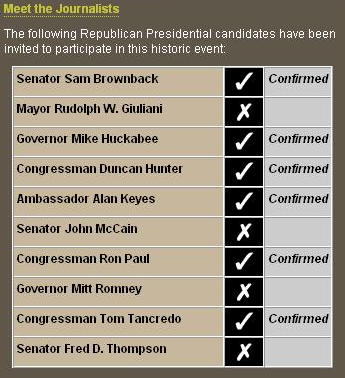
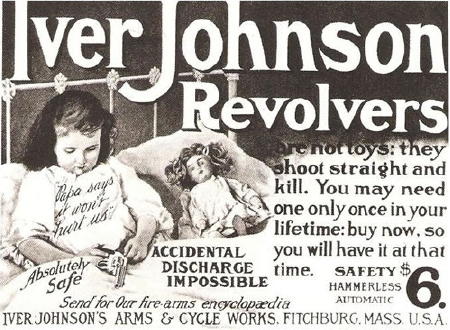

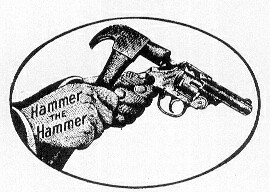
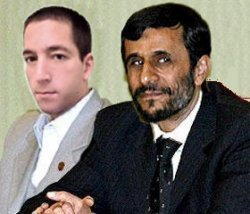






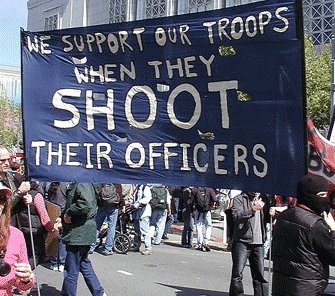
 .
. 


 No seriously.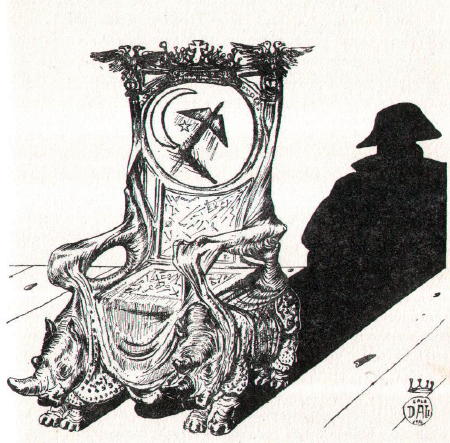
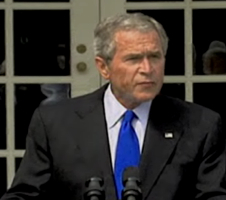


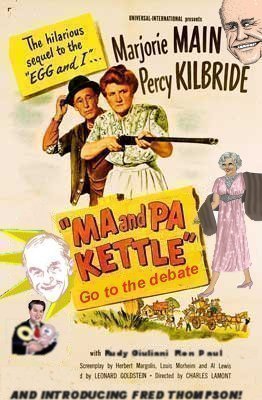
 Whether I'm aghast or not, she and her group recently