



|
|
|

October 22, 2009
Activists make it hard not to care
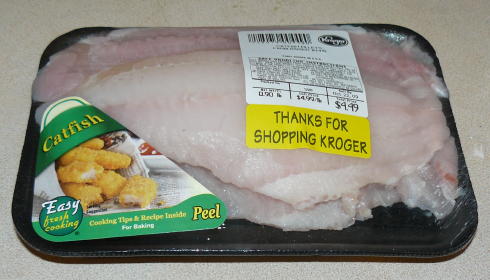
How my email address gets on these lists I do not know, but last night I received an urgent email which asked me to help do something about a sick Cockatiel for sale at a pet store in New York. A link went to this web site, where I saw a number of comments posted -- almost all of which display fanatic abolitionism on the subject of pet stores. They believe passionately that it is immoral to sell animals, and the only "debate" involves whether it is immoral to pay money to the store to "rescue" a sick bird. The bird is described as having ascites -- an infection which can result when impregnated birds retain egg yolk: Egg yolk peritonitis (the presence of yolk material in the coelomic cavity) is a common cause of abdominal distension in birds. Yolk material by itself induces a mild inflammatory response and may be reabsorbed by the peritoneum. Because yolk is an excellent growth medium for bacteria, peritonitis may result from secondary bacterial infection. Localized to diffuse fibrinous peritonitis may result, and may lead to secondary ascites and organ inflammation or compromise in chronic cases.If this disease affects birds like farm chickens, it would not be surprising to see it in an occasional pet store bird, although the diagnosis has not been confirmed by anyone writing these postings -- the primary goal of which is to condemn pet stores for selling animals. One commenter decried the horrors in this and other pet stores and said poignantly, I have been taking pictures of all the dead fish in Wal Mart.Most normal people would read that and say "Get a life!" The problem is (and this applies to most activists) she already has a life, and this is it. What bothers me the most about this abolitionist mentality is that there's no compromise with it. To these people, it is immoral for animals to be kept in zoos, pet stores, raised on farms or even kept as pets. To them, a picture of a dead fish at Walmart is as shocking as a picture of a bloody fetus is to an abortion activist, and presumably, they think that non-activists will be shocked into agreeing with them by seeing the images. When this does not happen, the activists only become more determined. This principle has been called group polarization: Study of this effect has shown that after participating in a discussion group, members tend to advocate more extreme positions and call for riskier courses of action than individuals who did not participate in any such discussion.The counterintuitive nature of this discovery of this phenomenon surprised researchers, who had always assumed that group decisions would reflect the group's average: The study of group polarization began with an unpublished 1961 Master's thesis by MIT student James Stoner, who observed the so-called "risky shift", meaning that a group's decisions are riskier than the average of the individual decisions of members before the group met. The discovery of the risky shift was considered surprising and counter-intuitive, especially since earlier work in the 1920s and 1930s by Allport and other researchers suggested that individuals made more extreme decisions than did groups, leading to the expectation that groups would make decisions that would conform to the average risk level of its members. The seemingly counter-intuitive findings of Stoner led to a flurry of research around the risky shift, which was originally thought to be a special case exception to the standard decision-making practice. By the late 1960s, however, it had become clear that the risky shift was just one type of many attitudes that became more extreme in groups, leading Moscovici and Zavalloni to term the overall phenomenon "group polarization".The phenomenon seems to be worse online: Group polarization has also been found to occur with online (computer-mediated) discussions e.g. (Sia et al., 2002). In particular, research has found that group discussions conducted when discussants are in a distributed (cannot see one another) or anonymous (cannot identify one another) environment, can lead to even higher levels of group polarization compared to traditional meetings. This is attributed to the greater numbers of novel arguments generated (due to PAT) and higher incidence of one-upmanship behaviours (due to social comparison).Years ago in Berkeley I noticed that left-wing radicals used to seem to be competing over who was the most rad (the most rad being the coolest of course), with predictable results. Guess what? I still see it, and I haven't been on the left for a long time. Of course, if you disagree with the group in question, the reverse tends to occur. What is fascinating about this is that even when people's positions are refuted or debunked, that only makes them adhere to their beliefs more obstinately. Persuasion does not work, because arguments do not win, and those who are unconverted tend to become more set in their ways. Little wonder that totalitarian states imprison dissenters; they know that while repetitive propaganda may fuel the believers, it also tends to fuel dissent. While it's beyond this post, there may be an inherently irreconcilable conflict between those who want to be told what to do, and those who do not. Anyway, what all of this means is that to the extent I want to remain rational and objective, I'd probably be better off not subjecting myself to activist propaganda. An additional problem for me is that even if I agree with an argument, if I start seeing it too often I am more likely to become critical of it. Thus, I tend to become repelled and disgusted by group polarization even if I agree with the premise of the group! It makes it very difficult for me to be an activist on any level. At best, I end up being disappointed with humanity again, even if I manage to hold my nose and support the group. (Yes, I should learn to be more understanding -- but even that sounds condescending on my part.) But what I find especially annoying is when people demand I care about something I don't care about, simply because they care deeply about it. That makes me care, perhaps not enough to "join the other side" (as I might have when I was younger), but still. Someone demanding that I care about what I don't about forces me into a position of at least caring enough to be annoyed by their demand. I am forced to give a crap only because others give a crap. The existence of the "give a crap" forces requires me to give a crap, even though I resent giving a crap.As I say, I'm not necessarily giving a crap over what the activists think I should be giving a crap about so much as I give a crap over the insistence that I give a crap. (There is a difference.) And just as I felt compelled to give a crap about pornography, right now I give a crap about dead fish. Enough that I took a picture of the dead fish at my local supermarket, which I rescued from being eaten by a total stranger, and which are now in my refrigerator.
Is that picture persuasive of anything? That picture reminded me of another one which was clearly intended to persuade, but which failed in my case.
So, simply because of my irritation over an email, I am now running the risk of being seen as making fun of an issue that a growing number of devout abolitionists feel very, very strongly about. And I'd be foolish not to feel strongly about the fact that they feel strongly, for I'm sure that many animal rights activists believe there is a special place in hell for people like me. Please bear in mind that I could have written about other emails from various activists who have failed to persuade me, but I selected this one because it's easier for me to write about, plus I thought it would offend the least number of readers. That's because animal rights activists don't think their position defines conservatism, nor do they call their enemies RINOs. I guess I need to try harder not to care. MORE: Citing a post about a new movement to eat your pets in the name of CO2 reduction, M. Simon propose having activists eat each other to lighten the load for the rest of us. Mmm mmm good! Maybe someone should start an organization called People for the Eating of Tasty Activists. Come to think of it, isn't the above picture suggestive of the idea? posted by Eric on 10.22.09 at 11:12 AM
Comments
Animal rights isn't about animal rights. It's about hating people. And there's no dialoguing with that. You're a good man for rescuing that catfish. I'm off to the supermarket to see if there's any halibut or salmon flesh in dire need of an intervention. I already have a holocaust of shrimp and scallops in my freezer. Rhodium Heart · October 22, 2009 12:20 PM Mob mentality is an earlier version. == These folks want you to eat your pets in the name of CO2 reduction: Perhaps we should get them all in a room together and let them sort it out amongst themselves. Maybe we could get them to eat each other and lighten the load for the rest of us. M. Simon · October 22, 2009 12:28 PM Their numbers are kind of stupid, who drives a car "10,000 KM/year"? That's around 6,000 miles. While I named my dog Kagogi, that doesn't mean I'm going to eat him for some global warmmongering reason, I'm going to eat him when his coat is at its peak so I get a nice jacket and some good Korean BBQ. Veeshir · October 22, 2009 05:33 PM Greetings: I see some similarity with what in my day was called "groupthink" in which a decision group marginalizes, isolates, and, eventually, expels members that don't go along with the "consensus". As the group "purifies" itself, I could easily see the resultant "risky shift". I once read a Jesuit, Teilhard du Chardin, who said, "Truth and one man is the majority". Anonymous · October 22, 2009 07:46 PM These folks want you to eat your pets in the name of CO2 reduction: Mostly crazy, but not completely nuts. Cook ad, though. I have to give credit for the creativity of those pics of "meat" in wrapping. Neat. In a sense, meat IS just meat--protein! And if you want to get around local, city, and county ordinances about livestock, you can get a potbellied pig (just one!) and a FEW chickens. Have them listed as "pets", and maybe cook up some ribs and wings later on. Don't laugh. Many people these days are considering eco-friendly goats to mow the lawn and give milk, and along with that you can have pigs to load up next to the stash of guns and gold some people are squirreling away. On a more serious note, the issue for me of "animal" rights is not that straightforward. PETA might have some nuts but I must give credence to the notion we can treat animals any way we please. They dont' exactly have "rights" in the human sense, as that's an intellectual concept that regards humans as metaphysically superior to the rest of the animal kingdom. That's the Cliff's Notes version of what almost all cultures understand in one form or another about Man's position in the scheme of things. bon apetit Wakefield Tolbert · October 22, 2009 08:59 PM As far as pet stores, there IS some truth to the tragedy of people getting a hold of animals with all the cute "ooooh" and "ahh", and then finding that just like us, the thing as to poop somewhere, the kids are busy and so are mom and dad, and yet the parents take on the role of attempting training (if dog or cat) or just doing the bare minimum. Dogs and cats are one thing. Though they can be complex to deal with and millions of homeless or abuses animals end up on the steets or dead or malnourished because someone had a flight of fancy and didn't bother doing any research. Ditto again for the more exotic animals like birds and reptiles, potbellies, etc, except that the problem of ignorance about them can be even more intense. Soon obnoxiious behaviors erupt depending on the genetic compliment of the creatures who have no idea why they can't behave like they want in the four walls of a suburban house. I've found too that generally pet store staff have limited abililty to explain things, though happily much more literature on such creatures is available now more than ever with the Internet and specialized books. Wakefield Tolbert · October 22, 2009 09:04 PM Post a comment
You may use basic HTML for formatting.
|
|
October 2009
WORLD-WIDE CALENDAR
Search the Site
E-mail
Classics To Go
Archives
October 2009
September 2009 August 2009 July 2009 June 2009 May 2009 April 2009 March 2009 February 2009 January 2009 December 2008 November 2008 October 2008 September 2008 August 2008 July 2008 June 2008 May 2008 April 2008 March 2008 February 2008 January 2008 December 2007 November 2007 October 2007 September 2007 August 2007 July 2007 June 2007 May 2007 April 2007 March 2007 February 2007 January 2007 December 2006 November 2006 October 2006 September 2006 August 2006 July 2006 June 2006 May 2006 April 2006 March 2006 February 2006 January 2006 December 2005 November 2005 October 2005 September 2005 August 2005 July 2005 June 2005 May 2005 April 2005 March 2005 February 2005 January 2005 December 2004 November 2004 October 2004 September 2004 August 2004 July 2004 June 2004 May 2004 April 2004 March 2004 February 2004 January 2004 December 2003 November 2003 October 2003 September 2003 August 2003 July 2003 June 2003 May 2003 May 2002 AB 1634 MBAPBSAAGOP Skepticism See more archives here Old (Blogspot) archives
Recent Entries
• "outside the Democratic norms of our society"
• Herding Junkies • Government Finance Reform • The past is an ever-persistent now, more than ever! • why women are victims and men are suspects • The DOD Looks At Energy Security • Beauty and death • A Three Percenter Speaks • Belief In Global Warming Falls Precipitously • "the Constitution explicitly forbids it"
Links
Site Credits
|
|

I look at is a a positive-feedback loop. Did you ever see the video of the bridge failing spectacularly as it twists and bends until it collapses? That was a case of positive feedback.
The system oscillates out of control.
People go farther and farther in the direction they're all going to impress their friends.
It's normal, human activity and what leads to people dying in "chicken races", religious self-scourging like in the middle ages and often, heroic activities by soldiers.
People are people, what they believe doesn't really change all that much how they act.